International Arbitration Yearbook 2022-2023


Welcome to the 16th edition of the “Baker McKenzie International Arbitration Yearbook.” We are pleased to bring you our analysis of notable developments in international arbitration over the past year from over 45 jurisdictions worldwide.

As with the editions before it, the 2022-2023 Yearbook looks at important legislative and case law updates from each jurisdiction. This includes:

• New arbitral rules from major institutions including the AAA, CAM-CCBC, CEPANI, DIAC and the SCC
• The ongoing reform of arbitration legislation to reflect international best practice, with recent developments in Italy, Japan, Luxembourg, the United Kingdom and Vietnam
• The continued effects of the European Court of Justice’s decision in Achmea
• The decision of a number of European states to withdraw from the Energy Charter Treaty and the accession of new parties to the ICSID convention
• The latest case law on the recognition and enforcement of foreign arbitral awards under the New York Convention, which has now been ratified in 172 jurisdictions worldwide
• New requirements from several institutions to disclose the sources of third-party funding, and the expansion of financing options for arbitration parties in Hong Kong

In this year’s edition we have introduced a new chapter on the arbitration framework in the OHADA area, which includes 17 African states.

I trust you will find our coverage of these, and many other important topics, to be of interest. Such breadth of coverage is only possible because of Baker McKenzie’s truly global presence. Our international arbitration team is the largest, busiest and most ranked arbitration team in the world and is ranked in the top 10 arbitration teams globally by Global Arbitration Review. With over 200 practitioners, we have acted in more hearings than any other firm, in every major center, allowing us to offer unrivaled insights into the state of arbitration right across the globe.

Finally, we extend our thanks to Ben Roe, Markus Altenkirch and Maria Barros Mota, to our editorial team Cathy Keegan, Sarah Fox and Paul Allanigue, and to our vast network of colleagues and friends who have contributed to this international team effort.

Ed Poulton
Global Chair, International Arbitration

Tiếp tục đọc “International Arbitration Yearbook 2022-2023”

Why do Jerusalem tensions fuel regionwide unrest?

yesterday, April7, 2023 AP

Muslim worshippers perform Friday prayers outside the Dome of Rock Mosque at the Al-Aqsa Mosque compound in the Old City of Jerusalem during the Muslim holy month of Ramadan, Friday, April 7, 2023. (AP Photo/Mahmoud Illean)

Muslim worshippers perform Friday prayers outside the Dome of Rock Mosque at the Al-Aqsa Mosque compound in the Old City of Jerusalem during the Muslim holy month of Ramadan, Friday, April 7, 2023. (AP Photo/Mahmoud Illean)

JERUSALEM (AP) — It’s become something of a grim, springtime tradition in the Holy Land.

Israeli police fire tear gas and rubber bullets at Palestinians stockpiling rocks and fireworks inside one of the most bitterly disputed holy sites on Earth. The violence ripples across Israel and the occupied West Bank, and militants from as far away as Gaza and Lebanon respond with rockets.

Tiếp tục đọc “Why do Jerusalem tensions fuel regionwide unrest?”

Nuclear Weapons in Europe: Mapping U.S. and Russian Deployments

By Jonathan Masters and Will Merrow, CFR

March 30, 2023 1:20 pm (EST)

Russia’s threat to deploy tactical nuclear weapons in Belarus has raised the specter of a new nuclear standoff with the United States and its allies in Europe. It also draws new attention to how such arms are deployed in NATO states.

What’s behind Russian President Vladimir Putin’s decision to deploy tactical nuclear weapons in Belarus?

The move that Putin announced in late March would be the first time since the fall of the Soviet Union that Russia has stationed nuclear weapons beyond its own borders, and it raises the prospects for a renewed, destabilizing nuclear arms rivalry with the United States and its North Atlantic Treaty Organization (NATO) allies.

Tiếp tục đọc “Nuclear Weapons in Europe: Mapping U.S. and Russian Deployments”

What Is NATO?


The alliance is bolstering its military deterrent in Europe amid Russia’s invasion of Ukraine and has expanded to include Finland.

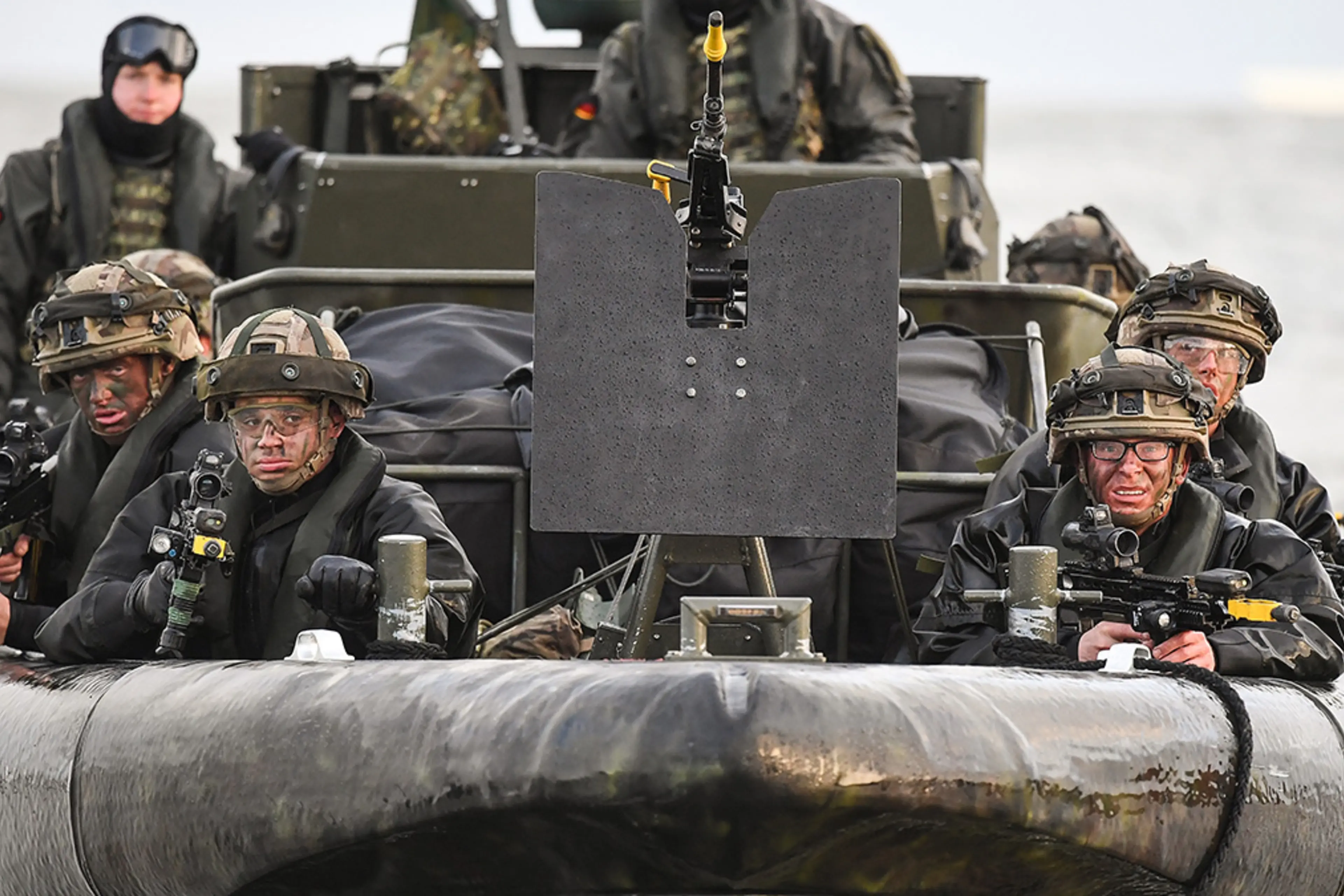
The United Kingdom’s Royal Marines take part in NATO exercises in Scotland in 2018.
The United Kingdom’s Royal Marines take part in NATO exercises in Scotland in 2018. Jeff J Mitchell/Getty Images

WRITTEN BY Jonathan Masters, CFR

UPDATED

Last updated April 4, 2023 7:00 am (EST)

Summary

  • Established during the Cold War, NATO is a transatlantic security alliance composed of thirty-one member countries, including the United States.
  • NATO has focused on deterring Russian aggression in recent years, but it has also conducted security operations in Afghanistan, Iraq, Kosovo, and Somalia. 
  • Amid Russia’s invasion of Ukraine, many NATO allies are providing Kyiv with extraordinary quantities of military supplies, and the alliance has expanded to include Finland.

Introduction

Founded in 1949 as a bulwark against Soviet aggression, the North Atlantic Treaty Organization (NATO) remains the pillar of U.S.-Europe military cooperation. An expanding bloc of NATO allies has taken on a broad range of missions since the close of the Cold War, many well beyond the Euro-Atlantic region, in countries such as Afghanistan and Libya.

Russia’s unprovoked invasion of Ukraine, a nonmember, in early 2022 has shaken Europe’s security architecture and prompted a major reevaluation of NATO members’ foreign policies and defense commitments. The threat from Russia has generated the greatest tensions with the alliance in the post-Cold War era. It is driving up defense spending and has pushed some longtime NATO partners, namely Finland and Sweden, to seek full membership. Finland acceded to the alliance in April 2023.

Tiếp tục đọc “What Is NATO?”