Who are the Houthis and why hasn’t the US retaliated for their attacks on ships in the Middle East?

This Nov. 12, 2018 photo shows The USS Carney in the Mediterranean Sea. The American warship and multiple commercial ships came under attack Sunday, Dec. 3, 2023 in the Red Sea, the Pentagon said, potentially marking a major escalation in a series of maritime attacks in the Mideast linked to the Israel-Hamas war. "We're aware of reports regarding attacks on the USS Carney and commercial vessels in the Red Sea and will provide information as it becomes available," the Pentagon said. (Mass Communication Specialist 1st Class Ryan U. Kledzik/U.S. Navy via AP)

1 of 2 | 

This Nov. 12, 2018 photo shows The USS Carney in the Mediterranean Sea. The American warship and multiple commercial ships came under attack Sunday, Dec. 3, 2023 in the Red Sea, the Pentagon said, potentially marking a major escalation in a series of maritime attacks in the Mideast linked to the Israel-Hamas war. “We’re aware of reports regarding attacks on the USS Carney and commercial vessels in the Red Sea and will provide information as it becomes available,” the Pentagon said. (Mass Communication Specialist 1st Class Ryan U. Kledzik/U.S. Navy via AP)Read More

FILE - The guided-missile destroyer USS Carney in Souda Bay, Greece. The American warship and multiple commercial ships came under attack Sunday, Dec. 3, 2023 in the Red Sea, the Pentagon said, potentially marking a major escalation in a series of maritime attacks in the Mideast linked to the Israel-Hamas war. "We're aware of reports regarding attacks on the USS Carney and commercial vessels in the Red Sea and will provide information as it becomes available," the Pentagon said. (Petty Officer 3rd Class Bill Dodge/U.S. Navy via AP)

2 of 2 | 

FILE – The guided-missile destroyer USS Carney in Souda Bay, Greece. The American warship and multiple commercial ships came under attack Sunday, Dec. 3, 2023 in the Red Sea, the Pentagon said, potentially marking a major escalation in a series of maritime attacks in the Mideast linked to the Israel-Hamas war. “We’re aware of reports regarding attacks on the USS Carney and commercial vessels in the Red Sea and will provide information as it becomes available,” the Pentagon said. (Petty Officer 3rd Class Bill Dodge/U.S. Navy via AP)

BY LOLITA C. BALDORUpdated 12:07 PM GMT+7, December 7, 2023 APnews

WASHINGTON (AP) — When Iranian-backed Houthi rebels in Yemen launched missiles and hit three commercial ships in the southern Red Sea last weekend, it triggered an immediate question: Will the U.S. military strike back?

The Houthis have sharply escalated their attacks against ships as they sail toward the narrow Bab el-Mandeb Strait. And U.S. Navy ships have shot down an array of drones headed their way and believed to have been launched by the militant group from territory it controls in Yemen.

But so far, the U.S. has avoided military retaliation — a marked difference from its multiple strikes against Iran-backed militias in Iraq and Syria that have fired rockets, missiles and drones at bases housing American forces in both countries.

No one has been reported hurt in the Houthi incidents, although the commercial ships suffered some damage. And U.S. officials argue that the Houthis haven’t technically targeted U.S. vessels or forces — a subtlety that Navy ship captains watching the incoming drones may question.

Tiếp tục đọc “Who are the Houthis and why hasn’t the US retaliated for their attacks on ships in the Middle East?”
Yemen: The world’s largest humanitarian crisis

UNFPA

You might not know it from the headlines, where crises around the world compete for attention, but Yemen lays tragic claim to the world’s largest humanitarian crisis and aid operation. Two-thirds of the population, or 20.7 million people, need humanitarian assistance in 2021. Multiple emergencies have pummeled the country: violent conflict, an economic blockade, currency collapse, flooding and the COVID-19 pandemic in a country where only half of health facilities are operational.

Tiếp tục đọc “Yemen: The world’s largest humanitarian crisis”

Từ chuyện Yemen nghĩ đến phận nước bé 

soi.today – Sáng Ánh – 08. 01. 18 – 5:53 pm

“1 người chết ở New York bằng 10 người chết ở London, 100 người chết ở châu Âu và 1000 người chết ở đâu đó” là thước đo thông dụng của truyền thông Hoa Kỳ. Chuyện này cũng dễ hiểu, khi ta ngồi buôn chuyện thì 1 con bé nhà bên mới có bồ sẽ đáng nói hơn 10 con bé ở ngoài đường, hơn 100 con bé khác mới có bồ ở trong quận, và 1000 con bé mới có bồ ở khắp thành phố. Tuy nhiên, nếu nguồn tin “1 con bé ở hẻm X của Brooklyn mới có bồ” mà đến cả Cầu Giấy hay phố nào Myanmar, Phi Châu cũng xôn xao thì mới là bất thường. Tình trạng hiện nay của truyền thông thế giới là như vậy. Quan tâm hay không quan tâm của Tây phương trở thành quan tâm hay không quan tâm của mọi người.

Một nghiên cứu năm 2007 về giai đoạn 1968-2002 trên các đài TV chính của Mỹ đã thử tìm thước đo này trong lãnh vực thiên tai. Bao nhiêu người chết thì đáng được đề cập, và sơ đồ dưới đây cho thấy 1 người thiệt mạng vì núi lửa ngang với 39.000 người chết đói. Núi lửa phun khói rất ăn hình, còn em bé bụng ỏng nằm chỏng chơ coi rất kém thẩm mỹ.

.

Tiếp tục đọc “Từ chuyện Yemen nghĩ đến phận nước bé “

Infants in War-torn Yemen Dying at Alarmingly High Rate

 VOA
  • Lisa Schlein

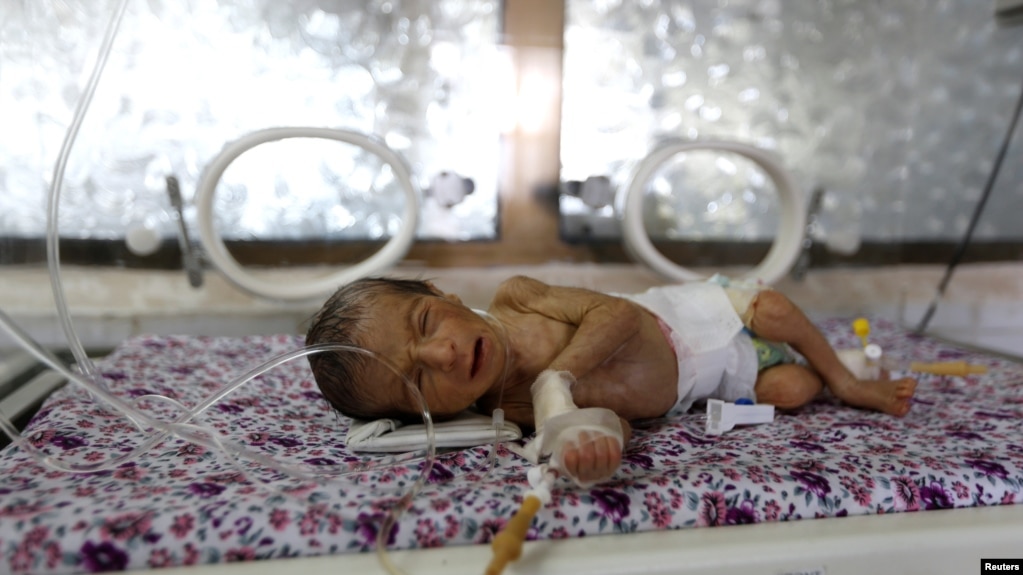
A premature baby lies in an incubator at the child care unit of a hospital in Sana'a, Yemen January 16, 2018.

A premature baby lies in an incubator at the child care unit of a hospital in Sana’a, Yemen January 16, 2018.

A report by the U.N. children’s fund finds babies born in war-torn Yemen are dying at an alarmingly high rate because of the collapsing health system, lack of food and clean water.

The U.N. children’s fund reports more than three million children have been born in Yemen since the country’s civil war escalated in March 2015. The agency’s report, called “Born into War”, describes the violent, hopeless situation of displacement, disease, poverty and hunger into which these children are born. Tiếp tục đọc “Infants in War-torn Yemen Dying at Alarmingly High Rate”

Report: Cluster Munitions in Syria, Yemen Increase Civilian Casualties

VOA

August 31, 2017 1:25 PM
  • Lisa Schlein

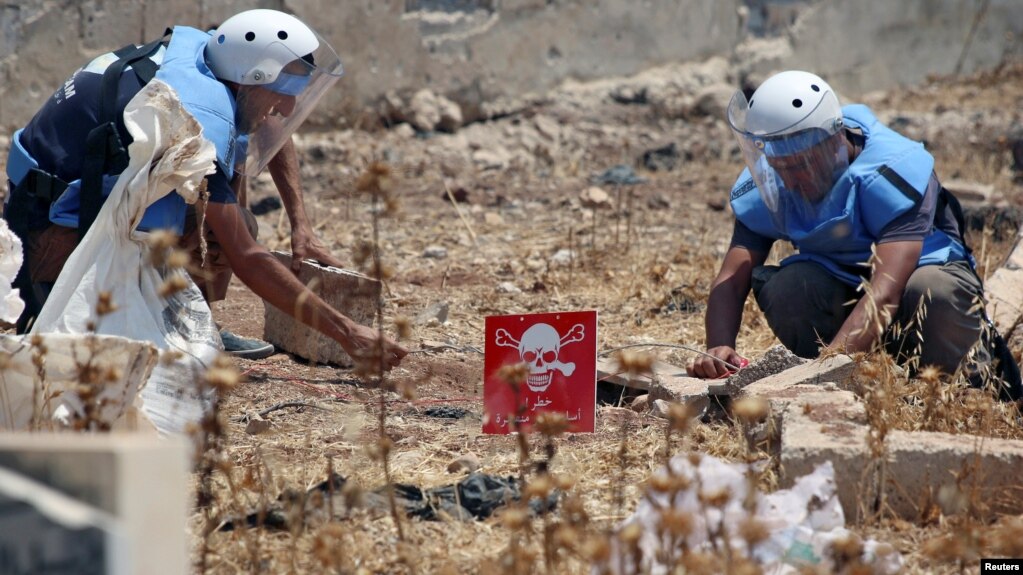
Civil defense members prepare to safely detonate cluster bombs in the rebel-held area in Deraa, Syria, July 26, 2017.

Civil defense members prepare to safely detonate cluster bombs in the rebel-held area in Deraa, Syria, July 26, 2017.

A report released ahead of next week’s U.N. conference on the Convention on Cluster Munitions has condemned the continued use of cluster munitions by Syria and Yemen. They are the only two countries that still use the bombs, which are banned under international law. Tiếp tục đọc “Report: Cluster Munitions in Syria, Yemen Increase Civilian Casualties”

“Mùa xuân Ảrập”: khi giấc mơ trở thành ác mộng

Thanh TuấnThứ Bảy,  2/1/2016, 16:52 (GMT+7)
Những cuộc nổi dậy mà ban đầu phương Tây ca ngợi là vì tự do và dân chủ cuối cùng có kết cục trái ngược hoàn toàn: thêm hỗn loạn, đất nước tan rã và sự nổi dậy của các nhóm Hồi giáo cực đoan. Ảnh: INTERNET

(TBKTSG) – Tuần trước, lễ kỷ niệm năm năm của phong trào “mùa xuân Ảrập” diễn ra khá lặng lẽ so với sự kiện đã làm rúng động Trung Đông và thế giới cách đây vài năm.

Tờ Jerusalem Post viết, trong tương lai khi các nhà sử học nhìn lại giai đoạn này của Trung Đông thì họ sẽ thấy “mùa xuân Ảrập” dẫn tới một loạt cuộc nội chiến, tiếp theo đó là sự trỗi dậy của lực lượng Nhà nước Hồi giáo tự xưng (IS) – một trong những lực lượng khủng bố khát máu, tàn bạo nhất trong lịch sử hiện đại.

Nói cách khác, những cuộc nổi dậy mà ban đầu phương Tây ca ngợi là vì tự do và dân chủ cuối cùng có kết cục trái ngược hoàn toàn: thêm hỗn loạn, đất nước tan rã và sự nổi dậy của các nhóm Hồi giáo cực đoan. Tiếp tục đọc ““Mùa xuân Ảrập”: khi giấc mơ trở thành ác mộng”