European Parliament sounds the alarm over developing world debt crisis

Ignoring the warning signs of a growing developing world debt crisis is no longer tenable. [Shutterstock]

The number of poor countries facing major debt crises has doubled since 2013, and only 1 in 5 are now considered to be at low risk of crisis. With some countries in the midst of crisis and others on the brink, meeting the Sustainable Development Goals (SDGs) remains a pipe dream, writes Mark Perera.

Mark Perera is a Senior Networking and Advocacy Officer at European Network on Debt and Development (Eurodad).

The debt burden of developing countries has been rising fast, both in absolute terms, and in relation to economic indicators such as GDP, export earnings, and government revenue – trends are driven by a number of factors. Tiếp tục đọc “European Parliament sounds the alarm over developing world debt crisis”

Where The Wind Blew

springfilms.

WHERE THE WIND BLEW tells the story of how the Cold War super powers, in their race to develop more and more deadly bombs, spent forty years developing weapons capable of wiping out entire nations, while sacrificing their own vulnerable populations in the name of national security.

Using archive and testimony from both those affected and those participating in these escalating events, Where the Wind Blew shows not only how ordinary people were allowed to suffer in ignorance, but also how, with personal fortitude and courage they defied their governments. They helped change the course of history by joining forces, first nationally, then across the world to finally triumph against the testing of nuclear weapons. Kazakhstan became, in 1989, the first nation to close its test site, leading the way to an international test ban treaty. Tiếp tục đọc “Where The Wind Blew”

Western strikes in Syria – five key questions

Syrian army in Douma April 2018. Credit: STRINGER/AFP/Getty ImagesBy Emile Hokayem, IISS Senior Fellow for Middle East Security.

What are the West’s military options – and what might the targets be?

Western countries have to decide whether military action in Syria is about punishment and deterrence for the use of chemical weapons, or whether they want to be more ambitious and go after the military infrastructure of the Assad regime, which has enabled his war machine to make very significant advances recently.

The likelihood is that President Trump, Prime Minister May and President Macron will opt for a narrow strike aimed at enforcing the international norm against the use of chemical weapons. If so, they face a choice between targeting the infrastructure that creates those weapons and hitting the means of delivery – the helicopters, the air force, the runways. Tiếp tục đọc “Western strikes in Syria – five key questions”

Phụ nữ trong khoa học: Những góc nhìn

TS – 07/03/2018 08:00 – Ann Hibner Koblitz*

Gần như tất cả các nền văn hóa trên thế giới đều có những nữ khoa học, nữ bác sĩ và nhà phát minh nữ nhưng vì nhiều lí do, tên tuổi của những người phụ nữ này vẫn bị khuất lấp hoặc không được ghi nhận. Đến thời kì “làn sóng nữ quyền lần thứ hai” trỗi dậy vào giữa những năm 1960 đến cuối những năm 1980, những nhà sử học theo chủ nghĩa nữ quyền đã khôi phục lại tên của vô vàn những người phụ nữ vĩ đại trong quá khứ, bao gồm các nhà khoa học và phát minh nữ. Những học giả này đã thách thức các định kiến giới trong những trang sử của hàng thế kỉ đã xóa đi những đóng góp của người phụ nữ trong rất nhiều lĩnh vực bởi các nhà sử học nam.


Nhà toán học Miryam Mirakhani. Ở Iran, quê hương cô, nghiên cứu toán học được coi là một nghề nữ tính. Trong ảnh là bìa của một tờ báo ngày tại Iran vinh danh Mirakhani sau khi cô qua đời. Tiếp tục đọc “Phụ nữ trong khoa học: Những góc nhìn”

Full Text: Indictment against 13 Russians, 3 entities for interfering in US election

TĐH: The indictment shows how Russia has had a huge operation since 2014 to interfere with US presidential election in 2016, and certainly future elections. Read and ask whether Russia may be trying to run Vietnam too.

Read the Indicment >>

FILE – In this June 21, 2017, file photo, Special Counsel Robert Mueller departs after a closed-door meeting with members of the Senate Judiciary Committee about Russian meddling in the election at the Capitol in Washington. (AP Photo/J. Scott Applewhite, File)


Published February 16, 2018 at 1:48 PM
Updated February 16, 2018 at 2:01 PM


Department of Justice Office of Public Affairs Press Release:

Grand Jury Indicts Thirteen Russian Individuals and Three Russian Companies for Scheme to Interfere in the United States Political System

The Department of Justice announced that a grand jury in the District of Columbia today returned an indictment presented by the Special Counsel’s Office. The indictment charges thirteen Russian nationals and three Russian companies for committing federal crimes while seeking to interfere in the United States political system, including the 2016 Presidential election. The defendants allegedly conducted what they called “information warfare against the United States,” with the stated goal of “spread[ing] distrust towards the candidates and the political system in general.” Tiếp tục đọc “Full Text: Indictment against 13 Russians, 3 entities for interfering in US election”

Những điểm nóng trong năm 2018

TT – Năm 2017 tiếp tục chứng kiến một xu hướng đã kéo dài trong nhiều năm qua: Không những chiến tranh, xung đột chưa có dấu hiệu sớm kết thúc, thế giới ngày càng phát sinh nhiều điểm nóng và nguy cơ về an ninh. 

Tổ chức học giả Hội đồng Quan hệ quốc tế (CFR) của Mỹ vừa công bố một danh sách những nguy cơ toàn cầu hàng đầu cần phải theo dõi trong năm 2018 sau khi tham khảo ý kiến của các chuyên gia hàng đầu.

Từ danh sách 30 cuộc xung đột và nguy cơ xung đột hiện hữu, họ chọn ra 8 mối nguy hiểm lớn nhất trong năm 2018 dựa trên khả năng leo thang hoặc bùng nổ của chúng.

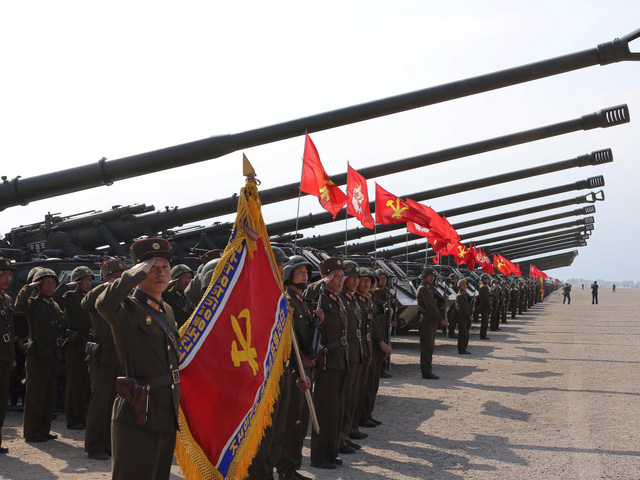
Xung đột vũ trang trên bán đảo Triều Tiên

Những điểm nóng trong năm 2018 - Ảnh 1.

Pháo binh Triều Tiên trong ngày kỷ niệm thành lập Quân đội Nhân dân Triều Tiên tháng 4-2017 – Ảnh: KCN

Tiếp tục đọc “Những điểm nóng trong năm 2018”

Sứ điệp của Đức Giáo Hoàng – Thông điệp Ngày Thế giới Hòa bình 2018

Đức Giáo Hoàng Phanxicô
 Thông điệp Ngày Thế giới Hòa bình 2018


Người Di Dân và Tị Nạn: Những người nam nữ tìm kiếm hòa bình

1. Những lời chúc tốt lành dành cho hòa bình


Bình an cho hết mọi dân tộc và mọi quốc gia trên trái đất! Bình an, điều mà các thiên thân loan báo cho các mục đồng vào đêm Giáng Sinh,[1] là một động lực sâu sắc cho mọi người, cho mỗi cá nhân và cho hết mọi dân tộc, và đặc biệt là cho những người đang phải chịu sự vắng bóng của hòa bình cách sâu sắc. Trong số những người mà tôi thường nhớ trong tư tưởng và lời cầu nguyện, một lần nữa tôi đề cập đến 250 triệu người di dân trên khắp thế giới, mà trong số đó có 22.5 triệu người là tị nạn. Tiếp tục đọc “Sứ điệp của Đức Giáo Hoàng – Thông điệp Ngày Thế giới Hòa bình 2018”

Global Trends 2035: Paradox of Progress

Global Trends Paradox of Progress: 2017 Report of the National Intelligence Council

LETTER FROM THE NIC CHAIRMAN

Thinking about the future is vital but hard. Crises keep intruding, making it all but impossible to look beyond daily headlines to what lies over the horizon. In those circumstances, thinking “outside the box,” to use the cliché, too often loses out to keeping up with the inbox. That is why every four years the National Intelligence Council (NIC) undertakes a major assessment of the forces and choices shaping the world before us over the next two decades.

This version, the sixth in the series, is titled, “Global Trends: The Paradox of Progress,” and we are proud of it. It may look like a report, but it is really an invitation, an invitation to discuss, debate and inquire further about how the future could unfold. Certainly, we do not pretend to have the definitive “answer.” Tiếp tục đọc “Global Trends 2035: Paradox of Progress”

Global Trends 2030: Alternative Worlds

Global Trends 2030: Alternative Worlds

is the fifth installment in the US National Intelligence Council’s series aimed at providing a framework for thinking about the future. As with previous editions, we hope that this report will stimulate strategic thinking by identifying critical trends and potential discontinuities. We distinguish between megatrends, those factors that will likely occur under any scenario, and game-changers, critical variables whose trajectories are far less certain. Finally, as our appreciation of the diversity and complexity of various factors has grown, we have increased our attention to scenarios or alternative worlds we might face. Tiếp tục đọc “Global Trends 2030: Alternative Worlds”

The World Bank Year in Review: 2017 in 12 Charts

Worldbank.org

How to sum up 2017? The global economy improved but there were plenty of unsettling and upsetting events and trends. Catastrophic storms and flooding wrecked homes and livelihoods from South Asia to the Caribbean. Education quality in many countries fell short even as much of the world raced into the digital age. Yet extreme poverty continues to decline. Innovation and technology are enhancing the quality of life. And human capital is now the biggest driver of wealth in the world today. Here’s what 2017 looked like in 12 charts.

1. Millions faced famine and required emergency aid

2. The world emitted historic amounts of carbon

3. Natural disasters dominated the news

4. Two-thirds of global wealth is human capital

5. There’s a crisis in learning

6. Nutrition affects learning, and millions of children remain stunted

7. Child marriage carried high personal and economic costs

8. The world’s population is young. And jobless.

9. Natural capital and biodiversity are undervalued

10. Globally, about half of elections are considered free and fair

11. Starting a business is getting easier

12. The power of renewables

A Tribute to Hans Rosling

Tiếp tục đọc “The World Bank Year in Review: 2017 in 12 Charts”

What effect did the Crusades have on the Middle East?

The Europeans besiege Jerusalem, seeking to "liberate" it from Muslim rule, 1099.
The Crusaders or Franks attack Jerusalem during the First Crusade, 1099. Getty Images

Updated June 13, 2017

Between 1095 and 1291, Christians from western Europe launched a series of eight major invasions against the Middle East. These attacks, called the Crusades, were aimed at “liberating” the Holy Land and Jerusalem from Muslim rule.

The Crusades were sparked by religious fervor in Europe, by exhortations from various Popes, and by the need to rid Europe of excess warriors left over from regional wars.

What effect did these attacks, which came from out of the blue from the perspective of Muslims and Jews in the Holy Land, have on the Middle East? Tiếp tục đọc “What effect did the Crusades have on the Middle East?”

Liên hợp quốc cắt giảm ngân sách cho lực lượng gìn giữ hòa bình toàn cầu

BTT – Thứ Bảy, 01/07/2017 10:36 

Ngày 30/6, Đại Hội đồng Liên hợp quốc (LHQ) đã nhất trí cắt giảm gần 600 triệu USD từ ngân sách 7,87 tỷ USD hiện nay chi cho hoạt động của các lực lượng gìn giữ hòa bình trên khắp thế giới, xuống còn 7,3 tỷ USD.

Binh sĩ Brazil thuộc Phái bộ gìn giữ hòa bình Liên hợp quốc tại Port-au-Prince, Haiti, ngày 2/6. Ảnh: EPA/TTXVN

Cụ thể, các nước thành viên LHQ đã nhất trí 6,8 tỷ USD trong ngân sách là để tài trợ cho 14 phái bộ gìn giữ hòa bình. 500 triệu USD còn lại bổ sung cho phái bộ gìn giữ hòa bình tại Haiti và khu vực Darfur của Sudan sẽ được LHQ thông qua lần cuối vào tháng 12 tới. Tiếp tục đọc “Liên hợp quốc cắt giảm ngân sách cho lực lượng gìn giữ hòa bình toàn cầu”

Syria’s civil war explained from the beginning

al jazeera 6 April 2017

The Syrian civil war is the deadliest conflict the 21st century has witnessed thus far.

As the Syrian conflict enters its seventh year, more than 465,000 Syrians have been killed in the fighting, more than a million injured and over 12 million Syrians – half the country’s prewar population – have been displaced from their homes.<

In 2011, what became known as the ” Arab Spring ” revolts toppled Tunisian President Zine El Abidine Ben Ali and Egyptian President Hosni Mubarak . Tiếp tục đọc “Syria’s civil war explained from the beginning”

Nước Đức: Khi niềm tin bị đánh cắp

BQT – 15:39 | 29/12/2016

Người dân Đức ứng phó với khủng hoảng, khủng bố với một tâm thế hoàn toàn khác so với nhiều nơi trên thế giới.

Vụ khủng bố bằng xe tải hạng nặng tại chợ Giáng sinh ở Berlin ngày 19/12 mà một số báo chí gọi là “vụ 11/9” của Đức, khiến 12 người thiệt mạng và hàng chục người bị thương, còn đang trong quá trình điều tra nhưng dư âm của nó đang còn nóng và chắc chắn sẽ còn theo người dân Đức trong thời gian tới.

Nhưng vì sao là Đức và vì sao đúng dịp này? Liệu bọn khủng bố quốc tế có đạt được điều mà chúng mong muốn qua những hành động vô nhân tính này hay không?

nuoc duc khi niem tin bi danh cap
Quang cảnh đổ nát của khu chợ sau vụ việc kinh hoàng. (Nguồn: Reuters)

Tiếp tục đọc “Nước Đức: Khi niềm tin bị đánh cắp”

Khủng hoảng tên lửa Cuba và những điều chưa biết – 11 kỳ

  • Kỳ 1: Từ sự kiện Vịnh Con lợn
  • Kỳ 2: Đến những chuyến tầu bí mật trên biển Caribê
  • Kỳ 3: Cuộc đấu vẫn tiếp tục
  • Kỳ 4: Phát hiện kinh hoàng của những chiếc máy bay do thám tầm cao U-2
  • Kỳ 5: Cuộc khủng hoảng bắt đầu ló dạng
  • Kỳ 6: Hành động ngăn chặn của quân đội Mỹ
  • Kỳ 7: Những bức thư qua lại giữa Kennedy và Khrushchev
  • Kỳ 8: Liên hợp quốc vào cuộc
  • Kỳ 9: Xuất hiện dấu hiệu xuống thang
  • Kỳ 10: Lập trường kiên quyết của Cuba
  • Kỳ 11: Hồi kết của cuộc khủng hoảng

Tổng thống Mỹ Kennedy và nhà lãnh đạo Khrushchev của Liên Xô, hai nhân vật chính trong cuộc khủng hoảng tên lửa Cuba 1962.

***

Kỳ 1: Từ sự kiện Vịnh Con lợn

BTT – Khủng hoảng tên lửa Cuba (tháng 10/1962) là sự kiện kịch tính nhất trong thời kỳ Chiến tranh Lạnh, từng đẩy Mátxcơva và Oasinhtơn đến bên bờ của một cuộc chiến tranh hạt nhân. Nhưng rốt cuộc, ít người biết được nguyên nhân sâu xa gây ra nó và nhân loại đã thoát ra khỏi thảm họa hạt nhân nhãn tiền đó như thế nào.

Tiếp tục đọc “Khủng hoảng tên lửa Cuba và những điều chưa biết – 11 kỳ”