Russia bans 45 foreign-owned banks or banking units from selling their shares

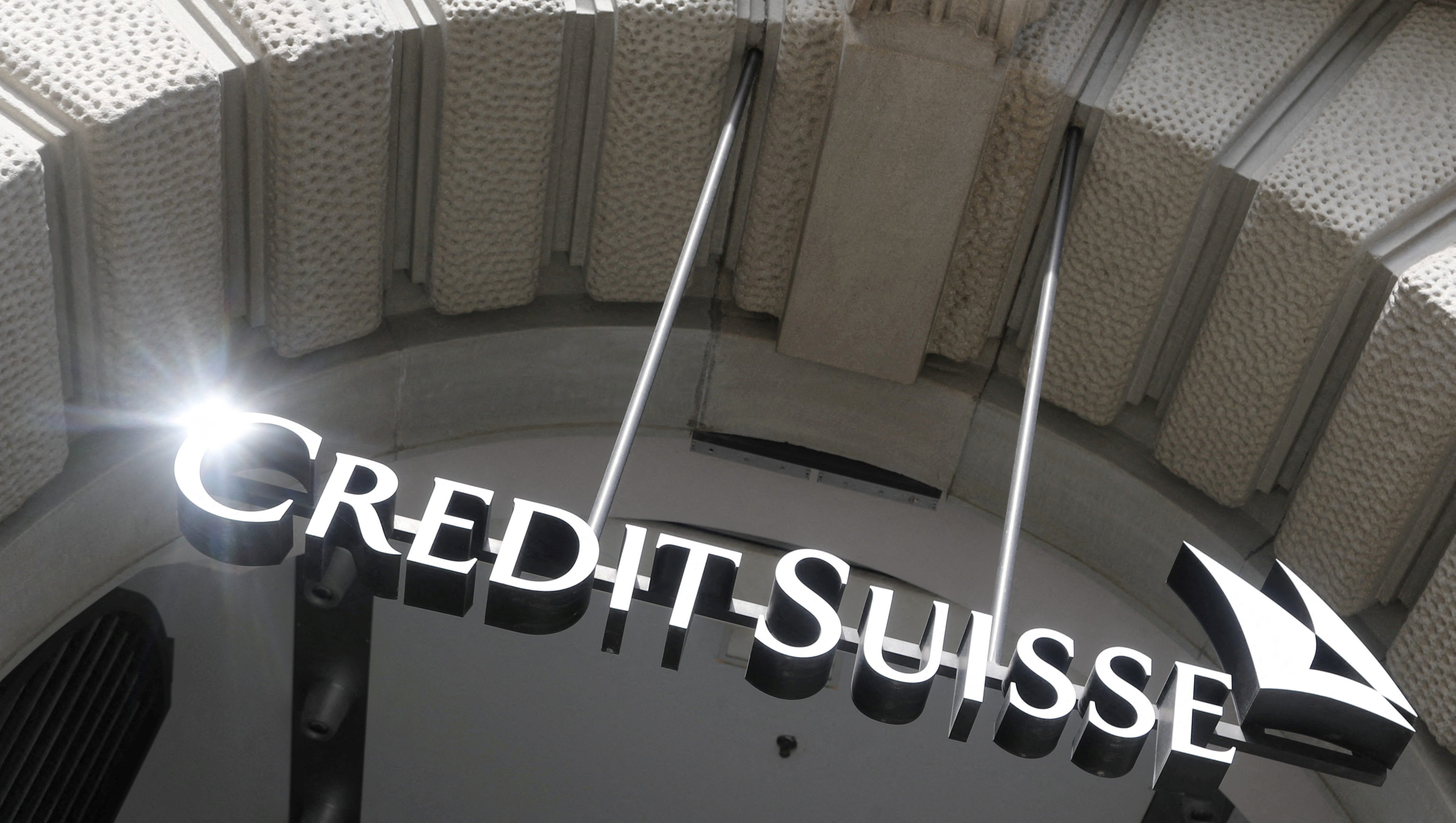
Logo of Swiss bank Credit Suisse is seen in Zurich

[1/3] The logo of Swiss bank Credit Suisse is seen at its headquarters in Zurich, Switzerland October 4, 2022. REUTERS/Arnd Wiegmann

  • This content was produced in Russia where the law restricts coverage of Russian military operations in Ukraine

MOSCOW, Oct 26 (Reuters) – Russia on Wednesday banned dealings in the shares or share capital of 45 banks or banking units, all either owned by parties in countries that Russia terms “unfriendly” or owned through foreign capital.

Western countries and allies, including Japan, have piled financial restrictions on Russia since it sent troops into Ukraine in late February. Moscow retaliated with obstacles for Western businesses and their allies leaving Russia, and in some cases seized their assets.

The list followed a decree issued on Aug. 5 by President Vladimir Putin banning dealings in stakes in the financial and energy sectors owned by parties in “unfriendly” countries unless specific permission was given. read more read more

The list, published on Wednesday, included Russian units of Intesa (ISP.MI), Credit Suisse (CSGN.S), Raiffeisen (RBIV.VI), Citi (C.N), OTP bank <OTPB.BU> and UniCredit Bank (CRDI.MI), as well as the Russian Yandex-Bank and Ozon-Bank.

Citi, the largest Wall Street bank to have a presence in Russia with an exposure of $8 billion, plans to wind down nearly all of the institutional banking services as it is unable to sell the business amid the recent sanctions-related laws. read more read more read more

Understanding The China-Russia Trade, Investment & Economic Relationship In The Context Of The Ukraine Conflict

silkroadbriefing.com

 May 10, 2022Posted bySilk Road Briefing

Surging Trade As Bilateral Relations Grow Closer

China and Russia have grown increasingly close in recent years, including as trading partners, in a relationship that brings both opportunities and risks as Russia reels from tough new sanctions led by the West in response to its invasion of Ukraine. Total trade between China and Russia jumped 35.9% in 2021 last year to a record US$147.9 billion, according to Chinese customs data, with Russia serving as a major source of oil, gas, coal and agriculture commodities, and running a trade surplus with China.

Since sanctions were imposed in 2014 after Russia annexed Ukraine’s Crimea, bilateral trade has expanded by more than 50% and China has become Russia’s biggest export destination The two were aiming to boost total trade to US$200 billion by 2024, but according to a new target unveiled last month during Russian President Vladimir Putin’s visit to Beijing for the Winter Olympics, the two sides want bilateral trade to grow to US$250 billion.

Tiếp tục đọc “Understanding The China-Russia Trade, Investment & Economic Relationship In The Context Of The Ukraine Conflict”

THE PUTIN SHOW

economist.com

How the war in Ukraine appears to Russians

May 17th 2022

When vladimir putin was first elected president of Russia in 2000, he changed little in the office he inherited from Boris Yeltsin. Yet in place of a pen on the desk, Mr Putin put a television remote control, one visitor noted. The new president would obsess over the media, spending the end of his days watching coverage of himself. One of his first moves was to bring under Kremlin control the country’s television networks, including ntv, an independent oligarch-owned channel, which had needled the new president with unflattering depictions of him as a dwarf in a satirical show called Kukly, or Puppets.

After more than two decades in power, today Mr Putin is the puppet master. The state controls the country’s television channels, newspapers and radio stations. The Kremlin gives editors and producers metodichki, or guidance on what to cover and how. As young audiences shift online, the Kremlin seeks to control the conversation there, leaning on social networks and news aggregators, blocking or undermining unco-operative digital media and flooding popular platforms, such as the messaging app Telegram, with state-approved content. Propaganda has long propped up Mr Putin’s regime. Now it fuels his war machine.

Since the president announced a “special military operation” in Ukraine on February 24th, control over information has become even tighter. Censorship laws bar reporting that cites unofficial sources. Calling the war a “war” is a crime. Protesters are detained for holding signs that contain eight asterisks, the number of letters in the Russian for “no to war”. Many Western social networks and platforms, including Facebook, Twitter and Instagram, have been banned or blocked. The last remaining influential independent media bastions have been pushed off air. Dozhd, an online tv station, has suspended its streams; Novaya Gazeta, a liberal newspaper whose editor recently won the Nobel Peace Prize, has halted publication; Echo Moskvy, a popular liberal radio station, no longer broadcasts from its longtime Moscow home on 91.2FM.

Tiếp tục đọc “THE PUTIN SHOW”

Cannes Film Festival Opens With Zelenskyy Video Address

huffpost.com

Zelenskyy quoted Chaplin’s final speech in “The Great Dictator,” which was released in 1940, in the early days of World War II: “The hate of men will pass, and dictators die, and the power they took from the people will return to the people.”

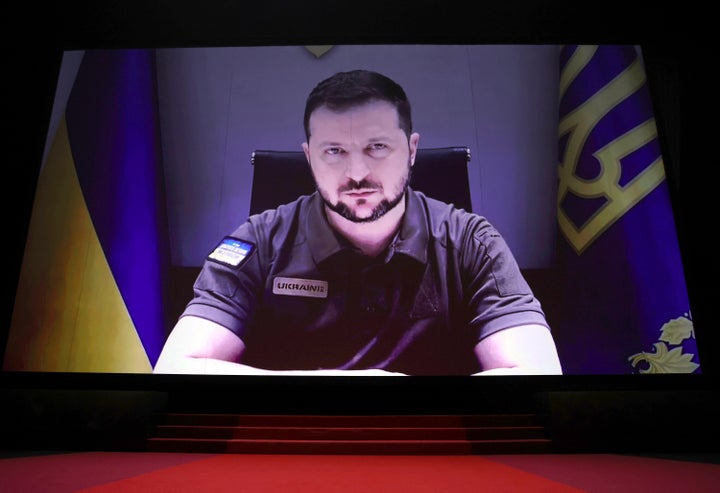
The 75th Cannes Film Festival kicked off Tuesday with a live satellite video address from Ukrainian President Volodymyr Zelenskyy.

May. 17, 2022, 04:09 PM EDT

President of Ukraine Volodymyr Zelenskyy appears via remote during the opening ceremony of the 75th international film festival, Cannes, southern France, Tuesday, May 17, 2022. (Photo by Vianney Le Caer/Invision/AP)

Tiếp tục đọc “Cannes Film Festival Opens With Zelenskyy Video Address”

Russians confirm they are hitting Ukrainian targets with banned cluster and phosphorus weapons 

news.yahoo.com

VALENTYNA ROMANENKO — SUNDAY, 15 MAY 2022, 14: 22

The Russian invaders confirm that they are using phosphorus and cluster weapons in Ukraine, which are prohibited by international conventions.

Source: another intercept of the invaders’ conversation by the Security Service of Ukraine

Details: These are particularly dangerous and inhumane types of weapons.

Tiếp tục đọc “Russians confirm they are hitting Ukrainian targets with banned cluster and phosphorus weapons ”

Five deadly weapons Russia is accused of using in Ukraine

thehill.com

Five deadly weapons Russia is accused of using in Ukraine

BY JORDAN WILLIAMS AND LAURA KELLY – 04/18/22 6:20 PM ET
Russia has been accused of using everything from so-called vacuum bombs to chemical weapons as it fights to overtake Ukraine.

Some of the worst weapons that Moscow has allegedly used are indiscriminate in their nature, prompting concerns about their impact on civilian populations from Ukrainian officials, the West, and human rights groups monitoring the war.

“There is deliberate targeting of civilian populations and noncombatants, which is against international law,” said John Erath, senior policy adviser for the Center for Arms Control and Nonproliferation. “And it really does not matter what type of weapon is being used. That is really bad.”

Here are five of the worst weapons Russia has been accused of using in its invasion. Tiếp tục đọc “Five deadly weapons Russia is accused of using in Ukraine”

Collective action to release oil stocks in response to Russia’s invasion of Ukraine: IEA confirms member country contributions

IEA.org

7 April 2022

Following an agreement on 1 April by IEA member countries for a new emergency release of oil stocks, the IEA Governing Board confirmed today that the total amount committed to date stands at 120 million barrels, making it the largest stock release in IEA history.

The unanimous agreement among IEA member countries on 1 April for a second collective action this year came in response to the significant strains in oil markets resulting from Russia’s invasion of Ukraine. In the days since the decision, each IEA member country has been considering how much it could contribute to the announced response plan, given its domestic circumstances.

The commitments submitted by members reached 120 million barrels to be released over a six month period, demonstrating strong unity. The United States will contribute about 60 million barrels, which are part of the larger drawdown from its Strategic Petroleum Reserve (SPR) that was announced on 31 March.

Tiếp tục đọc “Collective action to release oil stocks in response to Russia’s invasion of Ukraine: IEA confirms member country contributions”

From Russia, with trepidation: will China sign a new gas deal to feed its energy needs?

  • The Ukraine war is complicating the calculus of China’s energy security and the prospect of a new energy deal with Russia
  • Can Beijing afford to be close to a Moscow that is increasingly politically and economically isolated?
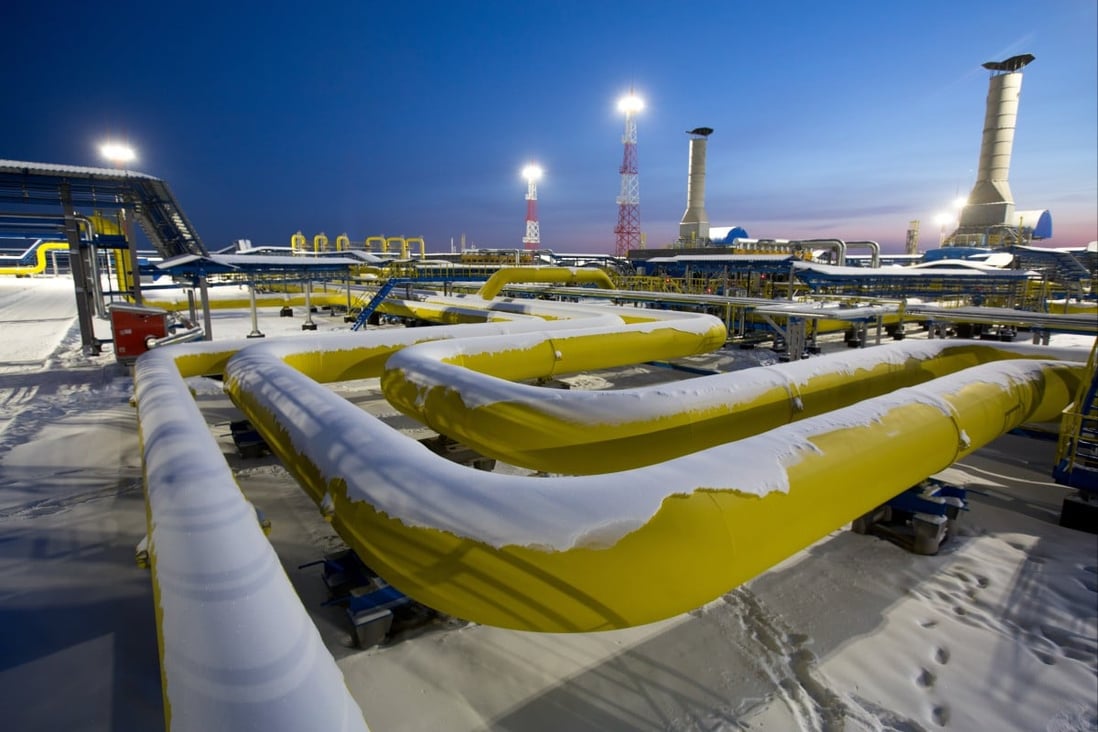
Snow covers sections of connected pipework at the Gazprom PJSC Atamanskaya compressor station, part of the Power Of Siberia gas pipeline extending to China, near Svobodny, in the Amur region, Russia, in 2019. Photo: Bloomberg

Snow covers sections of connected pipework at the Gazprom PJSC Atamanskaya compressor station, part of the Power Of Siberia gas pipeline extending to China, near Svobodny, in the Amur region, Russia, in 2019. Photo: Bloomberg

scmp.com

Two recent developments reveal the possibility of a new energy agreement between China and Russia. First, Russian gas giant Gazprom PJSC announced a contract to design the Soyuz Vostok pipeline across Mongolia towards China. Second, Beijing is reported to be discussing with its state-owned companies opportunities to buy stakes in Russian energy companies, and is also looking at a Power of Siberia 2 pipeline to China.

With the exit of international energy companies from Russia following its invasion of Ukraine, Germany’s decision to halt the certification process of the Kremlin-backed Nord Stream 2 pipeline, and rounds of sanctions on Russia, there are certainly new opportunities for the Chinese government and companies to strengthen their position in the Russian market.

However, even as domestic, regional and global factors may push China towards a new energy deal with Russia, Beijing could also face a range of challenges.

Firstly, Beijing’s ambition to be carbon-neutral by 2060 and replace much coal with gas is one of the most important domestic factors prompting China to further improve its relations with Russia.

Russian gas exports – whether liquefied natural gas or pipeline gas delivered through the original Power of Siberia, for example – would help China reduce greenhouse gas emissions as the country makes a green transition.

Secondly, the withdrawal of Western energy companies such as BP and Shell from Russia due to the Ukraine war creates opportunities for Chinese energy companies, especially state-owned ones, to invest in Russia and diversify their portfolio.

Thirdly, while China also imports gas from Turkmenistan, Russian gas is one of the cheapest options for Chinese consumers, making a new energy deal with Russia that much more attractive.

However, there could also be obstacles to such a deal. One problem could be the political and economic uncertainties now looming over Russia; the deterioration of the Russian business environment under current sanctions might discourage Chinese companies from investing in Russia.

Particularly, sanctions led by Washington seem to inspire caution in Beijing and Chinese companies. For example, the state-run Sinopec Group recently suspended talks about a major petrochemical investment and a gas marketing venture in Russia, apparently heeding a government call to tread carefully with Russian assets.

Tiếp tục đọc “From Russia, with trepidation: will China sign a new gas deal to feed its energy needs?”

6 killed by suspected wartime bomb explosion in central Vietnam

By Xuan Ngoc   August 18, 2017 | 02:53 pm GMT+7

6 killed by suspected wartime bomb explosion in central Vietnam

e.vnexpress.net_Police and curious people stand outside a house where an explosion killed six people in Khanh Hoa Province on Friday. Photo courtesy of Vietnam’s government news portal

Neighbors said the family had been trying to dismantle a bomb to sell as scrap metal.

Six members of a single family were killed in an explosion in the central province of Khanh Hoa on Friday morning.

Among the victims were three children. Another child was seriously injured and is receiving treatment.

Local witnesses said they rushed to the house after hearing the blast to find the roof had been blown off and the smell of explosives hanging in the air.

An official said the explosion might have been caused by ordnance left over from the war.

Local media reports cited the victims’ neighbors as saying that one member of the family had brought home a bomb that morning and they were cutting it open when it exploded.

Tiếp tục đọc “6 killed by suspected wartime bomb explosion in central Vietnam”

A Zen Master’s Advice On Coping With Trump

huffingtonpost_For HuffPost’s #LoveTakesAction series, we’re telling stories of how people are standing up to hate and supporting those most threatened. What will you stand up for? Tell us with #LoveTakesAction.

What can Zen Buddhism teach us about the art of effective activism in the wake of Donald Trump’s presidency?

Zen master Thich Nhat Hanh, who has been a social and environmental activist for more than 40 years, has said the most important thing for those feeling a sense of despair is to remember that meeting anger with more anger only makes matters worse.

The 90-year-old Vietnamese monk, who is considered to be one of the world’s leading spiritual teachers, is known for creating the idea of Engaged Buddhism, a method of linking mindfulness with social action.

His essential teaching on activism is that mindfulness gives people the ability to find peace in themselves so that their actions come from a place of compassion.

“Mindfulness must be engaged,” Hanh writes in his new book At Home in the World. “Once we see that something needs to be done, we must take action. Seeing and action go together. Otherwise, what is the point in seeing?”

“Nonviolence is not a set of techniques that you can learn with your intellect,” he goes on to say. “Nonviolent action arises from the compassion, lucidity and understanding you have within.”

Drawing from his own experience in seeking an end to the Vietnam War, Hanh writes that activists must learn to look after themselves if they are to be effective:

[I]f we don’t maintain a balance between our work and the nourishment we need, we won’t be very successful. The practice of walking meditation, mindful breathing, allowing our body and mind to rest, and getting in touch with the refreshing and healing elements inside and around us is crucial for our survival.

CHAIWAT SUBPRASOM / REUTERS
Thich Nhat Hanh.
Continue reading at huffingtonpost