Hàng nghìn trụ sở dư sau sắp xếp hành chính đang bị bỏ hoang, xuống cấp. Đồng thời, việc xử lý trụ sở chưa triệt để, còn dễ dẫn đến sử dụng sai mục đích hoặc tư nhân hóa gây thất thoát, lãng phí tài sản công và đất đai. Nếu được quy hoạch và chuyển đổi công năng hợp lý, các trụ sở này có thể phục vụ nhà ở xã hội, y tế, giáo dục hoặc các dịch vụ công cộng, vừa tiết kiệm chi phí, vừa phát triển kinh tế, đô thị và xã hội.
Hanoi and HCMC now proportionately more expensive than Singapore and Tokyo
HO CHI MINH CITY — To get by in Vietnam’s crowded, bustling capital Hanoi, university employee Nguyen Bich Ha shares a room with her husband and two kids that is 16.5 square meters in size, little bigger than a parking space for a car.
She wishes that the four of them could have a home of their own instead of living in a room in her husband’s parents’ house. She and her husband depend on the in-laws for help taking their children to and from school but sometimes disagree with them on issues related to bringing up the kids and the timing of meals.
“There isn’t much privacy either since there are many shared living spaces,” said Ha, 36. “And since it’s their house, we can’t make decisions on decoration or changes around the house.
The world is facing an unprecedented housing crisis. According to the latest UN-Habitat estimates, 318 million people are homeless, while 2.8 billion people—over a third of the global population—lack access to adequate housing. Behind these stark figures lie deep inequalities that undermine social progress and human dignity.
Adequate housing is more than shelter, it is a foundation for stability, health, education, and opportunity. Without a safe and secure home, individuals are more vulnerable to poverty, exclusion, and poor health outcomes. Homelessness also carries a heavy social cost, eroding trust, cohesion, and the potential for societies to thrive.
The housing challenge is global but manifests differently across contexts. In rapidly urbanizing regions, millions live in informal settlements or slums, where basic services are scarce and conditions unsafe. Today, 1.1 billion people live in such informal settlements, with 90 percent concentrated in Africa and Asia. Conflict, economic inequality, climate change, and natural disasters are major drivers of displacement and housing insecurity, pushing millions into precarious living conditions.
The urgency of the crisis was underlined at the UN-Habitat Assembly in Nairobi (29–30 May 2025), where Member States adopted the UN-Habitat Strategic Plan for 2026–2029. The plan places affordable housing, secure land tenure, and access to basic services at the heart of global priorities. Leaders called for bold and coordinated action, stressing that housing must be treated as a human right and a cornerstone of sustainable development.
The right to adequate housing is embedded in international human rights instruments and explicitly tied to the 2030 Agenda for Sustainable Development. Goal 11 commits the international community to make cities and human settlements inclusive, safe, resilient, and sustainable. Addressing homelessness and housing insecurity is therefore essential to achieving the SDGs and ensuring that no one is left behind.
Tackling homelessness and inadequate housing requires integrated strategies at local, national, and global levels:
Scaling up affordable housing initiatives through innovative financing, public-private partnerships, and policy reforms.
Expanding social protection systems to prevent families from falling into homelessness.
Investing in resilient housing solutions to adapt to the realities of climate change and disasters.
Strengthening community-based models such as cooperatives and housing associations that empower people to participate in shaping their own futures.
Homelessness is not inevitable. With coordinated action and commitment, the global community can reverse these trends. As the world prepares for the Second World Summit for Social Development in Doha, 4-6 November 2025, the message is clear: accelerating social progress requires that every person has access to a safe, secure, and dignified place to call home.
PGS. Trương Quang Thông– Đại học Kinh tế TPHCM (UEH)
Kinh nghiệm quốc tế cho thấy Việt Nam là ngoại lệ trong khu vực. Ở Trung Quốc, người mua căn hộ thứ hai phải đặt cọc tối thiểu 60-70% và trả lãi suất cao hơn 30% so với căn đầu tiên. Còn Hàn Quốc thì cấm hoàn toàn vay thế chấp để mua nhà thứ hai ở các “khu đầu cơ” (speculative zones). Đảo quốc Singapore áp dụng quy định “Loan-to-Value ratio” rất chặt chẽ, giới hạn 45% cho căn thứ hai và 35% cho căn thứ ba (Monetary Authority of Singapore, 2023).
(KTSG) – Giá nhà không chỉ phản ánh cung – cầu vật chất, mà còn là tấm gương phản chiếu của chính sách phân phối cơ hội. Khi tín dụng và thuế đều ưu ái người đã có tài sản, hệ thống trở nên bất công, và bất động sản trở thành nơi tích tụ rủi ro tài chính lẫn khủng hoảng niềm tin.
Nhà đất vẫn trở thành biểu tượng của thành công và nơi trú ẩn an toàn cho vốn tư nhân. Ảnh: N.K
Trong ba thập niên qua, Việt Nam đã chứng kiến những đợt tăng giá bất động sản mạnh nhất khu vực Đông Nam Á. Giá căn hộ tại trung tâm TPHCM và Hà Nội cao gấp 20-30 lần thu nhập bình quân năm của một người lao động có kỹ năng trung bình (World Bank, 2023). Mức chênh lệch này cao gấp 3 lần so với Thái Lan và gần gấp 4 lần so với Hàn Quốc trong những giai đoạn so sánh tương tự.
HCM CITY — The property industry in HCM City, and in fact the country in general, faces several problems that need urgent solutions, especially with regard to legal provisions.
Nguyễn Trọng Ninh, director of the Ministry of Construction’s housing and real estate market management department, admitted these regulations were not consistent because they were found in multiple laws.
Apartment buildings seen in Hoang Mai District, Hanoi. Photo by VnExpress/Nhat Quang.
Surging prices and a decline in the supply of affordable apartments are making it almost impossible for young Vietnamese to buy their first home.
Pham Hoai Nam used to think that being a grown-up means having a stable job, a good salary, a beautiful girlfriend, and his own house.
Now, at age 28, he is able to check off all of those items except the last one.
“My girlfriend and I plan to get married next year, and our only major concern now is finding a place to live,” Nam, who works as an electronics salesman in Hanoi, says.
He is among many young Vietnamese in major cities who are finding that their dream of owning a home is becoming increasingly elusive as real estate prices rise faster than incomes amid a decline in affordable apartment supply.
NĐT – TSKH-KTS. Ngô Viết Nam Sơn nhận định: “Xây nhà cao tầng dọc bờ sông khu Ba Son, Tân Cảng, Cảng Sài Gòn… sẽ tạo thành bức tường chắn gió thổi vào phía trong. Chắc chắn những công trình này xây xong thì các khu đất phía trong Sài Gòn sẽ ngày càng nóng hơn, không có gió, không thông thoáng, bị chắn tầm nhìn…”
Bạn nghĩ rằng nhà rơm dễ cháy, tạm bợ và mau hỏng?
Thực tế đang chứng minh điều ngược lại.
CT – Nếu trong câu chuyện cổ tích quen thuộc về ba chú heo con, ngôi nhà làm bằng rơm nhanh chóng bị thổi sập bởi con sói xấu xa, thì trong thực tế, rơm được nén thành từng kiện lại trở thành loại vật liệu xây dựng lý tưởng – kiên cố, bền, đẹp và rất tiết kiệm năng lượng. Tiếp tục đọc “Nhà rơm – Ngôi nhà tương lai”→
TP – Hàng trăm cây số bờ sông và bờ biển ĐBSCL đang bị sạt lở nghiêm trọng, mỗi năm cuốn trôi hàng trăm, thậm chí hàng nghìn héc-ta đất. Đang mất dần nơi được mệnh danh cánh đồng Đông Nam Á, hằng năm sản xuất 24-25 triệu tấn lúa (xuất khẩu 6-8 triệu tấn gạo) và 1,2 triệu tấn cá tra, 500.000 tấn tôm chủ yếu chế biến xuất khẩu.
Đê biển bị sóng đánh tan ở huyện Duyên Hải, tỉnh Trà Vinh. Ảnh: Sáu Nghệ
Như thường lệ, sáng sớm, cậu học sinh lớp 5 Đinh Hoàng Hưng đạp xe trên đường Võ Tánh dọc bờ sông Cần Thơ để đến trường. Con đường thuộc phường Lê Bình (Cái Răng, Cần Thơ) mới được tráng nhựa, nhảy nhót ánh bình minh cùng chợ nổi Cái Răng kề bên. Đột ngột, con đường rùng mình nứt gãy và tụt xuống. Tiếp tục đọc “Mất dần cánh đồng Đông Nam Á”→
TP – Bãi bồi ven biển, cồn cát, kênh mương ăn thông ra biển thành cụm dân cư cơ cực, bêu mạng sống với sóng biển, với rắn độc ven rừng. Đất chật, người đông, người dân từ đất liền kiếm sống lấn dần về phía biển, rồi dừng chân, dựng lều, cất chòi thành xóm làng heo hút ven rừng phòng hộ, chơi vơi trước biển mênh mông.



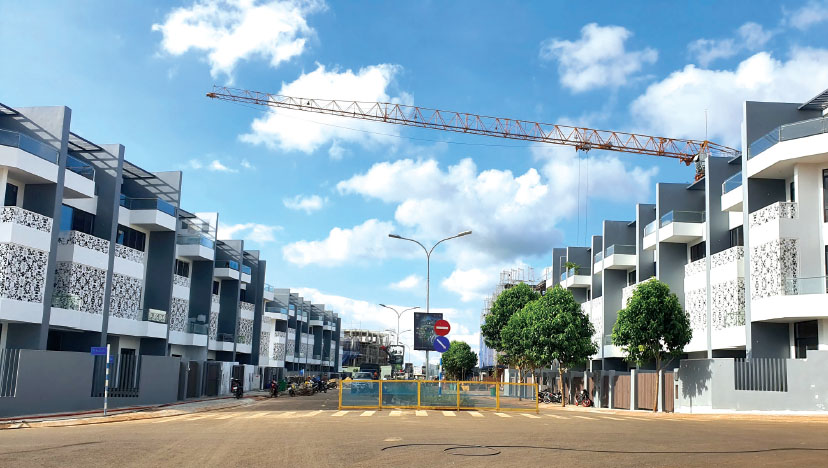
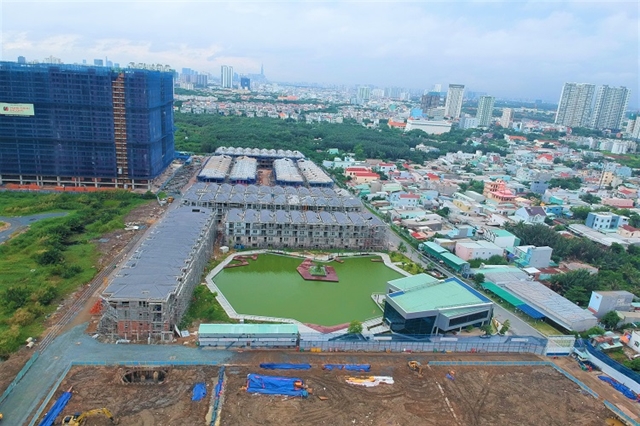 A housing project in HCM City. — VNA/VNS Photo


 CVD
CVD 