
Use “settings” to turn on English subtitle
Thẻ: US foreign policy
Secretary Blinken’s Meeting with Japanese Foreign Minister Kamikawa And Philippine Secretary of Foreign Affairs Manalo

READOUT
SEPTEMBER 22, 2023
The below is attributable to Spokesperson Matthew Miller:
Secretary of State Antony J. Blinken, Japanese Foreign Minister Kamikawa Yoko, and Philippine Secretary of Foreign Affairs Enrique Manalo held a trilateral meeting today in New York during the UN General Assembly High-Level Week.
Tiếp tục đọc “Secretary Blinken’s Meeting with Japanese Foreign Minister Kamikawa And Philippine Secretary of Foreign Affairs Manalo”The Consequences of Divided Government for U.S. Foreign Policy
| The Water’s Edge January 4, 2023, Council on Foreign Relations |
by James M. Lindsay  President Joe Biden delivers his first State of the Union address to a joint session of Congress in March 2022. Chip Somodevilla/REUTERS |
| Council on Foreign Relations 58 East 68th Street – New York, NY 10065 | | | | Forward This Email Manage Your Email Preferences |
Divided government is back! After two years of Democratic control of the presidency and both houses of Congress—just barely in the case of the Senate—the 118th Congress that opened yesterday puts Republicans in charge of the U.S. House of Representatives. A single party has controlled the White House and Congress only three times in the last three decades.
So what will divided government mean for U.S. foreign policy? Here are three things to watch. Tiếp tục đọc “The Consequences of Divided Government for U.S. Foreign Policy”
US Dept. of Treasury Report to Congress (Nov. 2022): Macroeconomic and Foreign Exchange Policies of Major Trading Partner of the United States
Excerpt on Vietnam
Treasury Conclusions Related to the 2015 Act
Vietnam has been removed from the Monitoring List, having only met one of the three criteria over the four quarters through June 2022 as it had in the June 2022 Report for the four quarters through December 2021. Vietnam had previously exceeded the thresholds for all three criteria as noted in the December 2021, April 2021, and December 2020 Reports, in each of which Treasury conducted enhanced analysis of Vietnam. In early 2021, Treasury commenced enhanced bilateral engagement with Vietnam in accordance with the 2015 Act. As a result of discussions through the enhanced engagement process, Treasury and the State Bank of Vietnam- (SBV) reached agreement in July 2021 to address Treasury’s concerns about Vietnam’s currency practices.5 Treasury continues to engage closely with the SBV to monitor Vietnam’s progress in addressing Treasury’s concerns and remains satisfied with the progress made by Vietnam.
Treasury Analysis under the 1988 and 2015 Legislation
This Report assesses developments in international economic and exchange rate policies over the four quarters through June 2022. The analysis in this Report is guided by Sections 3001-3006 of the Omnibus Trade and Competitiveness Act of 1988 (1988 Act) (codified at 22 U.S.C. §§ 5301-5306) and Sections 701 and 702 of the Trade Facilitation and Trade Enforcement Act of 2015 (2015 Act) (codified at 19 U.S.C. §§ 4421-4422), as discussed in Section 2 of this Report.
Under the 2015 Act, Treasury is required to assess the macroeconomic and exchange rate policies of major trading partners of the United States for three specific criteria. Treasury sets the benchmark and threshold for determining which countries are major trading partners, as well as the thresholds for the three specific criteria in the 2015 Act. In this Report, Treasury has reviewed the 20 largest U.S. trading partners3 against the thresholds Treasury has established for the three criteria in the 2015 Act:
(1) A significant bilateral trade surplus with the United States is a goods and services trade surplus that is at least $15 billion.
(2) A material current account surplus is one that is at least 3% of GDP, or a surplus for which Treasury estimates there is a material current account “gap” using Treasury’s Global Exchange Rate Assessment Framework (GERAF).
(3) Persistent, one-sided intervention occurs when net purchases of foreign currency are conducted repeatedly, in at least 8 out of 12 months, and these net purchases total at least 2% of an economy’s GDP over a 12-month period.4
The new [US] National Security Strategy in the context of an unstated “cold war”
By John Hemmings, Pacific Forum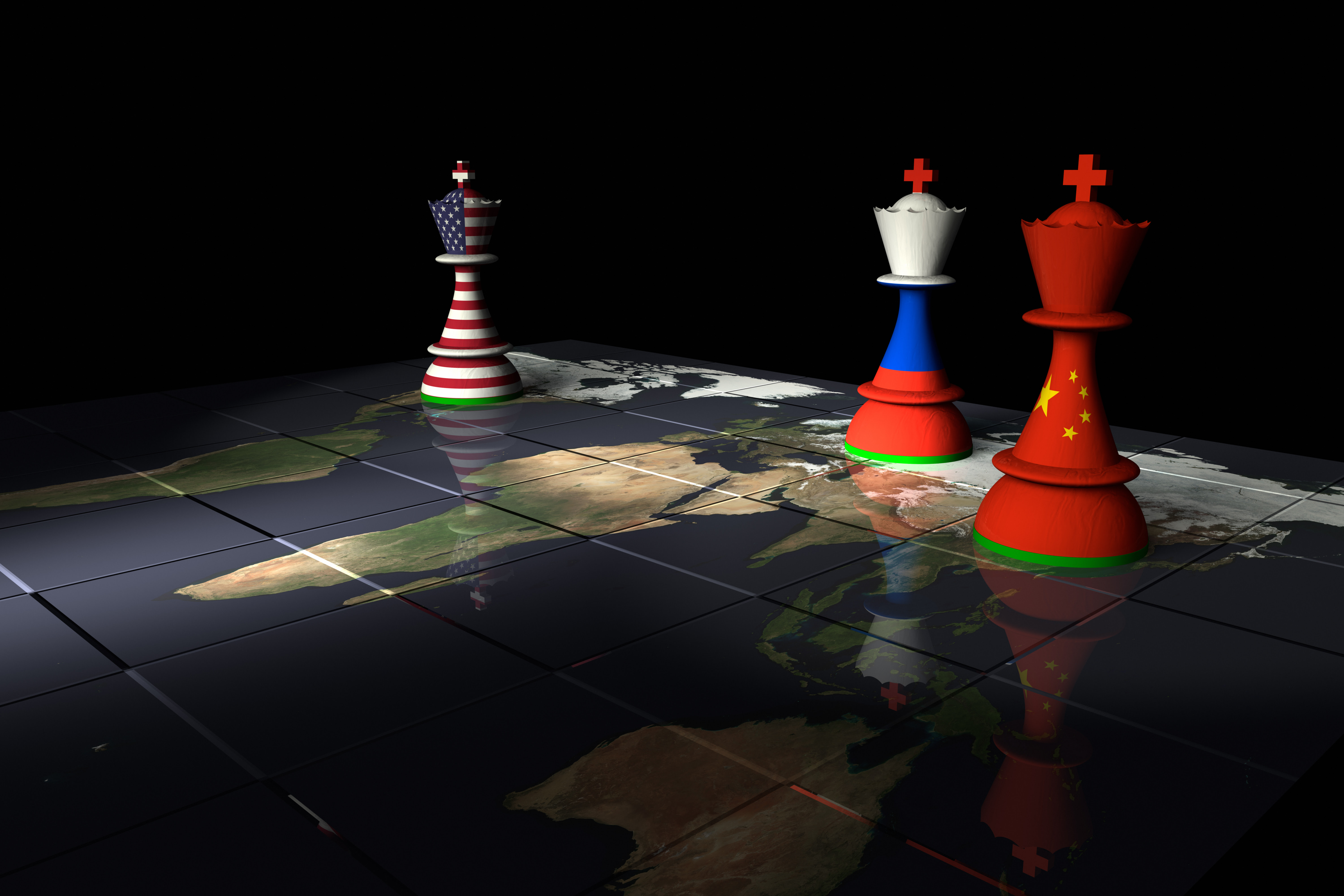
John Hemmings (john@pacforum.org) is Senior Director of the Indo-Pacific Foreign and Security Policy Program at the Pacific Forum.
The Biden administration released America’s new National Security Strategy (NSS) on Oct. 12. For those who read such documents regularly, there were few surprises. Values were mentioned in the context of the United States’ position in the world and vis-a-vis perceived adversaries, such as Russia, Iran, and the People’s Republic of China, while the administration’s lines of effort were laid out in a typical ends, ways, and means format. There were also sections on each region of the world, where the strategies laid out a bit more context.
Tiếp tục đọc “The new [US] National Security Strategy in the context of an unstated “cold war””
2022 Survey of Public Opinion on US Foreign Policy
October 20, 2022 The Chicago Council on Global Affairs
RESEARCHPUBLIC OPINION SURVEY BY DINA SMELTZ , IVO H. DAALDER , KARL FRIEDHOFF , CRAIG KAFURA , AND EMILY SULLIVAN
On some of the most significant issues of the day, including how the United States should respond to Russia’s invasion of Ukraine, Americans across party lines are in agreement, albeit often for different reasons.
Tiếp tục đọc “2022 Survey of Public Opinion on US Foreign Policy”U.S. Strategy to Prevent Conflict and Promote Stability
US State Department – Bureau of Conflict and Stabilization Operations
Message from the Secretary of State
The United States is committed to strengthening global resiliency and democratic renewal, and promoting peaceful, self-reliant nations that become strong economic and security partners capable of addressing shared challenges. To that end, the U.S. Government is moving forward in the spirit of partnership with Haiti, Libya, Mozambique, Papua New Guinea, and five countries in the Coastal West Africa region (Benin, Côte d’Ivoire, Ghana, Guinea, and Togo) to implement the ten-year U.S. Strategy to Prevent Conflict and Promote Stability.
Tiếp tục đọc “U.S. Strategy to Prevent Conflict and Promote Stability”Remarks by President Biden Before the 76th Session of the United Nations General Assembly
SEPTEMBER 21, 2021
United Nations Headquarters
New York, New York
10:01 A.M. EDT
THE PRESIDENT: Mr. President, Mr. Secretary-General, my fellow delegates, to all those who dedicate themselves to this noble mission of this institution: It’s my honor to speak to you for the first time as President of the United States.
We meet this year in a moment of — intermingled with great pain and extraordinary possibility. We’ve lost so much to this devastating — this devastating pandemic that continues to claim lives around the world and impact so much on our existence.
Tiếp tục đọc “Remarks by President Biden Before the 76th Session of the United Nations General Assembly”How America Can Win the Middle East
Beijing’s forays in the region present Washington with a test—and an opportunity.
By Kim Ghattas
SEPTEMBER 4, 2021
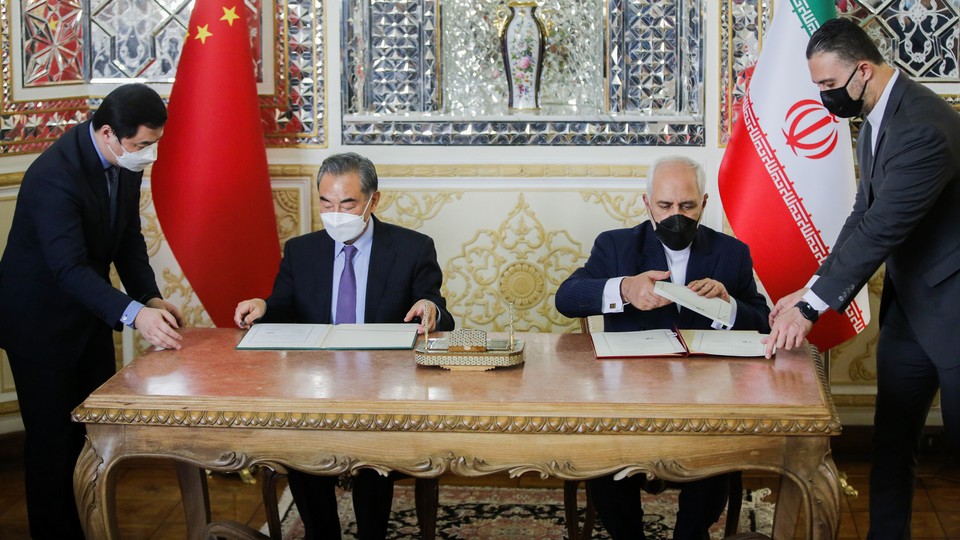
Since taking office, President Joe Biden has talked repeatedly about competition with China. To fight off Beijing and other autocracies, he has said, democracies must uphold their values. He has talked much less about the Middle East in that time, and although he has never phrased it in so many words, Biden appears to be trying to deprioritize a region that he believes has consumed too much of America’s attention and resources.
Tiếp tục đọc “How America Can Win the Middle East”President Biden addresses the American people after Afghanistan falls to Taliban — 8/16/21
Congressional Research Service: U.S.-China Strategic Competition in South and East China Seas: Background and Issues for Congress (Aug. 4, 2021)
U.S., China trade barbs at U.N. over South China Sea


U.S. Secretary of State Antony Blinken speaks to the media prior a meeting with Ukrainian Foreign Minister Dmytro Kuleba at the State Department in Washington, DC, U.S. August 5, 2021. Saul Loeb/Pool via REUTERS
NEW YORK, Aug 9 (Reuters) – U.S. Secretary of State Antony Blinken called out bullying in the South China Sea on Monday and warned the U.N. Security Council that a conflict “would have serious global consequences for security and for commerce,” sparking a strong rebuke from China.
The South China Sea has become one of many flashpoints in the testy relationship between China and the United States, with Washington rejecting what it calls unlawful territorial claims by Beijing in the resource-rich waters.
Tiếp tục đọc “U.S., China trade barbs at U.N. over South China Sea”The Princeton Project: Forging a World of Liberty under Law – US National Security in the 21st Century
| FINAL REPORT | ||||
 | About Us Final Report Conferences Readings & Resources Working Groups Working Papers ContactHome |  |  | Final Report Forging a World of Liberty Under Law, U.S. National Security In The 21st Century, G. John Ikenberry and Anne-Marie Slaughter Final Report Executive Summary – Chinese Working Group Reports Event Calendar Media Inquiries |
Remarks by President Trump Announcing Normalization of Relations Between Sudan and Israel
FOREIGN POLICY, The White House
Issued on: October 23, 2020
Oval Office
11:34 A.M. EDT
PRESIDENT TRUMP: (In progress) …on the phone, we have some terrific people: Chairman Abdel al-Burhan and Prime Minister Abdalla Hamdok of Sudan — a beautiful part of the world; and Prime Minister Benjamin Netanyahu — I think you mostly know him. You perhaps heard of him somewhere. We have the very highly sophisticated press. I think they may have heard of him, of Israel. So I want to just congratulate all of you.
The State of Israel and the Republic of Sudan have agreed to make peace. This is for many, many years they’ve been at odds, to put it nicely, and to normalize their relations. This will be the third country where we’re doing this. And we have many, many more coming. We have — they’re coming at us hot and heavy.
In the coming weeks, they will meet to negotiate cooperation agreements. You saw that happen with UAE and Bahrain recently in agriculture, technology, aviation, migration, and other critical areas.
WASHINGTON TRIES PULLING ECONOMIC LEVERS IN THE SOUTH CHINA SEA
BY GREGORY POLING AND ZACK COOPER | AUGUST 28, 2020
AMTI UPDATE CSIS
This week, the U.S. government for the first time imposed economic penalties on Chinese businesses for their behavior in the South China Sea. The Commerce Department placed 24 Chinese companies on the Entity List. The list restricts exports of certain goods to companies and individuals that threaten U.S. national security or foreign policy priorities. According to Commerce Secretary Wilbur Ross, the 24 companies (22 of which are state-owned enterprises) were selected because they “played a significant role” in China’s construction of artificial bases in the Spratly Islands. The State Department, meanwhile, announced that it would not issue visas to Chinese nationals “responsible for, or complicit in, either the large-scale reclamation, construction, or militarization of disputed outposts in the South China Sea, or the PRC’s use of coercion against Southeast Asian claimants to inhibit their access to offshore resources.”
Tiếp tục đọc “WASHINGTON TRIES PULLING ECONOMIC LEVERS IN THE SOUTH CHINA SEA” CVD
CVD 