Châu Âu chìm trong khủng hoảng năng lượng. Các công ty châu Âu đang dần chuyển hướng sang Mỹ. Người Mỹ thì lợi dụng điều này để bán khí thiên nhiên hóa lỏng (LNG) cho châu Âu với giá cao.
Không còn lựa chọn nào khác, châu Âu đang bắt đầu xây dựng các bến cảng lớn để tiếp nhận hàng từ Mỹ. Thế nhưng, sau đó, Mỹ tuyên bố đình chỉ các dự án LNG và sẽ không cung cấp cho châu Âu trong những năm tới.
Tổng thống Mỹ Joe Biden ngày 26/1 công bố lệnh tạm dừng xây dựng các kho cảng xuất khẩu LNG mới. Theo dữ liệu do tổ chức quốc tế Cedigaz công bố, trong năm 2023, Mỹ là nước xuất khẩu LNG hàng đầu thế giới. Theo Nhà Trắng, khoảng một nửa lượng xuất khẩu LNG vào năm 2023 được xuất khẩu sang châu Âu, do lục địa này đã chấm dứt việc nhập khẩu khí đốt của Nga kể từ khi nổ ra cuộc xung đột tại Ukraine.
The Biden administration took office with the intention of making partnership with Europe a central element of its China strategy. This paper assesses what has been achieved in the first year of these efforts, and what to expect in 2022. Despite some of points of contention, such as the disputes over the security pact between Australia, the United Kingdom, and the United States (AUKUS), European and US officials ended the year in a more optimistic place on the transatlantic China and Indo-Pacific agendas than they were at the start. Over the course of 2021, the two sides put in place new structures—from the EU-US Trade and Technology Council (TTC) to the Indo-Pacific high-level consultations—that have helped to get the right issues on the table and pushed their bureaucracies to deal with each other in ways that they had not before. Instead of a thin layer of periodic dialogues on China, there is an increasingly thick web of interactions, from working-level groups in different policy areas to leader-level exchanges. The EU and the United States also removed many of the obstacles to their joining forces more effectively on economic goals, particularly with the deal on steel and aluminum tariffs. Meanwhile, without raising excessively high expectations of a new coalition government that will not depart radically from its predecessor, the change in Berlin should also provide a stronger basis for cooperation on China than was present during the final phase of Chancellor Angela Merkel’s government.
All this needs to be translated into results this year. The gap between the EU and the United States is less in their analysis of China and more in the level of urgency with which they treat the challenge. Where the United States is in the process of making China the animating factor for its grand strategy, Europe is not, and the crisis with Russia will not make it likelier in the months ahead. Yet the actor that has done most to narrow the urgency gap between Europe and the United States has been China. Much as its escalatory sanctions in 2021 derailed its contentious Comprehensive Agreement on Investment with the EU, Beijing’s treatment of Lithuania is helping to expedite European plans to address economic coercion and supply-chain risks that might otherwise have taken years.
Economic coercion is one of several issues that are a priority for EU-US cooperation this year. The transatlantic agenda on China and the Indo-Pacific is a very expansive one and, although there is value to this breadth, the two sides will need to pick a few areas that merit an additional political push. While in an ideal world these would all be positive-sum efforts, such as aligning their infrastructure finance initiatives to compete more effectively with China’s Belt and Road Initiative (BRI), Europe and the United States will unavoidably have to deal with the sharp edges of Chinese power too. In all these efforts, the transatlantic agenda is only one component of a wider framework of cooperation that also involves their major partners in the Indo-Pacific. From the Quad to the TTC, one of the key goals for this year will be for these allies to stitch their efforts together with a view to driving outcomes rather than creating even more complex consultation structures.
There are also long-running goals for the United States and Europe that transcend administrations. There were striking shifts between the Obama, Trump, and Biden administrations but there has been more underlying consistency in what both sides need from each other in dealing with the China challenge than in many other policy fields. Considerable long-term planning is possible regardless of the potential political oscillations in the years ahead.
TTCT – Ca khúc In the year 2525 (Vào năm 2525) ra mắt năm 1968 của bộ đôi người Mỹ Zager và Evans có đoạn: “Nếu quý ông còn sống, quý bà còn sống… sẽ là nhờ máy móc đó”. Có ai ngờ từ năm 2020 này, lời dự báo đấy đã thành sự thật!
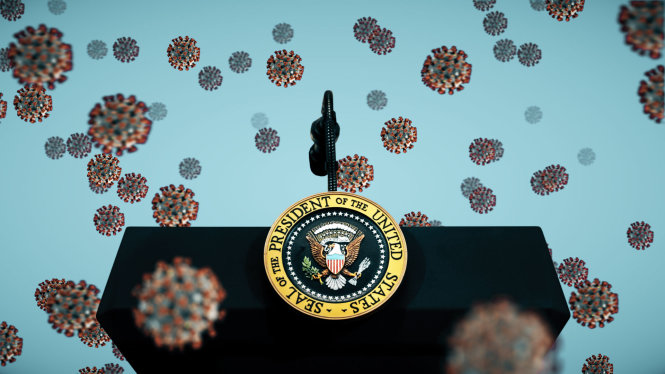
Một cuộc chiến khác của tổng tư lệnh Donald Trump Ảnh: Getty Images
Làm thế nào mà từ ca nhiễm đầu tiên được ghi nhận tại Mỹ hôm 20-1 – một phụ nữ 35 tuổi về từ Vũ Hán trước đó năm ngày, chín ngày sau lực lượng đặc nhiệm chống dịch đã được nhanh chóng thành lập (29-1), hai ngày sau nữa ban bố tình trạng khẩn cấp (31-1), mà đúng hai tháng sau, Tổng thống Donald Trump phải đọc một đoạn văn tế cho sức mạnh kinh tế và khoa học vĩ đại của Hoa Kỳ? Tiếp tục đọc “Một cuộc chiến khác của tổng tư lệnh Donald Trump”→
Có lẽ đã rất lâu rồi, ít nhất là kể từ khi Tổ chức Thương mại Thế giới (WTO) được thành lập từ cách đây hơn 3 thập kỷ, thậm chí kể từ khi Hiệp định thương mại mậu dịch tự do (GATT) năm 1947 đến nay, thương mại toàn cầu mới lại rơi vào tình huống nước sôi lửa bỏng như hiện nay mà không phải vì một cuộc khủng hoảng kinh tế hay tài chính nào.
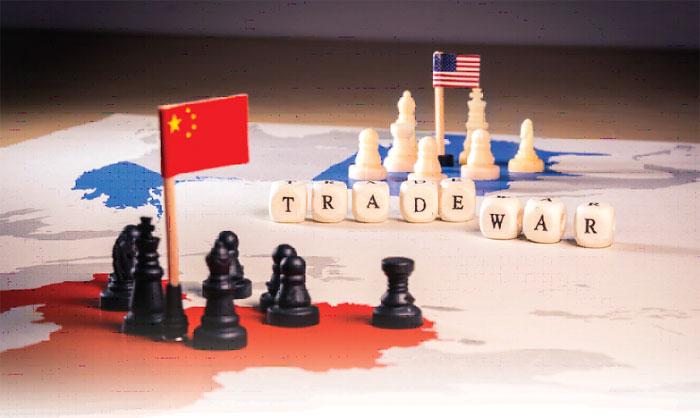
Cuộc chiến thương mại mà nước Mỹ của Tổng thống Donald Trumps khởi xướng mỗi lúc một diễn biến phức tạp. Ban đầu, “cuộc chiến” tưởng như có vẻ rất hỗn loạn với những hành động bất ngờ, những quyết định đâm bị thóc chọc bị gạo khắp nơi của “kẻ khởi xướng”, và những phản ứng lúng túng, đầy bức xúc của “người chịu trận”. Thực tế, chuyện dường như không phải vậy. Qua thời gian, xâu chuỗi các sự kiện, người ta bắt đầu nhìn thấy những đường hướng ngày càng rõ nét, mục tiêu cũng như logic hành động của mỗi bên.
Nhận thức được điều này một mặt giúp người ta nhìn rõ hơn bức tranh chiến lược của mỗi Bên. Mặt khác nó mang đến một tin không vui: Dường như cuộcchiến này có thể sẽ dài lâu hơn dự đoán, những hệ quả của cuộc chiến thậm chí còn có thể ảnh hưởng tới thương mại thế giới nhiều năm sau này.Tiếp tục đọc “Thử nhận diện những lá bài của mỗi bên trong cuộc chiến thương mại hiện nay”→
TTCT – Nước Mỹ dưới triều Tổng thống Donald Trump đã “tuyên chiến” với Huawei và liên tục kêu gọi các nước khác, nhất là đồng minh của Washington, cũng cấm cửa hãng công nghệ viễn thông hàng đầu Trung Quốc. Vì đâu nên nỗi?
Cả thế giới lo ngại “gián điệp số” đánh cắp công nghệ từ Trung Quốc
Huawei là một công ty sản xuất chip giá rẻ cho các nhà cung cấp thiết bị viễn thông lớn nhất thế giới trước khi phát triển không ngừng và vươn vai thành gã khổng lồ công nghệ Trung Quốc. Tiếp tục đọc “Làn sóng phản đối bủa vây Huawei”→



 CVD
CVD 