Quand le Vietnam tirera-t-il profit du duel sino-américain?

15/04/2019 10:40 lecourrier
Dans les medias, lorsque l’on évoque le conflit commercial sino-américain, on parle beaucoup d’une délocalisation massive d’usines de la Chine vers le Vietnam. De bons taux de croissance et de faibles coûts de production permettront au Vietnam de tirer les marrons du feu.
>>Ralentissement attendu par le FMI pour 70% de l’économie mondiale cette année
>>L’économie vietnamienne devrait croître de 6,7 à 6,9% en 2019
>>Pékin cherche une “solution constructive” aux tensions commerciales

Le site américain Bloomberg a estimé que le Vietnam pourrait être le “grand gagnant’’ du conflit commercial entre la Chine et les États-Unis, évoquant plusieurs raisons qui rendent le pays très attractif aux yeux des investisseurs étrangers. “Dans la course pour attirer les entreprises à la recherche de sites alternatifs dans la guerre commerciale américano-chinoise, le Vietnam dispose de nombreux avantages par rapport à ses concurrents’’, a-t-il écrit.

Le Vietnam est sur le point de conquérir une partie des parts de marché mondial de la Chine dans le secteur manufacturier à forte besoin de main-d’œuvre, a analysé Trinh Nguyên, économiste senior chez Natixis à Hong Kong (Chine).
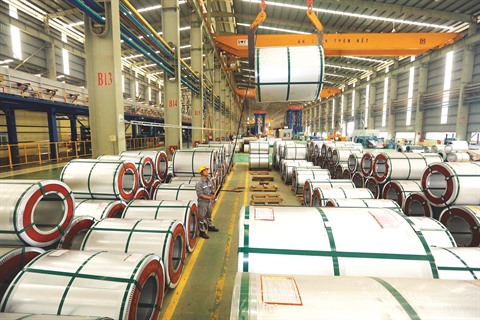
La forte croissance économique et la stabilité politique constituent de grands atouts du Vietnam. Photo: Danh Lam/VNA/CVN

Le Vietnam pourra-t-il absorber l’afflux d’IDE?

Selon Bloomberg, le Vietnam profitera de ces tensions commerciales pour renforcer son statut de plaque tournante de la production (atelier du monde) et de l’exportation, vendant toutes sortes de produits, des plus basiques aux plus technologiques. Le commerce représente environ le double du PIB, soit plus que tout autre pays d’Asie, à l’exception de Singapour. Tiếp tục đọc “Quand le Vietnam tirera-t-il profit du duel sino-américain?”

“U.S., China agree on trade war ceasefire after Trump, Xi summit”

CSIS
Reuters“China and the United States agreed to a ceasefire in their bitter trade war on Saturday after high-stakes talks in Argentina between U.S. President Donald Trump and Chinese President Xi Jinping, including no escalated tariffs on Jan. 1.”

“Trump will leave tariffs on $200 billion worth of Chinese imports at 10 percent at the beginning of the new year, agreeing to not raise them to 25 percent ‘at this time’, the White House said in a statement.” Tiếp tục đọc ““U.S., China agree on trade war ceasefire after Trump, Xi summit””

US – China Trade War info

  • Findings of the investigation into China’s acts, policies, and practices related to technology transfer, intellectual property, and innovation under Section 301 of the Trade Act of 1974 (Office of US Trade Representative, March 22, 2018)

    Download at USTR site, at CVD

  • Update concerning China’s Acts, policies and practices related to technology transfer, intellectual property, and innovation (Office of US Trade Representative, Nov. 20, 2018)

    Download at USTR site, at CVD

  • China White Paper: The Facts and China’s Position on China-US Trade Friction (Information Office, China State Council, Sept. 28, 2018)

    Read on China Daily, Download from CVD

  • Trump’s Trade War Timeline: An Up-to-Date Guide (Peterson Institute for International Economics)

    Read here

Trump and Xi Park Trade War—For Now

FP
But the U.S. president raises new uncertainties over the fate of the trade deal with Mexico and Canada.

U.S. President Donald Trump, Chinese President Xi Jinping, and top officials reached a truce in the trade war over dinner at the G-20 summit in Buenos Aires on Dec. 1. (Saul Loeb/AFP/Getty Images)

U.S. President Donald Trump, Chinese President Xi Jinping, and top officials reached a truce in the trade war over dinner at the G-20 summit in Buenos Aires on Dec. 1. (Saul Loeb/AFP/Getty Images)

As widely expected, U.S. President Donald Trump paused his trade war with China at the G-20 summit in Argentina this weekend, halting the imposition of new tariffs for 90 days while the two countries continue talking about the wider irritants in the trade relationship. But Trump also threw a cloud over the future of the new NAFTA, threatening to pull out of the existing three-way North American trade deal altogether if Congress doesn’t ratify the renegotiated accord. Tiếp tục đọc “Trump and Xi Park Trade War—For Now”

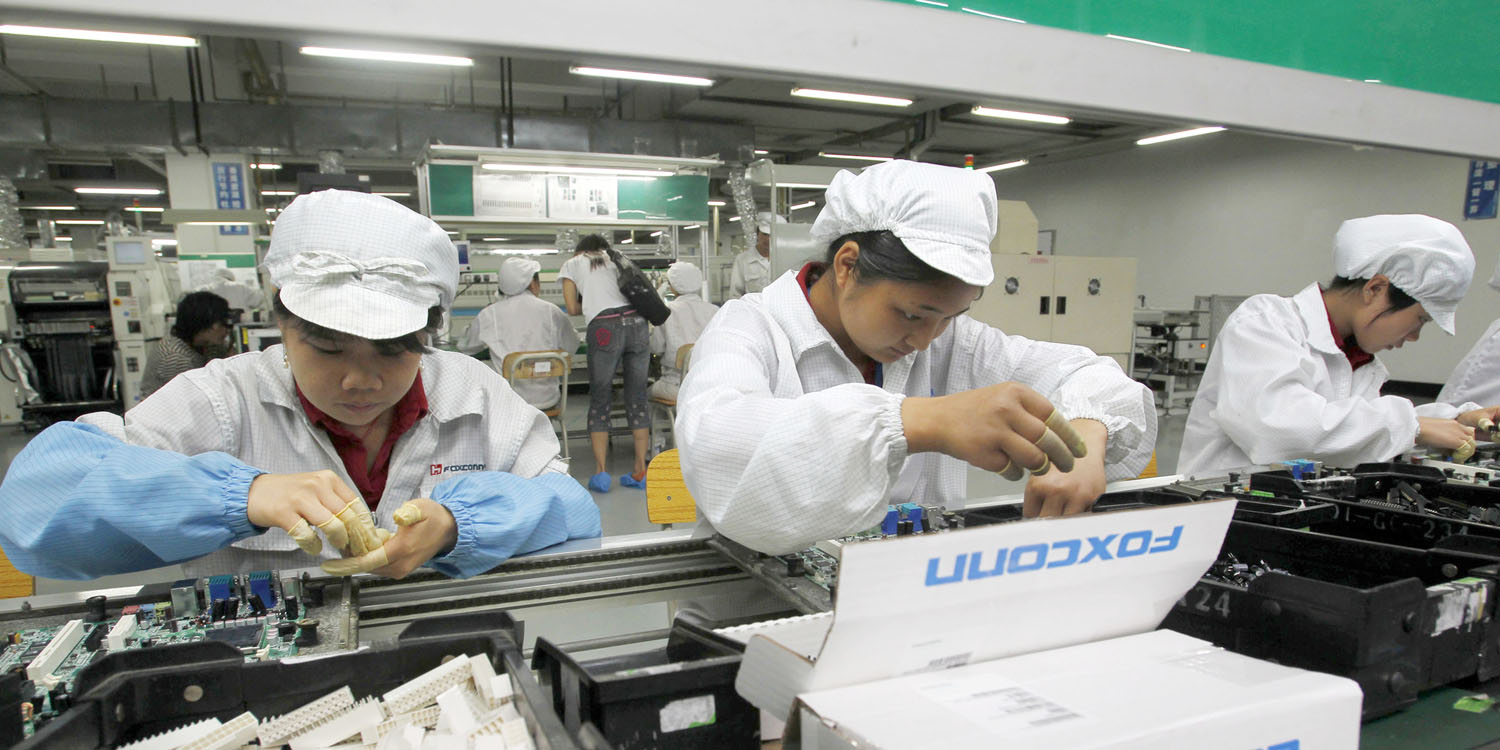
Foxconn considering iPhone factory in Vietnam as China trade war uncertainty continues

Apple’s biggest supply chain partner, Foxconn, is looking to start a new facility in Vietnam as a way to hedge against instability and uncertainty in its current production facilities due to the ongoing trade war between China and the US. Tiếp tục đọc “Foxconn considering iPhone factory in Vietnam as China trade war uncertainty continues”

China blames ‘excuses’ for APEC discord, as US ties sour again

channelnewsasia

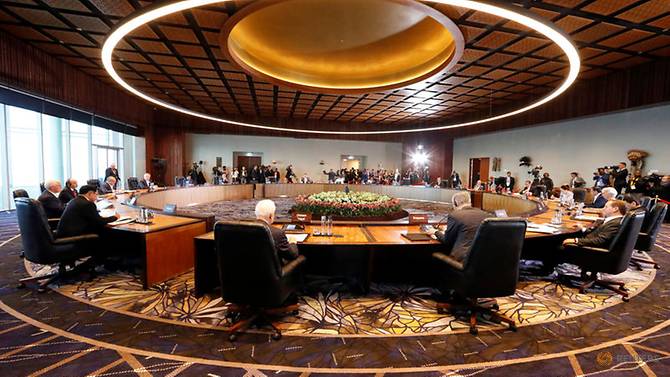
A major Asia-Pacific summit’s failure to agree on a communique resulted from certain countries “excusing” protectionism, a top Chinese diplomat said, in a veiled criticism of Washington that further sours the tone of China-U.S. ties ahead of a G20 meet.


Leaders attend the retreat session of the APEC Summit in Port Moresby, Papua New Guinea November 18, 2018. REUTERS/David Gray

BEIJING: A major Asia-Pacific summit’s failure to agree on a communique resulted from certain countries “excusing” protectionism, a top Chinese diplomat said, in a veiled criticism of Washington that further sours the tone of China-U.S. ties ahead of a G20 meet. Tiếp tục đọc “China blames ‘excuses’ for APEC discord, as US ties sour again”

China’s Top Economic Official Braces for Possible Trade War

Liu He in Beijing in 2010. As the top economic adviser to China’s president, Xi Jinping, Mr. Liu has sought to make China’s growth less reliant on rising debt and public spending. Credit Nelson Ching/Bloomberg

BEIJING — Over the last year, Liu He, a soft-spoken, American-educated technocrat, has consolidated his status as President Xi Jinping’s top economic adviser, amassing influence that some believe rivals that of the prime minister.

But as his star has climbed, Mr. Liu has struggled to overcome resistance to a program of measured economic liberalization and more open markets that he argues is critical to China’s long-term economic health — and that is generally favored by Washington.

Now, as President-elect Donald J. Trump prepares to enter the White House renewing warnings of China’s economic menace, it will be even more difficult for Mr. Liu to achieve his agenda, which could be overwhelmed by fears of fallout from a trade war.

There is little in his public record to suggest precisely how he would advise Mr. Xi to handle Mr. Trump’s threats to raise tariffs on Chinese products.

Continue reading on New York Times