In memoriam: Saleemul Huq (1952-2023) – “For three decades, Huq was arguably the foremost champion of poorest countries in UN climate negotiations”

This short film pays tribute to professor Saleemul Huq, an environmental and climate change giant who died on 28 October 2023.

Professor Saleemul Huq OBE (1952-2023)

Following the passing of Professor Saleemul Huq, senior fellow of IIED. This book of remembrance is open to all who wish to share their memories of Saleem.

Article, 29 October 2023

Head and shoulders photo of Saleemul Huq.

Professor Saleemul Huq was an environmental and climate change giant and senior fellow and dear friend of IIED and many IIED colleagues past and present.

Director of the International Centre for Climate Change and Development (ICCCAD) and a senior associate of IIED, he was awarded an OBE by the Queen in the 2022 New Year’s Honours List for his services to combating international climate change.

The honour was awarded in recognition of his work to build climate expertise in Bangladesh, the UK and across the world. 

Saleem was an expert on the links between climate change and sustainable development, particularly from the perspective of vulnerable developing countries. A constant voice for climate action and justice for the global South, he was the lead author of chapters in the third, fourth and fifth assessment reports of the Intergovernmental Panel on Climate Change. Huq’s work with the IPCC spanned 1997 to 2014 and he contributed to reports that led to the panel being awarded the Nobel Peace Prize in 2007.

A professor at the Independent University, Bangladesh, and an advisor to the Least Developed Countries (LDC) Group of the UNFCCC, Huq published hundreds of scientific as well as popular articles and was named by Nature in 2022 as one of its top 10 scientists

He set up the climate change research group at IIED in 2000 and was its initial director – continuing as a senior fellow until 2021 – and worked across the institute to ensure climate was at the heart of all that IIED did. 

IIED executive director Tom Mitchell said: “I would like to offer my deepest sympathy and condolences to Saleem’s family and loved ones on behalf of IIED. There was no one quite like Saleem and I will remember his unique combination of warmth, generosity of spirit, academic prowess and enormous standing in climate science. 
Tiếp tục đọc “In memoriam: Saleemul Huq (1952-2023) – “For three decades, Huq was arguably the foremost champion of poorest countries in UN climate negotiations””

UN Environment Head: Asia Must Lead Charge for Pollution-free Planet

VOA


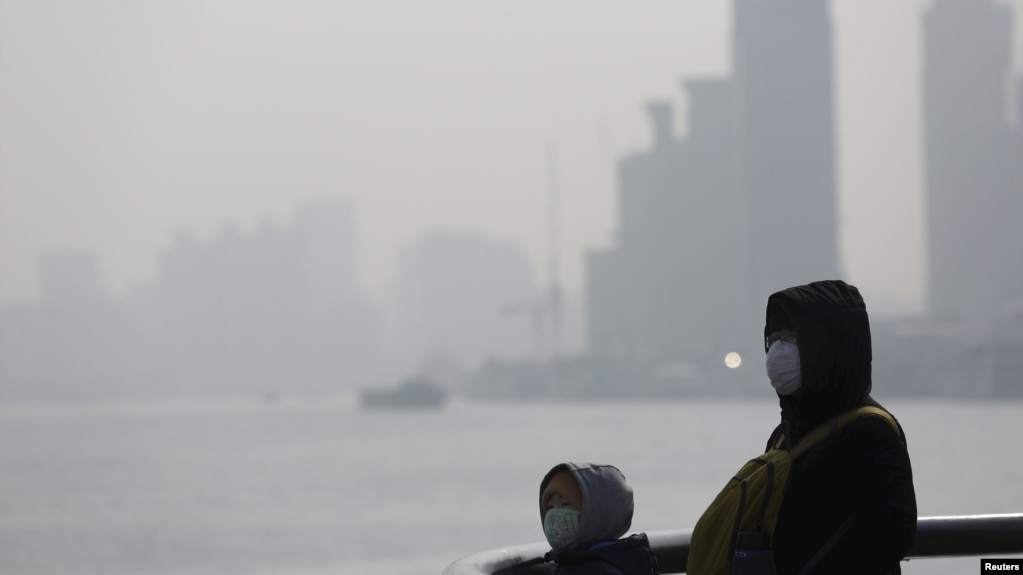
FILE - People wear protective masks during a polluted day in Shanghai, China, Jan. 19, 2016.

FILE – People wear protective masks during a polluted day in Shanghai, China, Jan. 19, 2016.

Asia-Pacific — home to more than half the world’s population and some of its fastest-growing economies — is a key battleground in the fight against pollution, one of the biggest threats to the planet and its people, the U.N. environment chief said.

An estimated 12 million people die prematurely each year because of unhealthy environments, 7 million of them due to air pollution alone, making pollution “the biggest killer of humanity,” Erik Solheim told the first Asia-Pacific Ministerial Summit on the Environment in Bangkok this week. Tiếp tục đọc “UN Environment Head: Asia Must Lead Charge for Pollution-free Planet”

UNEP: Vietnam Assessment Report on Climate Change

Vietnam Assessment Report on Climate Change

The report shows that the trend of recent climate change in Viet Nam is beyond the level of natural change.  Temperatures have increased by 0.05-0.20°C and sea level has increased by 2-4 cm per decade in the last 50 years.  According to projections, by the end of the 21st century, the annual temperature in Viet Nam will increase by between 1.1-1.9°C and 2.1-3.6°C rainfall is likely to increase by 1.0-5.2% and 1.8-10.1%, and sea level is likely to rise between 65 and 100cm, in comparison with the period 1980-1999, under low and high emission scenarios respectively. The potential impacts of climate change for the seven climatic zones of Vietnam are likely to be different, but are likely to be critical in the water resources and key socio-economic sectors such as agriculture, forestry, fishery, energy, transportation and health.  Vietnam is currently developing a low carbon economy and mitigation policies aimed to reduce the GHG emissions in these sectors. It is also developing a number of strategies to adapt to the impacts of climate change so as to reduce the vulnerability of society.

Click here to download the report