In November, 115 states voted in favor, eight voted against, and 44 abstained from voting on a resolution adopted by the General Assembly’s First Committee that examines the possible risks of integrating AI into nuclear weapons systems. Image: depositphotos
The United Nations rarely moves fast on disarmament. This year, though, it did something unusual. On November 6, the General Assembly’s First Committee, where states debate over questions of disarmament and international security, adopted a resolution that directly looks at the possible risks of integrating artificial intelligence into nuclear weapons systems, especially in nuclear command, control, and communications, known as NC3. Austria, El Salvador, Kazakhstan, Kiribati, Malta, and Mexico pushed the text, bringing into a formal setting a problem that has mostly lived in expert circles and informal dialogues.
With 115 states voting in favor, eight voting against, and 44 abstaining, support was broad. Nuclear-armed states and many of their allies voted against the resolution or chose to abstain. In contrast, the Global South and most non-nuclear-weapon states expressed strong support. This split reflects how each group views threats and what policies they prioritize. It also reveals how early and unsettled global thinking on AI in the nuclear field still is. Rather than seeing the outcome of the vote as a clear-cut failure or success, it may be best read as an initial test case. In other words, the resolution was an early attempt to translate a fast-moving technical debate into diplomatic language.
“We did not stop the holocaust. We did not stop the genocide in Ruanda. We did not stop the genocide in Srebrenica. We must stop the genocide in Gaza. There are no excuses any more. None.”
Ireland – PM Addresses United Nations “We have recognised the State of Palestine.”
Viet Nam – State President Addresses United Nations “Viet Nam welcomes the recent recognition of the State of Palestine by more countries, and urges the international community to act swiftly to end the humanitarian crisis faced by the Palestinian people.”
The UN is tasked with tackling many urgent issues of global importance, from humanitarian crises to peacekeeping operations and the climate crisis. This all comes at a cost, but not as much as you might think. With the 2024 budget recently approved, we crunch the numbers.
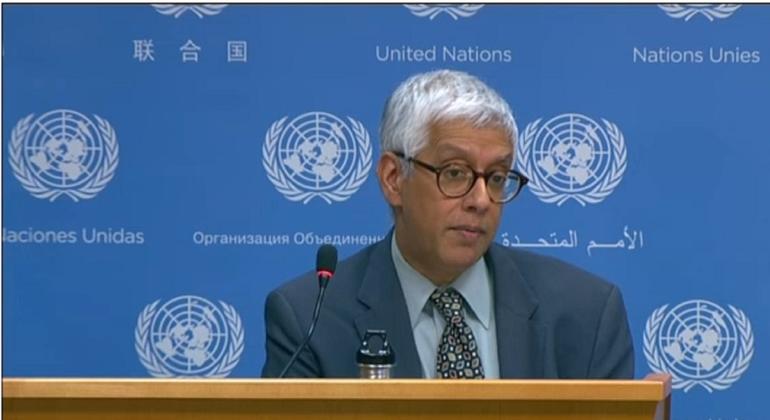
Just before Christmas, the 193 Member States that make up the UN General Assembly signed off a $3.59 billion budget to cover the expenses of the UN Secretariat in 2024. That’s a lot of money but, as UN Deputy Spokesperson Farhan Haq explained to UN News, there’s plenty of bang for each buck spent.
Farhan Haq: When you add up the regular UN Secretariat and peacekeeping budgets, the annual average cost of the UN for each person on the planet is about $1.25; that’s about the cost of a bag of chips in New York.
Aside from the U.N. Secretariat, the United Nations also comprises a vast range of agencies, funds, programmes and peacekeeping missions to deal with all kinds of issues, which are funded separately, and which are not included in the $3.59 billion budget.
At the high end you have agencies such as the World Food Programme, the refugee agency (UNHCR) and the children’s fund (UNICEF), which have budgets in the billions of dollars. Smaller agencies deal with, for example, maritime affairs, world tourism or civil aviation, and have budgets set accordingly. Member States join and pay dues for these agencies on a voluntary basis.
This International Day of Solidarity comes during one of the darkest chapters in the history of the Palestinian people. I am horrified by the death and destruction that have engulfed the region, which is overwhelmed with pain, anguish and heartache.
Palestinians in Gaza are suffering a humanitarian catastrophe. Almost 1.7 million people have been forced from their homes – but nowhere is safe. Meanwhile, the situation in the occupied West Bank, including East Jerusalem, risks boiling over.
I express my sincere condolences to the thousands of families who are mourning loved ones. This includes members of our own United Nations family killed in Gaza, representing the largest loss of personnel in the history of our organization.
I have been clear in my condemnation of the terror attacks by Hamas on 7 October. But I have also been clear that they cannot justify the collective punishment of the Palestinian people.
Across the region, the United Nations Relief and Works Agency is an indispensable lifeline, delivering vital support to millions of Palestinian refugees. It is more important than ever that the international community stands with UNRWA as a source of support for the Palestinian people.
Above all, this is a day for reaffirming international solidarity with the Palestinian people and their right to live in peace and dignity.
That must start with a long-term humanitarian ceasefire, unrestricted access for lifesaving aid, the release of all hostages, the protection of civilians and an end to violations of international humanitarian law. We must be united in demanding an end to the occupation and the blockade of Gaza.
It is long past time to move in a determined, irreversible way towards a two-State solution, on the basis of United Nations resolutions and international law, with Israel and Palestine living side-by-side in peace and security with Jerusalem as the capital of both States.
The United Nations will not waver in its commitment to the Palestinian people. Today and every day, let us stand in solidarity with the aspirations of the Palestinian people to achieve their inalienable rights and build a future of peace, justice, security and dignity for all.
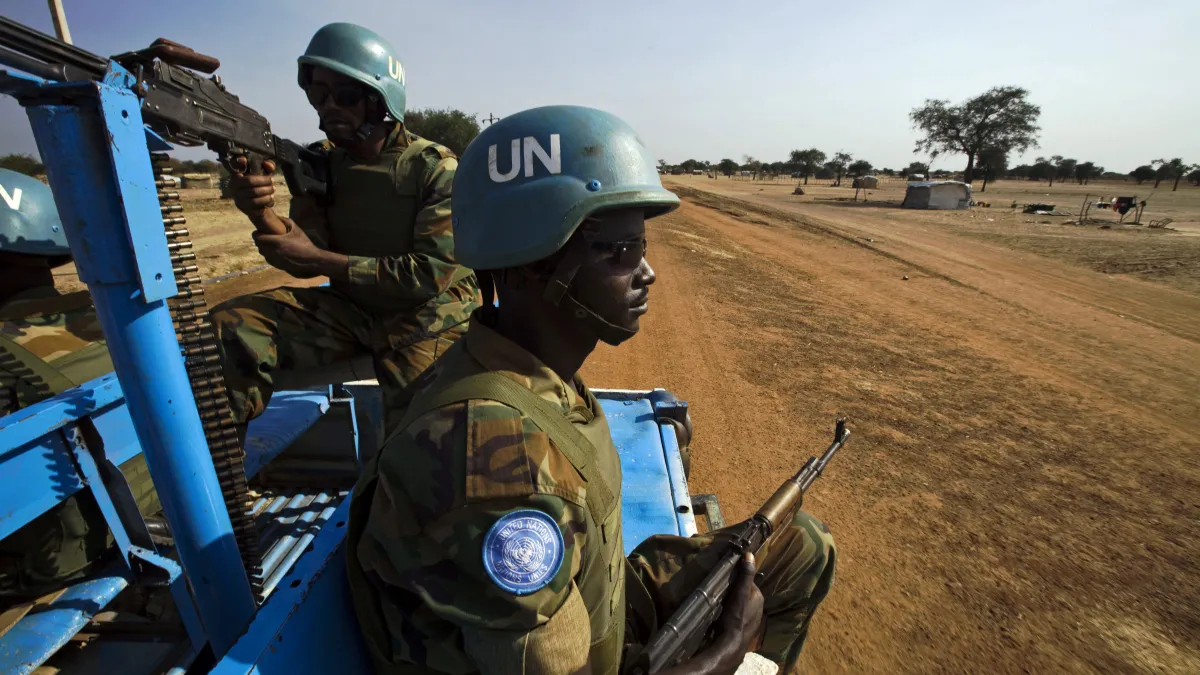
The world lacks a global police force capable of stopping violence in its tracks. However, it does have UN peacekeepers, who can help wind down conflicts and prevent them from recurring.
TS. NGUYỄN VIỆT LÂM Bộ Ngoại giao 21:46, ngày 17-05-2020
TCCS – Tháng 1-2020, Tổng Thư ký Liên hợp quốc An-tô-ni-ô Gu-tơ-rết trong phát biểu về các ưu tiên năm 2020 của Liên hợp quốc đã nhấn mạnh vai trò của phụ nữ trong tham gia, giải quyết các thách thức toàn cầu, bao gồm chương trình phụ nữ, hòa bình và an ninh. Đây cũng là vấn đề lần đầu tiên được Hội đồng Bảo an Liên hợp quốc chính thức thảo luận kể từ năm 2000. Đến nay, vấn đề này đã và đang được triển khai rộng khắp trên toàn cầu, đồng thời được lồng ghép đa dạng vào nhiều chương trình, hoạt động của Liên hợp quốc cũng như các quốc gia thành viên.
Phó Tổng thư ký Liên hợp quốc Amina Mohammed duyệt đội danh dự Lực lượng gìn giữ hòa bình Liên hợp quốc tại sân bay quốc tế Aden Abdulle, Thủ đô Mogadishu (Somalia), ngày 23-10-2019_Ảnh: UN
Có thể nói, vai trò và sự tham gia của phụ nữ trong công tác gìn giữ hòa bình được Liên hợp quốc nhìn nhận kể từ khi tổ chức này ra đời thông qua sự thành lập Ủy ban địa vị phụ nữ vào năm 1946. Nỗ lực bảo đảm bình đẳng giới cũng ngày càng được củng cố với việc Liên hợp quốc thông qua Công ước về xóa bỏ mọi hình thức phân biệt đối xử đối với phụ nữ (năm 1979), Tuyên bố về việc tham gia của phụ nữ trong thúc đẩy hòa bình và hợp tác quốc tế (năm 1982) và tổ chức các Hội nghị quốc tế về phụ nữ tại Thủ đô Bắc Kinh (Trung Quốc, năm 1995). Đặc biệt, năm 2000, Hội đồng Bảo an Liên hợp quốc đã thông qua Nghị quyết số 1325 về chương trình phụ nữ, hòa bình và an ninh, theo đó vấn đề phụ nữ, hòa bình và an ninh trở thành một trong những chương trình thảo luận chính tại Hội đồng Bảo an, sau đó được thúc đẩy tại nhiều cơ chế khác của Liên hợp quốc(1). Đây được coi là văn kiện quan trọng mang tính lịch sử, đánh dấu lần đầu tiên Hội đồng Bảo an ghi nhận ảnh hưởng của xung đột vũ trang đối với phụ nữ và trẻ em gái; thừa nhận những giá trị và đóng góp của phụ nữ đối với gìn giữ hòa bình, giải quyết xung đột và kiến tạo hòa bình. Nghị quyết nhấn mạnh tầm quan trọng của việc tham gia đầy đủ và bình đẳng của phụ nữ là những chủ thể năng động trong vấn đề hòa bình và an ninh.
Hiện nay, chương trình phụ nữ, hòa bình và an ninh được đề cập trong 10 nghị quyết của Hội đồng Bảo an(2) và là chủ đề thảo luận thường niên của Hội đồng Bảo an vào tháng 10 hằng năm theo hình thức thảo luận mở với văn kiện thông qua thường là Nghị quyết Hội đồng Bảo an hoặc Tuyên bố Chủ tịch của Hội đồng Bảo an(3). Một số khía cạnh khác của các chủ đề này cũng được khai thác thảo luận dưới hình thức cuộc họp Arria-formula(4). Chương trình phụ nữ, hòa bình và an ninh bao gồm bốn trụ cột chính: 1- Sự tham gia; 2- Ngăn ngừa xung đột; 3- Bảo vệ; 4- Cứu trợ và phục hồi(5).
Tình hình thực hiện chương trình phụ nữ, hòa bình và an ninh
Từ năm 2000 đến nay, tại Hội đồng Bảo an Liên hợp quốc, chương trình phụ nữ, hòa bình và an ninh được trao đổi, thảo luận xoay quanh các vấn đề: 1- Tăng cường vai trò và sự tham gia của phụ nữ trong tiến trình phòng ngừa, giải quyết xung đột, xây dựng và gìn giữ hòa bình.2- Từ năm 2008, Hội đồng Bảo an đã thông qua các Nghị quyết số 1820, 1888, 1960, 2106, 2467, nhìn nhận các hình thức bạo lực tình dục đối với phụ nữ được coi là tội ác chiến tranh, tội ác chống lại loài người; các quốc gia có vai trò và trách nhiệm giải quyết nguồn gốc bạo lực đối với phụ nữ và trẻ em gái; nhấn mạnh vai trò của Hội đồng Bảo an trong tăng cường giám sát việc thực thi của các bên tham gia xung đột. 3- Thiết lập và tăng cường sử dụng các biện pháp đánh giá, theo dõi việc thực hiện các nội dung của chương trình phụ nữ, hòa bình và an ninh. 4- Đào tạo, tăng cường năng lực cho lực lượng phòng ngừa và giải quyết tình trạng bạo lực tình dục trong xung đột vũ trang; kêu gọi hình thành các nhóm chuyên gia tại nơi xảy ra bạo lực tình dục; tăng cường ngân sách dành cho đào tạo, phân tích và các chương trình giới. 5- Vai trò của phụ nữ trong các hoạt động gìn giữ hòa bình và phòng ngừa bạo lực tình dục trong xung đột vũ trang. 6- Vai trò của các tổ chức khu vực, tiểu khu vực trong củng cố chính sách, tăng cường vai trò, sự tham gia của phụ nữ và trẻ em gái trong tiến trình hướng tới bảo đảm lợi ích của phụ nữ và trẻ em gái bị ảnh hưởng bởi bạo lực tình dục trong xung đột vũ trang. 7- Vai trò của các tổ chức chính trị – xã hội (CSO) trong thúc đẩy sự tham dự của phụ nữ giải quyết xung đột, giải quyết bạo lực tình dục, xây dựng hòa bình…
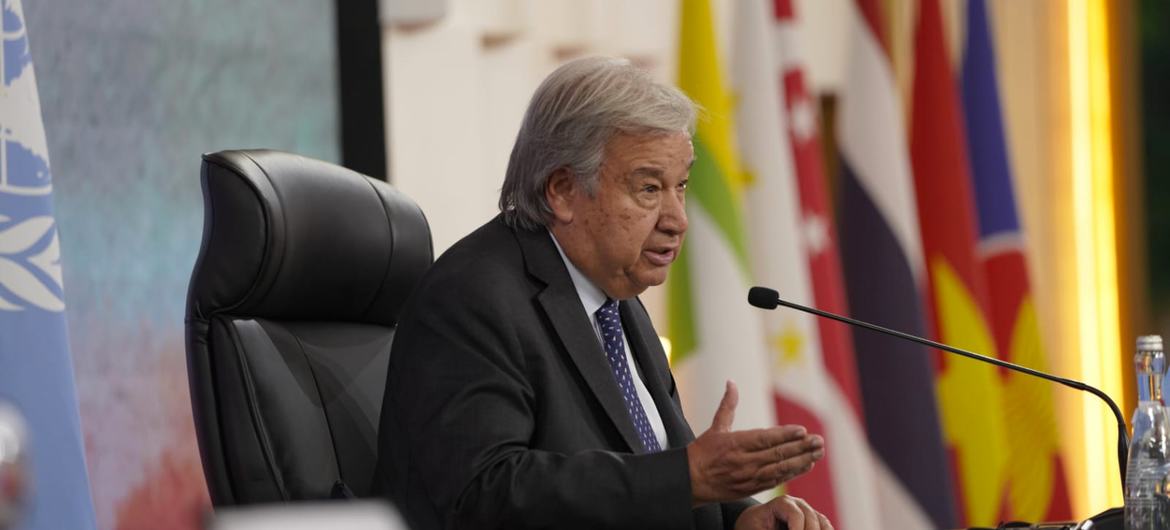
Amid rising geopolitical tension, Southeast Asia is fulfilling a “vital role in building bridges of understanding” worldwide said the UN chief on Thursday.
António Guterres was speaking in Jakarta, Indonesia, at the opening of the ASEAN-United Nations Summit, addressing Member States of the Association of Southeast Asian Nations and declaring “our partnership is more important than ever.”
KINSHASA, Congo — In the deadliest single attack on a United Nations peacekeeping mission in recent memory, rebels in eastern Congo killed at least 14 peacekeepers and wounded 53 others in an assault on their base that was launched at nightfall and went on for hours.
U.N. Secretary-General Antonio Guterres expressed “outrage and utter heartbreak” and called the attack a war crime, urging Congolese authorities to swiftly investigate. The [US] State Department’s Bureau of African Affairs said it was “horrified.” Tiếp tục đọc “DR Congo: 14 U.N. peacekeepers dead, dozens hurt in ‘huge attack’”→
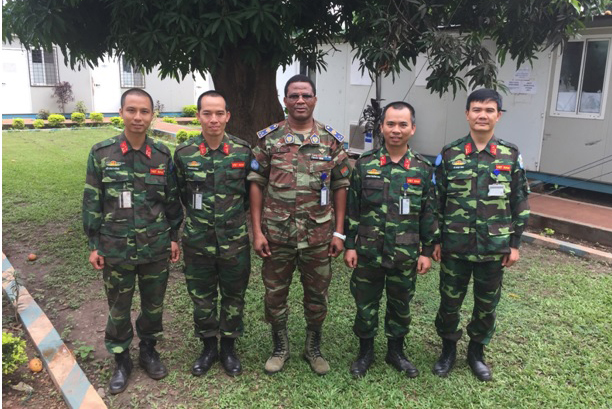
Trước tháng 6/2014, Việt Nam là một trong 3 quốc gia thuộc khối ASEAN (cùng với Lào và Myanmar) không có nhân sự tham gia Lực lượng gìn giữ hoà bình Liên hợp quốc (LLGGHBLHQ)- lực lượng thường được gọi là “lính mũ nồi xanh”. Từ khi Trung tâm gìn giữ hoà bình Việt Nam được thành lập vào tháng 5/2014, tính đến nay, Việt Nam đã cử 19 lượt sĩ quan tham gia LLGGHBLHQ tại Phái bộ GGHBLHQ tại Cộng hoà Trung Phi (MINUSCA) và Phái bộ GGHBLHQ tại Nam Sudan (UNMISS). Nhiệm kỳ của mỗi sĩ quan là 01 năm.
Các sĩ quan Việt Nam công tác tại MINUSCA chụp hình lưu niệm với Tướng hai sao Traore Daniel Sidiki – Phó Tư lệnh Quân sự MINUSCA nhân dịp bàn giao nhiệm kỳ
A member of the all-female Bangladeshi police unit, preparing to leave the UN mission in Haiti as it closes. A new UN compact with countries connected to a peacekeeping mission is being circulated for signature to help prevent sex abuse and exploitation. LOGAN ABASSI/MINUSTAH
Haunted by accumulating reports of sexual exploitation and abuse of women and girls by United Nations peacekeepers and others attached to UN missions around the world, Secretary-General António Guterres is taking the bold, unprecedented step of asking all governments to sign a compact pledging to prevent and stop these violations. Tiếp tục đọc “UN Chief asks all nations to sign new pact protecting women”→

 In November, 115 states voted in favor, eight voted against, and 44 abstained from voting on a resolution adopted by the General Assembly’s First Committee that examines the possible risks of integrating AI into nuclear weapons systems. Image: depositphotos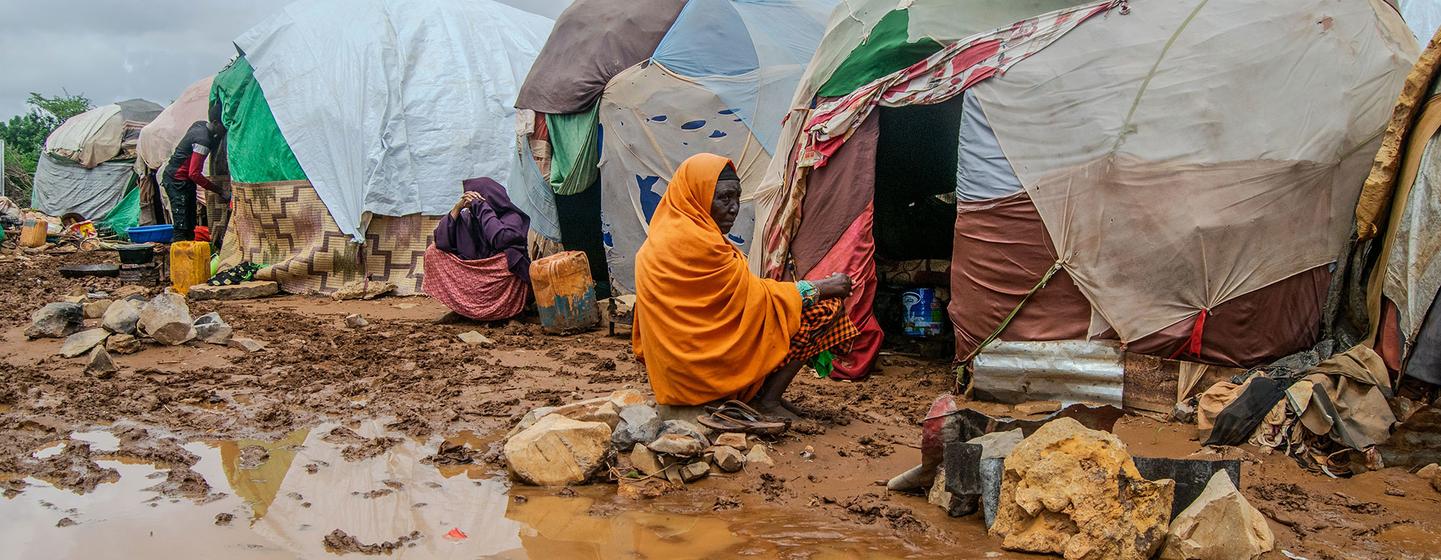



 CVD
CVD 