
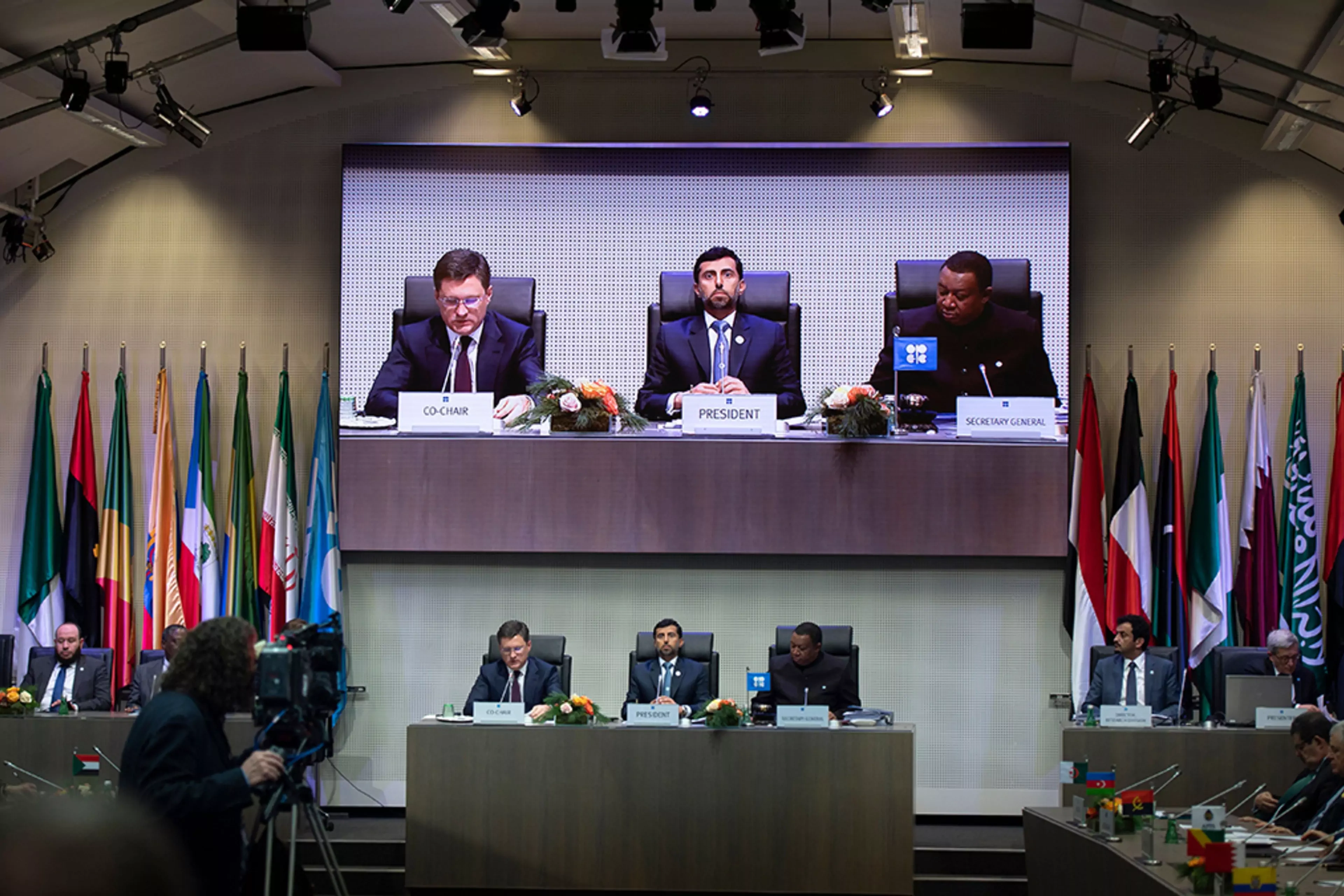
Western leaders have long criticized OPEC’s power to raise oil prices, and the bloc continues to influence the global market even as U.S. oil production has soared and alternative energies have come to the fore.
WRITTEN BY Anshu Siripurapu and Andrew Chatzky Last updated March 9, 2022 2:25 pm (EST)
Summary
- The Organization of the Petroleum Exporting Countries (OPEC) is a group of oil-rich countries that together control nearly 40 percent of the world’s oil supply.
- Russia’s war in Ukraine has caused global oil prices to surge, giving the bloc more leverage.
- However, as the world shifts away from fossil fuels, OPEC’s power could diminish.
The Organization of the Petroleum Exporting Countries (OPEC) is a bloc of thirteen oil-rich member states spanning the Middle East, Africa, and South America. Combined, the group controls close to forty percent of world oil production. This dominant market position has at times allowed OPEC to act as a cartel, coordinating production levels among members to manipulate global oil prices. As a result, U.S. presidents from Gerald Ford to Donald Trump have railed against the oil cartel as a threat to the U.S. economy.
Tiếp tục đọc “Organization of the Petroleum Exporting Countries – OPEC in a Changing World”
 CVD
CVD 