Southeast Asia’s Clean Energy Transition: A Role for nuclear Power?

Edited by David Santoro & Carl Baker

Read & Download >>

TABLE OF CONTENTS


EXECUTIVE SUMMARY
David Santoro & Carl Baker 1
1 INDONESIA POWER SECTOR
Elrika Hamdi 5
2 MALAYSIA ENERGY LANDSCAPE AND REQUIREMENTS 2022-2050
Sabar Hashim 19
3 MYANMAR’S ENERGY LANDSCAPE
Shwe Yee Oo 39
4 RE-ENERGIZING THE PHILIPPINES’ NUCLEAR POWER PROGRAM: OPPORTUNITIES
AND CHALLENGES
Julius Cesar Trajano 59
5 SINGAPORE’S ENERGY JOURNEY: NET-ZERO, NEW PERSPECTIVES & NUCLEAR?
Denise Cheong & Victor Nian 75
6 THAILAND’S ENERGY LANDSCAPE AND THE POTENTIAL ROLE AND PLACE OF
NUCLEAR TECHNOLOGY
Doongnyapong Wongsawaeng 93
7 ENERGY LANDSCAPE AND REQUIREMENTS OF VIETNAM
Nguyen Nhi Dien 107
ABOUT THE AUTHORS 127

Read & Download >>

‘Shadow fleet’ oil tankers pose growing risk in SEA

southeastasiaglobe.com

An armada of poorly regulated, scrapyard-ready tankers is hauling sanctioned oil through the region’s bustling shipping lanes. With that, they’re carrying an ever-present threat of environmental catastrophe

IAN HOLLINGER AUGUST 29, 2023

‘Shadow fleet’ oil tankers pose growing risk in SEA
Smoke rises from the oil tanker Pablo after it suffered from multiple explosions on 1 May off the coast of Malaysia. The ship was registered to Gabon and was part of the so-called “ghost fleet” of little-regulated tankers. Photo courtesy of the Malaysian coast guard.

On the morning of 3 May, residents of Batam, Indonesia, the largest city of the country’s Riau Islands, woke up to beaches black with oil. 

Tiếp tục đọc “‘Shadow fleet’ oil tankers pose growing risk in SEA”

Japan’s Indo-Pacific Plan – 2 part

Japan And China: Competition Or Cooperation In Southeast Asia? | Japan’s Indo-Pacific Plan – Part 1

Japan is investing in a series of infrastructure and supply chain resilience projects in ASEAN. It’s all part of the Free and Open Indo-Pacific plan launched by the Japanese government. Is this an alternative to China’s Belt and Road Initiative? What is the current state of relations between Japan & China? Will the two Asian giants cooperate or compete?

***

How Will Japan’s Indo-Pacific Strategy Impact Southeast Asia? | Japan’s Indo-Pacific Plan – Part 2

Japan is investing in infrastructure to alleviate the economic bottlenecks in ASEAN countries. In Indonesia, it’s building the country’s first MRT project. In Vietnam, it has invested in a network of roads, rail, ports and energy infrastructure. And in the Philippines, it’s investing in a flood mitigation project. What do these projects have in common? And why has Japan chosen to invest in them?

Huge increase in transnational crime and synthetic drugs in SE Asia requires cross-border cooperation

United Nations Office on Drugs and Crime

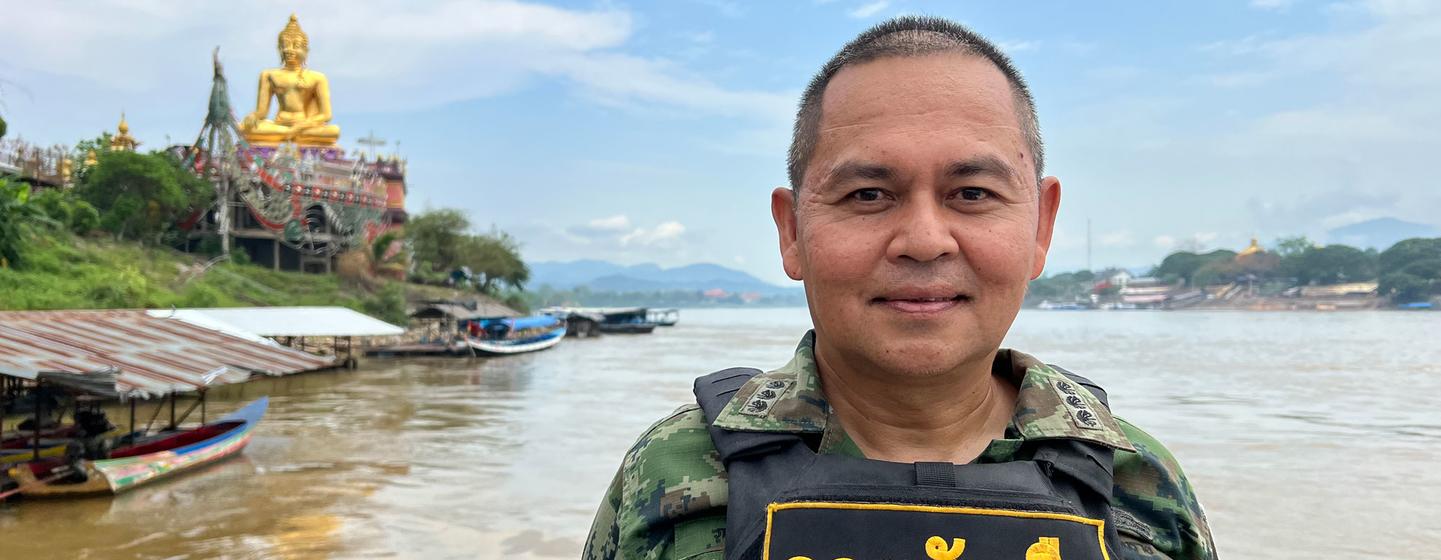
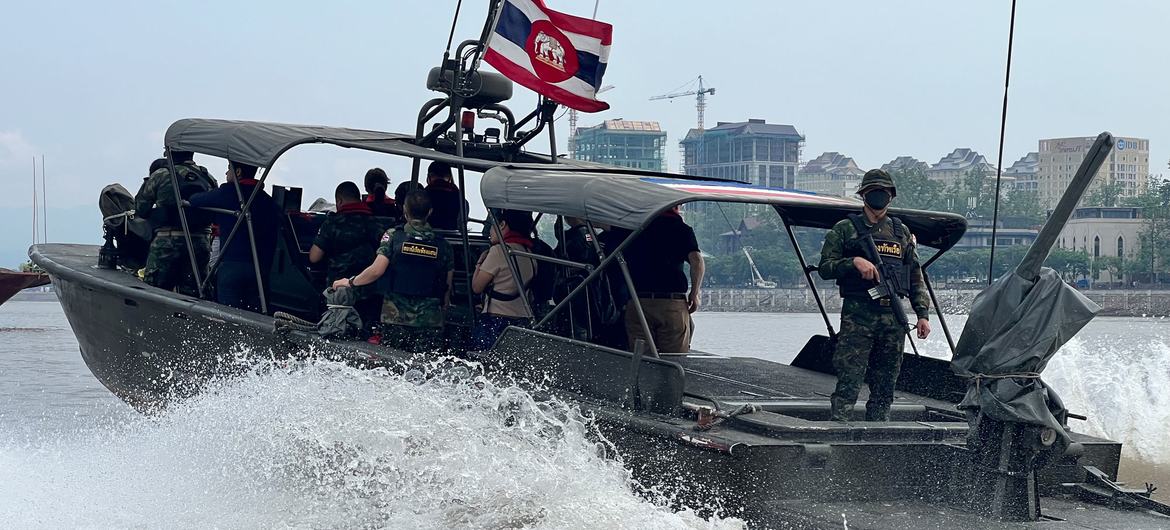
Bangkok (Thailand), 2 June 2023 – A Thai Navy launch travels at high speed down the muddy brown waters of the Mekong River close to the border town of Chiang Saen in the north of Thailand. To the right is Laos, where huge construction projects funded by foreign investment are rising out of the lush undergrowth along the riverbank and ahead to the left are the dense jungles of Myanmar.

This is the storied Golden Triangle where historically opium was grown to produce heroin for export but where, in recent years, the trade of even deadlier and more profitable synthetic drugs has taken over.

Thailand, Laos and Myanmar are at the frontlines of illicit trade in Asia dominated by transnational organized crime syndicates.

RIVER SEIZURE

UN News/Daniel Dickinson | Captain Phakorn Maniam is deployed to the Thai Navy Mekong Riverine Unit

UN News/Daniel Dickinson | Captain Phakorn Maniam is deployed to the Thai Navy Mekong Riverine Unit

Opinion: Energy importers must consider true ‘sustainability’ of Laos hydropower

Proponents describe regional power grids as a way to promote economic growth, energy security and renewables in Southeast Asia, but this might come at a heavy cost

Lat Tha Hae temple in Luang Prabang province, Laos, half submerged by the Nam Ou 1 hydropower dam (Image: Ton Ka/China Dialogue)

Ming Li Yong

the third pole – August 23, 2022

On 23 June 2022, the import of 100 megawatts (MW) of hydropower from Laos to Singapore through Thailand and Malaysia was hailed as a historic milestone. Part of a pilot project known as the Lao PDR-Thailand-Malaysia-Singapore Power Integration Project (LTMS-PIP), this event represented Singapore’s first ever import of renewable energy, and also the first instance of cross-border electricity trade involving four countries from the Association of Southeast Asian Nations (ASEAN).

However, this development takes place amid rising concerns for the ecological future of the transboundary Mekong River and the millions of people who depend on it. A 2018 study by the Mekong River Commission concluded that further hydropower development on the river would negatively affect ecosystems, and would reduce soil fertility, rice production, fish yields and food security, while increasing poverty in the river basin.

Tiếp tục đọc “Opinion: Energy importers must consider true ‘sustainability’ of Laos hydropower”

China Announces New ASEAN Belt & Road Initiative Projects Centered Around Cambodia

The Phnom Penh-Bavet Highway which will ultimately link the Cambodian and Vietnamese capital cities

aseanbriefing.com

The 2022 ASEAN summit took place at the Cambodian capital Phnom Penh, this past weekend, with China as an official guest. At the event, Chinese Premier Li Keqiang announced Beijing’s approval of Chinese investment in significant infrastructure projects in the ASEAN region.  

Among these is a US$1.6 billion expressway to be built from Phnom Penh to Bavet, at the Cambodian-Vietnamese border, and financial support for a rail link between Phnom Penh, Bangkok, and Vientiane, Laos, from which a high-speed rail link has already been constructed into China. 

Tiếp tục đọc “China Announces New ASEAN Belt & Road Initiative Projects Centered Around Cambodia”

The Latest on Southeast Asia

CSIS Southeast Asia Program

May 26, 2022
r.CSIS
The Latest on Southeast Asia

In Tokyo on May 23, President Biden announced the formation of the Indo-Pacific Economic Framework for Prosperity (IPEF). The framework will bring together the United States and a dozen other Indo-Pacific countries. The agreement will cover both traditional and digital trade standards, decarbonization and infrastructure, supply chain resiliency, taxation, and anti-corruption.

Tiếp tục đọc “The Latest on Southeast Asia”

Russia’s Continuing Ties to Southeast Asia—and How They Factor Into the Ukraine War (3 parts)

cfr.org

Russia’s Continuing Ties to Southeast Asia—and How They Factor Into the Ukraine War: Part 1

Longstanding ties and weapons sales to a number of countries in Southeast Asia insulate Russia from ASEAN criticism over Ukraine war.

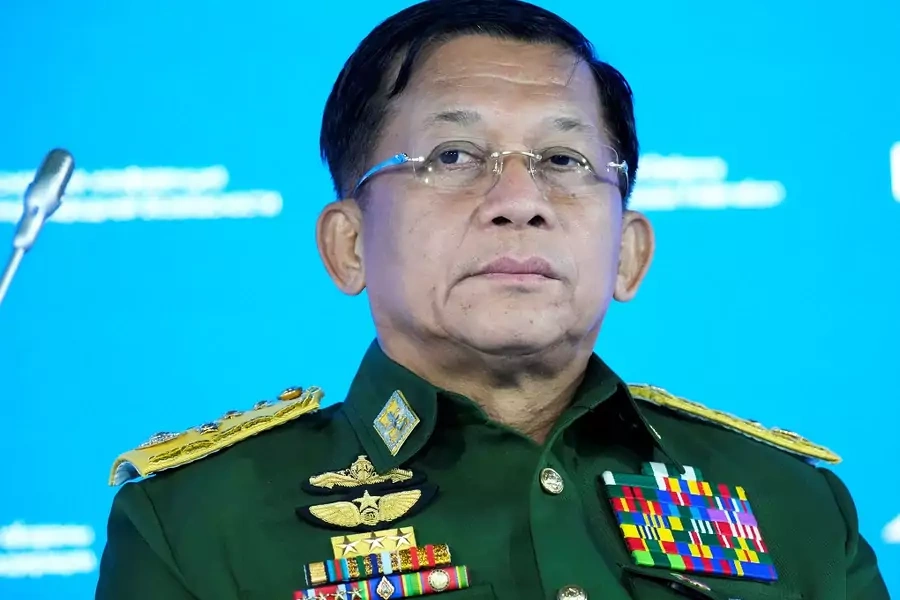
Commander-in-Chief of Myanmar's armed forces, Senior General Min Aung Hlaing, attends the IX Moscow conference on international security in Moscow, Russia, on June 23, 2021.
Commander-in-Chief of Myanmar’s armed forces, Senior General Min Aung Hlaing, attends the IX Moscow conference on international security in Moscow, Russia, on June 23, 2021. Alexander Zemlianichenko/Pool via Reuters

Blog Post by Joshua Kurlantzick

March 8, 2022 4:08 pm (EST)

In recent years, Russia, which had not had much of a strategic or economic presence in Southeast Asia, has become a more involved player once again. It has cultivated close ties with Myanmar, regularly selling weapons to Myanmar and cultivating strategic ties. Particularly after the February 2021 Myanmar coup, when even Beijing seemed to have doubts about how the coup had destabilized the country and led to potential risks to China’s investments, Russia stood strongly behind the junta. Russian officials participated in a prominent military ceremony in Myanmar after the coup, Russian continued to supply large numbers of arms to the junta, even as it launched a scorched earth policy against coup opponents and ethnic minority groups, and the Kremlin invited junta leader Min Aung Hlaing to Moscow in June (before he had any major visits to Beijing), sending a strong signal of support to Naypyidaw.

Tiếp tục đọc “Russia’s Continuing Ties to Southeast Asia—and How They Factor Into the Ukraine War (3 parts)”

Fallout in Southeast Asia of Russia’s Invasion of Ukraine

March 11, 2022 CSIS

Southeast Asian nations have been rather subdued in their responses to Russia’s invasion of Ukraine, although all but two—Vietnam and Laos—voted in the United Nations in early March to condemn Moscow’s aggression. The fighting erupted thousands of miles away, but the effects, particularly of the sanctions imposed by the United States, Europe, Japan, Australia, and others, will still have economic reverberations in Southeast Asia.

Overall, Russia and Ukraine are relatively minor economic players in Southeast Asia, with Russia making up just over 0.64 percent of global trade with the region while Ukraine accounts for just 0.11 percent, according to ASEANstats. But Moscow’s Economic Development Ministry has said that it will work to boost trade and economic links with Asia to balance sanctions.

Tiếp tục đọc “Fallout in Southeast Asia of Russia’s Invasion of Ukraine”

Climate Finance in Southeast Asia: Trends and Opportunities

fulcrum.sg

PUBLISHED 11 FEB 2022

Qiu Jiahui

MELINDA MARTINUS|QIU JIAHUI

The Covid-19 crisis has stalled the delivery of much-needed climate finance to developing countries. For Southeast Asia, a region frequently cited as being one of the most vulnerable regions threatened by climate change, the broken promise of climate finance is highly disappointing.

INTRODUCTION

Climate finance has been one of the most contentious issues in global climate politics. At the 2009 United Nations Climate Change Conference (COP 15), developed countries committed to mobilising by 2020 US$100 billion climate finance annually to assist vulnerable countries. The pledge has been key to building trust between states to limit global warming to well below 2 degrees Celsius, as specified in the Paris Agreement.

Tiếp tục đọc “Climate Finance in Southeast Asia: Trends and Opportunities”

2022 State of Southeast Asia Survey: Diverse Perspectives and Hard Realities

fulcrum.sg

PUBLISHED 16 FEB 2022

TERENCE CHONG

The US has gained ground against China in the contest for regional influence in Southeast Asia, according to the latest State of Southeast Asia Survey. ASEAN continues to be seen as ineffective in the eyes of respondents; at the same time, they are willing to give it credit when it is due.

The United States is gaining significant ground against China in the battle to win friends and influence countries, with respondents across Southeast Asia confident that Washington would be able to lead on issues such as championing free trade and upholding the rules-based regional order. 

A fresh reading of The State of Southeast Asia Survey also showed that pressing issues — the Covid-19 pandemic, unemployment and economic retraction as well as climate change – continue to be prioritised by respondents. In their view, however, ASEAN is seen as too slow and ineffective to cope with rapid developments.

Tiếp tục đọc “2022 State of Southeast Asia Survey: Diverse Perspectives and Hard Realities”

Mặt trái của du lịch: Liệu Đông Nam Á có thể cứu vãn các kho báu tự nhiên?

BVR&MT – 07/05/2019

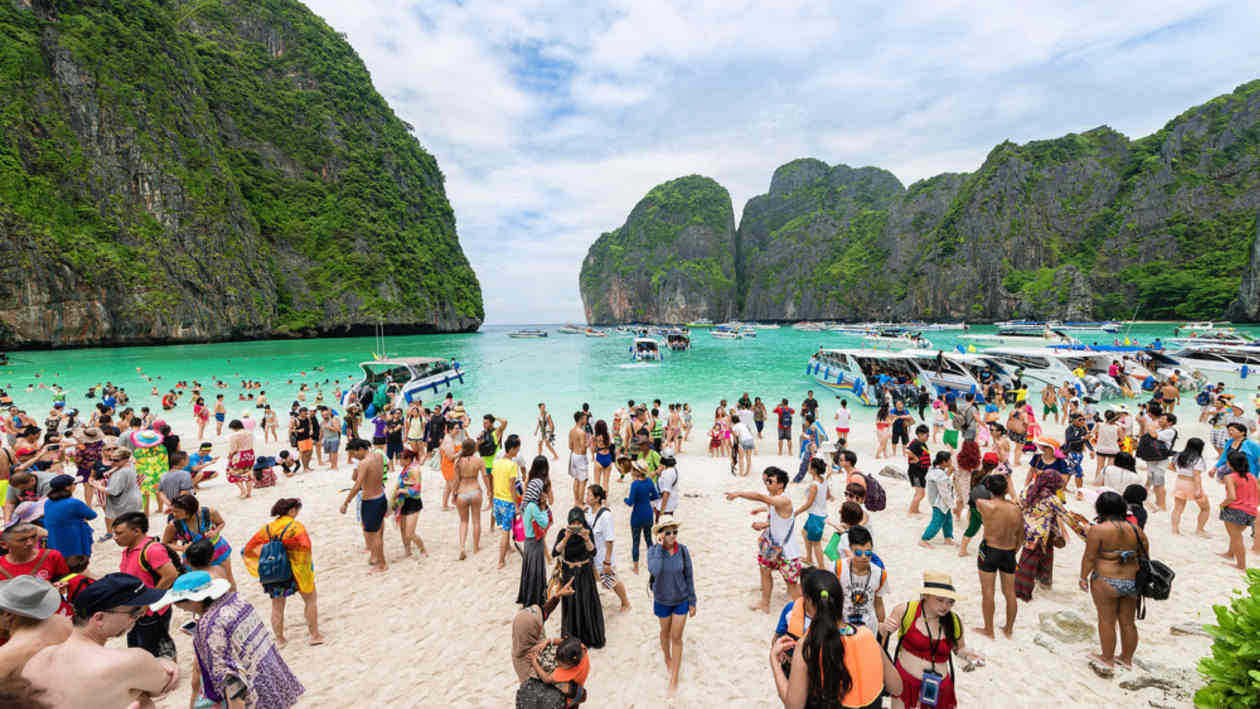
Từ Thái Lan đến Bali, khách du lịch – phần lớn đến từ Trung Quốc và các nền kinh tế đang phát triển nhanh chóng khác – đang gia tăng chóng mặt, đẩy các hệ sinh thái nhạy cảm đến điểm tan vỡ.

Một số quốc gia đang cố gắng kiểm soát sự bùng nổ, chẳng hạn như đóng cửa một vài điểm đến phổ biến để các khu vực bị thiệt hại được chữa lành.

Vịnh Maya ở Thái Lan thu hút 5.000 khách du lịch mỗi ngày trước khi chính phủ đóng cửa khu vực để hệ sinh thái phục hồi (Ảnh: Shutterstock)

Tiếp tục đọc “Mặt trái của du lịch: Liệu Đông Nam Á có thể cứu vãn các kho báu tự nhiên?”

Southeast Asia risks stumbling toward a South American future

asia.nikkei.com

Current trajectory suggests region will struggle to escape middle-income trap

William Bratton November 28, 2021 05:00 JST

Workers arrange blades at an assembly line in Rayong province, east of Bangkok, in April 2016: many of the necessary ingredients for productivity-led development are missing across much of  Southeast Asia.   © Reuters

William Bratton is author of “China’s Rise, Asia’s Decline.” He was previously head of equity research, Asia-Pacific, at HSBC.

It is easy to forget that it was South America, not Asia, that was once seen as the world’s emerging economic hot spot.

Many of the region’s countries were relatively prosperous in the first half of the 20th century. Argentina, for example, was then one of the world’s richest countries. They also achieved impressive growth rates in the immediate aftermath of World War II.

But South America has fallen far since those halcyon days. The region’s combined gross domestic product, in constant dollar terms, was 22% of the U.S.’s in 1980 but just 17% in 2020. This relative decline is even more stark on a per capita basis. Brazil’s GDP per capita was 22% of the U.S.’s in 1980 but only 14% in 2020, while Mexico’s fell from 25% to 15% over the same period.

Tiếp tục đọc “Southeast Asia risks stumbling toward a South American future”

India and Vietnam will define the future of Asia: Kurt Campbell

Japan to host next Quad summit in 2022, U.S. Indo-Pacific coordinator says

asia.nikkei.com

Kurt Campbell, the U.S. National Security Council Indo-Pacific coordinator speaks at the United States Institute of Peace on Nov. 19. (Screenshot)KEN MORIYASU, Nikkei Asia chief desk editorNovember 20, 2021 03:20 JST

NEW YORK — U.S. President Joe Biden’s administration views India and Vietnam as key countries to strengthen relations with, his Indo-Pacific point man said Friday.

India will be a key fulcrum player on the global stage in the 21st century, and successive American administrations have been united in that assessment, said Kurt Campbell, the National Security Council’s coordinator for the Indo-Pacific, at an event hosted by the Washington-based United States Institute of Peace.

“I’m very bullish about the future with India. I think we all recognize that the critical, crucial member in the Quad is India,” Campbell said, referring to the Quadrilateral Security Dialogue among the U.S., Japan, India and Australia.

->

Security Challenges of Climate Change in Southeast Asia

Photo: REZAS/AFP/Getty Images
by Murray Hiebert (Senior Associate, Southeast Asia Program) and Danielle Fallin (Program Coordinator and Research Assistant, Southeast Asia Program)

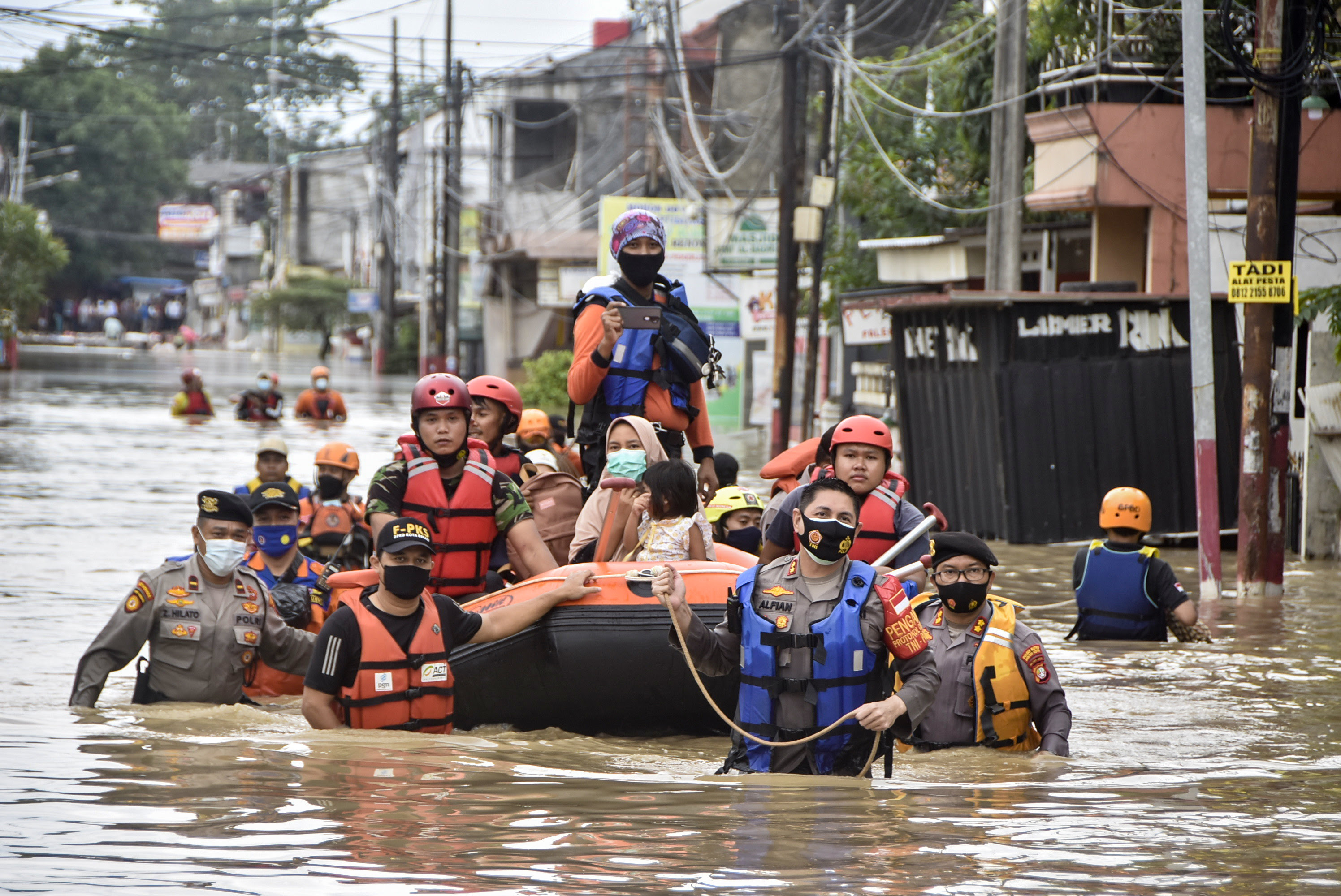
A 1.5-degree Celsius increase in global warming poses an immediate threat to Southeast Asia’s economic, political, and health security. Mitigating the effects of climate change is key to the United States’ goal to secure a free, open, and prosperous Indo-Pacific.

Southeast Asia will be one of the world’s most vulnerable regions to climate change unless countries make dramatic cuts in greenhouse gas pollution. According to a 2018 report from the Intergovernmental Panel on Climate Change, a global warming increase of 1.5 degrees Celsius (2.4 degrees Fahrenheit) will cause rising seas, dangerous flooding, and changing rain patterns leading to violent typhoons and drought. Global warming poses a threat to food security, hobbles economic growth, prompts political instability, and catalyzes pandemics. In extreme cases, it can create an environment conducive to terrorist activities.

Tiếp tục đọc “Security Challenges of Climate Change in Southeast Asia”