Environment minister urges water conservation in Vietnam

Tuoi Tre News

Updated : 03/23/2017 18:35 GMT + 7

Minister of Natural Resources and Environment Tran Hong Ha warned citizens at an event in northern Vietnam of the alarming scarcity of water, calling for the urgent conservation of water resources in the country.

A national campaign was organized in Bac Ninh Province on Wednesday morning to mark World Water Day, an event aimed at raising social awareness of water pollution and the importance of protecting resources.

The event was sponsored by Tuoi Tre (Youth) newspaper and Comfort, a Unilever brand in Vietnam.

Situated downstream of many major rivers, Vietnam faces significant challenges brought about by a lack of water resources, Minister Ha explained at the event.

“Two-thirds of the water in Vietnam’s rivers come from outside the territory,” the official pointed out, adding that the average volume in the country is about 3,600 cubic meters per person a year, compared to the global average of 4,000 cubic meters per person. Tiếp tục đọc “Environment minister urges water conservation in Vietnam”
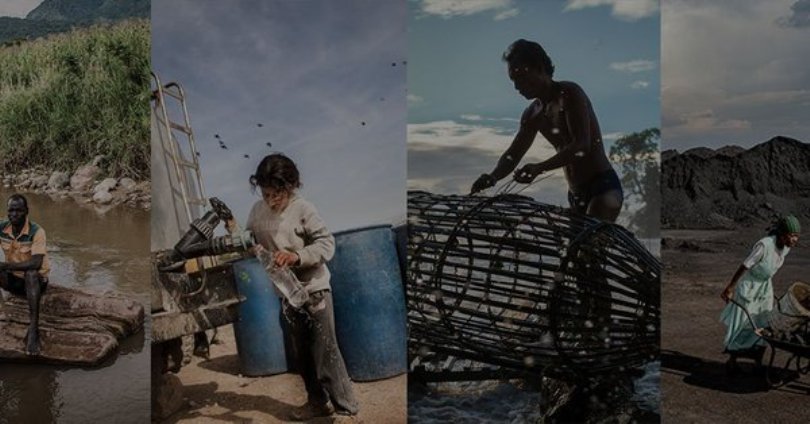
Watergrabbing A Story of Water

Al Jazeera

Historically the source of many conflicts, water grabbing is the control and theft of water resources by the powerful, often at the expense of local populations and ecosystems. It can result in dispossession, displacement and ecological destruction.

In an age of dwindling resources and climate change, water is increasingly being privatised.

It is now 24 years since the United Nations designated March 22 as World Water Day.

Al Jazeera looks at water grabbing in four parts of the globe, including large-scale damming in the Omo Valley in Ethiopia, the mining industry in South Africa, inequitable water practices in Palestine/Israel and the impact of dams on people living along the Mekong River in southeast Asia.

Tiếp tục đọc “Watergrabbing A Story of Water”

Four billion people affected by severe water scarcity

Date:February 15, 2016

Source:University of Twente
Summary: There are four billion people worldwide who are affected by severe water scarcity for at least one month a year. That is the conclusion after many years’ extensive research. This alarming figure is much higher than was previously thought.

FULL STORY

Sciencedaily – There are four billion people worldwide who are affected by severe water scarcity for at least one month a year. That is the conclusion of University of Twente Professor of Water Management, Arjen Hoekstra, after many years’ extensive research. This alarming figure is much higher than was previously thought. His ground-breaking research was published in Science Advances.

Professor Hoekstra’s team is the first research group in the world to identify people’s water footprint from month to month and to compare it to the monthly availability of water. “Up to now, this type of research concentrated solely on the scarcity of water on an annual basis, and had only been carried out in the largest river basins,” says Hoekstra.

He defines severe water scarcity as the depletion of water in a certain area. “Groundwater levels are falling, lakes are drying up, less water is flowing in rivers, and water supplies for industry and farmers are threatened. In this research, we established the maximum sustainable ‘water footprint’ for every location on earth, and then looked at actual water consumption. If the latter is much greater than what is sustainable, then there can be said to be severe water scarcity.”

More than previously thought

Until now, it had always been assumed in the scientific community that 2 to 3 billion people were affected by severe water scarcity. “Previous research looked at the availability of water on an annual basis, but that paints a more rosy and misleading picture, because water scarcity occurs during the dry period of the year,” explains Hoekstra. In his research, he describes for each place the number of months in a year that people are affected by severe water scarcity. That varies from zero to twelve months per year. Tiếp tục đọc “Four billion people affected by severe water scarcity”