Hà Nội đang lãng phí 12.000 thùng rác công nghệ được trang bị pin năng lượng mặt trời và khả năng chiếu sáng ban đêm. Nhiều thùng rác bị hư hỏng nặng và có thiết kế quá nhỏ nên người dân không thể đổ rác. Hậu quả là rác thải bị vứt quanh thùng rác gây mất mỹ quan đô thị và ô nhiễm môi trường.
Tình trạng này đòi hỏi cơ quan chức năng cần sớm giải quyết bằng cách kiểm tra, sửa chữa và thay thế thùng rác có thiết kế phù hợp với nhu cầu thực tế của người dân. Đồng thời, cần quy trách nhiệm bảo trì với đơn vị cung cấp khi để thùng rác bị hư hỏng trong thời gian dài. Việc nâng cao ý thức cộng đồng trong việc phân loại và xả rác đúng nơi quy định cũng rất cần thiết để đường xá đô thị ngày một sạch đẹp.
Rác thủy tinh khi thải ra môi trường không chỉ gây ô nhiễm, khó phân hủy mà còn có thể gây thương tích cho con người và động vật.
Nguy hiểm là vậy nhưng việc xử lý loại rác thải này vẫn chưa được quan tâm đúng mức. Đã đến lúc Nhà nước cần có chính sách mạnh mẽ và thiết thực để khiến các doanh nghiệp có trách nhiệm thu hồi cũng như tái chế sản phẩm từ thủy tinh sau khi sử dụng. Ngoài ra, việc phổ biến rộng rãi quy định phân loại và thu gom rác thủy tinh cũng rất quan trọng nhằm nâng cao ý thức của người dân và ngăn ngừa hành vi xả rác bừa bãi.
Researchers at the National Renewable Energy Laboratory (NREL) have conducted the first global assessment into the most promising approaches to end-of-life management for solar photovoltaic (PV) modules.
PV modules have a 30-year lifespan. There is currently no plan for how to manage this at end of their lifespan. The volume of modules no longer needed could total 80 million metric tons by 2050. In addition to quantity, the nature of the waste also poses challenges. PV modules are made of valuable, precious, critical, and toxic materials. There is currently no standard for how to recycle the valuable ones and mitigate the toxic ones.
Numerous articles review individual options for PV recycling but, until now, no one has done a global assessment of all PV recycling efforts to identify the most promising approaches.
A fast growing mountain of toxic e-waste is polluting the planet and damaging health, says new report
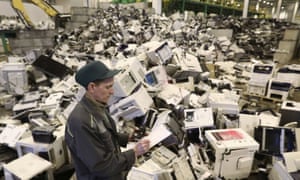
A worker at an electronic and electric equipment recycling and reuse plant, belonging to Ecopolis Corporation, in Moscow. Photograph: Sergei Karpukhin/Tass
At least $10bn (£7.9bn) worth of gold, platinum and other precious metals are dumped every year in the growing mountain of electronic waste that is polluting the planet, according to a new UN report.
A record 54m tonnes of “e-waste” was generated worldwide in 2019, up 21% in five years, the UN’s Global E-waste Monitor report found. The 2019 figure is equivalent to 7.3kg for every man, woman and child on Earth, though use is concentrated in richer nations. The amount of e-waste is rising three times faster than the world’s population, and only 17% of it was recycled in 2019.
Electronic and electrical goods, from phones and computers to refrigerators and kettles, have become indispensable in modern societies and enhance lives. But they often contain toxic chemicals, and soaring production and waste damages human health and the environment, and fuels the climate crisis.
The report blames lack of regulation and the short lifespan of products that are hard or impossible to repair. Experts called the situation a “wholly preventable global scandal”.
People in northern Europe produced the most e-waste – 22.4kg per person in 2019. The amount was half as much in eastern Europe. Australians and New Zealanders disposed of 21.3kg per person, while in the US and Canada the figure was 20.9kg. Averages across Asia and Africa were much lower, at 5.6kg and 2.5kg per person respectively.E-waste contains materials including copper, iron, gold, silver and platinum, which the report gives a conservative value of $57bn. But most are dumped or burned rather than being collected for recycling. Precious metals in waste are estimated to be worth $14bn, but only $4bn-worth is recovered at the moment. Tiếp tục đọc “$10bn of precious metals dumped each year in electronic waste, says UN”→
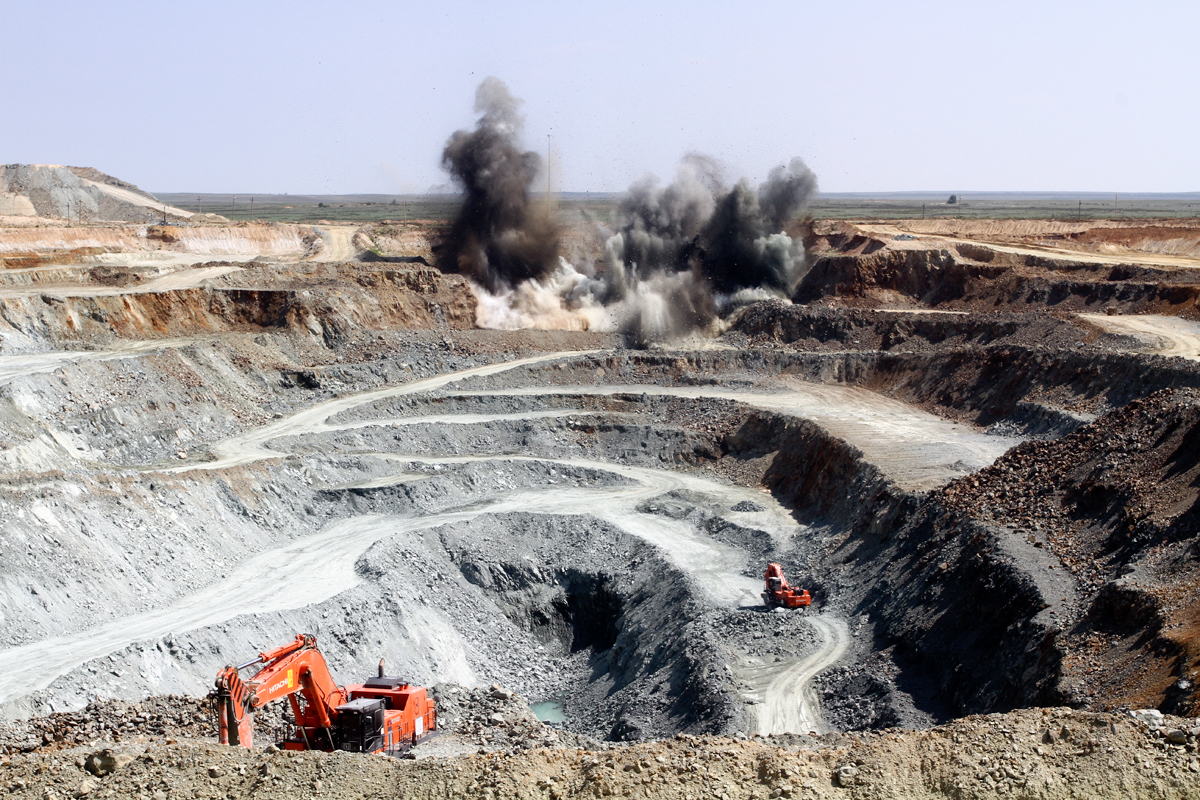
An open pit mine in Russia.RINAT GAREEV/WIKIMEDIA COMMONS
The amount of material consumed by humanity has passed 100 billion tons every year, a report has revealed, but the proportion being recycled is falling.
The climate and wildlife emergencies are driven by the unsustainable extraction of fossil fuels, metals, building materials, and trees. The report’s authors warn that treating the world’s resources as limitless is leading towards global disaster. Tiếp tục đọc “World Consumes 100 Billion Tons of Materials Every Year”→
BY TỊNH ANH – 14.08.2019, 16:58TTCT – Mua sắm qua mạng trước giờ vẫn được cho là giúp bảo vệ môi trường. Nhưng khi thương mại điện tử bùng nổ, những yếu tố từng là ưu điểm trong việc giảm ô nhiễm lại phản tác dụng.
In the first weeks of 2018 there were (for me) unexpected announcements from both the EU and the UK Government on the urgent global issue of ocean plastic pollution. The EU intends to make all plastic packaging on the European market recyclable by 2030 and in her speech announcing the UK’s 25 Year Environment Plan, Prime Minister Theresa May committed the UK to eliminating all “avoidable plastic waste” by 2042. The Prime Minister also said it would direct UK aid to help developing nations reduce plastic waste, which could indicate a new direction for the UK’s and other countries’ aid programmes.
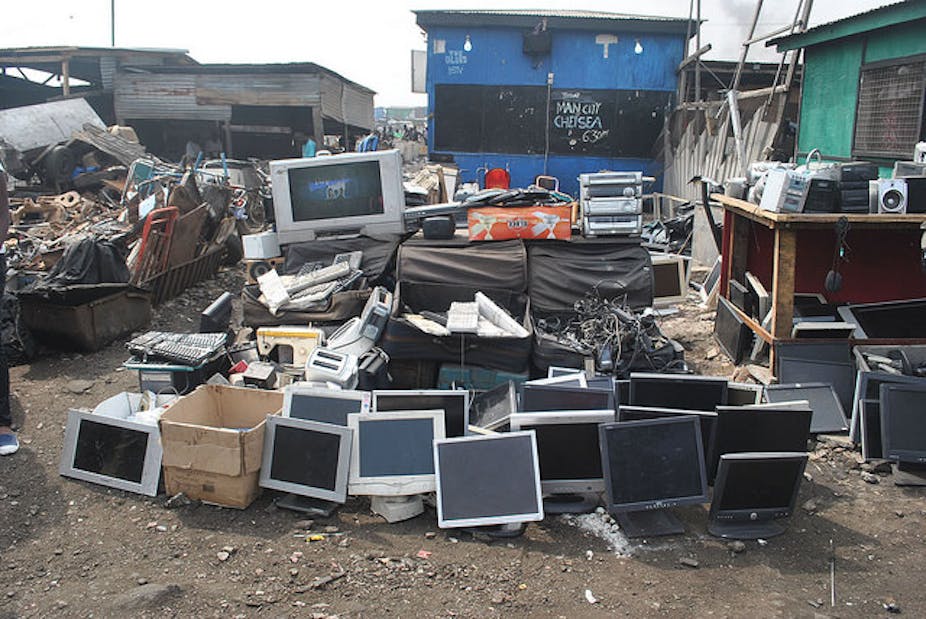
theconversation_Agbogbloshie, an area in the city of Accra Ghana, is usually portrayed as an e-waste dump. A more accurate picture would include the repair and refurbishment economy. Agbogbloshie Makerspace Platform
The volume of discarded electronics in East and South-East Asia jumped almost two-thirds between 2010 and 2015, and e-waste generation is growing fast in both total volume and per capita measures, new UNU research shows.
Driven by rising incomes and high demand for new gadgets and appliances, the average increase in e-waste across all 12 countries and areas analysed — Cambodia, China, Hong Kong, Indonesia, Japan, Malaysia, the Philippines, Singapore, South Korea, Taiwan, Province of China, Thailand and Vietnam — was 63% in the five years ending in 2015 and totalled 12.3 million tonnes, a weight 2.4 times that of the Great Pyramid of Giza.
VietNamNet Bridge – Sorting waste at the source and recycling are two of the solutions being implemented in HCMC to control issues posed by garbage dumping.
A report shows that the city produces 7,500 tons of waste, while the figure is expected to increase to 10,000-12,000 tons by 2020.
Hazardous solid waste is around 150,000 tons per year, including 6,300 tons of hazardous healthcare waste per year.
Residents of Kamikatsu diligently sort their waste into 45 different categories so it can be recycled, reused or composted
A small town in western Japan has become so good at recycling that it has been attracting foreign visitors, after its efforts became widely known via YouTube.
The documentary video, titled How This Town Produces No Trash with English narration and captions, explains how the 2,000 or so residents of town of Kamikatsu in Tokushima Prefecture diligently sort and recycle their waste according to 34 designated categories, peeling off labels and removing bottle caps as they go. Since the video was produced in late 2015, the categories have been increased to 45.