China is overplaying its rare earth hand in Japan

CNA Few countries are better prepared against China threatening their rare earth supplies than Japan, says David Fickling for Bloomberg Opinion.

Commentary: China is overplaying its rare earth hand in Japan
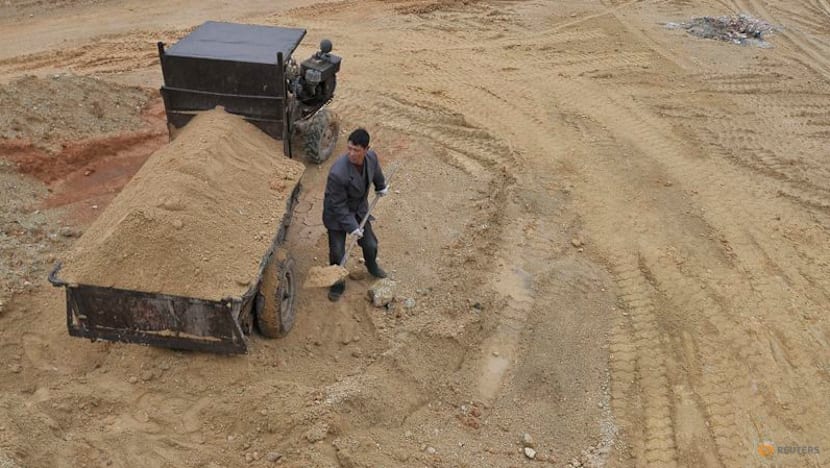
A labourer works at a site of a rare earth metals mine at Nancheng county, Jiangxi province, China, on Mar 14, 2012. (File photo: Reuters)
David Fickling 09 Jan 2026 05:59AM(Updated: 09 Jan 2026 09:30AM)

SYDNEY: To a hammer, every problem is a nail. If your most potent means of geopolitical leverage is threatening supplies of high-strength magnets, rare earth elements will always be the solution. 

That’s the latest approach Beijing is taking in its dispute with Tokyo sparked by comments from Japanese Prime Minister Sanae Takaichi about the possibility of military conflict over Taiwan. Exports of all items with potential military applications to Japan will be immediately banned, China’s Ministry of Commerce said on Tuesday (Jan 6)

The most obvious victim of this threat will be rare earth magnets made with the elements neodymium and praseodymium, and increasingly spiced up with rarer samarium, dysprosium and terbium. They’re used everywhere from charging cables to the switchgear in wind turbines to motors powering electric vehicles, missile guidance systems and aircraft flaps.

Tiếp tục đọc “China is overplaying its rare earth hand in Japan”

Exclusive: China-backed militia secures control of new rare earth mines in Myanmar

reuters.com By Naw Betty HanShoon NaingDevjyot GhoshalEleanor Whalley and Napat Wesshasartar

June 12, 20255:48 PM GMT+7Updated 5 days ago

United Wa State Army (UWSA) soldiers march during a media display in Pansang, Wa territory in northeast Myanmar

Item 1 of 4 United Wa State Army (UWSA) soldiers march during a media display in Pansang, Wa territory in northeast Myanmar, October 4, 2016. Picture taken on October 4, 2016. REUTERS/Soe Zeya Tun/File Photo

[1/4]United Wa State Army (UWSA) soldiers march during a media display in Pansang, Wa territory in northeast Myanmar, October 4, 2016. Picture taken on October 4, 2016. REUTERS/Soe Zeya Tun/File Photo Purchase Licensing Rights, opens new tab

  • Summary
  • Beijing-backed UWSA protecting new rare earth mines in Shan state, sources say
  • Mines being run by Chinese-speaking operators
  • China relies on Myanmar for rare earth imports but had recently faced some supply challenges
  • Rare earths offer Beijing leverage in trade war with Washington

BANGKOK, June 12 (Reuters) – A Chinese-backed militia is protecting new rare earth mines in eastern Myanmar, according to four people familiar with the matter, as Beijing moves to secure control of the minerals it is wielding as a bargaining chip in its trade war with Washington.

China has a near-monopoly over the processing of heavy rare earths into magnets that power critical goods like wind turbines, medical devices and electric vehicles. But Beijing is heavily reliant on Myanmar for the rare earth metals and oxides needed to produce them: the war-torn country was the source of nearly half those imports in the first four months of this year, Chinese customs data show.

Tiếp tục đọc “Exclusive: China-backed militia secures control of new rare earth mines in Myanmar”

Power scramble – 3 parts

Can Anyone Challenge China’s Near Monopoly On Metals Powering Our Tech? – Part 1/3 | Power Scramble


CNA Insider
– 3-11, 2023

We want the newest gadgets, the most advanced electric vehicles, and a fully electrified future, but behind all of that is a class of critical metals: rare earths. These are the only metals in the world, to date, that can be used to create powerful and portable magnets, essential to everything from EVs to wind turbines. So why the worry? For decades, China has maintained an iron grip on the entire supply chain for rare earths. Today, demand is skyrocketing for rare earths, because the world is racing to electrify just about every part of our lives. Kartik Kuna is the first outsider to gain filming access to a particular magnet factory in Dongguan, China – one of many Chinese factories that are producing a huge majority of the world’s rare earth magnets. Just why is it so hard to outcompete China in this space? Kartik also witnesses for himself a startling statistic – China is building up offshore wind power capacity at breakneck pace… all of which requires rare earths. Tiếp tục đọc “Power scramble – 3 parts”

Rare Earth Prices Skyrocket Following Burmese Mining Suspension

OILPRICE.COM By Metal Miner – Oct 08, 2023, 10:00 AM CDT

  • Myanmar’s Kachin State, supplying 38% of China’s rare earth imports, halted mining, causing an immediate spike in global prices.
  • The long-term effects of this suspension might lead to scarcity, illicit mining, and environmental issues in the region.
  • China’s economic slowdown combined with geopolitical risks highlights the need for diversified sourcing in the rare earth market.

The Rare Earths MMI (Monthly Metals Index) witnessed yet another steep increase month-over-month. Indeed, supply disruptions remain a massive concern in the rare earths industry, so rare earth magnets and other materials witnessed renewed bullish strength across the board over recent months.

https://imasdk.googleapis.com/js/core/bridge3.595.0_en.html#goog_2062367381

Tiếp tục đọc “Rare Earth Prices Skyrocket Following Burmese Mining Suspension”

Greenland: Đảo băng nóng bỏng

CHIÊU VĂN 26/3/2021 8:00 GMT+7

TTCT – Hồi năm 2019, khi tổng thống Mỹ lúc đó là Donald Trump hỏi mua hòn đảo khổng lồ ở Bắc Cực Greenland từ Đan Mạch, ông đã bị chê là vô duyên và lố bịch. Nhưng giờ, khi cuộc bầu cử sớm sắp diễn ra ở đấy – chính quyền Greenland sụp đổ vì tranh cãi liên quan tới tài nguyên đất hiếm – xem chừng ông Trump đã nhìn xa trông rộng.

Cuộc bầu cử ở Greenland, với tổng dân số chỉ hơn 56.000 người, dự kiến diễn ra vào ngày 6-4, và chỉ hơn một tháng sau sẽ là cột mốc trọng đại khác – 300 năm ngày vùng đất này trở thành lãnh thổ của Đan Mạch. Đầu cua tai nheo cũng là từ đó: ở đây có một phe đang đòi độc lập.

Hình ảnh này không có thuộc tính văn bản thay thế; tên tập tin là 2a5f6f07.jpg

Dân Greenland biểu tình phản đối một dự án khai khoáng. Ảnh: ejatlas.org

Tiếp tục đọc “Greenland: Đảo băng nóng bỏng”

Myanmar’s environment hit by rare earth mining boom

Pristine parts of northern Kachin State are under threat as demand grows for high-tech devices that rely on rare earth.

mekongeye.com

Kachin State’s Chipwi Township in northernmost Myanmar is known for its pristine forests and crystal-clear water.

But 10 years ago, local residents started noticing the patches of land that had been cleared on the lush mountains surrounding their town, which borders China’s Yunnan province. It started with one patch of land, where all the trees were cut down. Then others followed.

Soon locals saw heavy machinery being moved through their town, heading to those barren plots of land. Then workers started flooding in. They excavated the ground and left open pits, many filled with chemically-laced water, in areas once rich in woodland. The water near those sites was no longer clean.

It became obvious at that stage that the newcomers were looking for something underneath the ground – rare earth, which contains elements widely used in high-tech products like smartphones, computer components, electric vehicles and solar cells.  

Tiếp tục đọc “Myanmar’s environment hit by rare earth mining boom”

Những điều chưa biết về đất hiếm mà Trung Quốc dọa dùng làm vũ khí

TĐH: VN có trữ lượng đất hiếm nhiều thứ hai trên thế giới

30/05/2019 11:56 GMT+7

TTO – Các động thái mới đây của Trung Quốc hàm ý sẽ cắt giảm số lượng đất hiếm xuất khẩu sang Mỹ đã gây nhiều chú ý của công luận thế giới. Vậy đất hiếm là gì, chúng có thực sự hiếm như tên gọi?

Những điều chưa biết về đất hiếm mà Trung Quốc dọa dùng làm vũ khí - Ảnh 1.

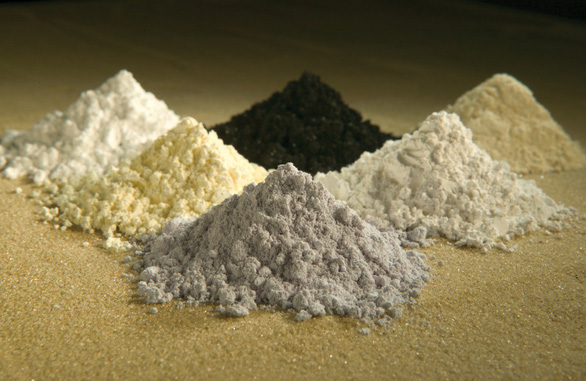
Các bán thành phẩm đất hiếm (từ trái sang) gadolinium, praseodymium, cerium, samarium, lanthanum, neodymium – Ảnh: Wikipedia

Đất hiếm được gọi là “vitamin của nền công nghiệp hiện đại” vì là thành phần không thể thiếu trong sản xuất các loại thiết bị và linh kiện trong công nghệ thông tin, y khoa, giao thông, hóa lọc dầu, luyện kim, quân sự và nhiều lĩnh vực khác.

Tiếp tục đọc “Những điều chưa biết về đất hiếm mà Trung Quốc dọa dùng làm vũ khí”

Mine declines: Good news for sustainability in Vietnam

Statistics from the General Statistics Office of Việt Nam (GSO) showed that the mining industry has posted a record slump since 2011, with the growth rate dropping by 7.1 per cent in 2017 and 4 per cent in 2016. — VNA/VNS Photo

Viet Nam Newsby Võ Trí Thành*

Statistics from the General Statistics Office of Việt Nam (GSO) showed that the mining industry has posted a record slump since 2011, with the growth rate dropping by 7.1 per cent in 2017 and 4 per cent in 2016.

This could be a small disappointment amid lots of bright spots in the country’s wider socio-economic picture last year. But this could also lead to an alarming conclusion – the mining industry will be unable to return to growth, and so the growth pattern must be transformed.

The GSO attributed the slump to the plummet in crude oil and coal exploitation. This consequence is directly related to Việt Nam’s past development strategy, when the mining industry still occupied an important position. Tiếp tục đọc “Mine declines: Good news for sustainability in Vietnam”

Where is gallium in our bauxite? Gali – kim loại trọng yếu – đang nằm ở đâu trong quặng Boxit của Việt Nam?

Bài tiếng Việt theo sau bài tiếng Anh

Where is gallium in our bauxite?

Given the strategic role of gallium in the world’s economy and security, and the availability of gallium in bauxite, why there has been absolutely neither discussion on nor mentioning of gallium through all these years of heated discussions about bauxite in Việt Nam?

Gallium is listed as a critical mineral by many advanced economies and may very well exist in Vietnam’s bauxite mines.

Minerals that have important uses and no viable substitutes, yet face potential disruption in supply, are defined as critical to a nation’s economic and national security.”[1]  Oftentimes, the terms “critical mineral” and “strategic mineral” are used interchangeably – if a mineral is deemed critical, it is usually essential for a national strategy, be it an economic or a defense strategy.


Gallium, appearance: silvery blue
Tiếp tục đọc “Where is gallium in our bauxite? Gali – kim loại trọng yếu – đang nằm ở đâu trong quặng Boxit của Việt Nam?”

Khủng hoảng kim loại đất hiếm: ngành năng lượng sạch đừng lo lắng

Rare-earth stock prices from 2007 to 2017

“Nguyên tố Đất hiếm” là 17 nguyên tố hóa học với tên gọi lạ lùng và đặc điểm không bình thường. Số nguyên tử của chúng là từ 57-71, 21 và 39. Hai phân nhóm nhỏ hơn, một nhóm là hiếm hơn và vì thế có giá trị hơn nhóm còn lại, có đặc điểm hóa học tương tự, vì vậy chúng thường được tìm thấy và khai thác cùng nhau.

Mặc dù tên gọi là hiếm, đất hiếm không phải là chất hiếm về mặt địa lý nhưng được phân tán rộng khắp lớp vỏ trái đất. Tuy nhiên, đất hiếm được khai thác ở một vài nơi và bởi một vài công ty bởi vì chúng thường không xuất hiện tập trung một chỗ với lượng lớn. Hơn nữa khai thác mỏ ngày càng nhiều chi phí và rủi ro, thị trường đất hiếm trên thế giới không lớn (vài tỷ đô la một năm), dễ bay hơi, phức tạp và bị chi phối bởi Trung Quốc, nơi mà không phải tất cả các mỏ và xuất khẩu khoáng sản đều hợp pháp và minh bạch. Một chuyên gia kết luận rằng khoảng một nửa số đất hiếm được sản xuất trên toàn cầu năm 2015 không nằm trong thống kê chính thức.
Tiếp tục đọc “Khủng hoảng kim loại đất hiếm: ngành năng lượng sạch đừng lo lắng”

Clean energy and rare earths: Why not to worry

Amory Lovins

“Rare earths” are 17 chemical elements with awkward names and unusual properties. Their atomic numbers are 57–71, 21, and 39. Their two subfamilies, one scarcer and hence more valuable than the other, have similar chemistries, so they’re generally found and mined together.

Despite their name, rare earths are not geologically rare but are widely dispersed throughout the Earth’s crust. They are mined in few places and by few firms, though, because they tend not to occur in highly concentrated form. Further raising miners’ costs and risks, the world market for rare earths is modest (several billion dollars a year), volatile, complex, and dominated by China, where not all mines and exports are legal and transparent. One expert concluded that about half of 2015 global production was off the books. Tiếp tục đọc “Clean energy and rare earths: Why not to worry”

What Happened to the Rare-Earths Crisis?

technologyreview_Four years ago, manufacturers fretted that trade controls in China would lead to a shortage of materials used in making an array of technology products. But demand fell more than expected.

February 25, 2015

      Four years ago, some manufacturers worried that they would run up against a shortage of rare-earth elements, which are used to make wind turbines, certain light bulbs, computers, and many other high-tech products. Rare earths actually aren’t rare, but they are found in low concentrations, attached to minerals from which they must be separated. And most of the facilities designed to mine and separate rare earths are based in China, which limited exports of these materials in 2009 and 2010 (see

“The Rare-Earth Crisis”

    ). A 2010 U.S. Department of Energy

report

    •  envisioned a possible “critical shortage” of five rare earth elements, especially dysprosium—crucial to the permanent magnets used in wind turbines and motors in hybrid or electric cars—between 2012 and 2014. But such worries seemingly dissipated without much fanfare. Why?
A chunk of dysprosium.

Falling prices Tiếp tục đọc “What Happened to the Rare-Earths Crisis?”

Critical Minerals of the United States

US Geological Survey, US Department of Interior

 Critical Minerals of the United States
It would be no exaggeration to say that without minerals, no aspect of our daily lives would be possible.

From the high-tech devices we use to access the information superhighway to the cars and trucks we use to drive the freeways, from the urban jungle to rural farms, every aspect of our lives relies on minerals. Thus, access to sufficient supplies of these minerals is a crucial part of keeping our economy and our security running.

In this new volume, entitled Critical Minerals of the United States, USGS geologists provide the latest and greatest on the geology and resources of 23 mineral commodities deemed critical to the economy and security of the United States. This work is meant to provide decision-makers, researchers, and economists with the tools they need to make informed choices about the mineral mix that fuels our society.

Image shows a chart of the elements used in computer chips over time
The number of elements used in computer chip technology  has changed: 12 in the 1980s, 16 in the 1990s, and more than 60 by the 2000s. (Public domain.)

Tiếp tục đọc “Critical Minerals of the United States”