Moses leading the Israelites out of Egypt. Tranh của Molnár, 1861
Đặng Hoàng Xa
“Mọi sự đều sẽ hết, nhưng người Do Thái thì không. Tất cả các thế lực khác sẽ qua đi, nhưng Họ vẫn còn. Bí mật trong sự bất tử của Họ là gì?” – Văn hào Mark Twain
Người Do Thái trên vùng đất Israel (Canaan)
Sự ra đời của đức tin
Người Do Thái có nguồn gốc từ người Hebrew cổ đại xuất hiện tại Trung Đông vào 4.000 năm trước. Theo truyền thuyết, người Do Thái và người Ả Rập là con cháu dòng dõi từ Abram (tên lúc sinh của Abraham) là người đã vâng theo lời gọi của Thượng Đế rời bỏ quê hương ở thành Ur thuộc phía Bắc vùng Mesopotamia (Lưỡng Hà) – nay là Đông-Nam Thổ Nhĩ Kỳ, đến lập nghiệp tại xứ Canaan, một vùng đất kéo ngang từ bờ sông Jordan tới biển Địa Trung Hải ngày nay.
Author: Le Chi Luc Ph.D. Research Scholar, Mahayana Buddhist Studies, Acharya Nagarjuna University, Guntur-522510, A.P, India
Abstract: Ly-Tran dynasty (1009 – 1400 A.D.) was the peak period of Vietnamese feudalism history. It was also known as the golden age of Vietnamese Buddhism. Therefore, the finding of study aim on the explore influence of Buddhist culture in Vietnam during Ly-Tran Dynasty (1009-1400 A.D.), that finds absorbed and deeply influenced in Vietnamese culture. This article addresses the main influences of Buddhist culture on the decisive ideology of this period, which is the premise to create a great landmark in the history of Vietnamese Buddhism finds the influence several aspects related the Vietnamese Buddhists 4 aspects as followed (1) influence on political – social thought, (2) influence on traditional and customs of Vietnamese, (3) influence on literature, and (4) influence on architecture and sculpture.
Descriptive Note: Memorandum
Corporate Author: RAND CORP SANTA MONICA CA
Personal Author(s): Gurtov, Melvin
Report Date: 1968-07-01
Abstract:
An analysis is made of 1 U.S. policy and diplomacy during the 1954 Geneva Conference on Indochina, 2 the objectives of the participants in the conference, 3 the tactics used during the negotiations, and 4 the implications of those tactics for the present conflict. Although Vietnamese unity was not a priority objective of China or the Soviet Union, neither power may have expected a South Vietnamese regime to survive until the national elections. The U.S. goal, among others, was to maximize the Saigon governments chances of posing an authentic challenge in the elections of 1956. In terms of the present conflict, additional Communist participation might complicate rather than strengthen Hanois position by increasing the opportunity for division on issues of troop withdrawal and political settlement. Saigons influence could be reduced if the United States were to limit South Vietnams role to talks with the Viet Cong. In the realm of tactics, Geneva indicates, first, that an ambiguous commitment on the part of the United States to a negotiated settlement can have far greater value than an obvious disposition to accept terms second, that the threat of a use of force hitherto restrained can be more valuable to the U.S. bargaining position than force already applied.
Full report https://www.rand.org/content/dam/rand/pubs/research_memoranda/2005/RM5617.pdf
NGUYỄN THANH BÌNH – Trường Đại học Khoa học Xã hội và Nhân văn, Đại học Quốc gia Hà Nội
1. Quốc triều hình luật (hay còn gọi là Lê triều hình luật) được xây dựng, bổ sung, hoàn chỉnh trong các triều đại phong kiến Việt Nam thời Lê sơ. Bộ luật này được vua Lê Thánh Tông ban hành vào năm 1483 trong thời gian ông lấy niên hiệu là Hồng Đức (1470-1497), nên trong dân gian và trong sử sách vẫn thường gọi bộ luật này là Luật Hồng Đức(1).
Tất nhiên, cho đến nay, vẫn còn có nhiều ý kiến khác nhau về thời điểm khởi thảo và thời điểm hoàn chỉnh bộ luật này. Trong thiên Hình luật chí (sách Lịch triều hiến chương loại chí), Phan Huy Chú cũng như dựa trên nhiều nguồn tư liệu khác và theo quan điểm chung của nhiều nhà nghiên cứu thì bộ luật này được xây dựng trên cơ sở sưu tập tất cả các điều luật, các văn bản pháp luật đã ban bố và thi hành trong các đời vua trước đây, được sửa chữa, bổ sung và san định lại cho hoàn chỉnh(2). Song, trong Lời nói đầu của cuốn Quốc triều hình luật do Viện Sử học Việt Nam dịch và giới thiệu thì bộ luật trên có thể được soạn thảo ngay năm đầu của triều Lê sơ (Lê Thái Tổ) và “không ngừng được các triều vua kế tiếp bổ sung, hoàn chỉnh dần, trong đó chắc chắn là có những đóng góp to lớn của ông vua nổi tiếng văn hiến Lê Thánh Tông”(3). Có thể khẳng định rằng, Luật Hồng Đức là bộ luật tiến bộ nhất, hoàn chỉnh nhất trong các bộ luật ở Việt Nam thời phong kiến; là thành tựu có giá trị đặc biệt trong lịch sử pháp luật Việt Nam; là một trong những thành tựu tiêu biểu của nền văn hiến nước ta. Bộ luật ấy chứa đựng nhiều giá trị nhân văn sâu sắc và nội dung tư tưởng rộng lớn, là cơ sở nền tảng trong việc xây dựng nhà nước phong kiến thịnh trị thời Lê sơ.
danviet.vn Thứ ba, ngày 15/06/2021 22:56 PM (GMT+7)
Với Bộ luật Hồng Đức, lần đầu tiên trong lịch sử Việt Nam, người phụ nữ được pháp luật quy định một loại quyền đặc biệt…
Bộ luật Hồng Đức là 1 trong 4 bộ tổng luật thành văn trong lịch sử lập pháp Việt Nam (cùng với bộ Hình thư thời Lý, bộ Quốc triều thông chế thời Trần và bộ Hoàng Việt luật lệ thời Nguyễn). Bộ luật Hồng Đức là sản phẩm của việc pháp điển hóa pháp luật thời Lê sơ, hiệu lực của nó không chỉ duy trì trong hơn 300 năm thời Hậu Lê; mà kể cả thời Nguyễn sau này hay hệ thống pháp luật Việt Nam hiện đại cũng đã kế thừa nhiều thành tựu lập pháp trong bộ luật Hồng Đức.
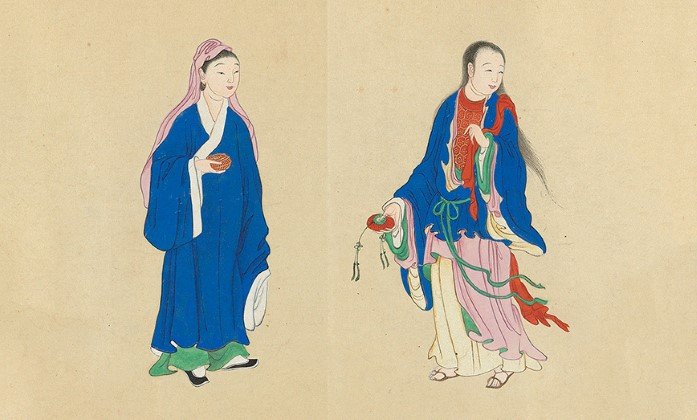
Hai người phụ nữ thời Lê trong Hoàng Thanh chức cống đồ.
Bộ luật Hồng Đức bao gồm 722 điều, chia thành 13 chương; nhưng không phải tất cả các điều luật này đều được ban hành trong thời kì Hồng Đức (1470-1497). Ví dụ, điều 388 bộ luật Hồng Đức được ban hành vào năm Quang Thuận thứ 2 (1461); điều 389 bộ luật Hồng Đức được ban hành vào năm Hồng Thuận thứ 3 (1511), điều 391 bộ luật Hồng Đức được ban hành vào năm Quang Thiệu thứ 2 (1517)…
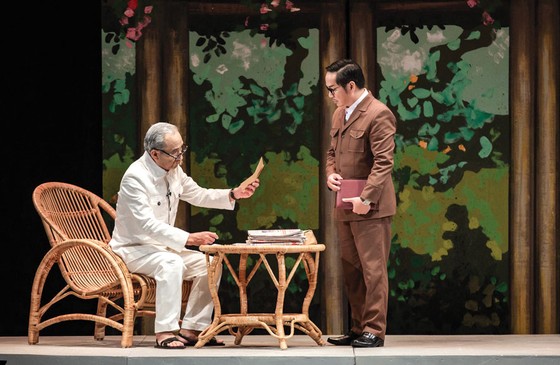
(ĐTTCO) – Hướng đến kỷ niệm sinh nhật Bác Hồ, Sân khấu tư nhân Lệ Ngọc công diễn vở kịch “Lá đơn thứ 72” nói về câu chuyện Chủ tịch Hồ Chí Minh chỉ đạo xử lý thư kêu cứu của người dân bị án oan. NSND Lê Tiến Thọ ở tuổi 71 được mời làm đạo diễn, còn NSND Vương Duy Biên ở tuổi 64 đảm nhận vai trò thiết kế mỹ thuật.
Một cảnh trong vở kịch “Lá đơn thứ 72”.
NSND Lê Tiến Thọ là một nhân vật nổi tiếng bậc nhất trong nghệ thuật tuồng Việt Nam, với các vai diễn trong “Suối đất hoa”, “Hoàng hôn đen”, “Lý Phụng Đình”… và còn thể hiện năng lực trong vai trò đạo diễn các vở tuồng “Thiếu phụ Nam Xương”, “Lý Chiêu Hoàng”, “Dũng khí Đặng Đại Độ”…
Ông cũng là tác giả của nhiều kịch bản tuồng như “Chuyện tình ông vua”, “Hoàng thúc Lý Long Tường”, “Vụ án Lệ Chi Viên”… NSND Lê Tiến Thọ được trao Giải thưởng Nhà nước về văn học nghệ thuật năm 2012. Sau nhiều năm làm Giám đốc Nhà hát tuồng Việt Nam, ông tiếp tục đảm nhận những vị trí Cục trưởng Cục Nghệ thuật biểu diễn, Thứ trưởng Bộ Văn hóa Thể thao – Du lịch, Chủ tịch Hội Sân khấu Việt Nam…
How did two countries with the same language, culture, and history turn out so differently?
Last Updated April 28, 2023
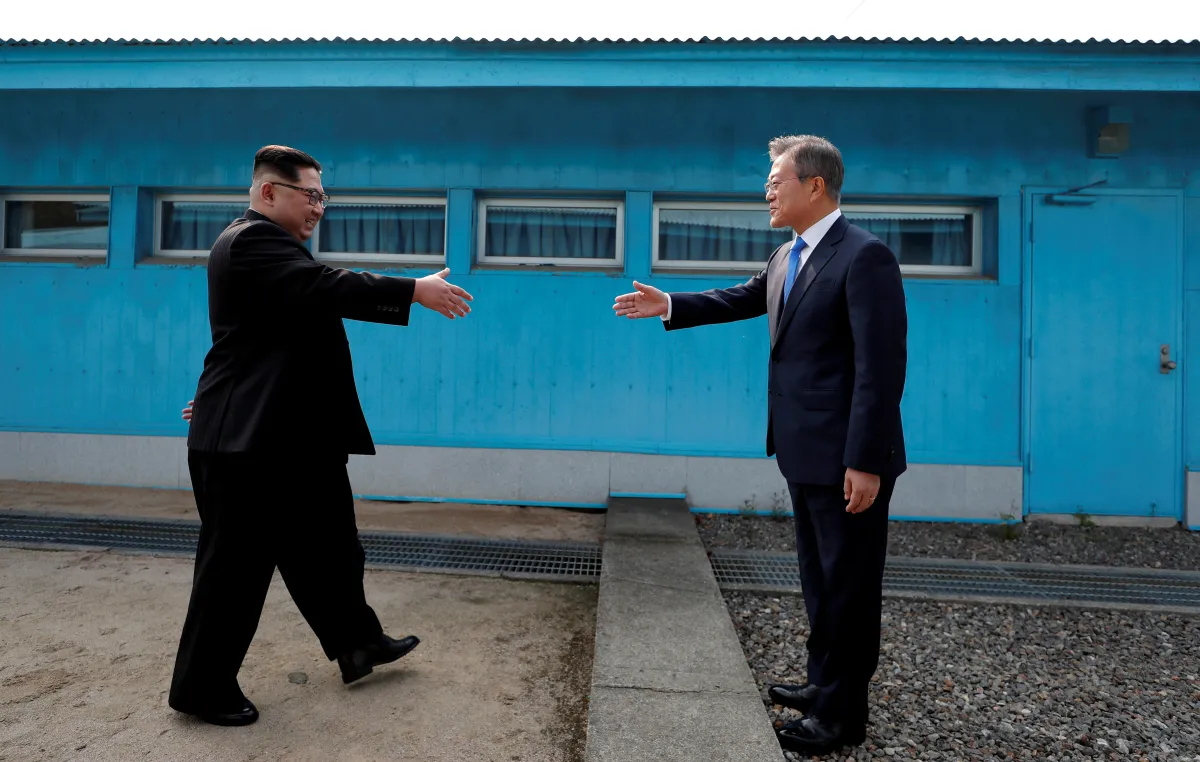
South Korean President Moon Jae-in and North Korean leader Kim Jong Un shake hands at the truce village of Panmunjom inside the demilitarized zone separating the two Koreas, South Korea, April 27, 2018.
Source: Korea Summit Press Pool via Reuters.SHARE
South Korea is one of the world’s most successful economies. It’s home to billion-dollar corporations like Samsung and produces some of the best high-tech electronics. But just across the border, North Korea is one of the most impoverished countries in the world. How can two countries with the same language, culture, and history—that were, not long ago, one united country—turn out so differently?
North and South Korea had been one nation for over a thousand years. Theoretically, they could have developed similarly after splitting in 1945, at the end of World War II. In fact, North Korea possessed the resources to outpace the south in development. But the political and economic decisions their leaders made destined the countries for completely different futures.
Women and children prepare to flee with their belongings near the Central African Republic town of Grimari on May 7, 2014. (Siegfried Modola/Reuters)
How many of today’s problems in the Global South are a direct legacy of colonialism? A recent journal article by Bruce Gilley, “The Case for Colonialism,” kicked up great controversy by arguing that the “orthodoxy” that Western colonialism was universally harmful to colonized peoples and countries is overstated. Colonialism, Gilley writes, was “both objectively beneficial and subjectively legitimate” in many places.
Gilley, a political scientist at Portland State University, studies Chinese politics and recently made waves for resigning his membership in the American Political Science Association over its alleged lack of political diversity. His article in Third World Quarterly, however, ignores many existing studies that answer these questions with better data and more rigorous analysis, and which come to a resounding conclusion of “no.”
Explore how colonialism enriched empires and fundamentally reshaped countries such as India.
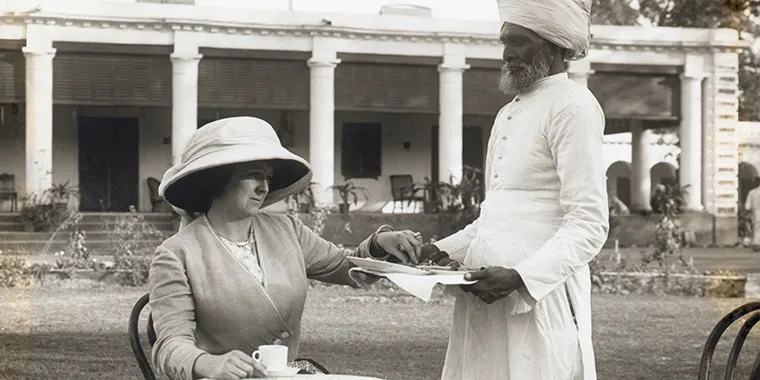
A Hindu servant serves tea to a European colonial woman in this undated photograph. Source: George Rinhart/Corbis via Getty ImagesSHARE
In the late seventeenth century, the Mughal Empire controlled almost all of the Indian subcontinent.
European visitors marveled at the empire’s wealth and grandeur. Antonio Monserrate, a Portuguese Jesuit missionary, called its cities “second to none either in Asia or in Europe with regards either to size, population, or wealth.”
For centuries, merchants around the world had traveled to India, eager to trade for coveted silk, spices, and textiles. And in 1700, India’s economy was larger than all of Western Europe’s put together, making up nearly 25 percent of the global economy. By 1973, however, that number had dropped to just 3 percent.
How did this happen?
The full story is long, winding, complex, and contentious. It involves centuries of war, technological innovation, and global trade that sent some economies soaring and brought others crashing down. But central to this story for India—and for so many countries around the world—is the history of colonialism, the practice of controlling another country or area and exploiting its people and resources.
A journey from Hanoi, the Vietnamese capital, via former capitals Ninh Binh and Hue, to Ho Chi Minh City, its investment capital, reveals much about the country
It’s difficult not to think about trains while in downtown Hanoi, especially at mealtimes.
Long metal caravans shunting through town in plain view of the near-ubiquitous streetside eateries contribute a periodic clappity-clap rhythm to the city’s clamorous soundtrack.
Tracks girdle the historical heart of the Vietnamese capital like the head of a question mark and in doing so, connect two of Hanoi’s most popular sites: the Long Bien Bridge, a colonial structure spanning the Red River that was bombed so many times during the Vietnam war it became a symbol of national resistance, and Ngo 224 Le Duan (better known as Train Street), an alleyway along which trains pass perilously close to houses and makeshift cafes.
However, my travel inspiration comes not from the recurrent glimpses of locomotives, but from an old propaganda poster hanging in a tourist shop opposite the Cathedrale Saint-Joseph de Hanoi.
Buddhist philosophy has long permeated the Khmer ethnic community. In this community, the relationship between ethnicity (Khmer people) and religion (Theravada Buddhism) is closely linked together. The Southern Khmer temple is a cultural center of this ethnic group. This place is associated with cultural activities and folk rituals, and at the same time is a traditional school that teaches the knowledge, human ethics, and handicraft. The pagoda is like a museum about Buddhism and the art of “Phum” and “Soc”, a place for Khmer people to rely on their souls when they live and send their ashes when they die. This study refers to the position and role of Theravada Buddhism for Khmer people. From there, state the current situation and make recommendations to the Vietnam Buddhist Sangha and state management agencies, in order to contribute to preserving and promoting the values of Khmer Theravada Buddhism and strengthening the great national unity bloc.
A documentary about the life of Stalin and his rise to power. The film includes interviews with surviving members of Stalins family who corroborate historical facts from their perspective.
Tác giả: Nam Sơn Trần Văn Chi – Published: 08 Tháng Ba 2019
Trích bài 3 – Lớp Dự bị – Đi học để làm gì
“Bác hỏi tôi đi học để làm gì. Tôi xin nói bác nghe. Tôi đi học để biết đọc những thư từ người ta gởi cho tôi và viết những thư từ tôi gởi cho người ta. Tôi đi học để biết đọc sách, đọc nhật báo, thấy điều gì hay thì bắt chước. Tôi đi học để biết tính toán, biết mọi sự vật và biết phép vệ sinh mà giữ gìn thân thể cho khỏe mạnh.
Nhưng tôi đi học cốt nhất là biết luân lý, để hiểu cách ăn ở thành người con hiếu thảo và người dân lương thiện.
Bài 1: Thân phận lạc loài
Những ai, trong chúng ta, ở độ tuổi 60 trở về trước, hẳn còn nhớ bộ sách Quốc Văn Giáo Khoa Thư ( QVGKT); Có thể đã từng đọc qua hoặc đã nghe đâu đó kể, hoặc đọc qua một vài đoạn, vài bài trong đó. Ðã nửa thế kỷ qua đủ để chúng ta quên nó. Và đủ để chúng ta nhớ nó; nhưng dù thế nào nay đọc lại cũng gây cho chúng ta ít nhiều hoài niệm về thời thơ ấu. Thời mà ngày hai buổi cấp sách đến trường, thời ăn chưa no, lo chưa tới của tuổi học trò.
Trong buổi sơ khai của chữ quốc ngữ (không phải chữ Hán, chữ Tây), bộ QVGKT là bộ sách giáo khoa, do nhà nước Pháp, mà trực tiếp là Nha Học Chánh Ðông Pháp, giao cho quí ông Trần Trọng Kim, Nguyễn Văn Ngọc, Ðặng Ðình Phúc và Ðỗ Thận cùng biên soạn. Bộ QVGKT gồm có 3 quyển:
– Quyển dành cho lớp Ðồng Ấu ( Cours Enfantin) là quyển dạy về luân lý (Morale) qua các bài tập đọc và tập viết.
– Quyển dành cho lớp Dự Bị ( Cours Préparatoire)
– Và quyển dành cho lớp Sơ Ðẳng ( Cours Elementaire).
Hai quyển Dự Bị và Sơ Ðẳng gồm các bài tập đọc (lecture), chứa đựng nội dung bao gồm: Sử ký, Ðịa Dư, Cách trí, Vạn vật, Vệ Sinh, Ðạo Ðức, Gia Ðình…
Chưa có dịp tìm một cách chính xác xem coi bộ QVGKT xuất bản đầu tiên năm nào, nhưng theo bản mà chúng tôi đọc, xuất bản năm 1939 thì đã in lần thứ mười ba. Như vậy án chừng sách xuất bản đầu tiên vào những năm đầu thế kỷ 20.
This essay explores contributions to Vietnamese history by Việt Nam’s first historical generals (who were women) as well as by women from the Vietnamese Communist Party’s early years through the French-American War (1945–1954) and the American War (1954‒1975). It discusses how women used Confucian subservience, gender-determined dress, and traditional roles to supply local soldiers, gather intelligence, and resist the French and American armies. I provide information, documents, and photographs gathered by completing annotated book translations and by engaging in conversations and interviews conducted in Vietnamese over the course of nearly fifty years, including accounts from both famous and ordinary Vietnamese women. Their stories are unique yet representative of the experiences of many wartime participants.
Vietnamese Women in War and Peace
When we think about the French-American War (1945‒1954) and the American War in Việt Nam (which Americans often call the Vietnam War, 1954‒1975), we should address a seldom-spoken truth: Since the Vietnamese fought a people’s war (toàn dân—all the people), demographics suggest that half of those fighting against the American-allied front were women. The story of these women begins in the first century C.E. with another seldom-spoken truth: The first Vietnamese historical (as opposed to legendary) personages were women.
Rooted in Ancient Matriarchy
From time immemorial, Việt Nam was a matriarchy with a well-established religion of mother goddesses, whom many Vietnamese still worship today (See Illus. #1, Hữu Ngọc 2016, 2017, 76–79). Matriarchy spawned Việt Nam’s first historical generals, the Trưng sisters— Trưng Trắc and Trưng Nhị (both ?–43 C.E.)—from an outlying district of modern-day Hà Nội. The Hán Chinese had occupied Việt Nam since 111 B.C.E. In 40 C.E., the sisters led a rebellion to avenge the death of Trưng Trắc’s husband, whom the Vietnamese annals say Chinese pro-consul Su Ting had assassinated. The sisters, their mother, and their women generals (whose names are known, affirming the sisters’ presence as historical characters) liberated Việt Nam from the Chinese. Before doing so, Trưng Trắc began Việt Nam’s tradition of generals writing poetry to galvanize their troops. Her “Oath at Hát River” in six-eight rhythm—a six-word line followed by an eight-word line—emphasizes the legendary Vietnamese Hùng Dynasty, which began in about 2870 B.C.E.:First pledge: Wash away the enemy Second pledge: Rebuild the Hùng Family’s ancient karma Third: Avenge injustices against my husband Fourth pledge: Execute this oath beginning to end (Borton 2007, 1).
Illus. #1
A Vietnamese mother goddess in a drawing collected by the French soldier Henri Oger, who published more than 4,000 drawings of traditional Vietnamese life depicted by Vietnamese artists. Scholar Olivier Tessier of École française d’Extrême-Orient (ÉFEO) oversaw the Oger Collection’s centennial publication in 2009. Source: Olivier Tessier, ÉFEO.





 CVD
CVD 