The lights dim on Laos’ brief Bitcoin dream

mekoneye.com By Võ Kiều Bảo Uyên 17 November 2025 at 14:50

Four years after it first approved Bitcoin mining projects powered by surplus hydropower, Laos is beginning to rethink whether the energy-hungry industry — now linked to massive transnational cryptocurrency scams — is worth keeping alive

High-rise buildings stand in the Boten Special Economic Zone in northern Laos, near the border with China. The area is suspected to be a hotspot for scam operations, including schemes that store fraudulent money in crypto for later laundering. PHOTO: Thanh Hue

Houaphanh Province, LAOS — Bitcoin is a world far away from 19-year-old Chai, an ethnic Hmong and a college student who has never owned a computer. 

But its shadow has already crept into his mountainous village, where power outages are common—often a side effect of the vast energy demands elsewhere, including cryptocurrency mining.

Despite the national grid being connected to his remote community seven years ago, he and his classmate studied by candlelight, oil lamp, or mobile flashlight at night to prepare for university entrance exams. The blackout worsens during the dry seasons when hydropower drops. 

Tiếp tục đọc “The lights dim on Laos’ brief Bitcoin dream”

Banana Boom, Soil Bust

mekongeye.com Produced in partnership with the Putlizer Center

Long-term intensive chemical use in Laos’ banana farms has degraded the country’s once-fertile soil, and it may take nearly half a century to restore it.

  • Laos’ fertile soil and its proximity to China have created ideal conditions for banana cultivation to meet the surging demand from Chinese consumers.
  • This fruit frenzy has attracted Chinese companies to seek farmland in Laos, a landlocked country that has embraced a “green agriculture” approach to combat poverty.
  • With government approval, the sector has expanded, offering jobs, infrastructure development, and revenue from land once considered undervalued.
  • However, an investigation by Mekong Eye and the Rainforest Investigations Network (RIN) reveals that the fruit plantation boom has left a legacy of soil degradation and uncertain livelihoods for many local farmers.

OUDOMXAY & BOKEO, LAOS – Northern Laos is experiencing soil degradation after years of monocropping and widespread chemical use on banana farms operated by Chinese entrepreneurs.

Thiep doesn’t remember the name of the Chinese fruit company that leased his family’s land, only that it was one of the first to arrive in his northern Lao village in 2007. 

After a decade of monocropping bananas, the company left and then returned the land to his family. But in the interim, the earth had changed in ways Thiep and his household couldn’t have anticipated.

“The soil is unusually hard and dry, not like it used to be. We had to replace the plow with a stronger one just to break the ground,” Thiep recalled.

His family members invested extra effort into its first rice crop after reclaiming the plotland. That year, they enjoyed a bumper harvest that was more than they had before the arrival of the Chinese company. But it was the last time they saw such abundance.

“The yield kept decreasing after that,” Thiep said, planting seedlings in the flooded paddy. “Before we leased it out, this plot produced 60 bags of rice. Now it’s down to 30, not enough for the family to eat.”

Nearly two decades ago, Chinese entrepreneurs, attracted by geographic proximity, blanketed northern Laos with banana plantations. 

Exporting bananas to China quickly became an economic mainstay, replacing the long reliance on subsistence rice farming. The plantations not only created local jobs but also increased income for households leasing their land to companies.

But investment capital is bittersweet: it may have provided the region with a ladder out of the depths of poverty, but it has ushered in new perils. 

Some local workers have reportedly fallen ill or died after pesticide spraying on farms.

laos banana worker
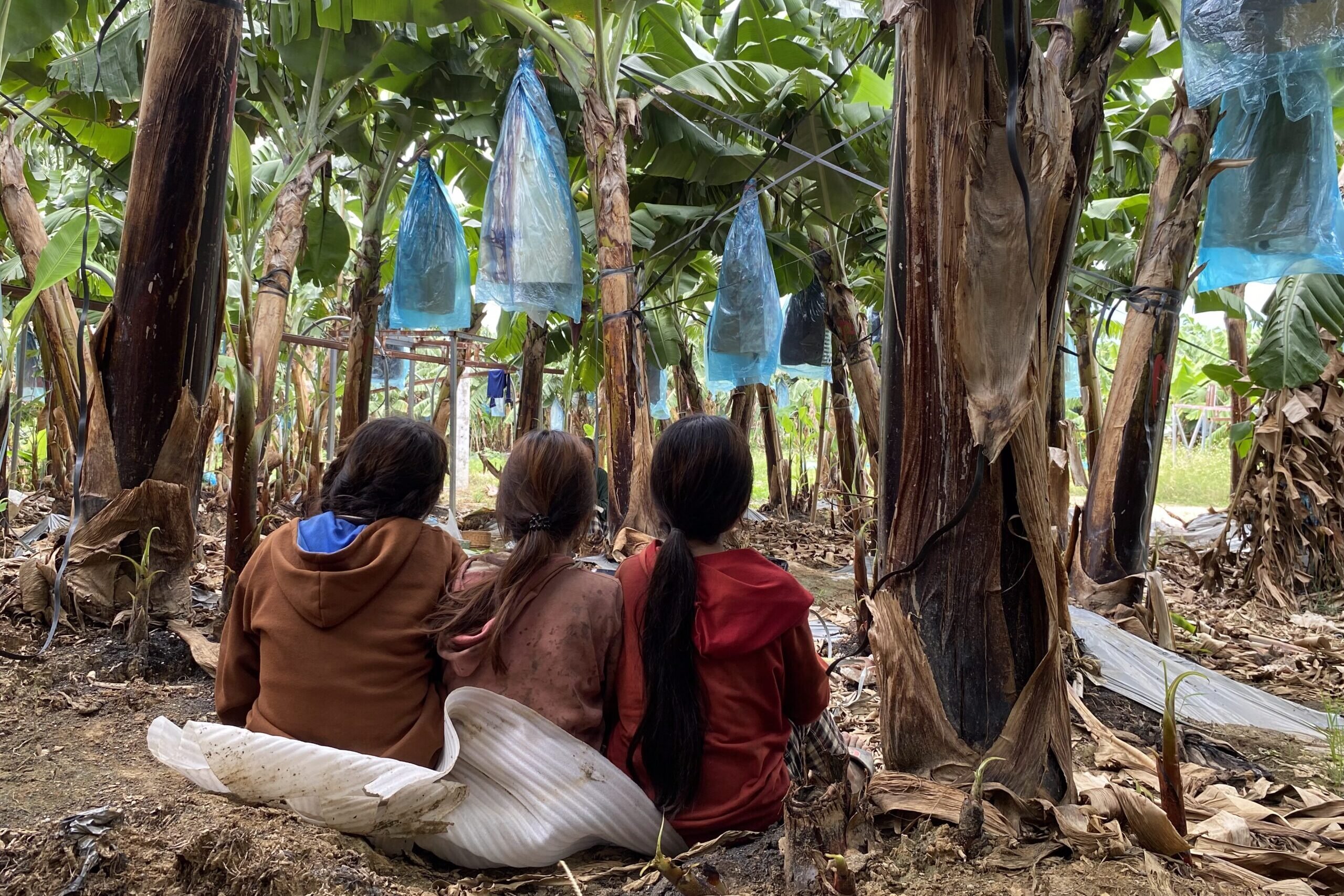
Young Hmong workers rest after long hours of labor on a banana plantation in Oudomxay province, northern Laos. Many, including children under 15, face direct exposure to hazardous agricultural chemicals used in the plantations.

A 2017 study, conducted with the Lao government’s involvement, found that agricultural chemicals – used intensively and without consistent management on banana plantations – had poisoned rivers and soil, and harmed the health of residents and plantation workers. 

Among the chemicals identified were paraquat – a highly toxic herbicide banned in several countries, including Laos and China – and chlorothalonil, a hazardous substance banned in the EU in 2020 due to its potential to pollute groundwater and cause cancer.

Facing the issue, an official from the Ministry of Industry and Commerce verbally stated in early 2017 that the Prime Minister’s Office had ordered a ban on all commercial banana cultivation, according to the Laos News Agency. However, our reporter was unable to find any official orders on public platforms dating back to 2016.

Tiếp tục đọc “Banana Boom, Soil Bust”

Fruits of spoil: Laos’ forests disappearing as fruit farms flourish (2 parts)

Fruits of spoil: Laos’ forests disappearing as fruit farms flourish

Mekong eyes – 16 December 2024 at 9:27 (Updated on 16 December 2024 at 15:40)

The country’s improved railway connectivity facilitates fruit exports to China but has also sparked a boom in foreign-owned banana and durian farms, leading to forest clearance

A Chinese-owned banana plantation on land that was once forested, located in Attapeu province, southern Laos, in August 2024.

The report was produced with support from the Pulitzer Center’s Rainforest Investigations Network (RIN) and Internews’ Earth Journalism Network as part of the “Ground Truths” collaborative reporting project on soils. 

ATTAPEU, LAOS — The new high-speed railway has enabled faster fruit exports from Laos to China, attracting more investment in large-scale plantations. However, this growth has come at the cost of deforestation.

Bananas and the “king of tropical fruit” – durians – are very popular in China, but they typically ripen within a few days of harvesting.

However, that problem was resolved with the launch of the Laos-China Railway in 2021, which has enabled landlocked Laos to deliver its fruit quickly to China’s 1.4 billion consumers.

Tiếp tục đọc “Fruits of spoil: Laos’ forests disappearing as fruit farms flourish (2 parts)”

Laos is spiraling toward a debt crisis as China looms large

>> Inflation and Debt Weigh Down Lao PDR Economic Recovery

CNBC.com Nyshka Chandran

KEY POINTS

  • Laos borrowed billions from President Xi Jinping’s administration to finance railways, highways and hydroelectric dams, which has ballooned public debt to over 100% of GDP.
  • Combined with a currency crisis and soaring inflation, Laos is on the brink of economic collapse.
  • Without a clear-cut debt reduction deal with China, Laos’ financial hardships are unlikely to ease, analysts warn. But it remains to be seen if Beijing will agree to long-term concessions.
A pedestrians at a bus station in Vientiane, Laos, on Saturday, June 24, 2023.

A pedestrians at a bus station in Vientiane, Laos, on Saturday, June 24, 2023.

Valeria Mongelli | Bloomberg | Getty Images

Tiếp tục đọc “Laos is spiraling toward a debt crisis as China looms large”

Laos struggles with unexploded bombs 50 years after Paris Accords

asia.nikkei.com

Hidden dangers from another era hinder economic development

An unexploded cluster bomb dropped by the U.S. military half a century ago is unearthed in Kasi, northern Laos.

KOSUKE INOUE, Nikkei staff writerJanuary 28, 2023 11:01 JST

KASI, Laos — Five decades have elapsed since the signing of the Paris Peace Accords on Jan. 27, 1973 that led to the end of the Vietnam War. The long conflict devastated all of Indochina, and its aftermath continues to stymie the region’s economic development.

Early this month, specialists of the Laotian military detected unexploded ordnance (UXO) in the northern town of Kasi. The team of about 10 found one cluster bomb the size of a tennis ball and used a loudspeaker to warn residents while cordoning off nearby roads before disposing of the device.

Operations of this type continue.

Tiếp tục đọc “Laos struggles with unexploded bombs 50 years after Paris Accords”

Vietnam’s timber legality program not making a dent in risky wood imports – Việt Nam còn rất nhiều việc phải làm để ngăn chặn gỗ bất hợp pháp

Vietnam’s timber legality program not making a dent in risky wood imports

Mongabay – by Carolyn Cowan on 2 February 2022

  • Despite new regulations to clean up Vietnam’s timber sector, importers continue to bring large volumes of tropical hardwood into the country from deforestation hotspots in Africa and Asia for use in products sold domestically.
  • In 2018, Vietnam signed a Voluntary Partnership Agreement with the EU to eliminate illegal timber from the country’s supply chains and boost access to the strictly regulated European markets.
  • However, importers say the new legality requirements introduced in 2020 to verify the legitimacy of timber brought into the country are “too confusing,” and customs data indicate few signs of a reduction in high-risk timber imports from countries including Cambodia, Cameroon, Gabon, Laos and Papua New Guinea.
  • Although Vietnamese authorities are taking steps to improve the situation, meaningful change is expected to take time; a switch by domestic consumers to products that use sustainable, locally grown timber instead of imported tropical hardwoods could solve many underlying problems, experts say.

Tiếp tục đọc “Vietnam’s timber legality program not making a dent in risky wood imports – Việt Nam còn rất nhiều việc phải làm để ngăn chặn gỗ bất hợp pháp”

Opinion: Energy importers must consider true ‘sustainability’ of Laos hydropower

Proponents describe regional power grids as a way to promote economic growth, energy security and renewables in Southeast Asia, but this might come at a heavy cost

Lat Tha Hae temple in Luang Prabang province, Laos, half submerged by the Nam Ou 1 hydropower dam (Image: Ton Ka/China Dialogue)

Ming Li Yong

the third pole – August 23, 2022

On 23 June 2022, the import of 100 megawatts (MW) of hydropower from Laos to Singapore through Thailand and Malaysia was hailed as a historic milestone. Part of a pilot project known as the Lao PDR-Thailand-Malaysia-Singapore Power Integration Project (LTMS-PIP), this event represented Singapore’s first ever import of renewable energy, and also the first instance of cross-border electricity trade involving four countries from the Association of Southeast Asian Nations (ASEAN).

However, this development takes place amid rising concerns for the ecological future of the transboundary Mekong River and the millions of people who depend on it. A 2018 study by the Mekong River Commission concluded that further hydropower development on the river would negatively affect ecosystems, and would reduce soil fertility, rice production, fish yields and food security, while increasing poverty in the river basin.

Tiếp tục đọc “Opinion: Energy importers must consider true ‘sustainability’ of Laos hydropower”

China-indebted Laos way more broke than advertised

asiatimes.com

World Bank predicts public debt will swell to 95% of GDP by year’s end while ‘hidden debts’ to China likely take the figure north of 120%

By DAVID HUTTOCTOBER 14, 2022

Laos will be hard-pressed to meet its external debt obligations. Photo: Faceboo
Laos’ public debt could climb to nearly 95% of GDP by the end of 2022, making it one of the most heavily indebted and mostly likely to default nations in Asia, according to World Bank estimates published this month

Significantly, the World Bank’s already dire debt figures do not encompass all of the small Southeast Asian nation’s liabilities.

Asia Times’ reporting and analysis show that Laos’ total debt, including other publicly guaranteed liabilities not included in headline figures, could take the state’s total financial obligations well over 100% of GDP for the first time ever this year. And that’s only the debt officially recognized by the Lao government.

Tiếp tục đọc “China-indebted Laos way more broke than advertised”

The lost tribe: The CIA’s secret army in Laos

The lost tribe: The CIA’s secret army in Laos | REWIND

Al Jazeera English – 24-8-2019

We trace a forgotten Hmong community in the jungles of northern Laos who helped the US during the Vietnam War.

Half a century ago, as war raged in Vietnam, an isolated community in the jungles of northern Laos was recruited by the CIA to help fight the Pathet Lao – the Laotian equivalent of Vietnam’s Viet Cong.

Over 50,000 of the Hmong tribe became part of the United States’s secret army, helping disrupt Communist supply lines along the Ho Chi Minh trail.

Tiếp tục đọc “The lost tribe: The CIA’s secret army in Laos”

Laos economic crisis intensifies amid massive Chinese debt

DW – 09.08.2022 – Enno Hinz

Laos is facing one of its worst economic crises in decades, with the country experiencing galloping inflation and staring at a debt default.   

Inflation in Laos has hit a 22-year high, causing a scarcity of essential commodities like fuel

Laos’ economy has been on the brink of collapse due to a spiraling debt crisis that is crippling the country’s finances and bringing it perilously close to default.

In June, the Southeast Asian nation’s Statistics Bureau announced that inflation hit a 22-year high of 23.6%, causing staple goods to become scarce and eroding the population’s purchasing power.

Tiếp tục đọc “Laos economic crisis intensifies amid massive Chinese debt”

Mỏ kim loại khủng ở Lào: Việt Nam dừng bước, “của hiếm” đổ hết sang Trung Quốc

vpdf – Ngày đăng: 09/12/2021 – 17:17

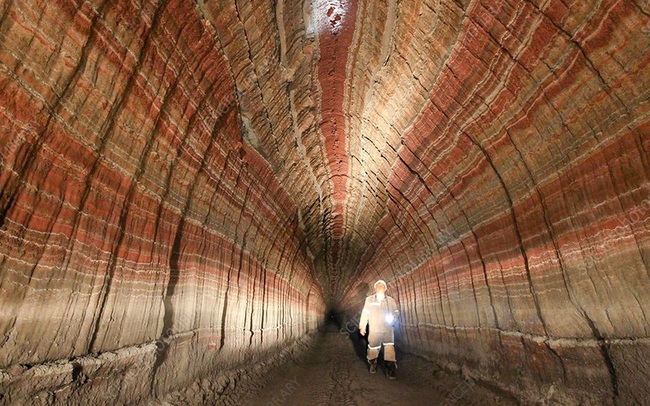
Dự kiến hàng triệu tấn kali khai thác ở Lào sẽ được xuất khẩu sang Trung Quốc nhờ tuyến đường sắt cao tốc mới khánh thành.

Mỏ kim loại khủng ở Lào: Việt Nam dừng bước, "của hiếm" đổ hết sang Trung

Tiếp tục đọc “Mỏ kim loại khủng ở Lào: Việt Nam dừng bước, “của hiếm” đổ hết sang Trung Quốc”

Càng xây đập ồ ạt, Lào càng lún vào bẫy nợ Trung Quốc

baovemoitruong – 09/06/2020

Covid-19 khiến Lào khá điêu đứng và chật vật trong việc bán trái phiếu đô la, gây thêm áp lực cho quốc gia trong cơn xoay sở trả nợ, đặc biệt là với chủ nợ Trung Quốc.

Các nguồn tin thân cận cho hay Chính phủ Lào đã và đang áp dụng thái độ “kiên nhẫn chờ đợi” trước khi tiến hành bán trái phiếu. Tuy nhiên, Ngân hàng Trung ương Lào vẫn xác nhận liệu việc bán trái phiếu có tiếp tục diễn ra trong năm nay hay không.

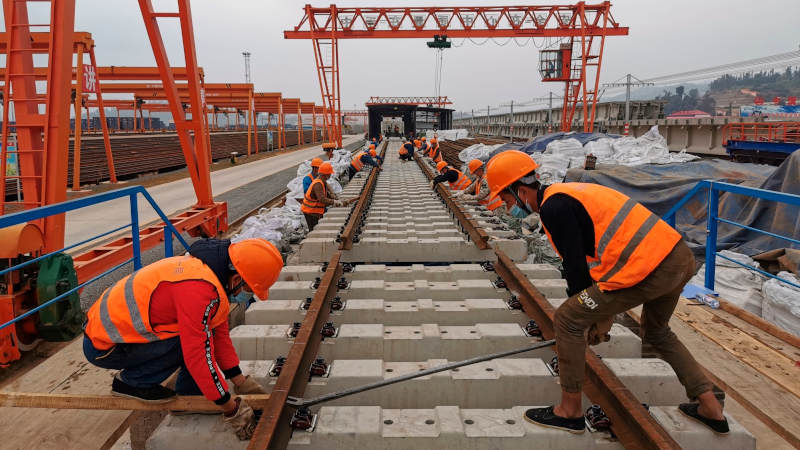
Công nhân thi công tuyến đường sắt cao tốc Côn Minh-Vientiane, đoạn ở Ngọc Khê, phía tây nam tỉnh Vâm Nam, Trung Quốc. (Ảnh: AP) Tiếp tục đọc “Càng xây đập ồ ạt, Lào càng lún vào bẫy nợ Trung Quốc”

Vietnam to buy 1.5 billion kWh of power annually from Laos

By Anh Minh   January 5, 2020 | 02:42 pm GMT+7 VnExpress

Vietnam to buy 1.5 billion kWh of power annually from Laos

A worker repairs electricity cables in Ho Chi Minh City. Photo by VnExpress/Thanh Nguyen.

State power utility EVN will buy around 1.5 billion kWh of electricity a year from Laos for two years starting in 2021.

Under contracts it signed on Saturday, Vietnam Electricity (EVN) will buy over 596 million kWh a year from two hydropower plants belonging to Phongsubthavy Group and 632 million kWh from two plants belonging to Chealun Sekong Group from 2022.

Tiếp tục đọc “Vietnam to buy 1.5 billion kWh of power annually from Laos”

Hổ tuyệt chủng ở Lào

BVR&MT – Đó là kết luận của một nghiên cứu mới không tìm thấy bằng chứng hổ hoang dã còn tồn tại ở nước này.

Sau năm năm khảo sát bằng bẫy ảnh ở Khu bảo tồn Nam Et-Phou Louey giàu đa dạng sinh học, nhóm nghiên cứu không tìm thấy bất cứ bằng chứng nào về hổ ngoài cơ man những cái bẫy chết người.

Ảnh: Bill Robichaud/Global Wildlife Conservation

Dường như những cá thể hổ phải trả giá đắt nhất cho cuộc khủng hoảng bẫy thú đang hoành hành ở Lào và các nước khác tại Đông Nam Á. Tiếp tục đọc “Hổ tuyệt chủng ở Lào”

Việt Nam triển khai dự án khai thác mỏ lớn nhất tại Lào

(TTXVN/VIETNAM+

Bộ trưởng Kế hoạch và Đầu tư Lào, ông Suphan Keomisay và bà Phương Minh Huệ, Tổng Giám đốc Tập đoàn đầu tư Việt Phương đang trao cho nhau Hợp đồng tại lễ ký. (Ảnh: Kiên Phạm/Vietnam+)

Theo phóng viên TTXVN tại Vientiane, chiều 11/9, lễ ký Hợp đồng Khai thác và chế biến quặng bauxite và xây dựng nhà máy sản xuất aluminat giữa Chính phủ Lào và đại diện Tập đoàn đầu tư Việt Phương (VPG) của Việt Nam đã diễn ra tại Bộ Kế hoạch Đầu tư Lào.

Với tổng trị giá đầu tư ước tính 650 triệu USD, đây sẽ là dự án đầu tư vào lĩnh vực khai thác mỏ lớn nhất của Việt Nam từ trước tới nay tại Lào. Tiếp tục đọc “Việt Nam triển khai dự án khai thác mỏ lớn nhất tại Lào”