India’s ‘neutrality’ on the Ukraine conflict could hurt it in the long run

New Delhi has been silent on Russia’s actions in Ukraine so far.

thediplomat – By Sudha Ramachandran – February 25, 2022

India’s ‘Neutrality’ on the Ukraine Conflict Could Hurt It in the Long Run
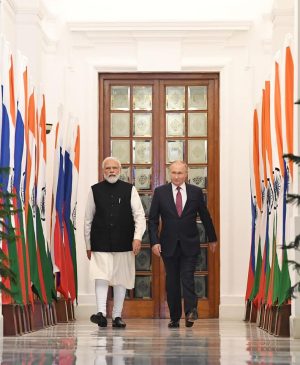
India’s Prime Minister Narendra Modi with Russian President Vladirmir Putin during the summit in New Delhi, India on December 6, 2021.Credit: Facebook/ Ministry of External Affairs, India

Russia’s invasion of Ukraine on February 24 has put India in a particularly difficult spot. Since the conflict between Moscow and the U.S. over Ukraine began escalating late last year, India has avoided taking sides. But with Moscow’s invasion of Ukraine, that cautious approach will become increasingly untenable for New Delhi. It could hurt India’s interests in the long-run.

Tiếp tục đọc “India’s ‘neutrality’ on the Ukraine conflict could hurt it in the long run”

Why are there so many Indian students in Ukraine?

For over 30 years, Ukraine has been a popular destination for Indians to study medicine, dentistry, and nursing. Now many of them are left stranded in a war zone.

thediplomat – By Neeta Lal – March 04, 2022

Why Are There So Many Indian Students in Ukraine?
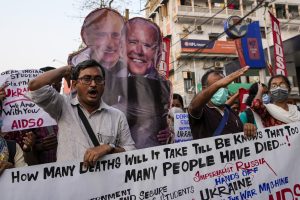
Activists of All India Democratic Students Organization shout slogans during a protest against the Russian invasion on Ukraine, in Kolkata, India, Thursday, March 3, 2022.Credit: AP Photo/Bikas Das

The tragic death of an Indian medical student, Naveen Shekharappa Gyanagoudar, in war-torn Ukraine, due to Russian shelling, has roiled India while spotlighting the desperation of thousands of Indians to rush to study in this east European nation every year.

Tiếp tục đọc “Why are there so many Indian students in Ukraine?”

IEEFA/JMK Research: Round-the-clock tenders can help meet demand for firm renewable power

Tenders have evolved from “vanilla” solar or wind, to hybrid, to round-the-clock

IEEFA

24 November (IEEFA/JMK Research India): Electricity distribution companies (discoms) demand firm and uninterrupted renewable power. A new report by IEEFA and JMK Research highlights the important role that different mixes of generation sources and storage technologies can play in overcoming the intermittency challenge of variable renewable energy (VRE) and ensuring grid stability.

Renewable energy blended with either conventional thermal power sources that have low plant load factors (PLFs) or energy storage systems (ESS) can provide firm round-the-clock (RTC) power required by discoms, according to the report.

Tiếp tục đọc “IEEFA/JMK Research: Round-the-clock tenders can help meet demand for firm renewable power”

India and Vietnam will define the future of Asia: Kurt Campbell

Japan to host next Quad summit in 2022, U.S. Indo-Pacific coordinator says

asia.nikkei.com

Kurt Campbell, the U.S. National Security Council Indo-Pacific coordinator speaks at the United States Institute of Peace on Nov. 19. (Screenshot)KEN MORIYASU, Nikkei Asia chief desk editorNovember 20, 2021 03:20 JST

NEW YORK — U.S. President Joe Biden’s administration views India and Vietnam as key countries to strengthen relations with, his Indo-Pacific point man said Friday.

India will be a key fulcrum player on the global stage in the 21st century, and successive American administrations have been united in that assessment, said Kurt Campbell, the National Security Council’s coordinator for the Indo-Pacific, at an event hosted by the Washington-based United States Institute of Peace.

“I’m very bullish about the future with India. I think we all recognize that the critical, crucial member in the Quad is India,” Campbell said, referring to the Quadrilateral Security Dialogue among the U.S., Japan, India and Australia.

->

Ấn Độ và luật quốc tịch mới: Chứng minh thư của anh đâu?

SÁNG ÁNH 8/3/2020 12:03 GMT+7

TTCTNhững chính sách và pháp luật mới về quốc tịch ở Ấn Độ đã làm bùng lên sự chống đối và nguy cơ bạo lực ra sao tại một đất nước quá phức tạp về lịch sử, tín ngưỡng, dân tộc và văn hóa.

Viễn kiến của Gandhi về Ấn Độ là một quốc gia với chính quyền thế tục và dung nạp mọi tôn giáo. Ảnh: The Indian Express

Anh Imran Khan, 30 tuổi, có tên trùng với thủ tướng Pakistan và một diễn viên Bollywood nổi tiếng, nhưng tên này rất thông dụng, tựa như Nguyễn Văn Ba ở Việt Nam. Anh là người bán hàng rong ở thủ đô New Delhi của Ấn Độ và đang trên đường về nhà thì bị một đám đông gậy gộc chặn lại tại khu vực Shiv Vihar. 

Họ hỏi anh giấy tờ, vì tuy chứng minh thư Ấn không có ghi tôn giáo nhưng suy theo tên họ thì có thể đoán ra. Tại Ấn không cần thiết phải mang theo chứng minh thư trên mình và nhiều người, nhất là tầng lớp thấp và lao động vơ vẩn, còn không có cả chứng minh thư. Anh Imran không có chứng minh thư để trình cho đám đông.

Họ bèn tuột quần anh ra vì người Hồi (cũng như người Do Thái) thì lúc sinh ra phải cắt bao quy đầu. Anh bị nhận… diện bằng cách này và bị đám đông Ấn giáo đánh đập bằng gậy sắt. Sau trận đòn hội đồng, họ tưởng anh đã chết, bèn thòng dây vào cổ anh kéo đến vất ở một đường mương.

Tiếp tục đọc “Ấn Độ và luật quốc tịch mới: Chứng minh thư của anh đâu?”

70 năm chia cắt Ấn Độ, Pakistan: Những tháng ngày kinh hoàng

Chia cat Pakistan An Do anh 3

Ngày 14-15/8 này, Pakistan và Ấn Độ kỉ niệm 70 năm độc lập. Nhưng bình minh đầu tiên của hai nước năm 1947 là những ngày đen tối nhất của thế giới trong thế kỉ 20.

Theo BBC, hai thủ đô Delhi và Islamabad của hai nước láng giềng Ấn Độ và Pakistan cách nhau 700 km, tức là chưa đến 2 giờ bay. Nhưng không có chuyến bay thẳng nào giữa hai thành phố. Thậm chí, có rất ít chuyến bay giữa hai nước.

Quan hệ hai nước vẫn căng thẳng từ khi Pakistan tách khỏi Ấn Độ năm 1947. Bạo lực sắc tộc trong thời gian này đã dẫn đến cái chết của gần 1 triệu người, khi khoảng 15 triệu người phải bỏ nhà sơ tán sang phần đất mới của mình – đây là đợt di dân lớn nhất trong lịch sử.

Tiếp tục đọc “70 năm chia cắt Ấn Độ, Pakistan: Những tháng ngày kinh hoàng”

Xung đột Trung – Ấn: Vì sao không ai muốn lên giọng?

  • SÁNG ÁNH
  • 27.06.2020, 05:36

TTCT – Dư luận Trung Quốc hiện đang được hướng sang tranh chấp quần đảo không người ở Senkaku/Điếu Ngư với Nhật Bản ở biển Hoa Đông. Khán giả xem phim võ hiệp và quyền thuật Trung Hoa đều rõ tâm tình này. Từ Lý Tiểu Long đến thầy ông là Diệp Vấn chỉ dành những chiêu độc nhất cho người Nhật, chứ chẳng thấy tỉ thí với võ sư người Ấn bao giờ

Xung đột Trung - Ấn: Vì sao không ai muốn lên giọng?
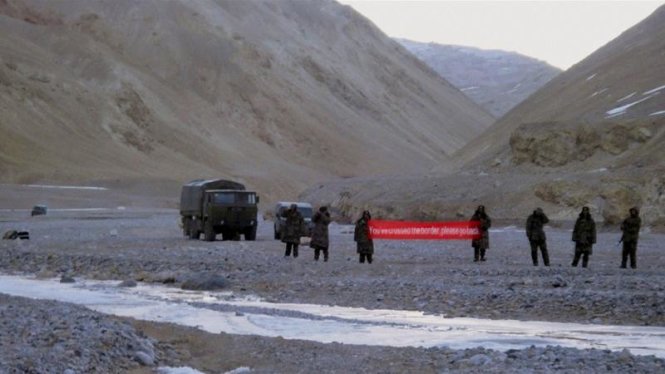
Trung Quốc và Ấn cáo buộc lẫn nhau về chuyện quân đôi bên nào vượt qua biên giới ở Ladakh trước. (Ảnh: AP)

Tiếp tục đọc “Xung đột Trung – Ấn: Vì sao không ai muốn lên giọng?”

Chuyện thành bại của các đặc khu kinh tế trên thế giới

VNE – Thứ bảy, 9/6/2018, 02:10 (GMT+7)

Dù mô hình đặc khu đã có hàng chục năm, các nước vẫn chưa tìm ra công thức thành công chung, và không ít đã thất bại.

1. Trung Quốc

Thâm Quyến được coi là ví dụ tiêu biểu nhất về áp dụng thành công mô hình đặc khu kinh tế. Thành phố này có vị trí chiến lược tại Quảng Đông, nằm tại lưu vực sông Châu Giang, gần Hong Kong, Macau và là cửa ngõ vào Trung Quốc.

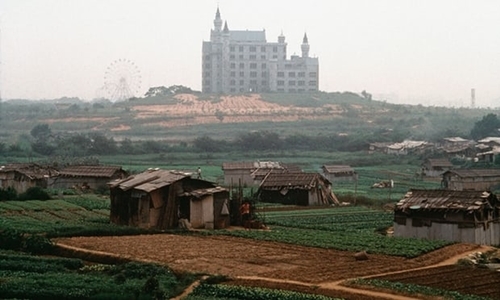
Thâm Quyến năm 1992 và hiện tại. Ảnh: Magnum/AFP

Tiếp tục đọc “Chuyện thành bại của các đặc khu kinh tế trên thế giới”

The art of the free trade agreement

JPEG - 53.2 kb

The Hindu | June 07, 2017

The art of the free trade agreement

Prabhash Ranjan

A European Court of Justice ruling will have bearing on India-EU pacts

During their recent meeting in Germany, Prime Minister Narendra Modi and German Chancellor Angela Merkel agreed on the need to resume India-European Union (EU) free trade agreement (FTA) talks. These negotiations, covering trade, investment protection and intellectual property, have remained deadlocked since 2013. Tiếp tục đọc “The art of the free trade agreement”

India’s New Philanthropy

IN ASIA

In Conversation: India’s New Philanthropy

January 31, 2018 By Editor

India has around 2 percent of the world’s millionaires and 5 percent of its billionaires, and since 2000, wealth in the country has grown 9.2 percent a year, faster than the global average of 6 percent. At the same time, India ranks among the highest in terms of income inequality and dominates the world’s poorest 10 percent. India’s leaders are grappling with how to narrow this gap, particularly as foreign funding to the country dwindles. Since 2009, India has added over 100 million donors, large and small, but there’s very little data on the extent of philanthropy.

A new report examines the state of Indian philanthropy, and shines a light on new ideas and innovations, and the implications of these for the future role of philanthropy as an agent of social change. In Asia editor Alma Freeman speaks with Chandrika Sahai, coordinator of Philanthropy for Social Justice and Peace, which co-published the report, on some of the key takeaways. Tiếp tục đọc “India’s New Philanthropy”

Vũ khí hạt nhân – 7 kỳ

***

Siêu bom hạt nhân thế hệ mới là cái gì?

02/08/2017 14:16 GMT+7

TTO – Đầu tháng 7-2017, Viện Nghiên cứu hòa bình quốc tế Stockholm đã cảnh báo tình hình hiện đại hóa vũ khí hạt nhân vẫn tiếp tục diễn ra trên thế giới.

Mỹ bắn thử tên lửa đạn đạo liên lục địa Minuteman III đêm 26-4-2017 - Ảnh: Không quân Mỹ
Mỹ bắn thử tên lửa đạn đạo liên lục địa Minuteman III đêm 26-4-2017 – Ảnh: Không quân Mỹ

Không có quốc gia sở hữu vũ khí hạt nhân nào sẵn sàng từ bỏ kho vũ khí hạt nhân trong tương lai gần. Các nước đều tiếp tục phát triển hoặc triển khai thêm các hệ thống vũ khí mới hoặc tuyên bố sẽ làm như thế
Chuyên viên Shannon Kile (Viện Nghiên cứu hòa bình quốc tế Stockholm)

Chín nước gồm năm nước thường trực Hội đồng Bảo an Liên Hiệp Quốc và Ấn Độ, Pakistan, Israel, Triều Tiên đang sở hữu 14.935 đầu đạn hạt nhân, trong đó đã triển khai 4.150 đầu đạn. Tiếp tục đọc “Vũ khí hạt nhân – 7 kỳ”

Battery swapping can propel India’s electric car revolution

Published on Monday, 23 October 2017

Motorists can charge their vehicles automatically in less than a minute with the battery-swapping system.

adb.org_Imagine you’re buying a car, and the manufacturer forces you to purchase not only the vehicle itself but also demanded you pay upfront for 10 years worth of fuel. About $25,000 for the car and another $50,000 for the gas. Would you still purchase the car? Absolutely not, unless the gasoline was given at a discount price, right?

Anyone shopping for an electric car could be forgiven for thinking that manufacturers are asking to pay upfront for future energy use. These vehicles are still on average about 35% more expensive than non-electric cars – despite gradually declining battery prices and the promise of practically zero maintenance fees. Tiếp tục đọc “Battery swapping can propel India’s electric car revolution”

India army chief: we must prepare for simultaneous war with China and Pakistan

General says Himalayan standoff could become larger conflict with China, which Pakistan would then use to its advantage

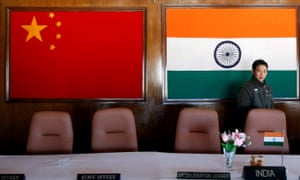
The flags of China and India are displayed at a conference room used for meetings between military commanders on the Indo-China border.
The flags of China and India are displayed at a conference room used for meetings between military commanders on the Indo-China border. India’s army chief the country should be ready in case of war. Photograph: Adnan Abidi/Reuters

India’s army chief said on Wednesday the country should be prepared for a potential two-front war given China is flexing its muscles and there is little hope for reconciliation with Pakistan. Tiếp tục đọc “India army chief: we must prepare for simultaneous war with China and Pakistan”

India most corrupt Asian country, Vietnam second: Forbes

Business Standard

The article goes on to praise Prime Minister Narendra Modi for his ‘fight against corruption.

ANI  |  New Delhi  Last Updated at September 1, 2017 15:11 IST

India corruption

Image: Shutterstock
If the statistics furnished by the Transparency International (TI), an anti-corruption global civil society organisation, are anything to go by, India has a long way ahead to fulfil one of the many objectives as told by the current Indian government – defeating the malice of corruption.

A recent survey by the Transparency International states that India is the most corrupt country in Asia.

Depicting how pervasive the problem is across Asia, a list released by – Asia’s Five Most Corrupt Countries – says that India beats Vietnam, Thailand, Pakistan and Myanmar, when it comes to bribery rate.

The article, which rates India the highest in the list with 69 per cent bribery rate, describes India as: “In five of the six public services – schools, hospitals, ID documents, police, and utility services – more than half the respondents have had to pay a

The article goes on to praise Prime Minister for his ‘fight against corruption’.

“However, Prime Minister Narendra Modi’s fight against corruption has made a mark: 53 per cent of the people think he is going it fairly or very well. And it has led to people feeling empowered, as 63 per cent believe ordinary people can make a difference,” it adds.

India is closely followed by at 65 per cent bribery rate.

India’s neighbour, Pakistan, stands fourth in the list with 40 per cent bribery rate. The article describes the nation as: “In Pakistan, about three-fourths of respondents perceive most or all of the police to be corrupt. Of the people who encountered either the police or the courts, nearly seven in ten had to pay a Sadly, people don’t feel things can change-only a third think ordinary people can make a difference.”

The 18-month long survey by Transparency International was concluded after talking to more than 20,000 people in 16 countries, regions and territories in the Asia Pacific.

The Berlin-based corruption watchdog had put India at rank 76 out of 168 countries in its Corruption Perception Index last year.

The country’s 2015 corruption perception score remained the same as 2014’s – 38/100 – showing lack of improvement.

According to figures published in March, 2017, while citizens of Pakistan were the most likely of any country to be asked for bribes in law and order institutions, for India the police bribery rate was 54 per cent and for a low 12 per cent.

India had the highest bribery rates of all the countries surveyed for access to public schools (58 per cent) and healthcare (59 per cent).

(Only the headline and picture of this report may have been reworked by the Business Standard staff; the rest of the content is auto-generated from a syndicated feed.)

First Published: Fri, September 01 2017. 14:59 IST