A ‘Himalayan tsunami’ has just devastated Nepal. It should be a wake-up call

Independent.co.uk

Massive glacial bursts are becoming more frequent and more dangerous due to the climate crisis, experts tell Mukesh Pokhrel, warning: ‘They are not going to stop anytime soon’

Wednesday 16 July 2025 12:25 BST

Independent Climate

Up until a disastrous day earlier this month, more than 150 trucks crossed daily over a border bridge between Nepal and China. Known by locals as the Miteri Pul (Friendship Bridge), the Rasuwagadhi crossing served as the main trade route between the two countries, with over $50m of goods passing over it last year alone.

But on the 8 July, floodwaters tore through northern Nepal’s Rasuwa district, sweeping away parts of this critical border highway. According to the National Disaster Risk Reduction & Management Authority, seven people lost their lives, and 20 were missing, including six Chinese nationals.

The Chinese nationals were working on a 200 megawatt hydro project in the Tirsuli River, which was also damaged by the floods. Initial estimates suggest Nepal has sustained losses of over $100m in the incident as a whole.

Tiếp tục đọc “A ‘Himalayan tsunami’ has just devastated Nepal. It should be a wake-up call”

Dalai Lama says successor will be born in ‘free world’ outside of China

Aljazeera.com

Tibetan spiritual leader says in a new book that his people’s aspiration for freedom cannot be indefinitely delayed.

The Dalai Lama offers blessings to his followers at his Himalayan residence in the northern hill town of Dharamshala, India, on December 20, 2024 [Priyanshu Singh/Reuters]

Published On 11 Mar 202511 Mar 2025

The Dalai Lama has said that his successor will be born in the “free world” outside of China.

In a new book released on Tuesday, the 89-year-old spiritual leader of Tibetan Buddhism says that he will be reincarnated outside of Tibet, which is an autonomous region of China.

“Since the purpose of a reincarnation is to carry on the work of the predecessor, the new Dalai Lama will be born in the free world so that the traditional mission of the Dalai Lama – that is, to be the voice for universal compassion, the spiritual leader of Tibetan Buddhism, and the symbol of Tibet embodying the aspirations of the Tibetan people – will continue,” the Dalai Lama, who fled Tibet for India in 1959, writes in Voice for the Voiceless.

China considers Tibet, which has alternated between independence and Chinese control over the centuries, as an integral part of the country and views movements advocating greater autonomy or independence as threats to its national sovereignty.

Beijing has labelled the current Dalai Lama, who was identified as the reincarnation of his predecessor at two years old, a “separatist” and insisted on the right to appoint his successor after his death.

The Dalai Lama, who stepped down as the political leader of the Tibetan government-in-exile in 2011 to focus on his spiritual role, has denied advocating Tibetan independence and argued for a “Middle Way” approach, which would grant the mainly Buddhist territory greater autonomy.

In his book, the Dalai Lama writes that he has received numerous petitions from people in and outside Tibet asking him to ensure that his lineage continues, and says that Tibetan people’s aspirations for freedom cannot be denied indefinitely.

“One clear lesson we know from history is this: If you keep people permanently unhappy, you cannot have a stable society,” he writes.

Source: Al Jazeera and news agencies

China plans to build the world’s largest dam – but what does this mean for India and Bangladesh downstream?

theconversation.com

Published: April 8, 2025 5.33pm BST

Author Mehebub SahanaLeverhulme Early Career Fellow, Geography, University of Manchester

China recently approved the construction of the world’s largest hydropower dam, across the Yarlung Tsangpo river in Tibet. When fully up and running, it will be the world’s largest power plant – by some distance.

Yet many are worried the dam will displace local people and cause huge environmental disruption. This is particularly the case in the downstream nations of India and Bangladesh, where that same river is known as the Brahmaputra.

The proposed dam highlights some of the geopolitical issues raised by rivers that cross international borders. Who owns the river itself, and who has the right to use its water? Do countries have obligations not to pollute shared rivers, or to keep their shipping lanes open? And when a drop of rain falls on a mountain, do farmers in a different country thousands of miles downstream have a claim to use it? Ultimately, we still don’t know enough about these questions of river rights and ownership to settle disputes easily.

The Yarlung Tsangpo begins on the Tibetan Plateau, in a region sometimes referred to as the world’s third pole as its glaciers contain the largest stores of ice outside of the Arctic and Antarctica. A series of huge rivers tumble down from the plateau and spread across south and south-east Asia. Well over a billion people depend on them, from Pakistan to Vietnam.

Tiếp tục đọc “China plans to build the world’s largest dam – but what does this mean for India and Bangladesh downstream?”

India’s youths face job crisis: Can they achieve their dreams? | Young dreams in a new India

CNA Insider 30-10-2024

We explore the challenges faced by India’s youth, who comprise a significant portion of the population and represent a substantial opportunity for economic growth and social progress. Despite their high aspirations, many young Indians are confronted with unemployment and underemployment, leading to frustration and disillusionment. Through personal stories and expert insights, we examine the social instability caused by this crisis, highlighted by protests and riots over job quotas. It also showcases how some young Indians are overcoming these obstacles.

Tiếp tục đọc “India’s youths face job crisis: Can they achieve their dreams? | Young dreams in a new India”

How China, India and war are reshaping the Middle East

CNA Insider – 29-11-2024

For decades, the Middle East has been a central focus of US foreign policy. But today, America is scaling down its involvement in one of the world’s most volatile regions.

Vying to fill the vacuum are China and India. Billions of dollars’ worth of infrastructure projects from Asia have moved to the Middle East. Cross border investment from the region to Asia has also gained momentum. The region is counting on trade with China and India for its post-oil future. At the same time, the gulf countries are strategically important to the superpowers. For example, China and India are looking to expand military cooperation with Oman.

With the war in Gaza and the spreading Lebanon conflict, the Middle East is leaning even further away from the American pole. How will the pivot to Asia change the dynamics of the region?

Tiếp tục đọc “How China, India and war are reshaping the Middle East”

Why India’s election is such a big deal

Al Jazeera English – 8-4-2024

The world’s biggest election is happening in India. There are 970 million registered voters and seven phases of voting, from April to early June.

#AJStartHere with Sandra Gathmann explains how the election will work, why Narendra Modi and the BJP are expected to win again, and how India is changing under them.

Chapters:
01:26 – How India’s massive election will work
02:28 – The key players: Modi and the BJP
02:48 – The key players: Rahul Gandhi, the Congress Party and the INDIA opposition alliance
03:48 – Modi’s popularity
06:12 – Hindutva explained
08:32 – Fears about the direction that India’s going in under Modi
09:35 – Violence and discrimination against the Muslim community in India
10:06 – India’s controversial citizenship law

Vận động bằng AI, mặt trận mới trong cuộc bầu cử Ấn Độ

ANTG – Thứ Năm, 02/05/2024, 06:41

Các hình đại diện gọi cử tri bằng tên thân mật, nói chuyện với họ qua tin nhắn bằng bất kỳ ngôn ngữ nào. Đấy là những gì được tạo ra từ trí tuệ nhân tạo (AI) và đang tràn ngập trên môi trường kỹ thuật số của Ấn Độ sau khi nước này bắt đầu cuộc tổng tuyển cử 2024.

Tràn ngập nội dung giả mạo bằng AI

Để có cái nhìn thoáng qua về vị trí của trí tuệ nhân tạo trong các chiến dịch bầu cử, hãy nhìn vào Ấn Độ, khi quốc gia đông dân nhất thế giới bắt đầu tiến hành các cuộc tổng tuyển cử vào ngày 19/4 vừa qua.

Một phiên bản Thủ tướng Narendra Modi do AI tạo ra đã được chia sẻ trên ứng dụng nhắn tin WhatsApp cho thấy khả năng tiếp cận siêu cá nhân hóa ở quốc gia có gần một tỷ cử tri. Trong video – một clip demo không rõ nguồn – hình đại diện của ông Modi đề cập trực tiếp đến tên của một loạt cử tri.

Cử tri Ấn Độ đeo mặt nạ hình Thủ tướng Modi để bày tỏ sự ủng hộ Đảng BJP của nhà lãnh đạo này. Ảnh: Reuters.
Tiếp tục đọc “Vận động bằng AI, mặt trận mới trong cuộc bầu cử Ấn Độ”

Ấn Độ, luật quốc tịch mới, và mâu thuẫn tôn giáo

SÁNG ÁNH – 01/04/2024 10:09 GMT+7

TTCTNăm 2019, Quốc hội Ấn Độ thông qua Đạo luật bổ sung về quốc tịch (Citizenship Amendment Act, tức CAA) gây nhiều tranh cãi, đặc biệt là với cộng đồng Hồi giáo đông đảo ở nước này.

Ảnh: The Print

CAA cho phép người vào Ấn Độ dù có phép hay trái phép trước 2014 đều được nhanh chóng vào quốc tịch trên căn bản tôn giáo: Người được phép nhập tịch muốn theo đạo gì cũng được, trừ đạo Hồi.

Ấn Độ theo hiến pháp 1947 là quốc gia thế tục và đa tôn giáo, không phân biệt. CAA như vậy vi phạm nguyên tắc lập quốc. Dù được chính quyền trình bày là một đạo luật nhân đạo giúp hợp thức hóa thành phần tị nạn và sống chui, CAA lại bị người Hồi tại Ấn Độ coi là kỳ thị tôn giáo của họ. 

Nó gặp phải sự chống đối dữ dội và biểu tình gây hỗn loạn khiến cả ngàn người bị bắt và trên 50 người thiệt mạng. Chính quyền bèn tạm thời không áp dụng đạo luật này và treo nó, không ban hành tức khắc.

Tiếp tục đọc “Ấn Độ, luật quốc tịch mới, và mâu thuẫn tôn giáo”

Maldives ‘thoát Ấn’ hay cuộc cạnh tranh ảnh hưởng của các nước lớn ở Nam Á

VOV – Thứ Tư, 11:47, 17/01/2024

Trong một động thái đáng chú ý ở khu vực Nam Á, Maldives yêu cầu Ấn Độ rút binh sĩ đang đồn trú tại nước này trước ngày 15/3.

Maldives là quốc đảo nhỏ ở khu vực Nam Á, vốn phụ thuộc đáng kể vào nước láng giềng Ấn Độ về nguồn cung lương thực, xây dựng hạ tầng và công nghệ. Tuy nhiên mối quan hệ này gần đây xuất hiện dấu hiệu căng thẳng.

Tổng thống Maldives Mohamed Muizzu. Ảnh: AP
 

Trong khi đó, trong chuyến thăm Trung Quốc hồi tuần trước của Tổng thống Maldives, hai bên nhất trí nâng cấp lên “quan hệ đối tác hợp tác chiến lược toàn diện”. Các nhà phân tích cho rằng động thái của Maldives phản ánh phần nào sự chuyển hướng chính sách của một số quốc gia ở Nam Á trước cuộc cạnh tranh ảnh hưởng giữa các nước lớn.

Tiếp tục đọc “Maldives ‘thoát Ấn’ hay cuộc cạnh tranh ảnh hưởng của các nước lớn ở Nam Á”

Why it’s time to worry about India

AJ+ – 9 thg 9, 2023

India prides itself as the largest democracy in the world, with nearly 1 billion eligible voters for the upcoming 2024 general election. But what’s been holding that democracy together has changed drastically under Prime Minister Narendra Modi and his nationalist party, BJP. Modi’s influence has shifted Indian society and widened rifts between communities.

How has Indian democracy changed? And why is it time to worry about India?

In bad faith – 3 parts

Hinduism, Weaponised: A Secular India Under Threat | In Bad Faith – Part 1 | CNA Documentary

CNA – Insider 9-4-2022

We investigate the reasons behind the weaponisation of Hinduism by the Rastriya Swayamsevak Sangh (RSS), a right-wing, paramilitary volunteer organisation that aims to create a Hindu Rashtra – a subcontinent only for the Hindus.

From supporting cow vigilantes in Rajasthan attacking Muslim cattle traders to spreading Islamophobia across RSS-backed television stations, why understand why India’s secular fabric is under threat. Tiếp tục đọc “In bad faith – 3 parts”

Love and Faith in India

Love and Faith in India | 101 East Documentary

Al Jazeera English – 27-1-2022

In India, Hindu nationalists are promoting the conspiracy that Muslim men are tricking Hindu women into marriage and converting them in an attempt to create an Islamic republic.

The national government has found no evidence to support this claim, but laws have been passed in some of India’s largest states that could see Muslim men jailed for up to 10 years for committing this so-called “Love Jihad”.

This documentary follows a group training to protect Hindu girls, a teenage Muslim boy who says he was imprisoned without trial for talking to a Hindu girl, and interfaith couples fighting just to be together.

101 East investigates love and faith in India.

Indian man jailed for 10 years over wife’s ‘dowry death’

By Rhea Mogul, CNN

Updated 0545 GMT (1345 HKT) May 25, 2022 CNN

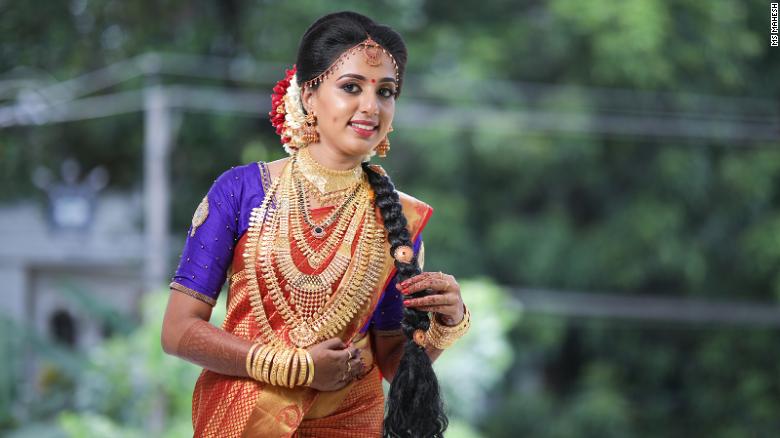
Despite being outlawed under the 1961 Dowry Prohibition Act, India’s dowry system remains deeply entrenched in society and has become associated with violence against women.

Vismaya Nair is seen in this undated image.

Vismaya Nair is seen in this undated image.

(CNN)A court in southern India on Tuesday sentenced a man to 10 years in prison in a ruling that found he abused his wife over their wedding dowry, leading to her death by suicide.

The district court in Kerala state found Kiran Kumar guilty under India’s “dowry death” law, which allows charges to be brought against people for causing the death of a woman within the first seven years of a marriage featuring dowry gifts and payments.

Tiếp tục đọc “Indian man jailed for 10 years over wife’s ‘dowry death’”

The war comes to Asia

nikkeiFrom refugees to sanctions, Asian countries are being forced to pick sides in the Russia-Ukraine war.

Nikkei staff writers – March 18, 2022 11:43 JST

NEW YORK — Welcome to Nikkei Asia’s podcast: Asia Stream.

LISTEN HERE

Every week, Asia Stream tracks and analyzes the Indo-Pacific with a mix of expert interviews and original reporting by our correspondents from across the globe.

Tiếp tục đọc “The war comes to Asia”

India and elsewhere: Religious wars are forever

thetimesinplainenglish.com – February 10, 2022

Plain English Version

At the Dasna Devi temple, a placard read: “This is a holy place for Hindus. Entry of Muslims is forbidden.” Photo Credit: Saumya Khandelwal for The New York Times.

People of different backgrounds live together. Unless, for some reason, they decide not to live together. They do seem to get along better in dictatorships. Tito ran Yugoslavia, Hussein ran Iraq and Khaddaffi ran Libya. Their people had no freedom of choice about with whom they lived. And so, for the most part, they got along.

Tiếp tục đọc “India and elsewhere: Religious wars are forever”