Cambodia’s central bank has reportedly revoked the banking license of a conglomerate accused of illicit online activities. But doubts abound about Phnom Penh’s commitment to taking action against cyberfraud networks.
Southeast Asia’s vast cyber scam industry exploded during the COVID-19 pandemic when many of the region’s illegal casino operators turned to online fraudImage: allOver-MEV/IMAGO
The banking arm of a Cambodia-based conglomerate accused of running the world’s “largest ever illicit online marketplace” has had its banking license revoked by the Cambodia’s central bank, Radio Free Asia reported last week.
Huione Guarantee, the Telegram marketplace of Huione Group, has reportedly processed up to €22 billion ($24 billion) in illicit transactions since 2021, making it by far the world’s largest illegal online marketplace, cryptocurrency compliance firm Elliptic reported last year.
Huione Pay, the group’s banking arm, had its license withdrawn because of noncompliance with “existing regulations and recommendations that may have been made by the regulators,” a National Bank of Cambodia spokesperson told Radio Free Asia, a US Congress-funded media outlet.
Từ một đứa trẻ lang thang, kiếm sống qua ngày bằng việc đánh giày trên đường phố Hà Nội, Đỗ Duy Vị (35 tuổi) vừa được bổ nhiệm vào vị trí Đồng Giám đốc điều hành của Blue Dragon – Children’s Foundation (Tổ chức Trẻ em Rồng xanh).
Đỗ Duy Vị năm 15 tuổi và hiện tại.
Blue Dragon mới đây thông báo bổ nhiệm ông Đỗ Duy Vị (sinh năm 1987) vào vị trí Đồng Giám đốc điều hành (Co-CEO), bên cạnh Đồng Giám đốc điều hành hiện tại, Skye Maconachie. Việc bổ nhiệm này diễn ra sau khi Nhà sáng lập Michael Brosowski rời khỏi vị trí Co-CEO, nhưng tiếp tục đồng hành với Blue Dragon trên cương vị Nhà sáng lập và Giám đốc chiến lược.
Với vị trí này, Đỗ Duy Vị sẽ tập trung vào tầm nhìn của tổ chức để chấm dứt nạn mua bán người. Điều thú vị là trước đó, tân Giám đốc điều hành của tổ chức này từng là một đứa trẻ lang thang, kiếm sống qua ngày bằng công việc đánh giày trên đường phố Hà Nội.
Thời gian gần đây, tội phạm mua bán người có xu hướng chuyển sang sử dụng các nền tảng mạng xã hội, ứng dụng trên internet để tiếp cận nạn nhân với các phương thức, thủ đoạn ngày càng tinh vi.
Hiện nay, tội phạm mua bán người vẫn diễn ra phức tạp trên toàn thế giới. (Nguồn: Nikkei Asia)
Tội phạm mua bán người là một trong những loại tội phạm xâm hại nghiêm trọng nhất đến quyền con người. Tình trạng mua bán người vẫn đang là vấn đề “nóng”, gây nhức nhối trên toàn cầu.
Được mô tả như một “nô lệ thời hiện đại”, nạn nhân của tội phạm này thường rơi vào các tình trạng bị bóc lột tình dục, lao động cưỡng bức, lừa đảo… Tội phạm mua bán người không chỉ hủy hoại cuộc sống của nạn nhân mà còn tác động tiêu cực đến sự phát triển về kinh tế, văn hóa, trật tự, an toàn xã hội của mỗi quốc gia.
Trong cuộc chiến chống lại tội phạm mua bán người, Việt Nam đã chứng minh nỗ lực của mình bằng những cam kết mạnh mẽ thông qua việc áp dụng điều ước quốc tế, tăng cường hợp tác quốc tế, các hoạt động nâng cao nhận thức của người dân về tội phạm mua bán người.
Tuy nhiên, tình hình tội phạm mua bán người ở Việt Nam trong thời gian gần đây tiếp tục diễn biến phức tạp, nhiều vụ nạn nhân bị mua bán ra nước ngoài, bị khống chế bóc lột tình dục, cưỡng bức lao động, lừa đảo, cưỡng đoạt, cướp tài sản, có trường hợp dẫn đến chết người, gây ảnh hưởng xấu đến tình hình an ninh chính trị, trật tự an toàn xã hội.
Fish caught by Chinese vessels and processed in Chinese factories end up on dinner plates around the world.
China’s seafood industry is the world’s biggest, accounting for a fifth of international fishing trade.
But onboard China’s ships and in its processing plants, alleged human rights abuses and labour trafficking are rampant.
With footage filmed over several years on the high seas and additional reporting on land, 101 East investigates the deadly secrets of China’s massive fishing fleet, and the price we pay for seafood.
(Sen Nguyen is a Vietnamese journalist – the author of this article won the 2023 Global Media Competition on Labour Migration, hosted by the International Labour Organization - ILO. Her entry, titled “Risk, rewards and remittances in Vietnam’s Nghe An province” published in Al Jazeera, was chosen out of more than 400 entries from 85 countries. SeeILO‘s announcement here)
39 Vietnamese people died being smuggled into the UK in 2019. Most were from Nghe An province.
Hoang Thi Ai holds up her phone showing a photo of her son, Hoang Van Tiep, who she later discovered was among the 39 people who were found dead in a truck container in Essex, the UK, in 2019 [File: Hau Dinh/AP Photo]
In late October 2019, ambulance crews in the United Kingdom were called to a scene of horror.
On a quiet road in a nondescript industrial park in Essex, the bodies of 39 people were found when the heavy steel doors of a refrigerated truck trailer were opened.
The victims had suffocated. Death came slowly as oxygen levels inside the airtight container depleted for the 28 men, eight women and three children as their attempt to be smuggled into the UK ended tragically.
The youngest were two 15-year-olds. All were from Vietnam and the majority were from one province – Nghe An.
“I’m sorry Dad and Mum,” 26-year-old Pham Thi Tra My tapped out in a final text message she composed for her parents.
“Mum, I love Dad and you so much. I’m dying because I can’t breathe … I am so sorry, Mum,” she wrote in a phone message that was widely reported on at the time.
The message was delivered long before her death was officially confirmed by police investigators in the UK.
Video Duration 01 minutes 41 seconds01:41Vietnamese family fears their daughter may be among Essex victims
In 2021, seven people were jailed in the UK for a total of 92 years for their role in the deaths of the 39. This week, an eighth suspect, described as a “right-hand man” in the smuggling ring, was sentenced to 12 years and seven months in prison by a UK court.
(ANTV) – Trong một báo cáo đưa ra mới đây, Liên hợp quốc (LHQ) cảnh báo các nhóm tội phạm đã ép hàng trăm nghìn người tại Đông Nam Á thực hiện các vụ lừa đảo trực tuyến và chịu các hình thức đối xử vô nhân đạo như bạo hành và xâm hại Theo báo cáo, rất khó để đánh giá quy mô tình hình do các hành vi này diễn ra lén lút và phản ứng còn chưa hiệu quả của nhà chức trách. Tuy nhiên, các nguồn tin đáng tin cậy cho biết ít nhất 120.000 người trên khắp Myanmar có thể đang bị cầm giữ và buộc phải thực hiện lừa đảo trực tuyến. Con số này tại Campuchia là khoảng 100.000 người. Lào, Philippines và Thái Lan là những quốc gia khác trong khu vực được xác định là điểm đến chính hoặc nơi trung chuyển của hoạt động buôn người. Ước tính các nhóm tội phạm này thu về hàng tỷ USD mỗi năm. Nạn nhân tới từ Hiệp hội các quốc gia Đông Nam Á (ASEAN), Nam Á, Trung Quốc đại lục, Hong Kong, Đài Loan (Trung Quốc)…Phần lớn các nạn nhân là nam giới. Các mạng lưới tội phạm này đã kiếm lời từ đại dịch COVID-19, khi một số quốc gia phải đóng cửa sòng bài để kiểm soát dịch. Điều này buộc các nhà điều hành sòng bài chuyển hoạt động tới những nơi có ít sự giám sát của nhà chức trách, chẳng hạn như khu vực biên giới có xung đột. Theo nội dung trong một hồ sơ pháp lý công bố ngày 28/8, mạng xã hội X (trước đây là Twitter) đang đối mặt với 2.200 vụ tranh chấp trọng tài với các nhân viên cũ sau khi tỷ phú công nghệ Elon Musk tiếp quản công ty, cắt giảm nhiều nhân sự và thực hiện loạt điều chỉnh sâu rộng. Hồ sơ pháp lý này nằm trong một vụ kiện tại tòa án quận Delaware giữa cựu nhân viên Chris Woodfield với Twitter, tập đoàn X và ông Musk. Trong đơn kiện của mình, ông Woodfield, một cựu kỹ sư mạng cấp cao từng làm việc tại chi nhánh của Twitter ở Seattle, cáo buộc Twitter (hiện là X) đã không trả tiền trợ cấp thôi việc cho ông như cam kết, sau đó trì hoãn việc giải quyết tranh chấp thay thế khi không thanh toán các phí cần thiết để tiếp tục vụ pháp lý. Vụ tranh chấp giữa ông Woodfield và tập đoàn X do JAMS – một tổ chức phi lợi nhuận chuyên cung cấp dịch vụ hòa giải bằng trọng tài tại Mỹ – giải quyết. Căn cứ vào biểu phí của JAMS, riêng chi phí nộp đơn trong 2.200 vụ tranh chấp bằng trọng tài của X có thể lên tới 3,5 triệu USD, chưa kể các khoản phụ phí. Tại Mỹ, nhiều tập đoàn lớn yêu cầu người lao động ký thỏa thuận giải quyết tranh chấp bằng trọng tài khi làm việc tại các chi nhánh và điều này là hợp pháp. TIN LIÊN QUAN Indonesia bắt giữ hơn 600 nghi phạm buôn người
We have no choice’: The Vietnamese dying for a chance to work in the UK | ITV News
There’s a saying in Vietnam about the Nghe An province: “Chó ăn đá, gà ăn sỏi.” It means “the dogs eat rocks, the chickens eat pebbles”. It’s a hot, tough place to live, and is also Vietnam’s hub for the trade in human cargo. When 39 Vietnamese were found dead in a lorry in Essex four years ago, the majority had left from Nghe An. Read the full report on the ITV News website here: https://www.itv.com/news/2023-09-26/w…
Nghiên cứu “Thanh thiếu niên dân tộc thiểu số và những rủi ro liên quan đến mua bán người trên mạng xã hội” được thực hiện bởi Viện iSEE, Blue Dragon với sự hỗ trợ tài chính và kỹ thuật của SecDev vào đầu năm 2021 tại Điện Biên, Hà Giang (hiện là địa bàn hoạt động của Blue Dragon) và Lào Cai (chưa có hoạt động của Blue Dragon), với mục tiêu tìm hiểu về thực trạng sử dụng Mạng Xã Hội và các dịch vụ Internet của thanh thiếu niên Dân tộc Thiểu số cũng như những rủi ro họ gặp phải liên quan đến nạn mua bán người hiện nay, từ đó đưa ra khuyến nghị thiết thực cho các thông điệp và can thiệp truyền thông. Nghiên cứu này được thiết kế kết hợp giữa một điều tra định lượng với 624 học sinh và thanh thiểu niên DTTS tại Hà Giang và Điện Biên (bao gồm 40.9% dân tộc Mông, 39.6% dân tộc Thái, còn lại gồm các dân tộc Khơ Mú, Dao, Tày, Giáy, vv..), và một nghiên cứu định tính dựa trên 14 TLN và 34 PVS trực tiếp với thanh thiếu niên, học sinh, giáo viên tại ba địa bàn nghiên cứu và cán bộ chương trình của Blue Dragon.
TTCT – Những lời có cánh “chỗ làm bao ăn ở miễn phí, đi nhanh, chỉ trả trước một phần” thực chất là cái bẫy để các đường dây buôn người đưa lao động di cư vào tình trạng dễ tổn thương và lệ thuộc nợ nhằm kiểm soát họ nơi xứ người.
4 năm về trước, thảm kịch 39 người Việt tử vong trong xe tải đông lạnh ở hạt Essex, Vương quốc Anh, đã đặt ra cho các bên liên quan hai câu hỏi chính. Một, vì sao đã biết hành trình là bất hợp pháp mà họ vẫn quyết định đi? Và hai, liệu họ có phải là nạn nhân của hoạt động buôn người?
An ICIJ investigation examines networks of companies, people and business practices that draw profit from cross-border labor trafficking and sex trafficking.
By Michael Hudson Image: Rocco Fazzari / ICIJ June 12, 2023
On any given day, the United Nations estimates, nearly 28 million adults and children around the world are trapped in jobs that are so oppressive that they amount to modern slavery or human trafficking.
They are forced to work long hours for little or no pay, toiling on farms and construction sites, in sweatshops and restaurants, as janitors and, in some cases, sex workers. They are exploited by recruiters and employers who use their poverty, isolation and immigration status against them, often threatening them with violence, arrest or deportation or ensnaring them in debts they struggle to repay.
A new investigation by the International Consortium of Investigative Journalists and other media partners has begun examining human trafficking in Asia, Africa, the Middle East and the United States.
The investigation, Trafficking Inc., focuses on two forms of human trafficking: labor trafficking and sex trafficking. Both involve using force, fraud or coercion to induce someone to work or provide a service.
ICIJ and its reporting partners are working to bring to light untold stories of hardship and abuse suffered by trafficked people — and expose the networks of companies, individuals and business practices that set the traps and profit from them.
The electrified metal fence, topped with razor wire and cameras, has prompted criminals to seek out new destinations.
China’s new ‘mega fence’, seen here in Ha Giang, runs for more than 1,000km along its border with Vietnam, Laos and Myanmar. [Courtesy of Blue Dragon Children’s Foundation]
Hanoi, Vietnam – When she arrived at her destination in Myanmar’s northern Shan state, expecting to start a new job, Diep* a 19-year-old Vietnamese woman, realised she had been trafficked.
Left in a locked room alone, she could hear other people but not see them. Armed men were guarding the house.
Liên Hợp Quốc (LHQ) vừa công bố Báo cáo Toàn cầu lần thứ 7 về nạn buôn người, trong đó ghi nhận việc liên quan đến biến đổi khí hậu và xung đột tiếp diễn tại Ukraine khiến vấn nạn buôn người thêm trầm trọng.
Theo báo cáo, trong khi chưa có một phân tích toàn cầu có hệ thống về tác động của biến đổi khí hậu đối với nạn buôn người, thì các nghiên cứu cấp độ cộng đồng ở nhiều khu vực khác nhau trên thế giới chỉ ra rằng “các thảm họa do thời tiết gây ra là nguyên nhân gốc rễ của nạn buôn người”. Báo cáo do Văn phòng Liên Hợp Quốc về chống Ma túy và Tội phạm (UNODC) thực hiện dựa trên dữ liệu từ 141 quốc gia, được thu thập từ năm 2017 đến năm 2020, và phân tích 800 vụ xét xử tại tòa án.
Ảnh minh hoa
Báo cáo cho biết tác động của biến đổi khí hậu đã dẫn đến ảnh hưởng “ở nhiều cấp độ” đối với hoạt động nông nghiệp, đánh bắt cá và đặc biệt với các cộng đồng nghèo khác chủ yếu dựa vào khai thác tài nguyên thiên nhiên để kiếm sống.
Trong một cuộc họp báo, tác giả chính của nghiên cứu Fabrizio Sarrica giải thích, trong bối cảnh các cuộc khủng hoảng xảy ra chồng chéo, điều kiện sống khó khăn buộc nhiều người phải xa rời cộng đồng của họ, khiến họ dễ dàng trở thành mục tiêu của những kẻ buôn người. Chỉ riêng trong năm 2021, hơn 23,7 triệu người đã phải di dời do các thảm họa liên quan đến khí hậu trong nước, trong khi nhiều người chọn di cư đến các quốc gia khác.
Theo báo cáo của LHQ, khi điều kiện sống tại các khu vực trên thế giới ngày càng sa sút, hàng triệu người sẽ phải đối mặt với nguy cơ bị lạm dụng và bóc lột dọc các tuyến đường di cư.
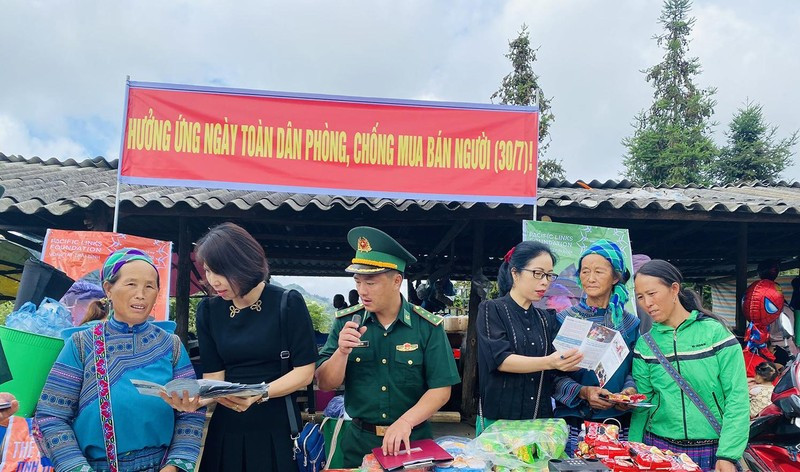
Tuyên truyền cho người dân về phòng, chống mua bán người tại chợ phiên xã Pha Long, huyện Mường Khương (Lào Cai).
UNODC lưu ý rằng tình trạng gia tăng các trường hợp buôn người đã được ghi nhận ở Bangladesh và Philippines, sau khi các cơn bão và lốc xoáy tàn phá khiến hàng triệu người phải di dời. Hạn hán và lũ lụt ở Ghana và vùng Carribean – nơi hứng chịu bão và mực nước biển dâng cao – cũng buộc nhiều người phải di cư.
Climate-induced disaster, environmental degradation and growing scarcity of resources are affecting many communities, driving millions of people into poverty and forcing many to migrate in search of work, food or safety. In many cases, victims of the climate emergency will be left more vulnerable to forms of modern slavery, including human trafficking, forced labour and child slavery.
Three of the ways that climate change and modern slavery are linked:
When people are forced to migrate, they face greater risks of human trafficking and forced labour. People who lose their livelihoods, income and ties to their community are often made vulnerable to exploitation, and in the worst cases, modern slavery, as they are forced to migrate. By 2050, the World Bank estimates that more than 143 million people will have been forced from their homes in sub-Saharan Africa, South Asia and Latin America because of climate change
The same industries that drive climate change leave people vulnerable to forced migration. Extractive industries and agricultural businesses in particular contribute to the emissions that drive climate change, while also profoundly damaging the land and water that ordinary people rely upon. This pushes many more people into poverty and forces them to leave their homes and communities, making them more vulnerable to people traffickers and at risk of slavery
Many victims of the climate emergency are exploited by businesses that contribute to the problem. Many of the people forced into migration by the climate emergency find themselves trafficked into forced labour, some within the very industries that are degrading the environment – completing a vicious circle in which climate change drives, and is driven by, modern slavery
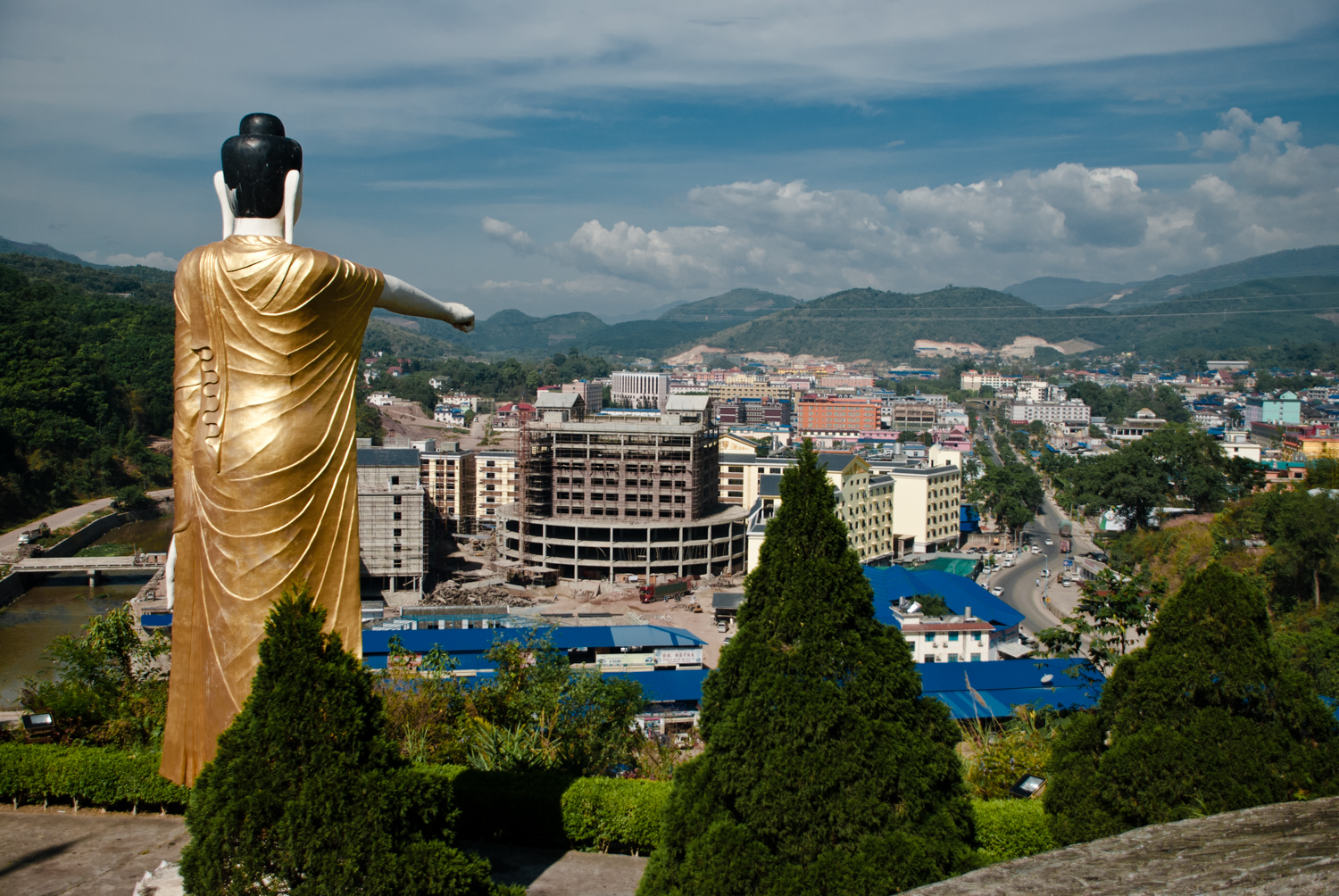
*Mong La, a town on the border between China and Myanmar, is notorious for a gambling town dubbed a ‘City of Sin’ in the heart of the Golden Triangle with Laos and Thailand”
A view of Mong La, a gambling enclave on the border between China and a rebel-administered sliver of Myanmar’s Shan State. (Sebastian Strangio)
Around six months ago, Ekapop Lueangprasert, a local government official and business owner in the Sai Mai suburb of Bangkok, was checking messages sent to his Sai Mai Must Survive Facebook page – a volunteer initiative he’d set up to try and help local people struggling financially during the pandemic – when he received a disturbing video from an 18-year-old girl.
“Today is January 28th at 1 am, 2022. I’m in a building opposite the Karaoke Bar,” says the Thai teenager into the camera, her eyes swollen from crying. She seems exhausted, close to breaking point, but determined to get as much information across as she can while she has the chance. The woman explains that she traveled from Bangkok to Sa Kaeo on the Thailand-Cambodia border to meet a Thai broker who had promised her a job in Poipet, a seedy casino town just over the border in Cambodia. She was then told that the role would actually involve scamming strangers online – and that if she wanted to leave, her father would have to pay 40,000 baht ($1,080) to secure her release. “I know everything and I’m afraid that [the boss] will kill me,” she sobs. “I don’t know what he will do to the others after this and I don’t know if I can contact you again. I’ve heard that at least 20 or 30 people have died.”
The request had come out of the blue and Ekapop was initially apprehensive. “I asked her, how can you use your phone?” he says. But as the teenager hastily sent and deleted location pins, photos from the compound, and other evidence of her treatment, it became clear she was telling the truth – and in the coming months, messages, videos, and photos flooded in from other Thai trafficking victims trapped in borderland casino towns in Cambodia, Laos, and Myanmar. All told near-identical stories about being duped by offers of well-paid, legitimate work, only to find themselves imprisoned in horrifying conditions by Chinese gangsters. Under constant threat of violence, they were forced to engage in illegal activities – mostly tricking people into making fake investments online – with the knowledge or even collusion of local authorities.
As Vietnam’s tourism industry expands, the Australian Human Rights Commission and the Vietnam Chamber of Commerce and Industry have partnered to produce guidance for companies operating in the tourism industry in Vietnam. The guidance aims to strengthen business capability and equip future business leaders to promote responsible business conduct and respect for human rights in Vietnam.
Tourism plays an important role in Vietnam’s economy by creating jobs, infrastructure, and market opportunities. It can also assist in fostering greater mutual understanding across cultures, regions and nations. However, the tourism sector can also create significant challenges for the promotion, protection and realisation of human rights. A range of human rights risks exist for workers, local communities and tourists interacting with the tourism industry. This guidance seeks to support business to navigate these challenges in a responsible and sustainable manner by assisting them to understand the key human rights challenges in the tourism industry and how to respond appropriately.