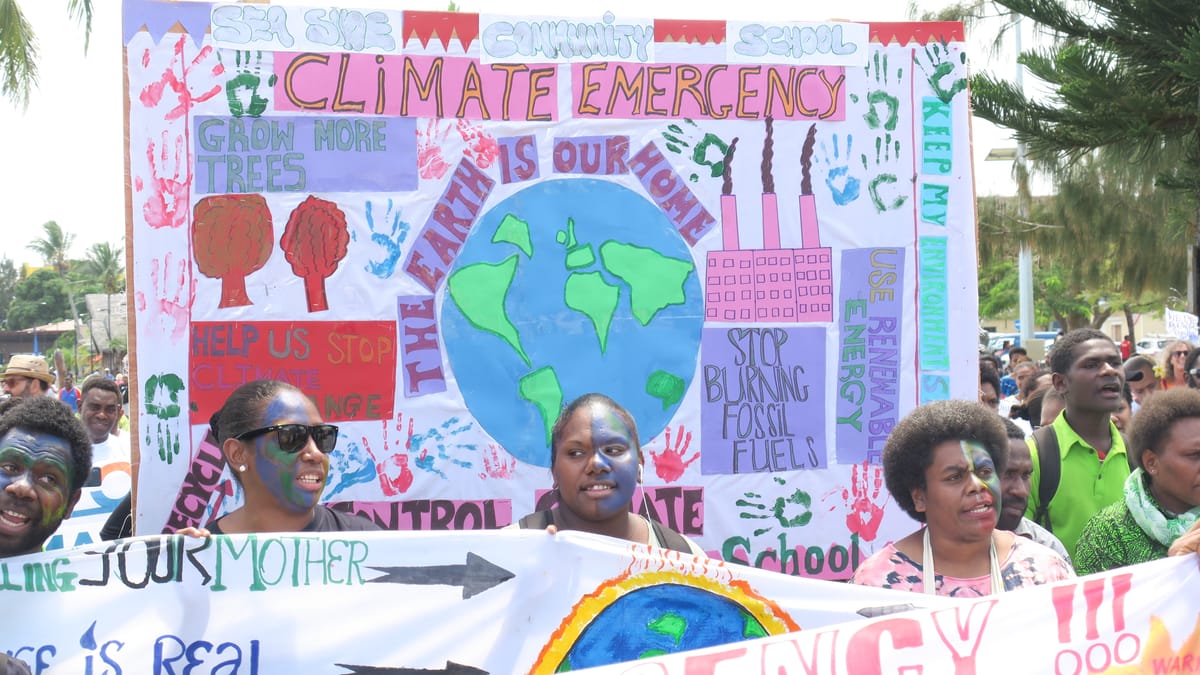
The climate crisis is the single greatest global public health threat of this century, health professionals say. Human rights experts warn it poses an unprecedented risk to human rights. For the world’s poor and most vulnerable people and communities on the frontlines of climate impacts like rising seas, it is an existential crisis threatening their very survival.
Yet the global response to what scientists say is undoubtedly a global emergency has fallen woefully short, through a United Nations governance framework that essentially rests upon voluntary pledges that nations of the world submit – called Nationally Determined Contributions – to reduce their greenhouse gas emissions. Last year, leading climate experts wrote to top UN officials calling for reform of the international climate negotiations, arguing that the “current structure simply cannot deliver the change at exponential speed and scale, which is essential to ensure a safe climate landing for humanity.”
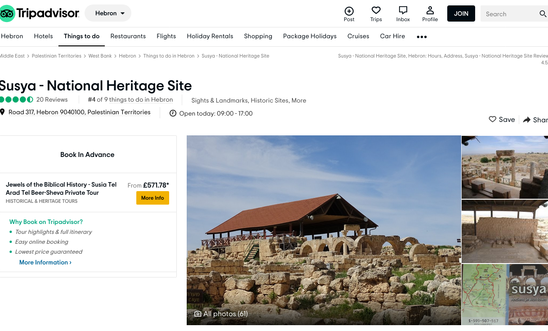
TripAdvisor listing of settler-managed historical sight on Palestinian land
The image above is a TripAdvisor listing of a heritage site managed by settlers in the village of Susiya – on Palestinian land. The UN has released a list of over 100 other companies that also have business interests in Israeli settlements built on Palestinian land.
But why is this a problem?
Illegal Settlements
In 1967, Israel began the process of building settlements on occupied Palestinian territory.
Firstly, what is a settlement?
It is Israel’s building of villages, towns and cities on occupied Palestinian territory.
What makes them illegal?
The transfer of Israeli civilians to these settlements is illegal under international law. In fact it is a war crime according to the Rome Statute of the International Criminal Court.
Hundreds of thousands Displaced
Since 1948, hundreds of thousands of Palestinians had to flee their homes to escape violence or were forcibly removed. Not just their they lost their land and businesses too. Many are remain in refugee camps till this day. Here they have become parents and even grand parents.
Suffocating laws
Some Palestinians stayed behind and refused to give up their land. Their lives have been made impossible as consecutive governments have introduced discriminatory laws and policies, in the hope they will eventually leave. But as the settlements continue to expand some are still standing their ground.
What TripAdvisor doesn’t show you
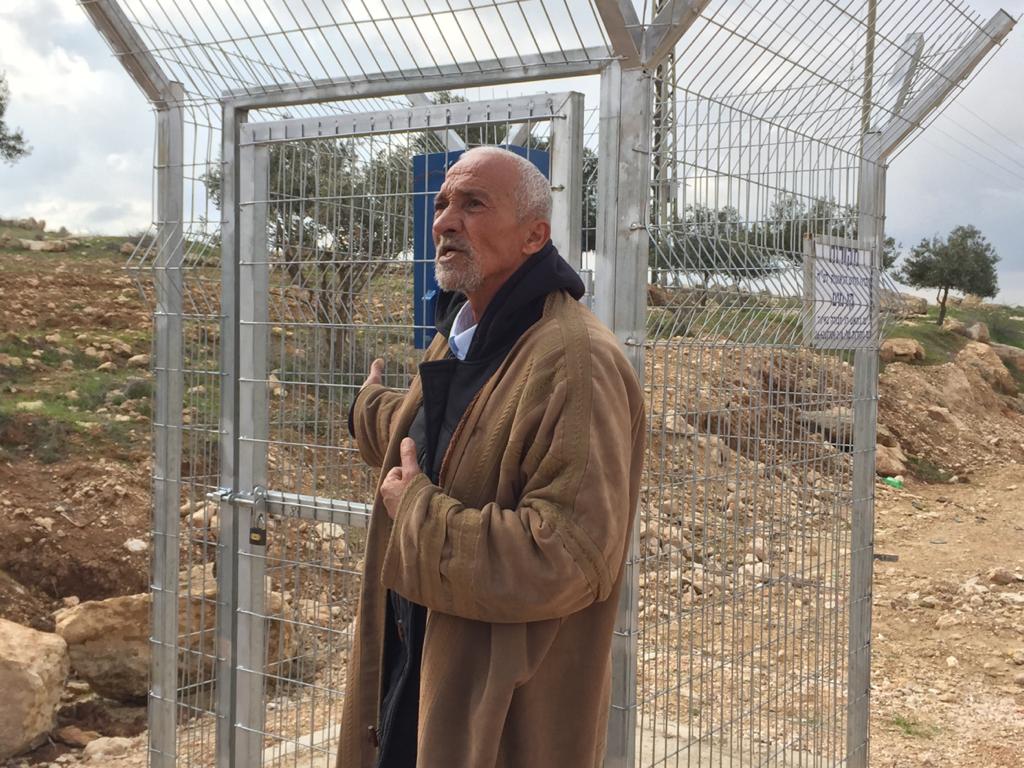
(A resident of Susiya shows us a water system installed on his land for the sole benefite of the nearby settlement)
The Palestinian village of Susiya, in the occupied West Bank is home to around 300 Palestinians. The village has a few tents and shacks, a couple of water cisterns and some sheep. There is no access to electricity or running water.
“History books will be written on this and countries will have to reckon—media agencies will have to reckon—with their major role in the genocide,” said Dr. Tanya Haj-Hassan.
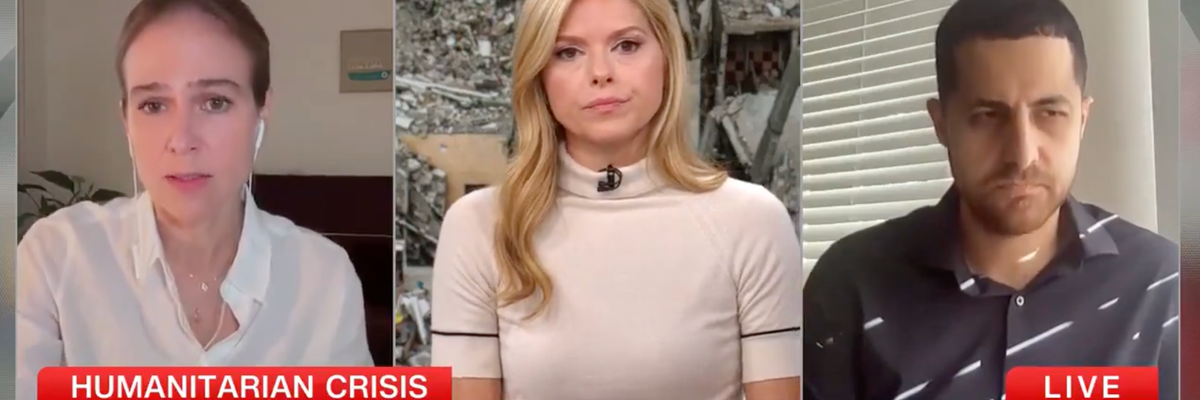
Dr. Tanya Haj-Hassan (left) pushes back on CNN anchor Kate Bolduan’s (center) description of the Gaza genocide as a “humanitarian crisis” during an October 7, 2024 interview.
(Photo: CNN screen grab)
Oct 11, 2024
Human rights advocates on Friday highlighted a rare instance in which a U.S. corporate media outlet allowed a pro-Palestinian voice to set the record straight about Israel’s crimes against humanity in Gaza.
Earlier this week, CNN “News Central” aired a panel segment on the anniversary of the October 7, 2023 Hamas-led attack on Israel and Israel’s retaliatory war. Anchor Kate Bolduan noted that around 1,200 people were killed during the Hamas attack—although she did not say that at least some of them were slain by Israeli forces in “friendly fire” incidents and under the Hannibal Directive—and that 250 others were kidnapped.
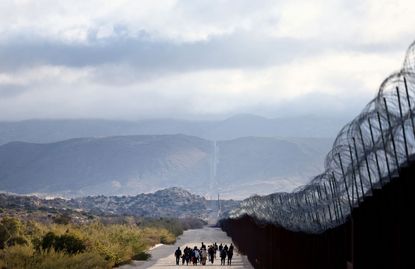
Asylum-seeking migrants walk toward a makeshift camp to await processing by the U.S. Border Patrol after crossing into the United States past a gap in the border barrier Dec. 1, 2023 in Jacumba Hot Springs, CaliforniaPUBLISHED 5 DAYS AGO
Immigration policy has been a hot-button issue for generations, in the United States and around the world. But waves of people fled their homes by land or by sea in 2023, triggering migrant crisis after migrant crisis in multiple regions. Battles over migration policy stoked domestic political feuds and diplomatic clashes.
International Organization for Migration officials told delegates at the United Nations’ COP28 climate conference that more than half of forced “internal displacements,” which totaled 32.6 million people last year, were driven by climate-related events, according to Forbes. Wars, like Russia’s invasion of Ukraine and the conflict between Israel and Hamas, drove more people to seek a better life in a new country, and increased tensions once they got there.
Here are some of the migration routes where the crisis was intense in 2023:
The U.S.-Mexico border
A “growing wave of migration” exploded at the U.S.-Mexico border in 2023, The Wall Street Journal reported recently. It hit especially hard in the small border city of Eagle Pass, Texas, where Mayor Rolando Salinas Jr. declared a state of emergency as the number of migrants entering from Mexico hit 3,000 per day. “We are on pace for this to be the worst of the border crisis yet, and we’ve seen some doozies,” said Rep. Tony Gonzalez (R-Texas), whose district includes Eagle Pass. The migrants included people fleeing turmoil in Venezuela, drug cartel violence in Ecuador and other once-safe countries, gang violence in Haiti, and a broad economic downturn across Latin America blamed on the Covid-19 pandemic.
But the impact wasn’t just felt at the U.S.-Mexico border. New York City Mayor Eric Adams declared a state of emergency as thousands of migrants — more than 146,000 between spring 2022 and November 2023 — arrived from the southern border. Many were sent north by Texas’ Republican governor, Greg Abbott, to cities run by Democrats in a campaign to pressure President Joe Biden to crack down at the border. Adams warned the city was facing a humanitarian crisis that would cost $12 billion over three years, The New York Times reported. City officials said in November their homeless shelters had no room for any more asylum-seekers.
The EU and UK
European nations have faced a huge influx of migrants in recent years. The EU is on track to receive more than one million asylum seekers in 2023, the most since a wave of people in 2015 and 2016, most of them fleeing Syria’s civil war. In Germany — already home to three million refugees, the most since waves of ethnic Germans returned from Eastern Europe after World War II — Chancellor Olaf Scholz is under pressure from overwhelmed states to do something about a more than 70 percent rise in asylum applications in 2023. “I don’t want to use big words,” Scholz told reporters in November, according to Politico, “but I think this is a historic moment.”
Italy and the United Kingdom joined forces in October to lead a European effort to fight “illegal migration.” Italy’s right-wing prime minister, Giorgia Meloni, came to power last year after vowing “to clamp down on unauthorized arrivals from North Africa with harsher immigration laws, restrictions on sea rescue charities, and plans to build migrant reception camps in Albania,” Reuters reported. U.K. Prime Minister Rishi Sunak’s conservative government wants to pay Rwanda to process asylum applications for people arriving illegally in the U.K., which Sunak said would help “break the cycle of tragedy” of people-smuggling using small boats, the BBC reported. The UK also is taking steps to curb legal migration, including a higher minimum salary.
South to South
Migrant waves to Western countries get most of the headlines, but most migration occurs between countries in the same region. “That has put a significant burden on states that border conflict zones, like Uganda, which sits alongside both South Sudan and the Democratic Republic of Congo,” according to the World Politics Review. Fighting between Sudan’s army and paramilitaries has internally displaced three million people, and sent 926,841 people seeking refuge in Egypt, Libya, Chad, the Central African Republic, South Sudan, Ethiopia, and other neighboring countries, according to the United Nations International Organization for Migration.
These crises threaten to only get worse as rising global temperatures fuel mass climate migrations, according to Fortune. Global carbon emissions are rising, and climate scientists say the greenhouse gasses already accumulated in our atmosphere all but guarantee that Earth’s average temperature rise will exceed the tipping point of two degrees Celsius, which it did briefly in November 2023. This, according to Fortune, could make countries like Bolivia or Yemen “vacant states,” as their people leave seeking “fertile” ground, with their leaders unable to give them reason to stay. As Fortune put it: “Solar panels for an Eritrean village won’t keep its boys from fleeing the country’s hopeless economy and austere politics.”
Together with Ms. Jasminka Džumhur and Mr. Pablo de Greiff, I will present an update on the progress of the work of the Independent International Commission of Inquiry on Ukraine, in conformity with this Council’s resolution 49/1, adopted in March 2022.
Last time the Commissioners were present at the Human Rights Council was in May this year. The Council then requested the Commission, in resolution S-34/1, to address events that took place in late February and March 2022 in the areas of Kyiv, Chernihiv, Kharkiv and Sumy, and to brief the Council on the progress of that inquiry as part of its oral update in September. Consequently, we have so far mainly focused on events in those four regions.
The prosecution of Cambodian opposition leader Kem Sokha is a message from Prime Minister Hun Sen’s government for the United States, one that says “stop interfering with Cambodia’s internal affairs”.
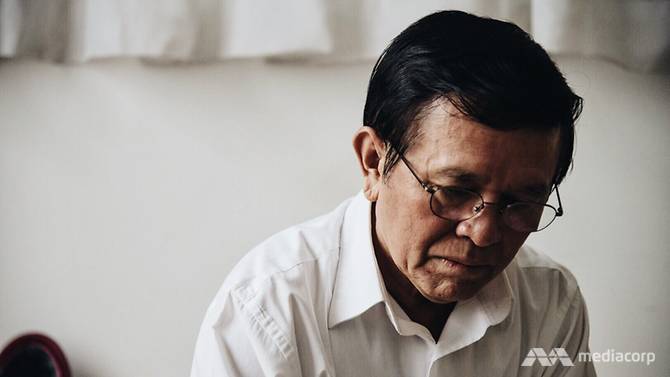
File photo of Cambodia’s Kem Sokha when he talked exclusively to Channel NewsAsia about living in self-exile, his protest plans and whether he would be PM. (Photo: Jack Board)
PHNOM PENH: The US should stop interfering in Cambodia’s internal affairs, a government spokesperson has told Channel NewsAsia, shortly after opposition leader Kem Sokha was charged with treason.
Thailand’s prestigious Chulalongkorn University has removed the head of its student council, a vocal critic of military rule, after he was accused of disrupting a royalist initiation ceremony.
FILE PHOTO: Anti-junta activist Netiwit Chotipatpaisal speaks during an interview with Reuters at an office in Bangkok, Thailand, May 17, 2017. REUTERS/Athit Perawongmetha/File Photo
BANGKOK: Thailand’s prestigious Chulalongkorn University has removed the head of its student council, a vocal critic of military rule, after he was accused of disrupting a royalist initiation ceremony.
Một đoan clip 2 phút dưới đây được làm ở Ấn Độ. Clip có phụ đề tiếng Anh, mình dịch ra tiếng Việt ở dưới cuộc đối thoại của một cô thợ làm tóc và một cô khách hàng. Mời các bạn.
Thu Hằng
Thợ làm tóc: Mời chị, đến lượt chị đó
Thợ làm tóc: wow, tóc chị đẹp quá, chị muốn làm tóc kiểu gì?
Khách hàng: Cắt ngắn đi
Thợ làm tóc: Nhưng chị có môt bộ tóc thật là đẹp quá, em chỉ tỉa ngắn đi một chút thôi nhé
Khách hàng: (Lắc đầu)
Thợ làm tóc: (bắt đầu tỉa tóc)
Thợ làm tóc: Em tỉa thế này được chưa chị
Khách hàng: Cắt ngắn hơn nữa
Thợ làm tóc: ngắn hơn nữa sao
Khách hàng: Vâng
Thợ làm tóc: (tiếp tục cắt)
Thợ làm tóc: Ngắn thế này được chưa chị
Khách hàng: Cắt ngắn hơn nữa
Thợ làm tóc:
Em nghĩ là chị sẽ không có nhiều thời gian để nuôi tóc dài nữa đâu
Sẽ đẹp hơn rất nhiều nếu em cắt thành lớp
(tiếp tục cắt)
Bây giờ thì tuyệt hảo (lấy gương cho khách xem tóc ngắn quá vai)
Khách hàng: Cắt ngắn hơn nữa đi, để mà không ai còn có thể nắm tóc tôi được như thế này nữa
(lời dẫn)
Tóc là thứ tự hào của phụ nữ
Tóc không phải là lý do cho sự yếu đuối của phụ nữ
80 trong số 100 phụ nữ đối mặt với bạo hành ở cách này hay cách khác trong đời
A Cambodian Buddhist monk, foreground, holds a portrait of Cambodia prominent political analyst Kem Ley as he takes part in a funeral procession of Kem Ley in Phnom Penh, Cambodia, Sunday, July 24, 2016. Photo: Heng Sinith/AP-TT
As a part of her ongoing work, in 2001 Jane Elliot’s “Blue Eye, Brown eye” experiment was filmed for release , under the heading of “The Angry Eye” as part of an update psychology series that spans some 30 plus years. Jane tackles a bunch of varsity students, challenging them to understand the true costs of racism, homophobia and sexism.
theconversion_U.S. Secretary of State John Kerry recently said that he sometimes feels like he’s living in a “parallel universe” compared to his Russian counterpart when it comes to Syria.
The Guide illustrates the human rights anchorage of the 17 goals and provides concrete links between the 169 targets and the range of human rights instruments and labour standards.
Thereby, the Guide reaffirms that human rights instruments and the 2030 Agenda are tied together in a mutually reinforcing way: human rights offer a legally-binding framework as well as guidance for the implementation of the 2030 Agenda. In turn, the SDGs can contribute substantially to the realization of human rights.
How to use the Guide?
The Guide is the essential tool to:
Understand the interlinkages between human rights and the SDGs. Concretely, 156 of the 169 targets (more than 92%) are linked with human rights instruments and labour standards.
Develop a human rights-based approach to sustainable development programming, implementation as well as follow-up and review (monitoring, evaluation and reporting)
What is it like to be trafficked to a foreign country and forced into prostitution? Just ask Charimaya Tamang. She survived trafficking and now advocates for other survivors
—
Some Days I Lived, Other Days I Died. Resilience in the face of exploitation
Charimaya Tamang knows all too well how easy it is to be trafficked in Nepal.
That’s because 22 years ago, it happened to her. At 16, Charimaya was alone cutting grass in the forest when she was ambushed by four men. After being drugged and losing consciousness, she awoke in Gorakhpur, near the Nepali/India border with her appearance completely changed — she had on makeup, a new hairstyle and different clothes.
medium – She was transported to the brothels in the Kamathipura red light district of Mumbai, India. Her captors left her in a windowless room with only a bed, table and chair, where she was forced to be a sex worker for the next 22 months.
“Some days I lived, other days I died,” says Charimaya.
Beaten, burned with cigarette butts and repeatedly raped, hope for escape slowly drifted away. Faced with deep social stigma should she ever regain her freedom, despair set in as neither outcome brought justice.
Vietnam debates the issue — unthinkable a decade ago in a country dominated by Confucianism.
By Dien Luong
April 13, 2016
thediplomat – It was past midnight and Ngo Thi Mong Linh had already gone to sleep when her cellphone suddenly rang. Linh knew all too well what to anticipate from the other end.
“A sex worker was urging me to come to rescue her,” Linh recalled in an interview. “Her client robbed her of all her money after severely beating her up. When I was there, all she could do was embrace me and burst into tears.” Tiếp tục đọc “Will Vietnam Legalize Prostitution?”→
Damiano de Felice Co-Founder and Co-Director, Measuring Business & Human Rights
Co-authored by Sarah Zoen, Senior Advisor, Private Sector Department at Oxfam America.
Photo by Rene Schwietzke (CC BY 2.0)
huffingtonpost – Numerous companies, non-governmental organizations (NGOs) and human rights practitioners have conducted human rights impact assessments in recent years. For instance, in 2012 Kuoni partnered with TwentyFifty Limited and Tourism Concern to assess its human rights impacts in Kenya. More recently, NomoGaia piloted a tool for evaluating the human rights implications of the Disi Water Conveyance Project in Jordan.
A Human Rights Impact Assessment (HRIA) is a process that identifies the potential and actual human rights impacts of a corporate project and recommends how to prevent, mitigate and/or address these impacts. HRIAs are different from Environmental Impact Assessments because of their holistic approach. Based on the inter-relatedness and indivisibility of human rights, they cover both environmental and social issues. HRIAs are different from Social Impact Assessments because their standards are anchored in binding national and international legal frameworks. This is important because these frameworks clearly identify duty-bearers and rights-holders. Tiếp tục đọc “Who is in charge? A key question for human rights impact assessments”→





 CVD
CVD 