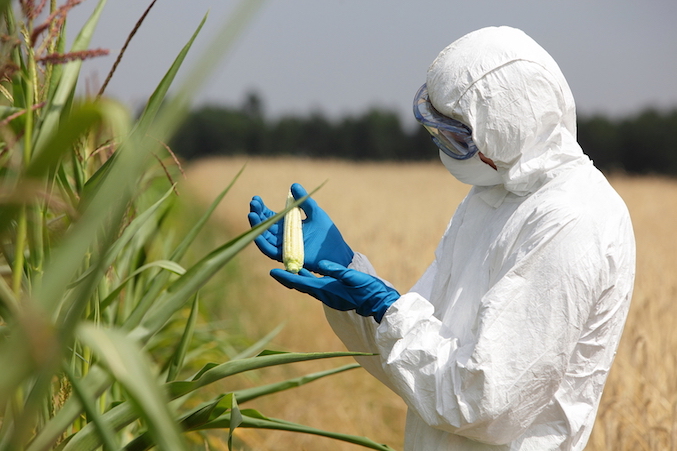
The creator of the CRISPR babies has been released from a Chinese prison

He Jiankui created the first gene-edited children. The price was his career. And his freedom.

technologyreview.com

By Antonio Regaladoarchive page April 4, 2022
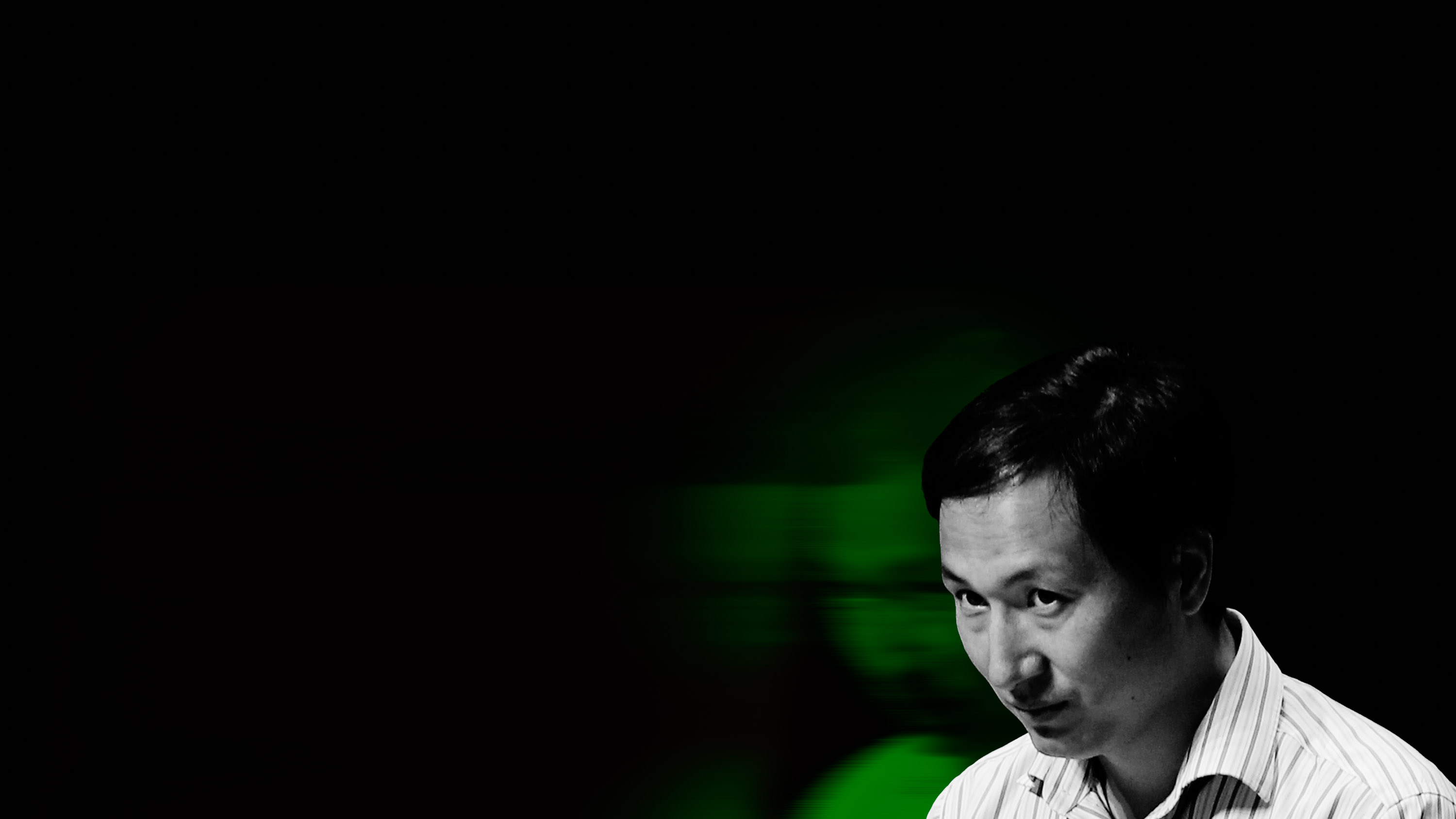
He Jiankui

MS TECH | AP PHOTO/KIN CHEUNG

The daring Chinese biophysicist who created the world’s first gene-edited children has been set free after three years in a Chinese prison.

He Jiankui created shock waves in 2018 with the stunning claim that he’d altered the genetic makeup of IVF embryos and implanted them into a woman’s uterus, leading to the birth of twin girls. A third child was born the following year.

Following international condemnation of the experiment, He was placed under home arrest and then detained. In December 2019, he was convicted by a Chinese court, which said the researcher had “deliberately violated” medical regulations and had “rashly applied gene editing technology to human assisted reproductive medicine.”

His release from prison was confirmed by people familiar with the situation and He answered his mobile phone when contacted early today. “It’s not convenient to talk right now,” he said before hanging up.

Tiếp tục đọc “The creator of the CRISPR babies has been released from a Chinese prison”

The ethics of catching criminals using their family’s DNA

nature.com
A high-profile arrest in California shows how the long arm of the law can now extend into DNA databases to check for relatives.
Authorities search the home of a suspected killer

The use of ancestral DNA data to track a suspected murderer raises some troubling ethical questions.Credit: Rich Pedroncelli/AP/REX/Shutterstock

Last week’s arrest of a suspect in the Golden State Killer case in California has highlighted how DNA samples that have been volunteered for one purpose — in this case, genealogy — can be used for other reasons, often without the donor’s explicit consent. Several ethicists have expressed concern about US detectives using a genealogy website in this way. Coming so soon after the reuse of Facebook data in political campaigns in the Cambridge Analytica scandal, it’s another example of how new technology and techniques lead to unexpected conundrums, and how ethical and societal debate must catch up. Tiếp tục đọc “The ethics of catching criminals using their family’s DNA”

UN approves declaration banning all forms of human cloning – UN thông qua tuyên bố cấm mọi hình thức nhân bản vô tính người, năm 2005

UN.org

8 March 2005 –The United Nations General Assembly today approved a non-binding declaration calling on all UN Member States to ban all forms of human cloning, including cloning for medical treatment, as incompatible with human dignity and the protection of human life.

By a vote of 84 in favour, 34 against and 37 abstaining, with 36 absent, the Assembly acted on the recommendation of its Legal, or Sixth, Committee to adopt the text, called the United Nations Declaration on Human Cloning. But some delegates said they opposed banning therapeutic cloning.

The Declaration, negotiated by a Working Group last month, also banned “genetic engineering techniques that may be contrary to human dignity.” It called on States “to prevent the exploitation of women in the application of life sciences” and “to protect adequately human life in the application of life sciences.” Tiếp tục đọc “UN approves declaration banning all forms of human cloning – UN thông qua tuyên bố cấm mọi hình thức nhân bản vô tính người, năm 2005”

Chinese scientists break key barrier by cloning monkeys

LONDON (Reuters) – Chinese scientists have cloned monkeys using the same technique that produced Dolly the sheep two decades ago, breaking a technical barrier that could open the door to copying humans.

https://www.reuters.tv


  Zhong Zhong and Hua Hua, two identical long-tailed macaques, were born eight and six weeks ago, making them the first primates — the order of mammals that includes monkeys, apes and humans — to be cloned from a non-embryonic cell.

Tiếp tục đọc “Chinese scientists break key barrier by cloning monkeys”

Nghiên cứu: Bắp ngô thường và biến đổi gen ‘cơ bản là không tương đồng’

TT – 26 February, 2017

Các nhà nghiên cứu gần đây đã phát hiện rằng một loại bắp ngô biến đổi gen nhằm chịu được thuốc diệt cỏ glyphosate (được cho là có nguy cơ gây ung thư cao) có sự khác biệt đáng kể về phân tử so với loại bắp ngô truyền thống.

(ảnh: Shutterstock)
(ảnh: Shutterstock)

Phương pháp đánh giá ‘Tương đồng Cơ bản’

Năm 1993, Tổ chức OECD đưa ra một báo cáo có tên “Đánh giá an toàn của thực phẩm có nguồn gốc công nghệ sinh học hiện đại”, trong đó thuật ngữ ‘Tương đồng Cơ bản’ lần đầu được sử dụng để đánh giá thực phẩm biến đổi gen. Tiếp tục đọc “Nghiên cứu: Bắp ngô thường và biến đổi gen ‘cơ bản là không tương đồng’”

‘Three-parent baby’ claim raises hopes — and ethical concerns

Questions surround report of baby created using controversial mitochondrial replacement technique.

28 September 2016 Article tools Rights & Permissions

Courtesy of New Hope Fertility Center

Team leader John Zhang and the ‘three-parent’ baby have made headlines across the world.

Tiếp tục đọc “‘Three-parent baby’ claim raises hopes — and ethical concerns”

Three technologies that changed genetics

  • Nature 528, S2–S3 (03 December 2015) doi:10.1038/528S2a
  • Published online
  • 02 December 2015
blished online
02 December 2015

Nature – Genome editing uses enzymes that are targeted to sequences of DNA to make cuts. These cuts are then repaired by the cell’s machinery. This technology allows scientists to disrupt or modify genes with unprecedented precision. By Amy Maxmen, infographic by Denis Mallet.

Double-stranded break

All three of the main genome-editing tools (ZFNs, TALENs and CRISPR–Cas9) create a break across both strands of DNA at a specific location, which is repaired in one of two ways to either ‘knock out’ or ‘knock in’ a gene.