What countries are the top producers and consumers of oil?

EIA.org

The top 10 oil1 producers and share of total world oil production2 in 20233

CountryMillion barrels per dayShare of world total
United States21.9122%
Saudi Arabia11.1311%
Russia10.75 11%
Canada  5.76  6%
China  5.26  5%
Iraq  4.42  4%
Brazil  4.28  4%
United Arab Emirates  4.16  4%
Iran  3.99  4%
Kuwait  2.91  3%
Total top 1074.59  73%
World total101.81

1 Oil includes crude oil, all other petroleum liquids, and biofuels.
2 Production includes domestic production of crude oil, all other petroleum liquids, and biofuels and refinery processing gain.
3 Data source: U.S. Energy Information Administration, International Energy Statistics, Total oil (petroleum and other liquids) production, as of April 11, 2024

The top 10 oil1 consumers and share of total world oil consumption in 20222

CountryMillion barrels per dayShare of world total
United States20.0120%
China15.1515%
India  5.05  5%
Russia  3.68  4%
Saudi Arabia  3.65  4%
Japan  3.38  3%
Brazil  3.03  3%
South Korea  2.55  3%
Canada  2.41  2%
Germany  2.18  2%
Total top 1061.0861%
World total99.95

1 Oil includes crude oil, all other petroleum liquids, and biofuels.
2 Data source: U.S. Energy Information Administration, International Energy Statistics, Total oil (petroleum and other liquids) consumption, as of April 11, 2024

Learn more:
Energy Explained: Where our oil comes from

Last updated: April 11, 2024. Note: Source data are subject to change since last update.
Vietnam Approves Pharos Energy’s Offshore Oil Project

oedigital.com 

OE Staff September 11, 2020

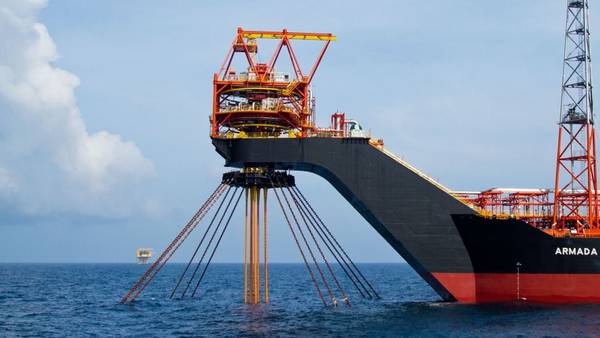
Armada TGT-1 FPSO - Image Credit: Pharos Energy

Armada TGT-1 FPSO – Image Credit: Pharos Energy

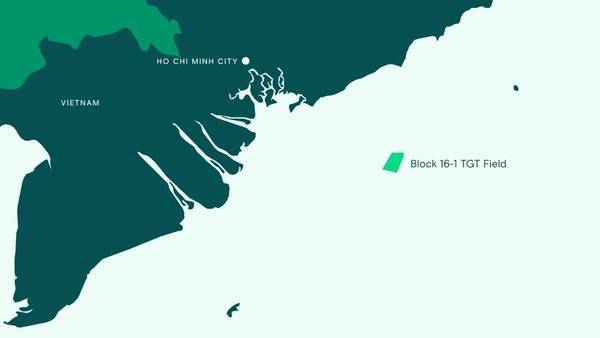
Pharos Energy said Friday it had received approval from the Prime Minister of Vietnam for the development plan of an offshore oil field in Vietnam.

Pharos, until recently known as Soco International, said that the approval of what is called the TGT Full Field Development Plan represented the “last stage of the required process.”

Pharos has previously said that the plan, which includes drilling of six producer wells, had been approved by all partners in the field, and was awaiting PM’s green light. The PM’s approval, announced Friday, follows the recently granted two-year TGT field license extension to December 7, 2026.

“Ordering of long-lead items can now proceed to enable the commencement of the drilling of six firm development wells contained in the FFDP in Q4 2021 as planned,” Pharos Energy said.

This infill-drilling program is targeted to increase gross production at TGT field off Vietnam from the current levels of around 15,000 boepd to around 20,000 boepd in 2022.
Credit: Pharos EnergyEd Story, President, and Chief Executive Officer, said: “We are pleased to have received approval from the Prime Minister of Vietnam for the TGT Full Field Development Plan. This final approval enables us to put plans in place to commence the drilling of the six new producer wells on TGT starting in Q4 2021, allowing us to realize further resources in the TGT field.” Tiếp tục đọc “Vietnam Approves Pharos Energy’s Offshore Oil Project”

Solar Farms Without Subsidy Sprout From Gloomy Britain to Italy

bloomberg.com
Green Energy Is Finally Standing on Its Own Feet

Next to a wheat field north of London, banks of solar panels in 35 neat rows are generating electricity without any support from the government.

Despite Britain’s reputation for grey skies, the closely-held developer Anesco Ltd. is building the hybrid solar and battery facility in Milton Keynes with its own capital. It’s just one of about 15 photovoltaic projects underway from Italy to the U.K. that aren’t relying on subsidies to make a profit, according to Bloomberg NEF, which anticipates many more to come. Tiếp tục đọc “Solar Farms Without Subsidy Sprout From Gloomy Britain to Italy”

Good Morning Vietnam, Energy-wise

energyathass

Vietnam, a leading indicator for the rest of the developing world, has seen tremendous growth in per capita energy consumption.

During a recent family vacation in Vietnam, I learned that the country is a microcosm for several major trends in energy consumption in the developing world: (1) there’s a thriving middle class, (2) hot and humid weather is driving air conditioning demand and (3) rural electrification rates are very high. (We also loved the food, culture and beaches, and we were gripped by the poignant remnants of the American War, as it’s known locally. I highly recommend it as a vacation destination if that’s your thing.)

Let’s start with some basic facts: Vietnam has seen extraordinary growth in per capita energy consumption over the past several decades. Since 1990, the earliest year for which data are available for most countries, total per capita energy consumption in Vietnam has more than doubled. (All the country-level data in this post come from the World Bank Development Indicators.) This puts Vietnam in the top 3% of countries in the world in terms of growth in per capita energy consumption. Of the countries with more than 5 million people, only China and Thailand have had more rapid growth. Tiếp tục đọc “Good Morning Vietnam, Energy-wise”

Canary in the coal mine Lacklustre power demand in Asia throws a cloud over coal

A surge in renewable energy is another threat to the black stuff’s future

economist_THE Hazelwood power station in Australia’s state of Victoria started generating electricity 52 years ago. The stark symbol of an era when coal was king, Hazelwood was one of Australia’s dirtiest: its fuel was the Latrobe valley’s brown coal, a bigger polluter than the black sort. The station was due finally to close on March 31st. Days earlier, chimney stacks were demolished at Munmorah, a black-coal station north of Sydney, already closed. Australia has shut ten coal-fired power stations over the past seven years, yet coal still generates about three-quarters of its electricity. Tiếp tục đọc “Canary in the coal mine Lacklustre power demand in Asia throws a cloud over coal”

ENERGY INVESTMENTS IN A TRANSITIONING WORLD

https://theecoreport.com/energy-investments-in-a-transitioning-world/

The ECOreport interviews Laszlo Varro, Chief Economist of the International Energy Agency (IEA) about energy investments in a transitioning world

By Roy L Hales

Though most of the world’s energy investments are still in fossil  fuels, their iron grip is weakening. The largest source of power investment was the $313 billion put into alternate energy sources like wind and solar. According to Laszlo Varro, Chief Economist of the International Energy Agency (IEA), last year there were more renewables coming online than the entire growth of the energy sector. In many developing countries, wind and solar are less expensive than using imported gas to produce electricity. Laszlo Varro, Chief Economist of the International Energy Agency, described energy investments as the world transitions to a low carbon economy.
Tiếp tục đọc “ENERGY INVESTMENTS IN A TRANSITIONING WORLD”

How to Transform the Global Energy Economy

Q&A with Jennifer Layke: How to Transform the Global Energy Economy

WRI_Today’s energy economy faces competing challenges: We don’t just need more energy, we need energy that is clean enough to protect our climate, and cheap enough to power growing economies that are trying to lift millions out of poverty. Tiếp tục đọc “How to Transform the Global Energy Economy”