Khi nào người dân được lựa chọn mua điện từ các đơn vị bán lẻ trực tiếp?

thanhnien.vn 14/11/2023 19:43 GMT+7

Mặc dù Đảng và Nhà nước chủ trương xóa bỏ độc quyền đối với ngành điện, và Tập đoàn Điện lực Việt Nam (EVN) không còn độc quyền sản xuất điện, nhưng người dân và doanh nghiệp hiện chỉ có một lựa chọn duy nhất là mua điện của EVN. Thế độc quyền đó có thể thay đổi không, và sẽ thay đổi như thế nào?

Lộ trình tiến tới thị trường bán lẻ điện cạnh tranh

Xóa độc quyền trong ngành điện được tính đến từ hơn 10 năm trước theo 3 cấp độ: thị trường phát điện cạnh tranh, thị trường bán buôn điện cạnh tranh và thị trường bán lẻ điện cạnh tranh. Từ năm 2012, thị trường phát điện cạnh tranh chính thức vận hành với 32 nhà máy tham gia. Đến năm 2020, số đơn vị tham gia đã có hơn 100 nhà máy. Đến nay, EVN không còn độc quyền phát điện, chỉ sở hữu 37%, các doanh nghiệp tư nhân sở hữu 42%, còn lại do các doanh nghiệp nhà nước khác, các dự án BOT nắm giữ và một tỷ lệ nhỏ khoảng 1% là điện nhập khẩu. 

Tiếp tục đọc “Khi nào người dân được lựa chọn mua điện từ các đơn vị bán lẻ trực tiếp?”
Mapped: Asia’s Biggest Sources of Electricity by Country

element.visualcapitalist.com

Mapped: Asia’s Biggest Sources of Electricity by Country

Mapped: Asia’s Biggest Sources of Electricity by Country

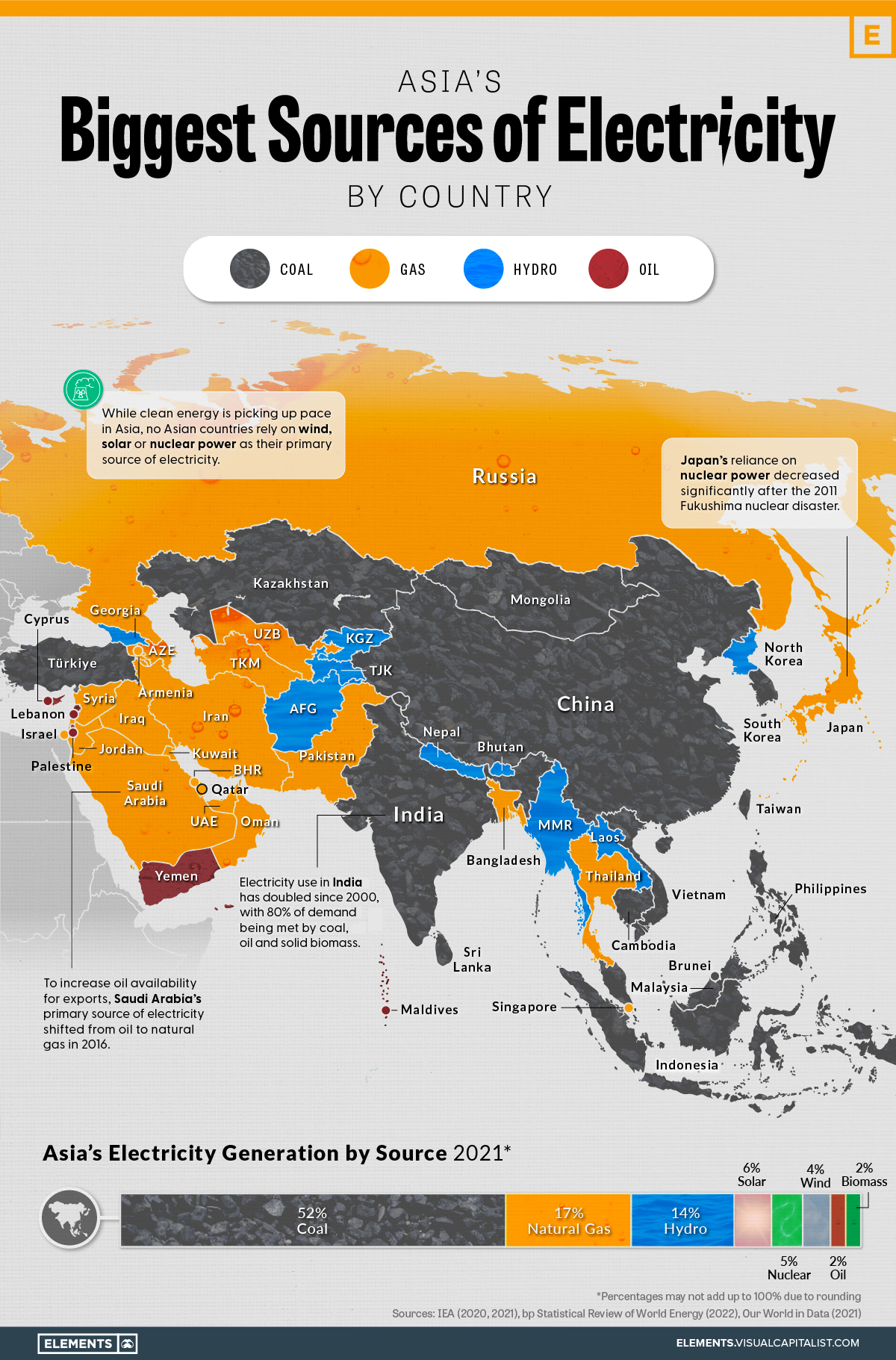
The International Energy Agency (IEA) predicts that Asia will account for half of the world’s electricity consumption by 2025, with one-third of global electricity being consumed in China.

To explore how this growing electricity demand is currently being met, the above graphic maps out Asia’s main sources of electricity by country, using data from the BP Statistical Review of World Energy and the IEA.

A Coal-Heavy Electricity Mix

Although clean energy has been picking up pace in Asia, coal currently makes up more than half of the continent’s electricity generation.

No Asian countries rely on wind, solar, or nuclear energy as their primary source of electricity, despite the combined share of these sources doubling over the last decade.

 % of total electricity mix, 2011% of total electricity mix, 2021 
Coal55%52% 
Natural Gas19%17%
Hydro12%14%
Nuclear5%5%
Wind1%4%
Solar0%4%
Oil6%2%
Biomass1%2%
Total Electricity Generated9,780 terawatt-hours15,370 terawatt-hours

The above comparison shows that the slight drops in the continent’s reliance on coal, natural gas, and oil in the last decade have been absorbed by wind, solar, and hydropower. The vast growth in total electricity generated, however, means that a lot more fossil fuels are being burned now (in absolute terms) than at the start of the last decade, despite their shares dropping.

Following coal, natural gas comes in second place as Asia’s most used electricity source, with most of this demand coming from the Middle East and Russia.

Zooming in: China’s Big Electricity Demand

Tiếp tục đọc “Mapped: Asia’s Biggest Sources of Electricity by Country”

The Impacts of US Wholesale Electricity Market Rules and Policies on Clean Energy Goals: A Primer for Local Governments

WRI.org

This paper discusses the evolving rules and policies of wholesale markets that can create barriers to local governments’ achievement of an effective and rapid clean energy transition. The report reviews the current barriers associated with transmission, market rules, and stakeholder processes across these markets while considering how these barriers affect local government clean energy and decarbonization goals, and the role of effective engagement in addressing these barriers.

Download

Cover image

DOI https://doi.org/10.46830/wriwp.21.00097

 ENERGY

RegionNorth AmericaMarch 30, 2022

This Working Paper is part of Electricity Market Design within our Energy Program. Reach out to Zach Greene for more information.

Authors

Elise Caplan, Zach GreeneJoseph WombleKatrina McLaughlin and Lori Bird

Tiếp tục đọc “The Impacts of US Wholesale Electricity Market Rules and Policies on Clean Energy Goals: A Primer for Local Governments”