‘Deadliest outbreak ever seen’: climate crisis fuels Bangladesh’s worst dengue epidemic

theguardian.com

Mosquito-borne disease once largely limited to Dhaka spreads countrywide as higher rainfall and heat lead to fivefold rise in cases in a year, with children the hardest hit
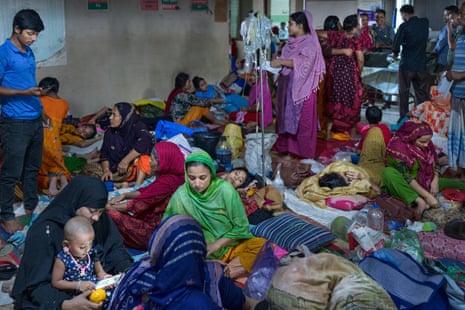
People lie on mattresses in a crowded corridor with drips on stands in the middle. Most of the people are children and women in colourful saris

Corridors in Dhaka Medical College hospital crowded with dengue patients amid a shortage of beds. Bangladesh’s worst outbreak of dengue on record comes after unusually heavy rain, torrid temperatures and high humidity led to an explosion in the mosquito population

 All photographs by Fabeha Monir for WHO

In a small, dimly lit control room at the Directorate General of Health Services (DGHS) in Dhaka, data on Bangladesh’s dengue outbreak flashes across multiple computer screens. Government analysts here have been busy collecting and monitoring the impact of the disease across the country since cases were first reported last April.

In 2023, the total reported cases of dengue numbered 321,179, with 1,705 deaths recorded, a massive jump from the year before, when 62,000 people were known to have had the virus, and 281 died. It was the highest number of annual deaths caused by the mosquito-transmitted disease ever recorded in Bangladesh.

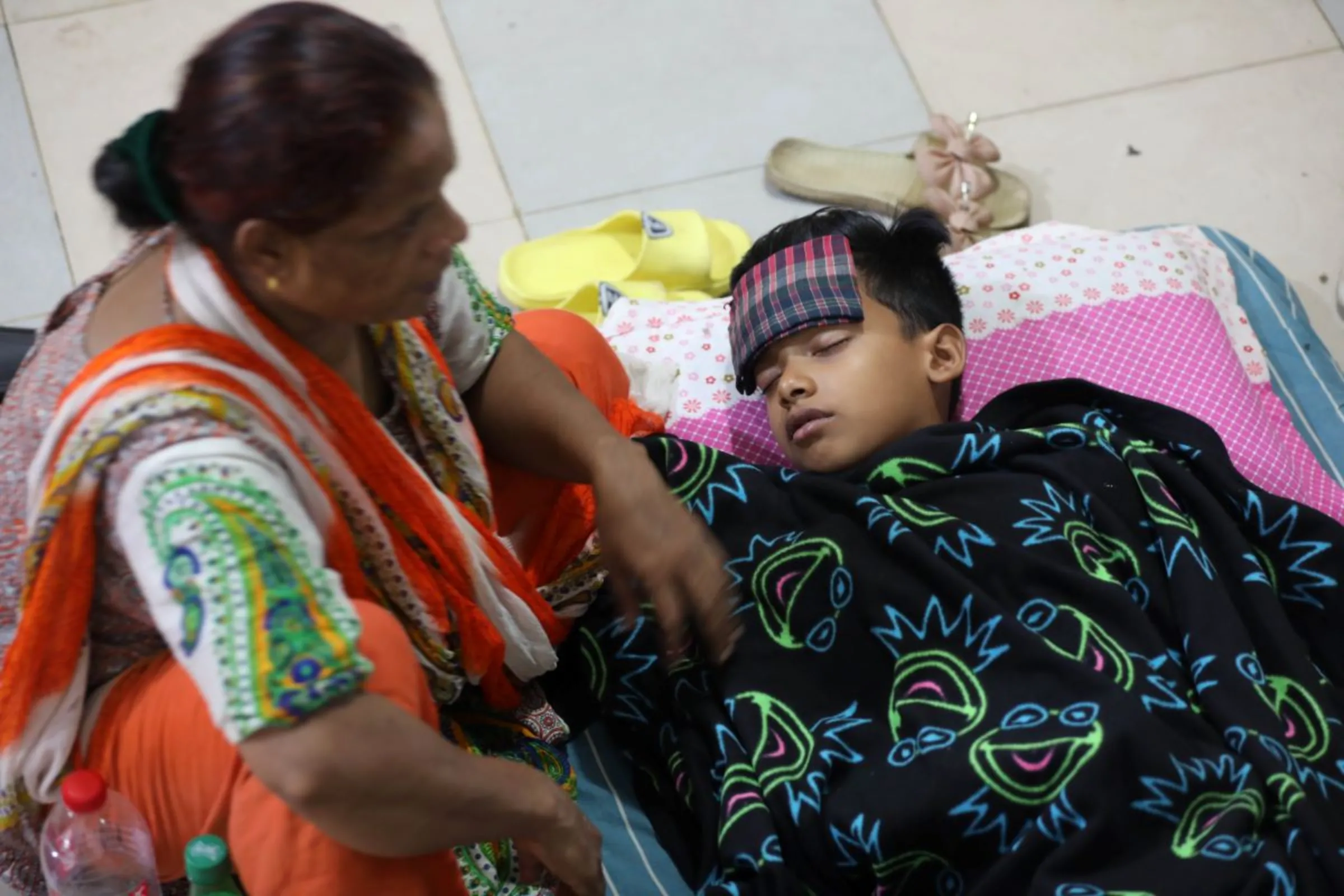
We can’t afford to admit her to hospital so I’ve been doing whatever I can to protect her at home

Masuma Begum

The deaths last year included at least 113 children. According to Save the Children, the majority of these deaths were of children under the age of 10, with 38 deaths among those under five.

“Children make up around 30% of all dengue cases in Bangladesh and are particularly vulnerable to the virus because of underdeveloped immune systems,” says Dr Shamim Jahan, Bangladesh director of Save the Children. “Those under five are particularly at risk from developing severe symptoms, such as dehydration and shock.”

Over the past few months, the surge in cases has pushed Bangladesh’s health system to the limit, with hospital corridors overflowing with patients as wards run out of beds.

Tiếp tục đọc “‘Deadliest outbreak ever seen’: climate crisis fuels Bangladesh’s worst dengue epidemic”

Asia’s climate-driven health crisis raises alarm ahead of COP28

asia.nikkei.com

New Delhi residents use clothes and books to protect their faces from the scorching sun on a hot June day in India. 2023 could be the hottest year on record.   © EAP/Jiji

Summit’s first health ministerial follows record summer spike in heatstroke and dengue cases

SAYUMI TAKE, Nikkei staff writerNOVEMBER 22, 2023 06:00 JST

TOKYO — 2023 is set to be the world’s hottest year on record, and the consequences for the human body are deadly.

Record-shattering temperatures can cause headaches, dizziness and nausea. Disease-carrying mosquitoes flourish after torrential rain and devastating floods. Polluted air causes shortness of breath and respiratory illnesses. The health emergencies that accompany climate change are shaking communities across the globe.

The impact on Asia is already profound. The continent has warmed at twice the speed of the global average in the past 30 years due to its huge land mass, according to the World Meteorological Organization (WMO).

More people in Asia are dying or falling ill than ever before due to high temperatures, the United Nations scientific body Intergovernmental Panel on Climate Change (IPCC) reported in 2022. Heat stress is one of many health risks. Dengue and malaria are increasing in Thailand and Malaysia, while respiratory diseases caused by air pollution are rising in Indonesia. Even mental disorders like depression and anxiety are associated with climate change, according to a 2022 report by the IPCC.

“These impacts that we’re seeing today could be just a symptom of a very dangerous future unless we tackle climate change urgently,” warned Marina Romanello, executive director of the authoritative Lancet Countdown on Health and Climate Change report.

Tiếp tục đọc “Asia’s climate-driven health crisis raises alarm ahead of COP28”

Dengue will ‘take off’ in southern Europe, US, Africa this decade, WHO scientist says

By Jennifer Rigby October 6, 2023

LONDON, Oct 6 (Reuters) – Dengue fever will become a major threat in the southern United States, southern Europe and new parts of Africa this decade, the WHO’s chief scientist said, as warmer temperatures create the conditions for the mosquitoes carrying the infection to spread.

The illness has long been a scourge in much of Asia and Latin America, causing an estimated 20,000 deaths each year. Rates of the disease have already risen eight-fold globally since 2000, driven largely by climate change as well as the increased movement of people and urbanization.

Many cases go unrecorded, but in 2022 4.2 million cases were reported worldwide and public health officials have warned that near-record levels of transmission are expected this year. Bangladesh is currently experiencing its worst-ever outbreak, with more than 1,000 deaths.

Tiếp tục đọc “Dengue will ‘take off’ in southern Europe, US, Africa this decade, WHO scientist says”

Mosquito-borne dengue grows deadlier in South Asia as planet warms

context.news

A grandmother keeps her vigil at the side of her sick grandchild at the dengue wards at the Mugda Medical College and Hospital, Dhaka, ‎August ‎30, ‎2023

A grandmother keeps her vigil at the side of her sick grandchild at the dengue wards at the Mugda Medical College and Hospital, Dhaka, ‎August ‎30, ‎2023, Thomson Reuters Foundation/Mosabber Hossain

What’s the context?

Virus is posing an ever-greater threat in Bangladesh and Nepal where rise and spread of cases are linked to climate change impacts

  • Dengue on the rise and spreading in Bangladesh, Nepal
  • Heat and longer monsoon linked to worsening outbreaks
  • Authorities struggle to respond but aid groups helping

DHAKA/KATHMANDU – Mosquito-borne dengue fever is taking a heavy toll on South Asian nations this year as Bangladesh grapples with record deaths and Nepal faces cases in new areas, with disease experts linking worsening outbreaks to the impacts of climate change.

Authorities in the two countries are scrambling to contain and treat the disease – which is also known as “breakbone fever” for the severe muscle and joint pains it induces. Entomologists and epidemiologists say rising temperatures and longer monsoon seasons are providing ideal breeding conditions for mosquitoes.

The threat is not restricted to South Asia as dengue rates are rising globally with 4.2 million cases reported in 2022 – up eight-fold from 2000 – the World Health Organization (WHO) says.

Tiếp tục đọc “Mosquito-borne dengue grows deadlier in South Asia as planet warms”

Mosquito-borne diseases become climate reality in warming Pacific

Aljazeera.com

Disease surveillance by the WHO shows mosquito-borne diseases such as malaria and dengue fever are rising sharply.

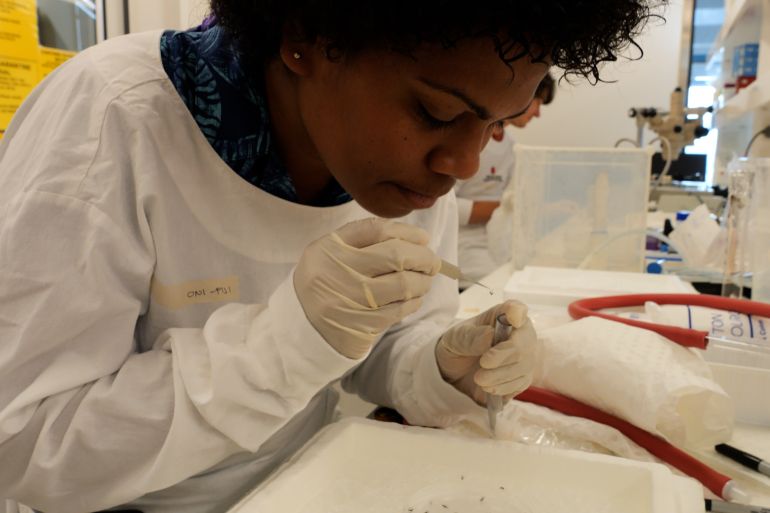
A researcher at a mosquito control laboratory in Brisbane She is wearing a white lab coat and latex gloves and is putting a mosquito into a tube
Experts say countries need to invest in new ways to control mosquitoes [Courtesy of QIMR Berghofer Medical Research Institute]

By Catherine Wilson

Published On 22 Feb 202322 Feb 2023

Climate change forecasters have warned for years that the warmer and wetter world created by the climate crisis will drive a surge in mosquito-borne diseases, such as malaria and dengue fever.

Experts say that in the Pacific Islands, such predictions are now becoming a reality.

Tiếp tục đọc “Mosquito-borne diseases become climate reality in warming Pacific”

THE WORLD MOSQUITOES PROGRAM

WHEN AEDES AEGYPTI MOSQUITOES CARRY NATURAL BACTERIA CALLED WOLBACHIA, THEY REDUCE THE MOSQUITOES’ ABILITY TO TRANSMIT VIRUSES LIKE DENGUE, ZIKA, CHIKUNGUNYA AND YELLOW FEVER. FIND OUT HOW.

worldmosquitoprogram.org

How mosquitoes spread disease

Mosquitoes pick up viruses by biting infected people. When they bite again, they can transmit the virus to the next person. This is how mosquito-borne diseases spread.

Mosquitoes do not naturally carry viruses – they can only get them from infected people. 

Since only female mosquitoes bite humans, only female mosquitoes can transmit viruses.

The Aedes aegypti mosquito is the main transmitter of dengue, Zika, chikungunya and yellow fever viruses.

Aedes aegypti

Aedes aegypti mosquitoes originated in Africa, but they have spread through tropical and subtropical regions around the world.

Tiếp tục đọc “THE WORLD MOSQUITOES PROGRAM”

Dengue fever a growing threat in Asia

japantimes.co.jp

A World Mosquito Program project staff member hangs a mosquito-box from a tree in Colombo, Sri Lanka. | WORLD MOSQUITO PROGRAM

A World Mosquito Program project staff member hangs a mosquito-box from a tree in Colombo, Sri Lanka. | WORLD MOSQUITO PROGRAM

For Kasun Chameera, who lives in Sri Lanka’s densely populated capital Colombo, dengue fever is a disease which has afflicted many loved ones, including his brother.

“We fear death when we hear about dengue,” Chameera said. “It’s present almost everywhere in my district, and spreads faster in the city than in the villages.”

His brother “suffered a lot from it,” Chameera said. “For at least one to two months, he would be tired walking just 10 steps. We were very scared.”

Also known as breakbone fever because of the severe pain it can cause, the disease is a growing threat across Asia, where 70% of the world’s dengue cases occur. The virus is transmitted to humans through the bites of the female aedes aegypti and aedes albopictus mosquitoes, which thrive in both tropical and subtropical urban areas.

Worldwide, it is estimated to infect about 390 million people every year, with more than half of the global population now at risk.

Recent weeks have seen soaring cases in Singapore, Malaysia and Vietnam, despite the peak season usually lasting from June to October. Reported cases in Singapore topped the 10,000 mark in the first five months of this year, already exceeding the 5,258 cases reported in all of 2021.

In Japan, 461 cases were reported in 2019 — mainly found in travelers from Asian countries. But with the borders effectively closed during the pandemic, the number of cases dropped to 43 and eight in 2020 and 2021, respectively.

Tiếp tục đọc “Dengue fever a growing threat in Asia”

Singapore’s dengue ’emergency’ is a climate change omen for the world

By Heather Chen, CNN

Updated 0213 GMT (1013 HKT) June 7, 2022

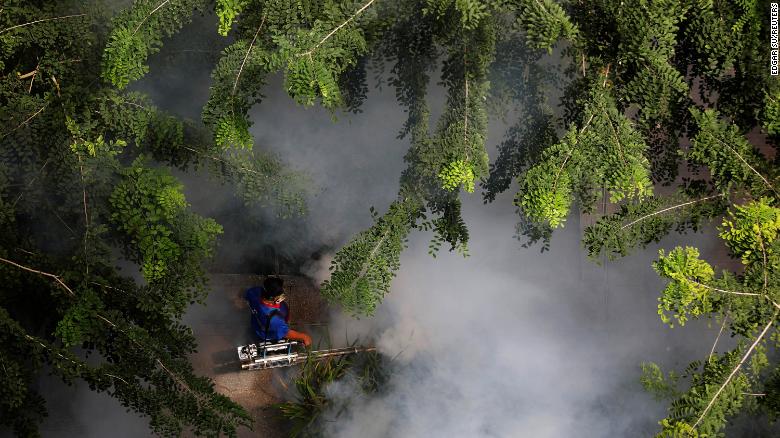
A worker fogs a housing estate for mosquitoes in Singapore on August 27, 2020.

A worker fogs a housing estate for mosquitoes in Singapore on August 27, 2020.

(CNN)Singapore says it is facing a dengue “emergency” as it grapples with an outbreak of the seasonal disease that has come unusually early this year.

The Southeast Asian city-state has already exceeded 11,000 cases — far beyond the 5,258 it reported throughout 2021 — and that was before June 1, when its peak dengue season traditionally begins.

Experts are warning that it’s a grim figure not only for Singapore — whose tropical climate is a natural breeding ground for the Aedes mosquitoes that carry the virus — but also for the rest of the world. That’s because changes in the global climate mean such outbreaks are likely to become more common and widespread in the coming years.

Tiếp tục đọc “Singapore’s dengue ’emergency’ is a climate change omen for the world”

Dengue fever season is peaking as death tolls have risen

Do Not Fear the Drones Air-Dropping 50,000 Mosquitoes From Above

Smithsonian

CDC-Gathany-Aedes-albopictus-4409.jpg
A pair of Aedes albopticus mosquitoes mating. These mosquitoes are very closely related to the Aedes aegypti mosquitoes used in the WeRobotics/IAEA trials, and both can carry Zika, yellow fever and dengue. The female is much larger. (Wikimedia Commons)
SMITHSONIAN.COM

On an early spring morning, a humming drone hovered over a small town in Bahia, Brazil. Three hundred feet above ground, a small canister clicked open, ejecting its contents into the mouth of the release mechanism below. For a moment, there was silence. Then, a swarm of mosquitoes, freshly awoken from icy slumber, stretched their wings and took flight. Tiếp tục đọc “Do Not Fear the Drones Air-Dropping 50,000 Mosquitoes From Above”

CDC issues travel notice for Vietnam due to dengue outbreak

August 27, 2017

Vietnam has reported a large increase in dengue fever cases in 2017. As of last week, more than 90,000 cases have been reported, including two dozen deaths. The case count is up more than 60 percent compared to last year.

Image/kpgolfpro
Image/kpgolfpro

The most affected areas include: An Giang, Binh Duong, Danang, Dong Nai, Dong Thap, Hanoi, Ho Chi Minh City, Khanh Hoa, Soc Trang, and Tien Giang. Dengue is spread through mosquito bites and can cause symptoms such as fever, headache, nausea, vomiting, rash, and pain in the eyes, joints, and muscles. Tiếp tục đọc “CDC issues travel notice for Vietnam due to dengue outbreak”

Thousands ill in Vietnam dengue outbreak

Al Jazeera

Mosquito-borne disease outbreak stretches Vietnam medical system as officials report 10,000 new infections in one week.

A total of 90,626 people have been infected with dengue, of whom 76,848 have been hospitalised [Tran Van Minh/AP]

Vietnam is battling a raging dengue fever outbreak with more than 10,000 new infections reported over the past week.

The number of infected represents a 42 percent increase over the same period last year along with seven more deaths, the Ministry of Health said on Friday.

A total of 90,626 people have been infected, of whom 76,848 have been hospitalised, and 24 have died. Tiếp tục đọc “Thousands ill in Vietnam dengue outbreak”

Dengue fever, encephalitis multiply throughout Vietnam

Tuoi Tre News

Updated : 06/29/2017 16:45 GMT + 7

A patient is pictured being treated for dengue fever at the National Hospital of Tropical Diseases in Hanoi.

Vietnam is about to hit the height of the dengue fever season, while encephalitis is also reaching epidemic proportions in many regions of the Southeast Asian country.

Statistics released by the Ministry of Health show that the outbreak of the mosquito-borne dengue fever is battering localities across the country way earlier than previous years. Tiếp tục đọc “Dengue fever, encephalitis multiply throughout Vietnam”

Dengue fever rise in Hà Nội

vietnamnews

Update: June, 07/2017 – 17:30

Health officials spray chemicals to kill mosquitoes in Hà Nội’s Hoài Đức District. — VNA/VNS Photo Tuyết Mai
HÀ NỘI — Dengue fever cases is on the rise in Hà Nội, as weather has been favourable to the development of infected mosquitoes.Statistics from the Hà Nội Health Department show that 1,281 cases of dengue fever were recorded in the city by June 4, 2.6 times more than the same period last year.

Of these, 126 patients are receiving treatment at hospitals and one person has reportedly died in Đống Đa District’s Trung Liệt Ward. Tiếp tục đọc “Dengue fever rise in Hà Nội”

Hà Nội reports first death from dengue fever

vietnamnews

Update: May, 22/2017 – 11:30

Health officials spray chemicals to kill mosquitoes. One person has been confirmed dead from dengue fever in Hà Nội. — VNA/VNS Photo Dương Ngọc

HÀ NỘI — The Hà Nội Health Department has announced the first death from dengue fever since the beginning of this year.The Central Tropical Diseases Hospital on Sunday confirmed that a 19-year-old student who rented a house in Đống Đa District’s Trung Liệt Ward died of dengue.

In Hà Nội, the number of patients with dengue fever has shown a tendency of increasing since early this month, with 27 cases recorded in the last two weeks. Tiếp tục đọc “Hà Nội reports first death from dengue fever”