
| Top of the Agenda Delayed UN Report Details China’s Human Rights Violations in XinjiangA UN human rights office report [PDF] issued yesterday said the Chinese government’s detentions of Uyghurs and other predominantly Muslim groups in the Xinjiang region could constitute “crimes against humanity.” The report noted (NYT) that two-thirds of former detainees interviewed described treatment “that would amount to torture and/or other forms of ill treatment.” The report stopped short of calling China’s actions “genocide,” as the United States has done. Human rights groups have criticized UN human rights chief Michelle Bachelet over a nearly yearlong delay in the report’s release. The report asks that Beijing (AP) release those who have been arbitrarily detained and disclose the whereabouts of individuals who are missing. Beijing denounced the report as a fabrication, while Uyghur activists celebrated its release. |
Thẻ: Council on Foreign Relations
Daily News Brief August 29, 2022
 Daily News BriefAugust 29, 2022 Daily News BriefAugust 29, 2022 |
| Top of the Agenda Over One Thousand People Killed in Catastrophic Pakistan FloodsPakistani officials are appealing for international aid (CNN) as uncharacteristically strong monsoon rains cause nationwide flooding. The floods, which climate change minister Sherry Rehman called a “climate catastrophe,” have so far displaced more than three million people, according to the International Federation of Red Cross and Red Crescent Societies. While Pakistan usually sees four rainy periods per year, it is currently experiencing its eighth, Rehman said. The flooding comes as Pakistan experiences an economic crisis (FT). Some preliminary estimates put the cost of the damages (Reuters) around $4 billion, though Pakistan’s foreign minister said it is likely higher. |
Council on Foreign Relations: Daily News Brief Aug. 18, 2022
CFR Daily Brief
Daily News Brief August 18, 2022
Top of the Agenda
Turkish, Ukrainian Leaders Hold First Face-to-Face Meeting Since Start of War
Turkish President Recep Tayyip Erdoğan is meeting (AFP) with Ukrainian President Volodymyr Zelenskyy and UN Secretary-General António Guterres in the western Ukrainian city of Lviv. They are expected to discuss diplomatic efforts to end the war in Ukraine, as well as a deal that Turkey and the United Nations brokered to resume grain exports from the country. Tiếp tục đọc “Council on Foreign Relations: Daily News Brief Aug. 18, 2022”
Council on Foreign Relations – Daily News Brief July 25, 2022
| Daily News BriefJuly 25, 2022 |
| Top of the Agenda EU Approves Vaccine for Monkeypox in Wake of WHO Emergency DeclarationThe European Union (EU) followed Canada and the United States in approving Bavarian Nordic’s smallpox vaccine for use against monkeypox (Reuters), the Danish drugmaker said. The step comes after the World Health Organization (WHO) declared monkeypox a public health emergency of international concern and urged countries to step up their disease surveillance and response efforts. WHO Director General Tedros Adhanom Ghebreyesus overruled an inconclusive WHO panel of advisors to make the declaration, saying “too little” is understood (NYT) about the current outbreak. More than sixteen thousand monkeypox cases have been reported in seventy-five countries since early May. Vaccines have been made available in some countries, though their global supply is relatively small (Vox). |
Concil on Foreign Relations: Daily Brief July 22, 2022
Daily News BriefJuly 22, 2022
| Daily News BriefJuly 22, 2022 |
Tiếp tục đọc “Concil on Foreign Relations: Daily Brief July 22, 2022”
Confronting Reality in Cyberspace: Foreign Policy for a Fragmented Internet
Council on Foreign Relations
Independent Task Force Report No. 80
Confronting Reality in Cyberspace: Foreign Policy for a Fragmented Internet
Nathaniel Fick and Jami Miscik, Chairs
Adam Segal, Project Director
Gordon M. Goldstein, Deputy Project Director
CFR Daily News Brief June 30, 2022
| Top of the Agenda China’s Xi Visits Hong Kong, Praises Its ‘Rise From Ashes’Chinese President Xi Jinping is in Hong Kong for ceremonies marking the twenty-fifth anniversary of the city’s handover from British rule. He said Hong Kong has “risen from the ashes” (SCMP) since his last visit in 2017. Since then, Beijing has cracked down on dissent and independent media in the city. While Xi’s 2017 visit was followed by a pro-democracy march (Bloomberg), Hong Kong’s streets have been empty of demonstrations this week because of the sweeping national security law Beijing imposed on the city in 2020 and warnings from police. It is Xi’s first trip outside mainland China since the start of the COVID-19 pandemic. The anniversary also marks the halfway point of a promise Beijing made to maintain liberal institutions in Hong Kong for fifty years. The United States and United Kingdom have accused Beijing of breaking the promise. |
CFR Daily News Brief June 29, 2022
| Top of the Agenda U.S., NATO Strengthen Military Presence in Europe U.S. President Joe Biden said the United States will send more troops and weapons (FT) to Europe as part of a North Atlantic Treaty Organization (NATO) defense buildup over Russia’s invasion of Ukraine. Washington will establish a new permanent army headquarters in Poland, send five thousand additional troops to Romania, and up its deployments in the Baltic states. NATO is seeking a response force of three hundred thousand troops, a sevenfold increase (Politico) from the current level. NATO Secretary-General Jens Stoltenberg called the announcements the biggest overhaul of NATO defenses since the end of the Cold War. Meanwhile, Turkey dropped its veto (Al Jazeera) on Finland’s and Sweden’s applications for NATO membership after the countries committed to toughening their approaches to groups Turkey views as threats. |
Council on Foreign Relations – May 27 briefs
| Daily News Brief May 27, 2022 |
| Editor’s note: There will be no Daily Brief on Monday, May 30, in observance of Memorial Day. |
| Top of the Agenda Blinken Details U.S. Strategy Toward ChinaU.S. Secretary of State Antony Blinken laid out (CNN) the Joe Biden administration’s strategy toward China in a speech yesterday (State Dept.), calling Beijing “the most serious long-term threat to the international order.” Blinken said Washington is determined to avoid a conflict or new Cold War with China. The U.S. approach—called “invest, align, compete”—hinges on efforts to invest in domestic sources of strength, align with allies and partners, and compete with China on issues such as technological innovation. Blinken reiterated that the U.S. strategy toward Taiwan is unchanged, and that Washington seeks to engage and cooperate with China where possible, especially on climate change. Officials said President Biden could hold a phone call (Politico) with Chinese President Xi Jinping within weeks. |
Council on Foreign Relations: Monitor World Conflicts
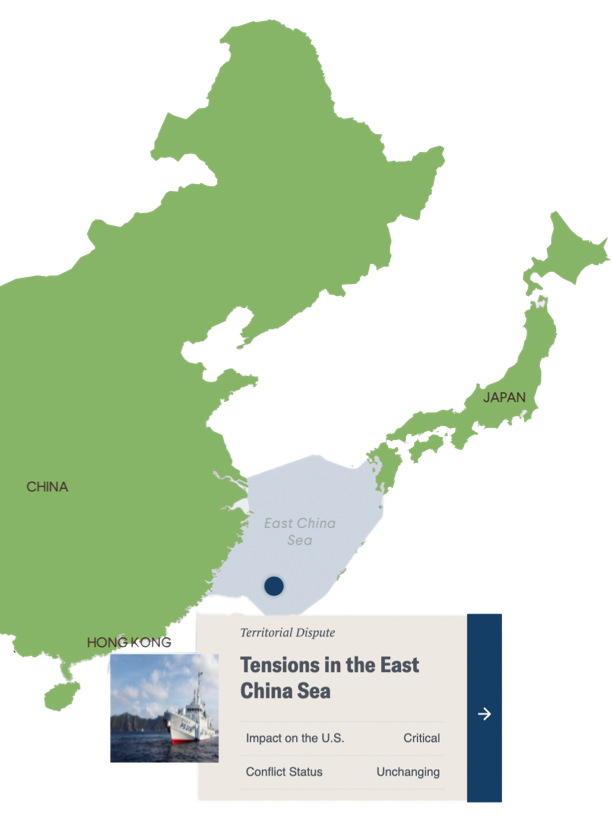 The Global Conflict Tracker identifies conflicts around the world, follows their evolution, and assesses their impact on U.S. national security. Our newly redesigned and expertly researched tool from CFR’s Center for Preventive Action includes live data, background information, the latest developments, and critical resources to provide insight on the world’s strife. The Global Conflict Tracker identifies conflicts around the world, follows their evolution, and assesses their impact on U.S. national security. Our newly redesigned and expertly researched tool from CFR’s Center for Preventive Action includes live data, background information, the latest developments, and critical resources to provide insight on the world’s strife. |
| Conflict in Ukraine Conflict status: Worsening Russia’s military invasion risks a wider European conflict. Stay up to date. |
| War in Afghanistan Conflict status: Worsening Decades of instability continue amid the 2021 Taliban takeover. Read about the history. |
| North Korea Crisis Conflict status: Unchanging The nation’s leader continues to provoke a global crisis with his nuclear ambitions. Learn about attempts at rapprochement. |
| Conflict with Al-Shabab Conflict status: Unchanging Up to 450 U.S. troops return to Somalia for a mission against the al-Qaeda affiliate. Stay current. |
| Council on Foreign Relations58 East 68th Street — New York, NY 10065 1777 F St NW — Washington, DC 20006 |
Many watching to see what a ‘strong China’ means: PM Lee
channelnewsasia
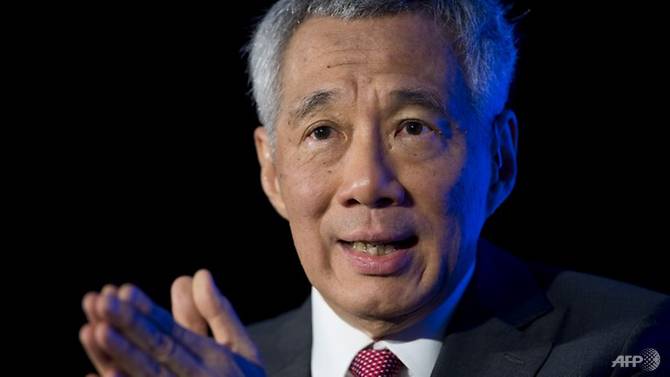 Singapore’s Prime Minister Lee Hsien Loong speaking at the Economic Club of Washington during his US working visit. (Photo: AFP/Saul Loeb)
Singapore’s Prime Minister Lee Hsien Loong speaking at the Economic Club of Washington during his US working visit. (Photo: AFP/Saul Loeb)
Bookmark
WASHINGTON: Chinese President Xi Jinping’s consolidation of his leadership position is a signal that this is the start of a new phase for China, according to Singapore Prime Minister Lee Hsien Loong on Wednesday (Oct 25).
Mr Lee, speaking at a dialogue session at the Council on Foreign Relations during his official working visit to the US, said: “They mentioned a new era; Mao’s era, Deng’s era and now Xi’s era – which he envisages extending to 2050 and taking China to 100 years after the revolution.” Tiếp tục đọc “Many watching to see what a ‘strong China’ means: PM Lee”
New Contingency Planning Memorandum: A China-Vietnam Military Clash
by Joshua Kurlantzick
September 23, 2015
 Chinese oil rig Haiyang Shi You 981 is seen surrounded by ships of China Coast Guard in the South China Sea, about 210 km (130 miles) off shore of Vietnam on May 14, 2014. (Nguyen Minh/Reuters)

The risk of a military confrontation between China and Vietnam is rising. Although the two countries have enjoyed close party-to-party ties for decades, since 2011 they have both asserted conflicting claims to the South China Sea. Beijing claims 90 percent of the sea as its exclusive economic zone. China has repeatedly moved oil rigs into disputed areas, dredged and occupied parts of the disputed Paracel Islands, and constructed at least one and potentially multiple airstrips, possibly for military use, in the Spratly Islands. Vietnam has also tried to use oil explorations to claim disputed areas of the sea and reportedly has rammed Chinese vessels in disputed waters. Vietnam has cultivated close military ties to the United States, to other Southeast Asian nations like the Philippines, and to regional powers such as India, all to the consternation of China.
In addition, Vietnam and China increasingly compete for influence in mainland Southeast Asia, where Vietnam had dominated between the 1970s and late 2000s. China has become the largest aid donor and investor in many mainland Southeast Asian nations, as well as an important military partner to Myanmar, Cambodia, Thailand, and Laos. Rising nationalism in both Vietnam and China fuels this race for regional influence and makes it harder for leaders in each country to back down from any confrontation, whatever the initial genesis.
These growing sources of friction could lead to a serious military confrontation between the two countries in the next twelve to eighteen months, with potentially significant consequences for the United States. Accordingly, the United States should seek to defuse tensions and help avert a serious crisis.
For more on the chances of a China-Vietnam military clash, and how the United States could help prevent one, see my new Contingency Planning Memorandum.
 CVD
CVD 