Vietnam’s desolate seabed

mekongeye.com by Thu Quynh Nguyen 31 July 2023 at 14:39

As coral reefs and marine life disappear, efforts to save them are underway, but is it too late?
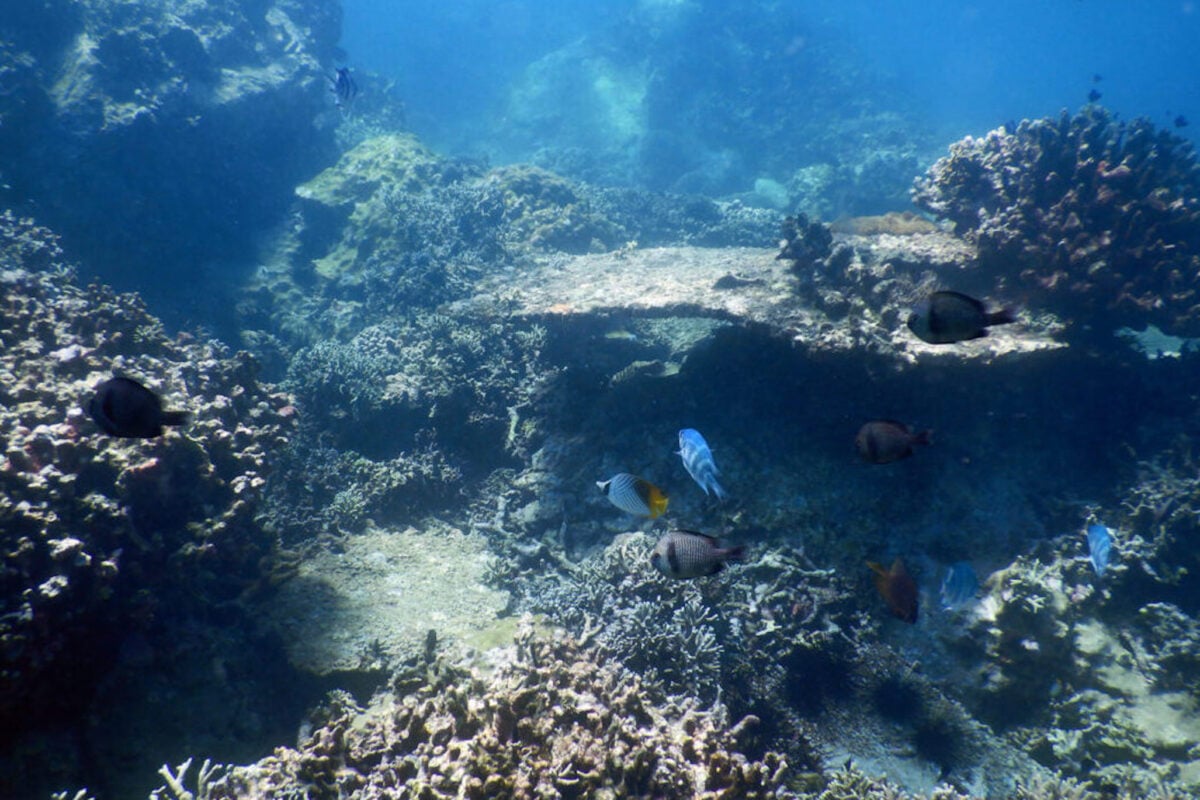
Coral die-off in Hon Mun, Nha Trang. PHOTO: Konstantin Tkachenko.

NHA TRANG, VIETNAM ― In Hon Chong, one of Vietnam’s last coral reefs, colorful schools of fish have become distant memories. These days, only small fish lurk behind bleached coral formations, a stark difference from the way some travel brochures depict the place.

Half an hour by boat from Hon Chong is Hon Mun, a marine conservation site once home to more than 340 coral species, and valued at approximately US$70 million for its biodiversity in 2005.

About 10 years before the Covid-19 pandemic, professional divers started noticing a gradual depletion of the coral reefs in the area. They had hoped that lockdowns and border closures would alleviate stress from tourism and revive the reef.
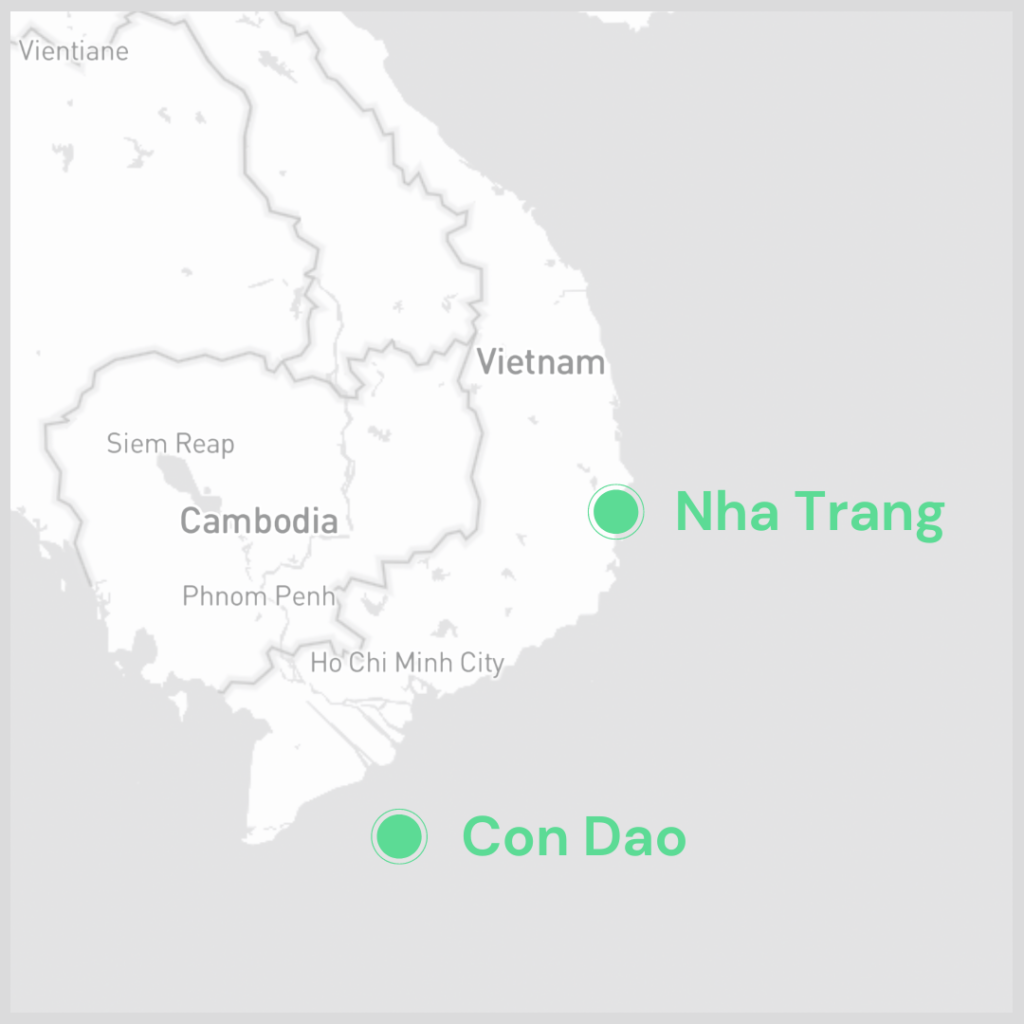
Source: Mapbox

“After two years [of Covid-19], I was speechless to see the ocean bed so empty, the coral all bleached,” photographer Na Son, a diver who has made hundreds of trips down to Hon Mun’s ocean bed, told Mekong Eye in June 2023. Last June, Na Son was one of many divers who spoke to local media about Hon Mun’s alarming coral depletion.

Coral reefs are considered to be one of Vietnam’s national treasures, as the country boasts one of the world’s most diverse ecosystems with 355 species, according to data from the World Resources Institute.

Yet across the country, vital coral reserves are depleting at such an alarming rate that frenzied attempts to salvage what remains are likely to be insufficient to restore the ecosystems.

Tiếp tục đọc “Vietnam’s desolate seabed”

Các rạn san hô Việt Nam và cái chết được báo trước từ lâu

cuoituan.tuoitre.vn

TTCT – Với đà suy giảm hiện nay, nhiều rạn san hô lộng lẫy rồi sẽ chỉ còn là quá khứ. Là nơi cư trú lý tưởng, là mái nhà trú ẩn, là bãi đẻ cho hàng nghìn loài sinh vật biển, sự suy giảm của san hô mang tới nỗi vô vọng về tương lai của môi trường và nguồn sống.

Mùa hè năm ngoái tôi đưa con đi biển Đà Nẵng. Bước vào cửa khách sạn, con reo lên đòi chụp ảnh với một cây san hô trắng muốt trưng bày giữa sảnh. “Nhành san hô này có khi đã cả trăm tuổi đấy, vì mỗi năm loài này chỉ nhích lên được vài centimet thôi” – tôi nói với con.

Ăn vào tương lai

Một bài học về biển cả mà đứa trẻ bảy tuổi cũng có thể nhắc là rạn san hô là một trong những mái nhà nuôi nấng nguồn lợi biển. Mất rạn san hô không chỉ là mất một vẻ đẹp lộng lẫy của biển cả, mà còn gây ra sự đứt gãy sinh thái lớn hơn rất nhiều, thậm chí gây khủng hoảng cho cả hệ sinh thái ở các bãi, đảo, vịnh trù phú mà con người đang có. 

Mất rạn san hô là mất nơi cư trú, nơi sinh sống của các cộng đồng sinh vật có mối liên kết chặt chẽ với nhau: trên rạn có tảo cộng sinh để quang hợp, tạo ra năng suất sơ cấp cho các loài cá ăn tảo, tiếp theo là các loài cá ăn thịt, tạo dây chuyền thức ăn. Rạn san hô không còn thì chuỗi thức ăn đứt gãy, không chỉ nguồn lợi, sản lượng sinh vật có thể khai thác cũng biến mất theo mà chất lượng môi trường biển cũng suy tàn.

Tiếp tục đọc “Các rạn san hô Việt Nam và cái chết được báo trước từ lâu”

Cơ hội cuối cùng cho Việt Nam – Du lịch bền vững

English: Vietnam’s last chance: Sustainable tourism

2017-10-09T050115Z_911570337_RC1EE87ABD80_RTRMADP_3_VIETNAM-ECONOMY-1-940x580 Xe máy trên đường phố Hanoi, Vietnam June 30, 2016. Source: Reuters/Kham

Ba mươi năm sau khi Đảng Cộng sản Việt Nam ban hành chính sách “đổi mới”, mở cửa cho nền kinh tế quốc doanh và tập trung vào thị trường toàn cầu thì các chỉ số kinh tế của đất nước đã được cải thiện đáng kể. Theo số liệu của Ngân hàng Thế giới, GDP bình quân đầu người của Việt Nam đã tăng từ 437,13 USD năm 1986 lên 2,185.69 USD vào năm 2016. Tỷ lệ nghèo đói cũng giảm đáng kể, từ 60% năm 1993 xuống còn 14% năm 2016. Tuy nhiên người Việt Nam đang phải trả phí cho những tiến bộ kinh tế này bằng việc đánh đổi các nguồn tài nguyên thiên nhiên, các bờ biển rộng lớn của quốc gia đang phải chịu ảnh hưởng nặng nề. Tiếp tục đọc “Cơ hội cuối cùng cho Việt Nam – Du lịch bền vững”

Nha Trang nature reserve may be operated by private firm

Last update 17:01 | 12/06/2017

The central province of Khanh Hoa is considering allowing a local private firm to preserve and operate its Hon Mun Nature Reserve, one of the most famous tourist destinations in the province.

Nha Trang nature reserve may be operated by private firm, Vietnam environment, climate change in Vietnam, Vietnam weather, Vietnam climate, pollution in Vietnam, environmental news, sci-tech news, vietnamnet bridge, english news, Vietnam news, news Vietna

Tourists in Hon Mun 

Earlier in February this year, the provincial people’s committee agreed on Hon Tam Nha Trang Sea JS Company’s proposal to manage Hon Mun Nature Reserve. The company would also provide eco-tourism tours.

The company has co-operated with Australia’s Reef Ecologic to survey the condition of the reserve. Tiếp tục đọc “Nha Trang nature reserve may be operated by private firm”

Scientists warn about danger to VN coral reefs

Last update 10:15 | 16/02/2017

VietNamNet Bridge – Coral reefs, which provide a habitat for aquatic creatures, are increasingly in danger because of human exploitation activities.

vietnamnet bridge, english news, Vietnam news, news Vietnam, vietnamnet news, TPP, US President Obama, Vietnam net news, Vietnam latest news, vn news, Vietnam breaking news, coral reefs, con dao, Binh Dinh

Binh Dinh province has 134km of coastline with coastal waters surrounded by small islands and a diverse ecosystem comprising coral reefs, seagrass beds and aquatic animals.

The province is rich in aquatic resources with more than 500 fish species, 38 of which have high economic value. Pelagic fish accounts for 65 percent of total reserves, about 38,000 tons, while ground fish accounts for 35 percent of total reserves, or 22,000 tons.

The province has the fleet of 7,339 fishing boats with total capacity of 980,838 CV. The sea resources and biodiversity in the locality bring a comfortable life to local people.

However, Tran Van Phuc, deputy director of Binh Dinh Agriculture Department, said the environment and local biodiversity have been seriously degrading. Tiếp tục đọc “Scientists warn about danger to VN coral reefs”