COPs and robbers

Transparency International
05/11/2021: COPs and robbers
The world’s biggest annual climate conference, COP26, is underway in Glasgow. Despite the promise of “the most inclusive COP ever”, activists have had to follow negotiations from the sidelines. Representatives of major gas and oil companies, however, have continued to rub shoulders with decision-makers, just like in previous years.


Young people display placards as ministers prepare COP26. Milan, 1 October 2021. Image: Mauro Ujetto / Shutterstock

Earlier this week, news broke that government leaders achieved a new deal to end and even reverse deforestation by 2030. This is the first COP pledge to recognise protection of the rights of Indigenous Peoples as a climate solution. Indigenous communities play a crucial role in protecting their lands from illegal deforestation but – as Transparency International recently documented – often face discriminatory corruption, so this high-level recognition is both welcome and long overdue.But don’t hold your breath just yet.

The Glasgow declaration fails to mention the need for accountability and good governance measures when delivering on these promises. In this regard, things aren’t much different from 2014, when the New York Declaration on Forests was adopted. Despite ambitious targets set back then, the Declaration has so far failed to achieve its objective, as corruption has continued to fuel deforestation.

Take Nicaragua, for example, whose signature is missing from the Glasgow deforestation deal even though the country is losing its forests at the fastest rate in the world. Deforestation rates have almost doubled since 2014, when Nicaragua’s national forestry agency came under President Daniel Ortega’s direct control.And now, an investigation from the Organized Crime and Corruption Project has found that Nicaragua’s Vice President – and Ortega’s wife – Rosario Murillo and other public officials handed out forestry permits to politically connected companies. What’s more, Nicaragua’s reforestation programmes – which are co-financed by international donors – have allegedly benefitted the private interests of a certain supreme court judge.

In 2018 alone, climate finance totalled US$546 billion globally, and corruption finds fertile ground in such vast sums of money. Cases documented by Transparency International show corruption remains a major barrier to the success of climate adaptation and mitigation measures.  

  Corruption, like climate change, is a threat multiplier with many dangerous tipping points. It not only diminishes the chance of curbing climate change, but unfairly denies the most vulnerable members of society from participating or benefitting from climate funds. Rueben Lifuka, Vice Chair of Transparency International Over the next years, as wealthy nations – many of which are the biggest polluters – scale up the delivery of climate finance, they must also do more to ensure that these funds do not end up in private pockets.Transparency International is working tirelessly around the world to build a range of integrity measures – from advocating on behalf of affected communities to proposing better mechanisms to disburse much-needed climate finance. The aim is, ultimately, to protect our people and our planet.


© Transparency InternationalClimate & Corruption Atlas

From fossil fuel lobbying to the illegal rosewood trade, Transparency International’s Climate & Corruption Atlas documents cases of corruption in climate finance and projects. These stories underscore the importance of protecting these multi-billion-dollar flows of money from corruption. 
Tiếp tục đọc “COPs and robbers”

Security Challenges of Climate Change in Southeast Asia

Photo: REZAS/AFP/Getty Images
by Murray Hiebert (Senior Associate, Southeast Asia Program) and Danielle Fallin (Program Coordinator and Research Assistant, Southeast Asia Program)

A 1.5-degree Celsius increase in global warming poses an immediate threat to Southeast Asia’s economic, political, and health security. Mitigating the effects of climate change is key to the United States’ goal to secure a free, open, and prosperous Indo-Pacific.

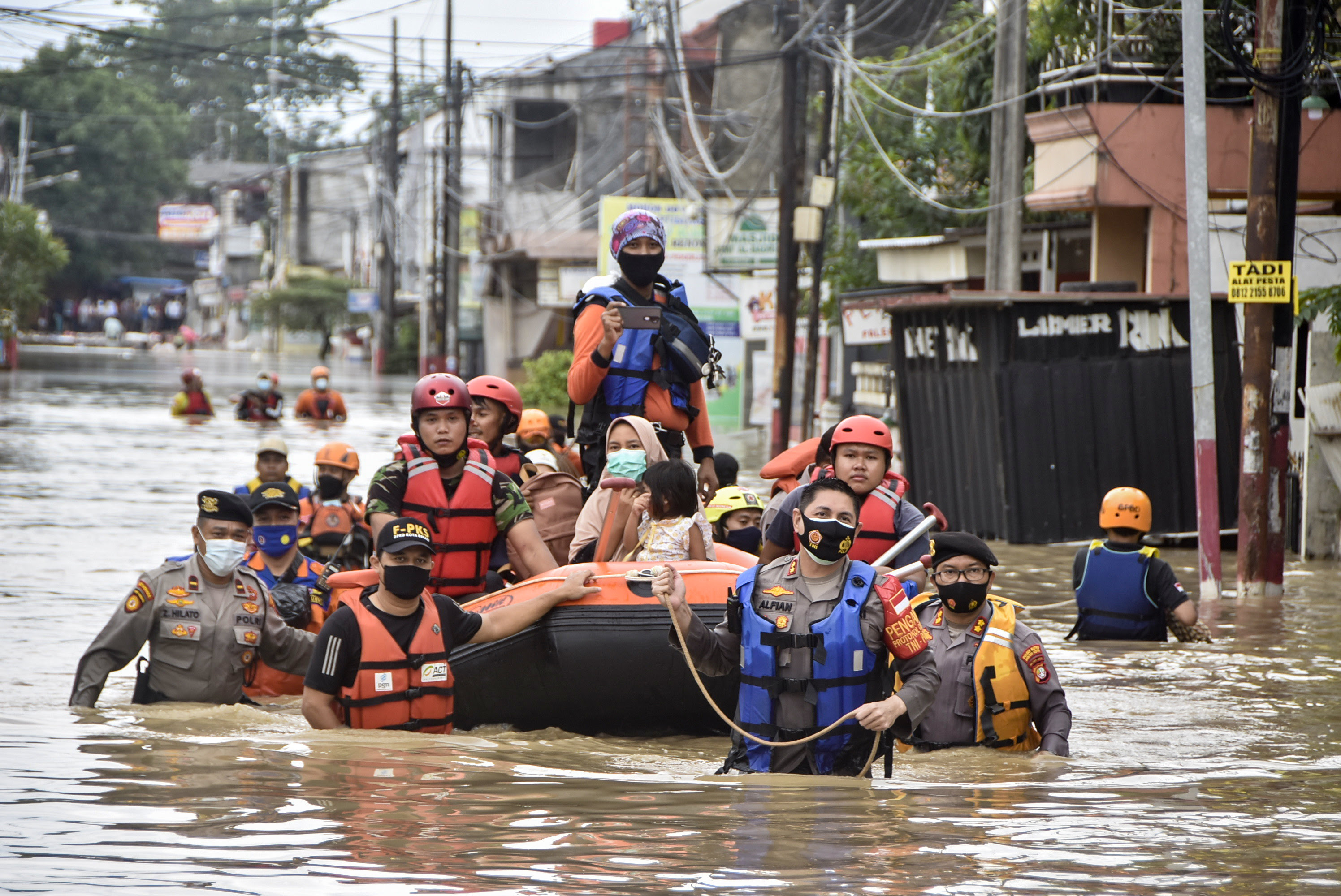
Southeast Asia will be one of the world’s most vulnerable regions to climate change unless countries make dramatic cuts in greenhouse gas pollution. According to a 2018 report from the Intergovernmental Panel on Climate Change, a global warming increase of 1.5 degrees Celsius (2.4 degrees Fahrenheit) will cause rising seas, dangerous flooding, and changing rain patterns leading to violent typhoons and drought. Global warming poses a threat to food security, hobbles economic growth, prompts political instability, and catalyzes pandemics. In extreme cases, it can create an environment conducive to terrorist activities.

Tiếp tục đọc “Security Challenges of Climate Change in Southeast Asia”

China’s Commitment to Stop Overseas Financing of New Coal Plants in Perspective

CSIS.org

September 24, 2021

On September 21, 2021, Chinese president Xi Jinping announced at the United Nations General Assembly debate that China would not build any new coal-fired power plants abroad and would step up its support for developing green and low-carbon energy in developing countries. He also reiterated the country’s goal to become carbon neutral by 2060 and peak carbon emissions by 2030, targets which he had first announced last year. This new announcement sets the tone for the upcoming UN climate change conference, COP26, which will be held in Glasgow in early November.

Q1: Why does this new climate commitment matter?

A1: Xi Jinping’s speech at last year’s UN General Assembly was noteworthy because it set a timeline for China’s decarbonization. However, in addition to not specifying a peak level of emissions, it also left unanswered the question of whether the country would shoulder the responsibility for climate action outside its borders. China’s role as the largest public financier of coal projects globally has come into particular focus this past year as other governments, such as the G7 members, have pledged to slash their public financing of such projects. There were multiple calls from the international community, including U.S. special envoy for climate John Kerry, for China to end its support for coal projects globally.

Tiếp tục đọc “China’s Commitment to Stop Overseas Financing of New Coal Plants in Perspective”

Geopolitical standoff in South China Sea leads to environmental fallout

mongabay.com

by Leilani Chavez on 12 August 2021

  • Satellite images show significant growth in the occurrence of algal blooms in contested areas in the South China Sea.
  • Images suggest that these algal blooms or phytoplankton overgrowth are linked to the presence of vessels anchored in the area and to island-building activities in the region.
  • While satellite images help give a preview of the ecological state of the South China Sea, on-site observations are necessary to validate the findings, experts say.
  • Decades of territorial and maritime disputes, however, have limited the conduct of studies and dissuaded the establishment of conservation zones in the South China Sea.

Tiếp tục đọc “Geopolitical standoff in South China Sea leads to environmental fallout”

If your coffee’s going downhill, blame climate change

by Reuters

Monday, 16 August 2021 10:00 GMT

Brazil is turning to stronger and more bitter robusta coffee beans, which are hardier in the heat than the delicate arabica, in a sign of how climate change is affecting global markets

* Robusta coffee more heat tolerant than arabica

* It can be grown at lower altitudes than rival variety

* Top roasters ramping up use of Brazilian robusta

* Yields in Brazil now match top robusta grower Vietnam

By Maytaal Angel, Marcelo Teixeira and Roberto Samora

LONDON/NEW YORK/SAO PAULO, Aug 16 (Reuters) – Coffee leader Brazil is turning to stronger and more bitter robusta beans, which are hardier in the heat than the delicate arabica, in a sign of how climate change is affecting global markets – and shaping our favourite flavours.

Brazil is the world’s biggest producer of arabica, yet its production has stayed largely flat over the last five years. Meanwhile its output of cheaper robusta – generally grown at lower altitudes and viewed as of inferior quality – has leapt and is attracting more and more international buyers, new data shows.

The expansion is challenging Vietnam’s longstanding robusta dominance, while squeezing smaller players, increasingly leaving output concentrated in fewer regions and more vulnerable to price spikes if extreme weather occurs.

It also promises to gradually alter the flavour of the world’s coffee over the coming years as more of the harsher and more caffeine-charged robusta variety, widely used to make instant coffee, makes its way into the pricier ground blends currently dominated by arabica.

Whatever your taste, Enrique Alves, a scientist specialising in coffee seed cultivation at Brazilian state agritech research centre Embrapa, said that it might ultimately be thanks to robusta that “our daily coffee will never be missing” as the globe warms.

Tiếp tục đọc “If your coffee’s going downhill, blame climate change”

The latest UN report is clear: Climate change is here, it’s a crisis, and it’s caused by fossil fuels.

The Attlantic.com

By Robinson Meyer

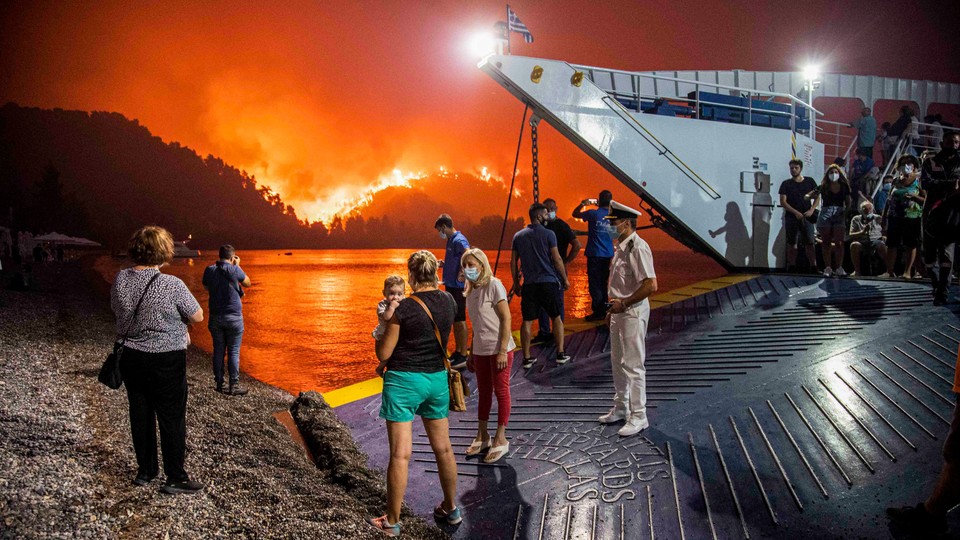
People board a ferry prior to an evacuation as a wildfire approaches the seaside village of Limni, on the island of Evia, Greece, on August 6, 2021.
NurPhoto / Getty

AUGUST 10, 2021SHARE

A new United Nations–led report from hundreds of climate scientists around the world makes it clear: The human-driven climate crisis is now well under way. Earth is likely hotter now than it has been at any moment since the beginning of the last Ice Age, 125,000 years ago, and the world has warmed 1.1 degrees Celsius, or nearly 2 degrees Fahrenheit, since the Industrial Revolution began—an “unprecedented” and “rapid” change with no parallel in the Common Era. What’s more, the recent spate of horrific heat waves, fire-fueling droughts, and flood-inducing storms that have imperiled the inhabited world are not only typical of global warming, but directly caused by it.

Tiếp tục đọc “The latest UN report is clear: Climate change is here, it’s a crisis, and it’s caused by fossil fuels.”

South Korea and Japan Will End Overseas Coal Financing. Will China Catch Up?

WRI.org

Since 2013, public finance from China, Japan and South Korea accounted for more than 95% of total foreign financing toward coal-fired power plants. This financing enabled the construction and operation of coal power plants in developing countries, where investment in power supply does not match demand. These investments also came at a time when the global carbon budget was already overstretched.

Tiếp tục đọc “South Korea and Japan Will End Overseas Coal Financing. Will China Catch Up?”

China key to Vietnam’s solar success

Chinadialogue.net

A rapid rise in Vietnam’s solar power has been boosted by Chinese finance and technology, but more support is still going to fossil fuels

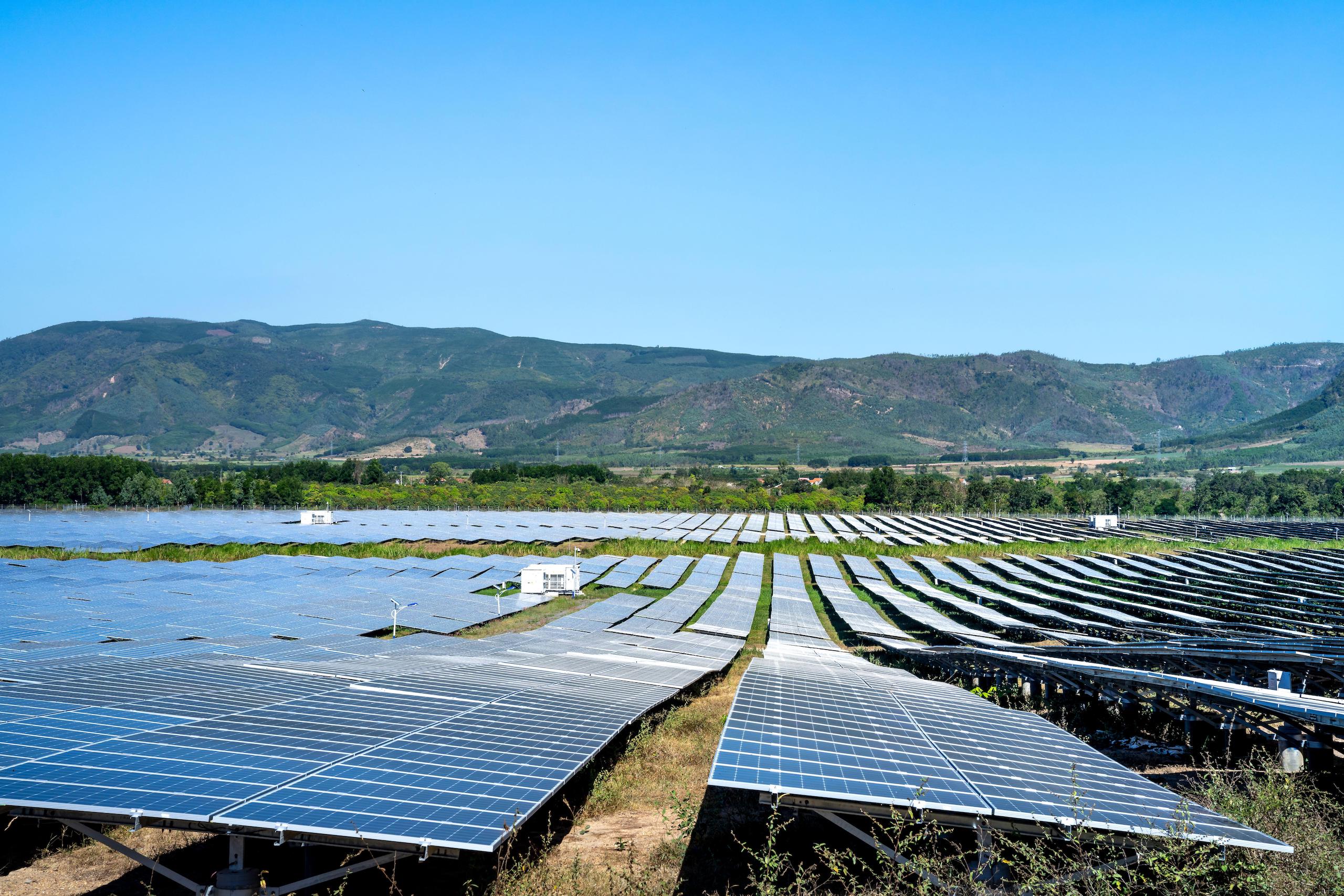
Solar energy in Vietnam has grown rapidly since 2018, supported by Chinese finance and technology (Image: Alamy)Solar energy in Vietnam has grown rapidly since 2018, supported by Chinese finance and technology (Image: Alamy)

Linh Pham

June 30, 2021

Vietnam has been a Southeast Asia solar success story. It went from having barely any generation in 2018 to a quarter of its total installed capacity being solar – a 100-fold increase in two years.

This rapid growth is mainly down to the Vietnamese government’s feed-in tariff which provides a guaranteed above-market price for renewable energy producers; other incentives signed off in 2017 in an attempt to pivot away from lagging fossil fuel projects; and cheaper solar panels, some of which are assembled domestically.

Around 99% of the installed solar panels in Vietnam come from China. At the same time, China is one of the few countries that still lends Vietnam money to build coal plants.

China’s future role in Vietnam’s power system will be shaped by the latter’s newest plan for its power sector. The final version of the Power Development Plan 8 is due to be published in June, though it has been postponed before and may be again.

Tiếp tục đọc “China key to Vietnam’s solar success”

Remarks by President Nguyen Xuan Phuc at Leaders Summit on Climate

Vietnamplus

State President Nguyen Xuan Phuc on April 23 delivered a speech at the virtual Leaders Summit on Climate hosted by the US.VNA Friday, April 23, 2021 21:24 

The virtual Leaders Summit on Climate hosted by the US (Photo: VNA)Hanoi (VNA) – State President Nguyen Xuan Phuc on April 23 delivered a speech on the economic opportunities of climate change at the Leaders Summit on Climate which is held virtually on April 22-23, at the invitation of US President Joe Biden.

Following is the full text of the remarks of President Nguyen Xuan Phuc.

President Joe Biden,

Excellencies,

Ladies and gentlemen,

I thank President Biden for inviting me and other leaders to this very important Summit.

I welcome the United States’ return to the Paris Agreement. I believe that the renewed leadership and strong commitment that President Biden espoused during the opening session, combined with our shared efforts, will lead us on the path towards achieving the goals of the Paris Agreement.

Mr. President,

Climate change is undoubtedly a major existential threat to many countries and to our planet. In Vietnam, last year alone, extreme weather has taken hundreds of lives and reversed decades of progress in poverty reduction. The Mekong Delta, our rice bowl and the home to 20 million Vietnamese, is suffering immensely from sea level rise, especially towards the end of this century.

Tiếp tục đọc “Remarks by President Nguyen Xuan Phuc at Leaders Summit on Climate”

Vietnam hit by worst drought in 90 years

Scientists blame the ongoing 2015-2016 El Nino weather phenomenon, one of the most powerful on record, for the current drought.


“The water level of the Mekong River has gone down to its lowest level since 1926, leading to the worst drought and salinisation there,” Nguyen Van Tinh, deputy head of the hydraulics department under the Ministry of Agriculture, told AFP. Tiếp tục đọc “Vietnam hit by worst drought in 90 years”

Hãy ký vào petition của VEF gửi Tổng thống Obama về “Cứu nguy Đồng Bằng Sông Cửu Long”

mekong_delta

 
Chào các bạn,

Dưới đây là message anh Lê Xuân Khoa, bạn mình, gửi mọi người, mời mọi người đến ký tên vào petition của Viet Ecology Foundation gửi Tổng thống Obama về “Cứu nguy Đồng Bằng Sông Cửu Long” trước chuyến công du của Tổng thống vào cuối tháng Năm 2016.

Các bạn hãy ký tên và chuyển thông tin này đi rộng rãi.

Mến,

Hoành
_____________

From: Lê Xuân Khoa

Thưa anh/chị,

Dưới đây là email tôi gửi cho một số thân hữu về cái petition gửi Tổng thống Obama về vụ “Cứu nguy Đồng bằng sông Cửu Long,” trước chuyến công du VN của Tổng thống vào cuối tháng Năm 2016.

Đây là bản dịch thư Việt ngữ thư gửi TT Obama:

http://vietecology.org/Article.aspx/Article/143

Và đây là bản petition để mời ký trên change.org:

https://www.change.org/p/barack-obama-call-on-president-obama-to-help-mekong-people-save-the-mekong-climate-change-development?recruiter=1185022&utm_source=share_for_starters&utm_medium=copyLink

Mong các anh chị sẵn sàng tham gia ký petition này để cho Tổng thống Hoa Kỳ lắng nghe tiếng nói chính đáng của trí thức Việt Nam, không chỉ ở Hoa Kỳ mà luôn cả từ Viêt Nam và nhiều quốc gia khác nữa. Change.org chỉ công bố con số người ủng hộ petition chứ không đăng danh sách người ký tên. Danh sách này chỉ được change.org thông báo cho nơi gửi (VEF) và nơi nhận (White House) mà thôi.

Tôi giúp cho Viet Ecology Foundation (VEF) làm cuộc vận động này vì tôi biết họ là một nhóm chuyên gia về hệ sinh thái và môi trường đã làm việc ở Mỹ lâu năm. Anh Ngô Thế Vinh, tác giả hai cuốn sách nổi tiếng là “Cửu Long Cạn Dòng, Biển Đông Dậy Sóng” và “Cửu Long, Dòng Sông Nghẽn Mạch”. đã được dịch sang tiếng Anh, cũng ở trong nhóm VEF. Vì anh Vinh là bác sĩ nên anh không làm Chủ tich VEF. Bản thân tôi, từ nhiều năm nay, cũng chỉ góp ý và giúp đỡ kỹ thuật cho các nhóm NGO chứ không chính thức tham gia một tổ chức nào hay đứng ra chủ trương một hoạt động cộng đồng nào.

Anh Phạm Phan Long vừa nhận được thư tham gia ký tên của đối tác FACT bên Cambodia và thư ủng hộ của International Rivers network (IR) ở Berkeley, California. Anh Long đã cùng với Aviva Imhoff, cựu Giám đốc IR, soạn thảo và công bố bản Mekong River Declaration từ năm 1999.

Thưa quý anh chị,

Lá thư gửi Tổng thống Obama của anh Phạm Phan Long, nhân danh Viet Ecology Foundation (VEF), rất cần thiết trước chuyến công du VN của ông Obama trong tháng Năm 2016. Đây là một bước đồng bộ với nhiều nhóm chuyên gia ở trong nước và quốc tế trong chiến dịch “Cứu nguy Đồng bằng Sông Cửu Long” hiện đang bị hạn hán và nhiễm mặn trầm trọng. Mấy tuần trước, VEF cũng đã viết thư cho Đại sứ Ted Osius và ông Osius đã lập tức chỉ thị cho bộ phận trong Sứ quán phụ trách về Lower Mekong Initiative (do cựu Ngoại trưởng Hillary Clinton thành lập), chia sẻ thông tin và nghiên cứu các đề nghị của VEF. Một đường dây trao đổi giữa hai bên đã được thiết lập. Một cuộc Hội thảo quốc tế về ĐBSCL cũng vừa diễn ra tại Đại học Cần Thơ, nhưng rõ ràng là tiếng nói của các chuyên gia không đủ mạnh khiến chính phủ các nước lưu vực Mekong phải lưu tâm nếu không có sự ủng hộ mạnh mẽ của Hoa Kỳ.

Vì vậy là thư của VEF gửi TT Obama (bản gốc tiếng Anh) cũng đã được chuyển thành petition và danh sách ký tên ủng hộ cập nhật hàng ngày trên change.org sẽ được White House theo dõi đều đặn. Chiến dịch Cứu nguy ĐBSCL không chỉ có mục đích vận động Hoa Kỳ và quốc tế đáp ứng nhu cầu cấp bách của người dân Việt Nam mà còn tham gia vào những nỗ lực chung ngăn chặn đám lãnh đạo Trung Quốc tiến hành kế hoạch hiểm độc của chúng, vừa chiếm đoạt đất nước Việt Nam vừa tiêu diệt khả năng trỗi dậy của dân tộc Việt.

Không ai có thể nghi ngờ và chống đối những bước vận động khẩn cấp và cuối cùng của những người Việt Nam, dù ở trong hay ngoài nước, có lương tâm và trách nhiệm trước hiểm họa mất nước và diệt chủng chưa từng có trong lịch sử dân tộc. Tôi hi vọng số chữ ký ủng hộ petition này sẽ đủ nhiều để cho White House staff kịp chuẩn bị đầy đủ cho chuyến đi Việt Nam của ông trước cuối tháng Năm này.

Kính thư,

Lê Xuân Khoa

Cá chết dọc biển: Nhà khoa học Đức, Mỹ vào cuộc

Đất Việt, May 3 2016

(Tin tức thời sự) – Các nhà khoa học có kinh nghiệm từ Đức, Mỹ, Israel đã đến Việt Nam phối hợp cùng Bộ TN&MT tìm nguyên nhân cá chết dọc biển miền Trung.

Ngày 2/5, tại trụ sở Bộ TN&MT, Bộ trưởng Trần Hồng Hà và Thứ trưởng Nguyễn Linh Ngọc đã tiếp và làm việc với các nhà khoa học trên và các nhà khoa học trong nước.

Đây là những người có kinh nghiệm trong lĩnh vực hải dương học, địa chất ven biển, kỹ thuật bờ biển và môi trường bền vững.

Sau khi nghe thông báo ngắn gọn tình hình sự cố hải sản chết bất thường tại bốn tỉnh miền trung, các chuyên gia quốc tế khẳng định sự quan tâm và sẵn sàng giúp đỡ Việt Nam trong việc điều tra, xác định nguyên nhân.

Tiếp tục đọc “Cá chết dọc biển: Nhà khoa học Đức, Mỹ vào cuộc”