Climate Change 2022: Impacts, Adaptation and Vulnerability (Intergovernmental Panel on Climate Change)

The Working Group II contribution to the IPCC Sixth Assessment Report assesses the impacts of climate change, looking at ecosystems, biodiversity, and human communities at global and regional levels. It also reviews vulnerabilities and the capacities and limits of the natural world and human societies to adapt to climate change.

Summary for Policymakers

The Summary for Policymakers (SPM) provides a high-level summary of the key findings of the Working Group II Report and is approved by the IPCC member governments line by line.

DOWNLOAD 40 PAGES

FIGURES.

Technical Summary

The Technical Summary (TS) provides extended summary of key findings and serves as a link between the comprehensive assessment of the Working Group II Report and the concise SPM.

DOWNLOAD 96 PAGES, 22 MB

Full Report

The 18 Chapters and 7 Cross-Chapter Papers of the Working Group II Report assess the impacts of climate change on nature and humanity, and their capacities and limits for adaptation.

DOWNLOAD

6 Big Findings from the IPCC 2022 Report on Climate Impacts, Adaptation and Vulnerability

February 27, 2022 By Kelly LevinSophie Boehm and Rebecca Carter Cover Image by: Roop_Dey/iStock

WRI.org

The newest report from the Intergovernmental Panel on Climate Change (IPCC) paints a troubling picture: Climate change is already impacting every corner of the world, and much more severe impacts are in store if we fail to halve greenhouse gas emissions this decade and immediately scale up adaptation.     

Following on the first installment of the IPCC’s Sixth Assessment Report, Working Group II’s contribution, released on February 28, 2022, draws from 34,000 studies and involved 270 authors from 67 countries. It provides one of the most comprehensive examinations of the intensifying impacts of climate change and future risks, particularly for resource-poor countries and marginalized communities. The 2022 IPCC report also details which climate adaptation approaches are most effective and feasible, as well as which groups of people and ecosystems are most vulnerable.

UN Secretary-General Antonio Guterres called the report “an atlas of human suffering and a damning indictment of failed climate leadership. 

Here are six takeaways from the report:

1. Climate impacts are already more widespread and severe than expected.

Climate change is already causing widespread disruption in every region in the world with just 1.1 degrees C (2 degrees F) of warming.

Tiếp tục đọc “6 Big Findings from the IPCC 2022 Report on Climate Impacts, Adaptation and Vulnerability”

Climate Finance in Southeast Asia: Trends and Opportunities

fulcrum.sg

PUBLISHED 11 FEB 2022

Qiu Jiahui

MELINDA MARTINUS|QIU JIAHUI

The Covid-19 crisis has stalled the delivery of much-needed climate finance to developing countries. For Southeast Asia, a region frequently cited as being one of the most vulnerable regions threatened by climate change, the broken promise of climate finance is highly disappointing.

INTRODUCTION

Climate finance has been one of the most contentious issues in global climate politics. At the 2009 United Nations Climate Change Conference (COP 15), developed countries committed to mobilising by 2020 US$100 billion climate finance annually to assist vulnerable countries. The pledge has been key to building trust between states to limit global warming to well below 2 degrees Celsius, as specified in the Paris Agreement.

Tiếp tục đọc “Climate Finance in Southeast Asia: Trends and Opportunities”

How Peatlands Can Advance Climate Action in Southeast Asia

WRI.org

Topic Forest and Landscape Restoration Region Asia

Southeast Asia is home to over 54% of the world’s peatlands — tropical wetlands which have a major role to play in climate action. But they are being deforested rapidly: Around 25 million hectares of tropical peatlands in Southeast Asia have been deforested and drained over the last three decades alone, and only 6% of peatlands remain untouched.

This is a major blow to the region. These terrestrial wetland ecosystems help regulate water flow by capturing rainwater during the wet season and slowly releasing it during the dry season. They are also key habitats for endangered and rare species of both plants and animals, and are essential for the livelihoods of local communities.

Additionally, they are an important carbon store in the global carbon cycle; more than three-fourths of global peat carbon stocks (52 Gigatons) are stored in Southeast Asian peatlands. Their destruction warrants global attention.

Tiếp tục đọc “How Peatlands Can Advance Climate Action in Southeast Asia”

What Does “Net-Zero Emissions” Mean? 8 Common Questions, Answered

WRI.org

The latest climate science is clear: Limiting global warming to 1.5 degrees C (2.7 degrees F) is still possible. But to avoid the worst climate impacts, global greenhouse gas (GHG) emissions will need to drop by half by 2030 and reach net-zero around mid-century.

Recognizing this urgency, a rapidly growing number of national government, local government and business leaders are making commitments to reach net-zero emissions within their jurisdictions or businesses. To date, over 80 countries have communicated such “net-zero targets,” including the world’s largest emitters (China, the United States, the European Union and India). On top of that, hundreds more regions, cities and businesses have set targets of their own.

Tiếp tục đọc “What Does “Net-Zero Emissions” Mean? 8 Common Questions, Answered”

Key Themes for the Global Energy Economy in 2022

oxfordenergy.org

We start with a review of short-term issues in the oil, gas and electricity markets. Bassam Fattouh and
Andreas Economou consider the outlook for oil demand over the next 12 months and discuss the ability
of OPEC+ producers to manage a gradual increase in production to balance the market, even as
demand growth is expected to soften. Their conclusion is that the oil price will remain within a $70-90
per barrel range, while refilling depleted storage will be a key issue. Price volatility, in light of
considerable uncertainty about both supply and demand, as well as political responses to high prices
will remain dominant issues in 2022. Anupama Sen, David Robinson and Rahmat Poudineh then
discuss government responses to current electricity price volatility, using the UK and Spain as examples
of different responses to providing protection for low-income consumers. They see the issue becoming
increasingly relevant as the energy transition progresses and suggest that government intervention
could become less and less effective unless energy policy is well designed.
In a somewhat similar vein, Mike Fulwood and Jack Sharples consider the outlook for gas prices and
supply to Europe and the implications for the global LNG market. Replenishing European storage will
be a critical issue in 2022, with LNG supply, Asian demand and pipeline exports from Russia being key
drivers to watch.

Tiếp tục đọc “Key Themes for the Global Energy Economy in 2022”

‘Acidifying, warming seas affecting seafood supplies’

scidev.net

Japanese amberjack

A school of Japanese amberjack at the north-east coast of Taiwan. A new report warns that ocean warming and acidification are affecting the behaviour of fish. Copyright: Vincent C. Chen(CC BY SA 4.0)

Speed read

  • Warming, acidification of the oceans changing shoal behaviour in fish
  • Shoal behaviour key to fish survival and seafood supplies
  • Fish species moving towards the poles, changing temperate ecosystems

By: Claudia Caruana

[NEW YORK] Ocean acidification and global warming are interfering with the way fish interact in groups, posing a threat to their survival which could affect seafood supplies, researchers say.

Marine ecosystems worldwide have shown an increased dominance of warm water species following seawater temperature rise, with parallel changes in the species composition of fish catches since the 1970s, according to a report by the Intergovernmental Panel on Climate Change (IPCC).

Tiếp tục đọc “‘Acidifying, warming seas affecting seafood supplies’”

Corporate Financing of Nature Based Solutions: What Next?

In this commentary, we share some perspectives on how to ensure high-ambition and high-integrity with respect to demand for and supply of credits. Crucially, we argue that companies’ investments in NBS should only qualify for consideration as carbon credits if the company can demonstrate that it is doing all that it should to eliminate carbon emissions from its operations and value chains, aligned with Science-Based Targets. The remainder of this commentary describes why, and how this would work.

WRI.org

April 5, 2021 By Andrew Steer and Craig Hanson

More than 1,500 companies have committed to net-zero emissions by mid-century, as have 11,000 cities and at least $9 trillion in private assets under management. This raises crucial questions as to how much offsetting of carbon can take place in mid-century and, more importantly, how much can take place on the path to get there. The January 2021 report of the Taskforce on Scaling the Voluntary Carbon Market suggested a market of 1-5 Gigatons of CO2e by 2030, with perhaps two-thirds directed at Nature Based Solutions (NBS), meaning that tens of billions of dollars of investment in NBS are potentially at stake.

Tiếp tục đọc “Corporate Financing of Nature Based Solutions: What Next?”

Is it possible to make steel without fossil fuels?

Greenbiz.com

By Josh Owens

September 24, 2020

Steel production
Steel production is an incredibly energy intensive process.

Steel is arguably the single most important resource when it comes to constructing infrastructure.

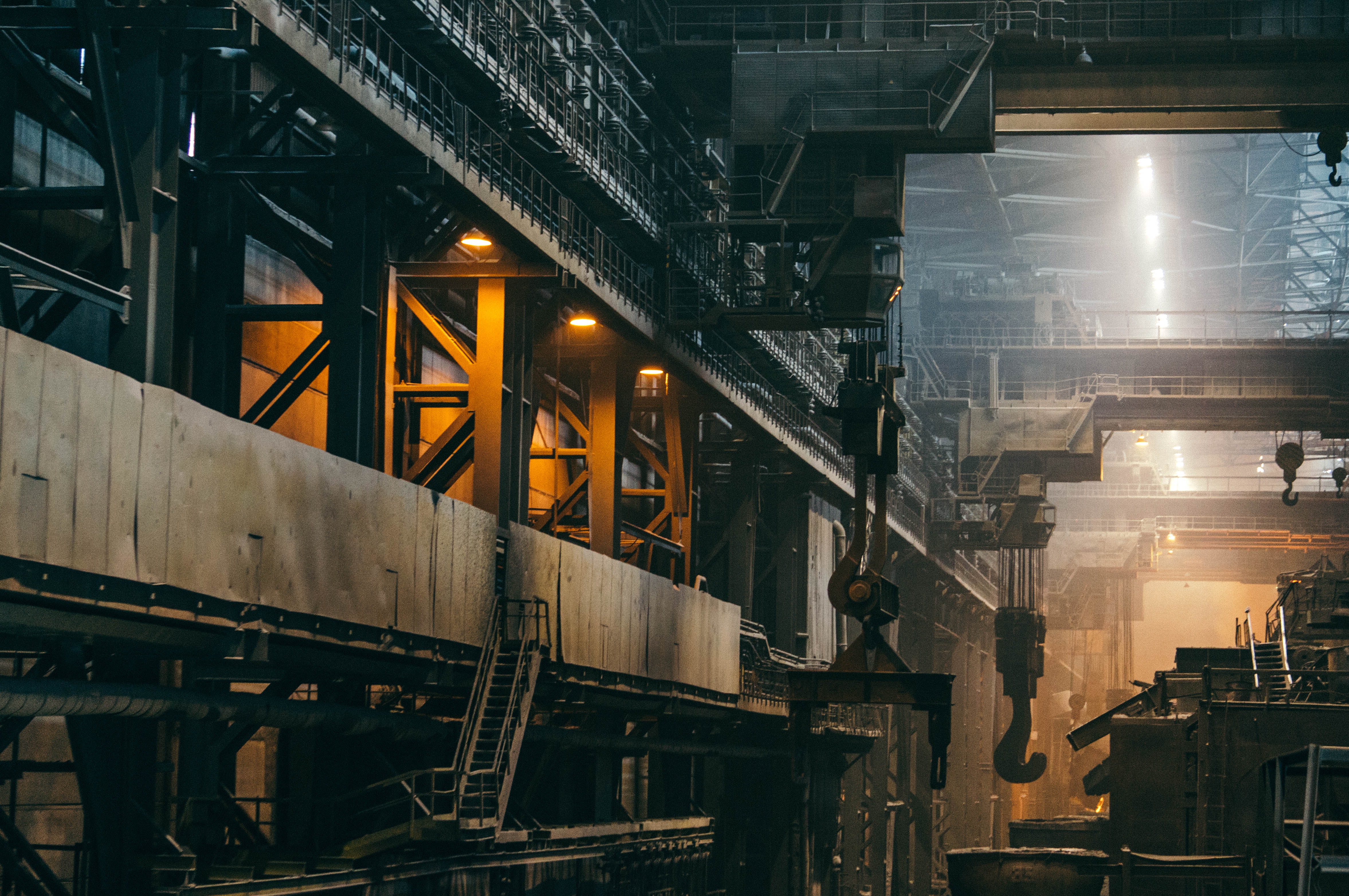
From roads to railways and the skeleton of most buildings, it is at the very heart of nearly every city on earth. Within those cities, the cars on the road, the cutlery in our kitchens and the furniture in our offices all rely on steel production. Steel production, however, is an incredibly energy intensive process, and the vast majority of this energy comes from fossil fuels.

Globally, steel is responsible for 7-9 percent of all direct emissions from fossil fuels. Most of those emissions come from the burning of coal, which makes up 89 percent of the energy input for blast furnace-basic oxygen furnace (BF-BOF) and 11 percent of the energy input of electric arc furnaces (EAF). Of those two types of steel production, BF-BOF is far more common, making up 75 percent of steel that is produced compared to 25 percent from EAF. Globally, steel is responsible for 7-9% of all direct emissions from fossil fuels.

Tiếp tục đọc “Is it possible to make steel without fossil fuels?”

Trẻ em Việt Nam có “nguy cơ cao” chịu tác động của khủng hoảng khí hậu – UNICEF

Children in Viet Nam at ‘high risk’ of the impacts of the climate crisis – UNICEF

Unicef.org

Lần đầu tiên, UNICEF xếp hạng các quốc gia dựa trên nguy cơ rủi ro và mức độ dễ bị tổn thương của trẻ em trước các cú sốc về khí hậu và môi trường; trong đó, trẻ em Việt Nam xếp thứ 37 trên thế giới về mức độ dễ bị tổn thương

Trẻ em và thanh thiếu niên Việt Nam là một trong những nhóm đối tượng có nguy cơ cao nhất trước các tác động của biến đổi khí hậu; điều này đe dọa đến sức khỏe, giáo dục và sự an toàn của các em.
UNICEF Việt Nam\Trương Việt HùngTrẻ em và thanh thiếu niên Việt Nam là một trong những nhóm đối tượng có nguy cơ cao nhất trước các tác động của biến đổi khí hậu; điều này đe dọa đến sức khỏe, giáo dục và sự an toàn của các em.

NEW YORK, HÀ NỘI ngày 20/8/2021 – Theo báo cáo của UNICEF phát hành ngày hôm nay, thanh thiếu niên Việt Nam là một trong những nhóm đối tượng có nguy cơ cao nhất trước các tác động của biến đổi khí hậu; điều này đe dọa đến sức khỏe, giáo dục và sự an toàn của các em.

‘Khủng hoảng khí hậu là cuộc khủng hoảng về quyền trẻ em: Giới thiệu chỉ số rủi ro khí hậu liên quan tới trẻ em’ là phân tích toàn diện đầu tiên được thực hiện về rủi ro khí hậu từ góc độ của trẻ em. Trong phân tích này, các quốc gia được xếp hạng dựa trên nguy cơ rủi ro của trẻ em trước các cú sốc về khí hậu và môi trường, chẳng hạn như lốc xoáy và các đợt nắng nóng, cũng như mức độ dễ bị tổn thương của trẻ em trước các cú sốc, dựa trên khả năng tiếp cận các dịch vụ thiết yếu của trẻ em.

Báo cáo được thực hiện và phát hành với sự hợp tác của tổ chức Fridays for Future nhân dịp kỷ niệm ba năm phong trào biểu tình vì khí hậu toàn cầu do thanh niên lãnh đạo. Báo cáo cho thấy khoảng 1 tỷ trẻ em – gần một nửa trong số 2,2 tỷ trẻ em trên toàn thế giới – sống tại 33 quốc gia được phân loại là có “nguy cơ cực kỳ cao”. Các kết quả của báo cáo cho thấy số lượng trẻ em hiện đang bị ảnh hưởng; các con số có thể trở nên tồi tệ hơn khi tác động của biến đổi khí hậu tăng nhanh.

Tiếp tục đọc “Trẻ em Việt Nam có “nguy cơ cao” chịu tác động của khủng hoảng khí hậu – UNICEF”

China, India, other big coal users missing from COP26 phase-out deal

reuters.com

By Kate Abnett and Elizabeth Piper

Summary

  • Poland, Indonesia sign up to phase out coal
  • China, India, U.S., Australia not included
  • COP26 mini deals aim to add up to big climate win

GLASGOW, Nov 4 (Reuters) – Indonesia, Poland, Vietnam and other nations pledged on Thursday to phase out use of coal-fired power and stop building plants, but their deal at the COP26 climate summit failed to win support from China, India and other top coal consumers.

Britain has said one of its main aims for the United Nations summit is “consigning coal power to history”. The deal saw 23 nations making new commitments, a move the president of the COP26 summit, Alok Sharma, said put the end of coal “in sight”.https://17f4ab6d574607e1c63d4da62d7a4666.safeframe.googlesyndication.com/safeframe/1-0-38/html/container.html

“Today I think we can say that the end of coal is in sight,” Sharma told the Glasgow meeting.

Tiếp tục đọc “China, India, other big coal users missing from COP26 phase-out deal”

More than 40 countries agree to phase out coal-fired power

theguardian.com

Critics say pledge to end use of dirtiest fuel source in 2030s and 40s does not go far enough

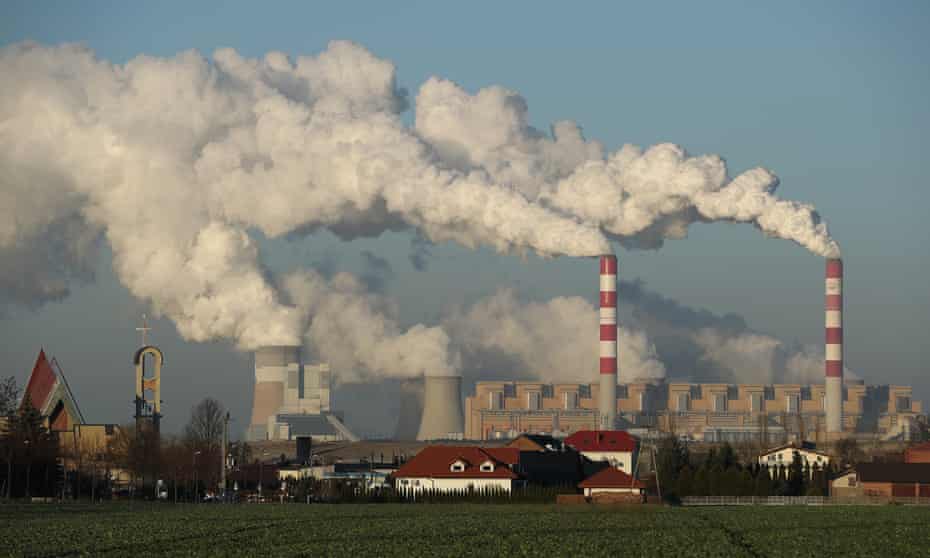
Steam and smoke rise from Bełchatów power station in Poland.
Steam and smoke rise from Bełchatów power station in Poland, one of the countries that has agreed to phase out coal-fired power. Photograph: Sean Gallup/Getty Images

Fiona HarveyJillian Ambrose and Patrick Greenfield in GlasgowWed 3 Nov 2021 22.30 GMT

More than 40 countries have agreed to phase out their use of coal-fired power, the dirtiest fuel source, in a boost to UK hopes of a deal to “keep 1.5C alive”, from the Cop26 climate summit.

Major coal-using countries, including Canada, Poland, South Korea, Ukraine, Indonesia and Vietnam, will phase out their use of coal for electricity generation, with the bigger economies doing so in the 2030s, and smaller economies doing so in the 2040s.

Tiếp tục đọc “More than 40 countries agree to phase out coal-fired power”

State of Climate Action 2021: Systems Transformations Required to Limit Global Warming to 1.5°C

WRI.org

Transformations must occur across every sector at far faster pace than recent trends to keep the window open to achieve the Paris Agreement’s goal to limit global warming to 1.5°C, according to this Systems Change Lab report authored by the UN High-Level Climate Champions, Climate Action Tracker, ClimateWorks Foundation, Bezos Earth Fund and World Resources Institute.

Limiting global warming to 1.5°C requires far-reaching transformations across power generation, buildings, industry, transport, land use, coastal zone management, and agriculture, as well as the immediate scale-up of technological carbon removal and climate finance. This report translates these transitions into 40 targets for 2030 and 2050, with measurable indicators.

Tiếp tục đọc “State of Climate Action 2021: Systems Transformations Required to Limit Global Warming to 1.5°C”

Climate Benefits of Iconic Protected Forests Are Under Threat

WRI.org

Last month, nine philanthropic organizations pledged $5 billion to protect 30% of the planet over the next decade — the largest commitment of private funding ever made for the conservation of nature. These organizations intend to address three interrelated global crises — the climate crisis, the biodiversity crisis and the public health crisis — while working with Indigenous Peoples and local communities. 

The pledges arrive not a moment too soon. A new report released on October 28, 2021 by WRI, the United Nations Educational, Scientific and Cultural Organization (UNESCO), and the International Union for Conservation of Nature (IUCN) reveals that despite substantial carbon stored and absorbed by forests across UNESCO’s World Heritage network, the climate benefits of even some of the world’s most iconic and protected places are under pressure from land use and climate change. Continued reliance on these forests’ carbon sinks and storage depends upon stronger protection measures.

Tiếp tục đọc “Climate Benefits of Iconic Protected Forests Are Under Threat”

Top Takeaways from the UN World Leaders Summit at COP26

Dawn over Glasgow COP26

CommentaryTopic Climate

WRI.org

The first two days of the UN Climate Conference (COP26) featured over 100 high-level announcements and speeches during the “World Leaders Summit,” helping set the tone for the two-week long conference. The gathering of world leaders was immediately preceded by the G20 Summit held in Rome.

While several important announcements were made that will help to move the needle on global climate action, negotiators will still have their work cut out for them as they try to pave the way for more progress in the coming days.

Here’s a look at the developments so far.

Limited Progress at G20 Summit in Rome

In a final communique, G20 nations recognized the importance of strengthening national climate action this decade, and committed to revisit and further enhance their 2030 emission reduction targets where necessary. This should pave the way for negotiators at COP26 to agree that major emitters will further strengthen their 2030 targets within the next couple of years to keep the Paris Agreement’s 1.5 degrees C (2.7 degrees F) temperature goal within reach.  

Tiếp tục đọc “Top Takeaways from the UN World Leaders Summit at COP26”