Andrew Steer: We must de-risk the energy transition for developing nations

ft.com

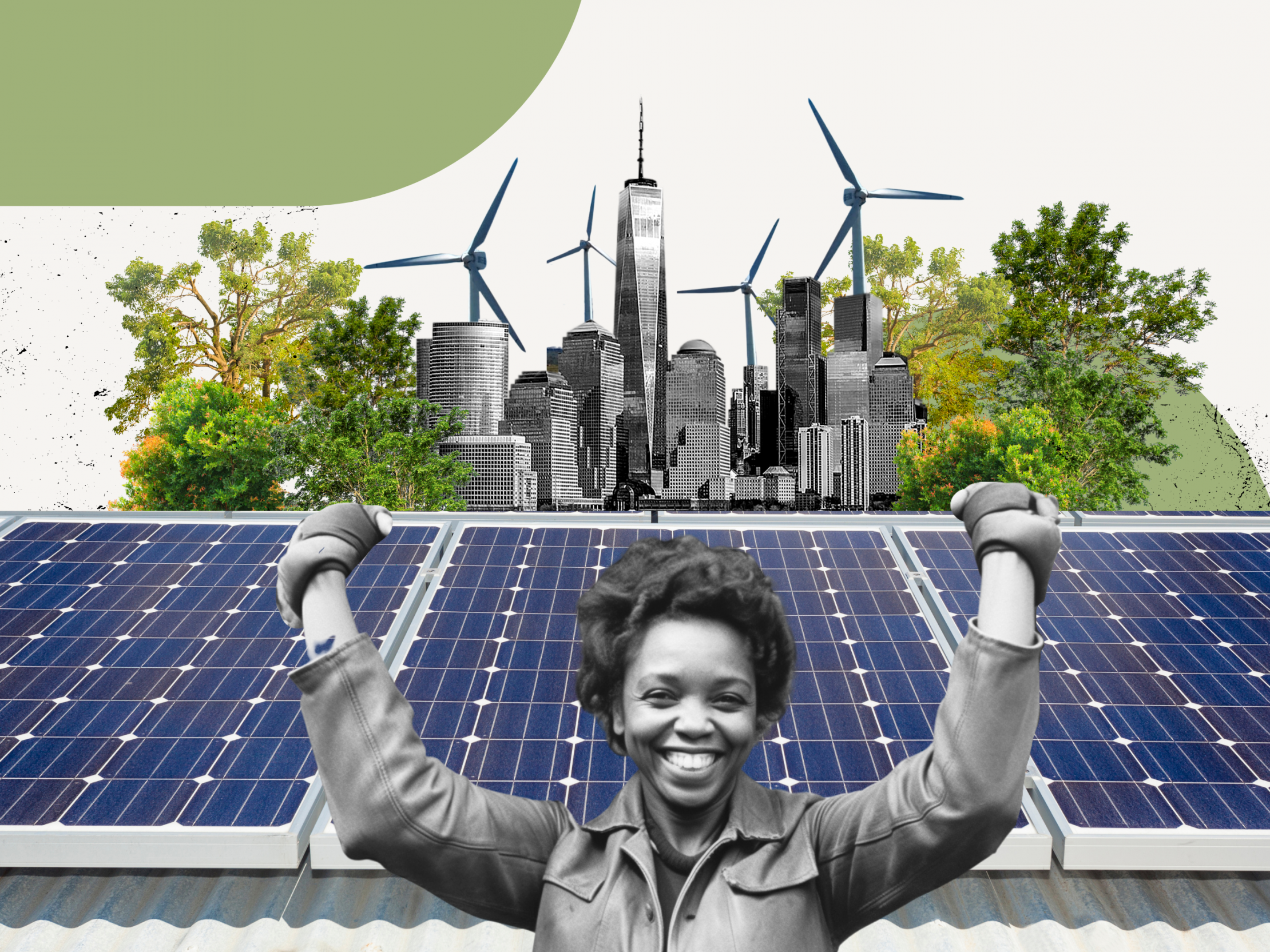
In 2020, Amazon founder Jeff Bezos committed $10bn to create the Bezos Earth Fund, to help address the pressing issues of climate change. And, since then, the fund’s chief executive, Andrew Steer — who joined from the World Resources Institute, following a stint as the World Bank’s special envoy for climate change — has focused its efforts on funding energy transition.

At the COP 27 conference in Egypt, last November, Steer, alongside John Kerry, the US special presidential envoy for climate, and the philanthropic Rockefeller Foundation, announced plans for an Energy Transition Accelerator (ETA) programme, to bring private capital to clean energy transition projects in emerging and developing economies. It’s aim was to do this by verifying the greenhouse gas emission reductions from transition projects, which participating jurisdictions would be able to issue as marketable carbon credits. Under the still to be developed proposal, these credits might then be purchased by companies to achieve their net zero emission targets, creating a predictable finance stream to de-risk costly transition investment.

In March, Steer joined the FT’s climate editor, Emiliya Mychasuk, at the FT Climate Capital Live event, to give an update on the ETA’s progress.

Tiếp tục đọc “Andrew Steer: We must de-risk the energy transition for developing nations”

Global shipping is under pressure to stop its heavy fuel oil use fast – that’s not simple, but changes are coming

theconversation.com

Published: April 24, 2023 1.26pm BST

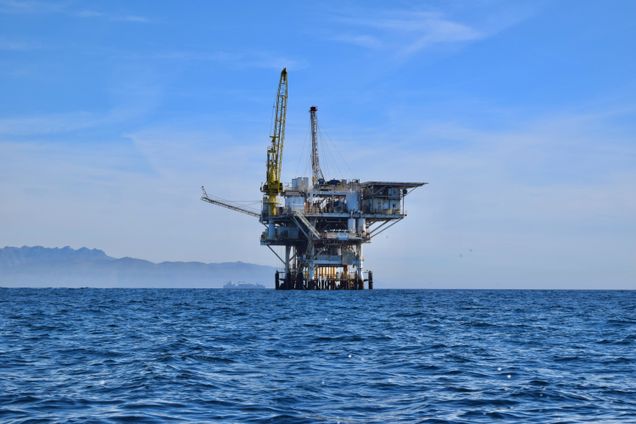
Most of the clothing and gadgets you buy in stores today were once in shipping containers, sailing across the ocean. Ships carry over 80% of the world’s traded goods. But they have a problem – the majority of them burn heavy sulfur fuel oil, which is a driver of climate change.

While cargo ships’ engines have become more efficient over time, the industry is under growing pressure to eliminate its carbon footprint.

European Union legislators reached an agreement to require an 80% drop in shipping fuels’ greenhouse gas intensity by 2050 and to require shipping lines to pay for the greenhouse gases their ships release. The International Maritime Organization, the United Nations agency that regulates international shipping, also plans to strengthen its climate strategy this summer. The IMO’s current goal is to cut shipping emissions 50% by 2050. President Joe Biden said on April 20, 2023, that the U.S. would push for a new international goal of zero emissions by 2050 instead.

We asked maritime industry researcher Don Maier if the industry can meet those tougher targets.

Our mission is to share knowledge and inform decisions.

About us

Why is it so hard for shipping to transition away from fossil fuels?

Economics and the lifespan of ships are two primary reasons.

Most of the big shippers’ fleets are less than 20 years old, but even the newer builds don’t necessarily have the most advanced technology. It takes roughly a year and a half to come out with a new build of a ship, and it will still be based on technology from a few years ago. So, most of the engines still run on fossil fuel oil.

Tiếp tục đọc “Global shipping is under pressure to stop its heavy fuel oil use fast – that’s not simple, but changes are coming”

Death threats, trolling and sexist abuse: climate scientists report online attacks

nature.com

Survey highlights experiences of dozens of climate researchers who have endured online harassment related to their work.

Close-up of the hands of a woman typing on a laptop at night
Among 468 survey respondents, 39% said they have experienced online harassment or abuse related to their climate research.Credit: Oscar Wong/Getty

In 2013, Richard Betts called the police because someone online threatened to string him up with piano wire. The threat happened after Betts, a climate scientist at the University of Exeter, UK, tweeted about the rising temperatures the world would experience the following year. This wasn’t the first time someone had responded negatively to his comments about climate change; nor would it be the last. And Betts isn’t alone.

survey by the international non-governmental organization Global Witness hints at the extent of online abuse faced by scientists working on climate topics worldwide, some of which takes a toll on their work or well-being.

Tiếp tục đọc “Death threats, trolling and sexist abuse: climate scientists report online attacks”

How using tree rings to look into the past can teach us about the climate changes we face in the future

theconversation.com

“The longer you can look back, the farther you can look forward,” Winston Churchill proclaimed to the Royal College of Physicians in 1944, invoking a much older idea known as “uniformitarianism”.

Coined by geologists James Hutton and Charles Lyell, this is the idea that past processes (like erosion or climate change) that have altered the Earth over time remain similar, so we can analyse them to understand the consequences of future processes – such as how climate change might shape our planet in the years to come.

This principle of looking to the past to see the future still guides the science of palaeoclimatology, or the study of past climates.

For example, the geological record tells us there were palm trees in Antarctica many millions of years ago, when CO₂ was at 1,000 parts per million in our planet’s atmosphere.

Our mission is to share knowledge and inform decisions.

About us

Looking back to this period, when our planet was experiencing naturally high CO₂ levels, helps us study what life on Earth might look like if our attempts to reach net zero emissions fail and greenhouse gas emission rates continue to rise.

Tiếp tục đọc “How using tree rings to look into the past can teach us about the climate changes we face in the future”

Muốn bán tín chỉ carbon, trước tiên phải có uy tín về bảo vệ rừng

laodong.vn

Quảng Nam vừa được Chính phủ đồng ý thí điểm kinh doanh tín chỉ carbon (CO2). Đây là tín hiệu vui cả cho sự phát triển kinh tế lẫn công tác bảo vệ môi trường, bảo vệ rừng.

Muốn bán tín chỉ carbon, trước tiên phải có uy tín về bảo vệ rừng
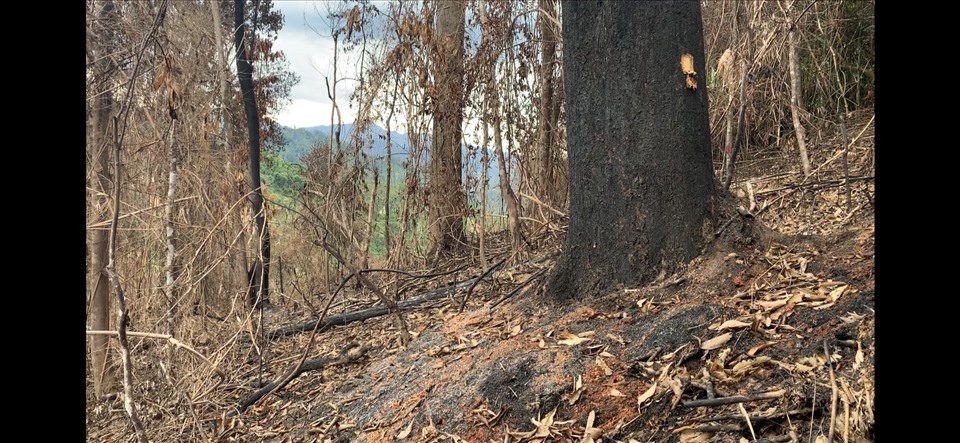
Một vụ đốt rừng để trồng rừng vừa xảy ra giữa tháng 5.2021 tại huyện Phước Sơn, Quảng Nam. Ảnh: Huy Kha

UBND Quảng Nam cho biết, Văn phòng Chính phủ vừa có Công văn gửi cho Bộ NN&PTNT và chính quyền tỉnh này về việc đồng ý cho phép Quảng Nam lập đề án thí điểm kinh doanh tín chỉ carbon.

Theo Bộ NN&PTNT, mỗi năm Việt Nam có thể bán ra thị trường thế giới 57 triệu tín chỉ carbon. Nếu được giá bán 5 USD/tín chỉ, thì mỗi năm Việt Nam có thể thu về hàng trăm triệu USD.

Trong đó, Quảng Nam với 628.000 ha rừng tự nhiên, mỗi năm có khả năng bán được 1 triệu tín chỉ carbon ra thị trường thế giới. Nếu thành công với đề án này thì bình quân mỗi năm tỉnh này sẽ thu được từ 5 triệu đến 10 triệu USD.

Tiếp tục đọc “Muốn bán tín chỉ carbon, trước tiên phải có uy tín về bảo vệ rừng”

‘It can be done. It must be done’: IPCC delivers definitive report on climate change, and where to now

theconversation.com

The world is in deep trouble on climate change, but if we really put our shoulder to the wheel we can turn things around. Loosely, that’s the essence of today’s report by the Intergovernmental Panel on Climate Change (IPCC).

The IPCC is the world’s official body for assessment of climate change. The panel has just released its Synthesis Report, capping off seven years of in-depth assessments on various topics.

The report draws out the key insights from six previous reports, written by hundreds of expert authors. They spanned many thousands of pages and were informed by hundreds of thousands of comments by governments and the scientific community.

Tiếp tục đọc “‘It can be done. It must be done’: IPCC delivers definitive report on climate change, and where to now”

Mapped: Asia’s Biggest Sources of Electricity by Country

element.visualcapitalist.com

Mapped: Asia’s Biggest Sources of Electricity by Country

Mapped: Asia’s Biggest Sources of Electricity by Country

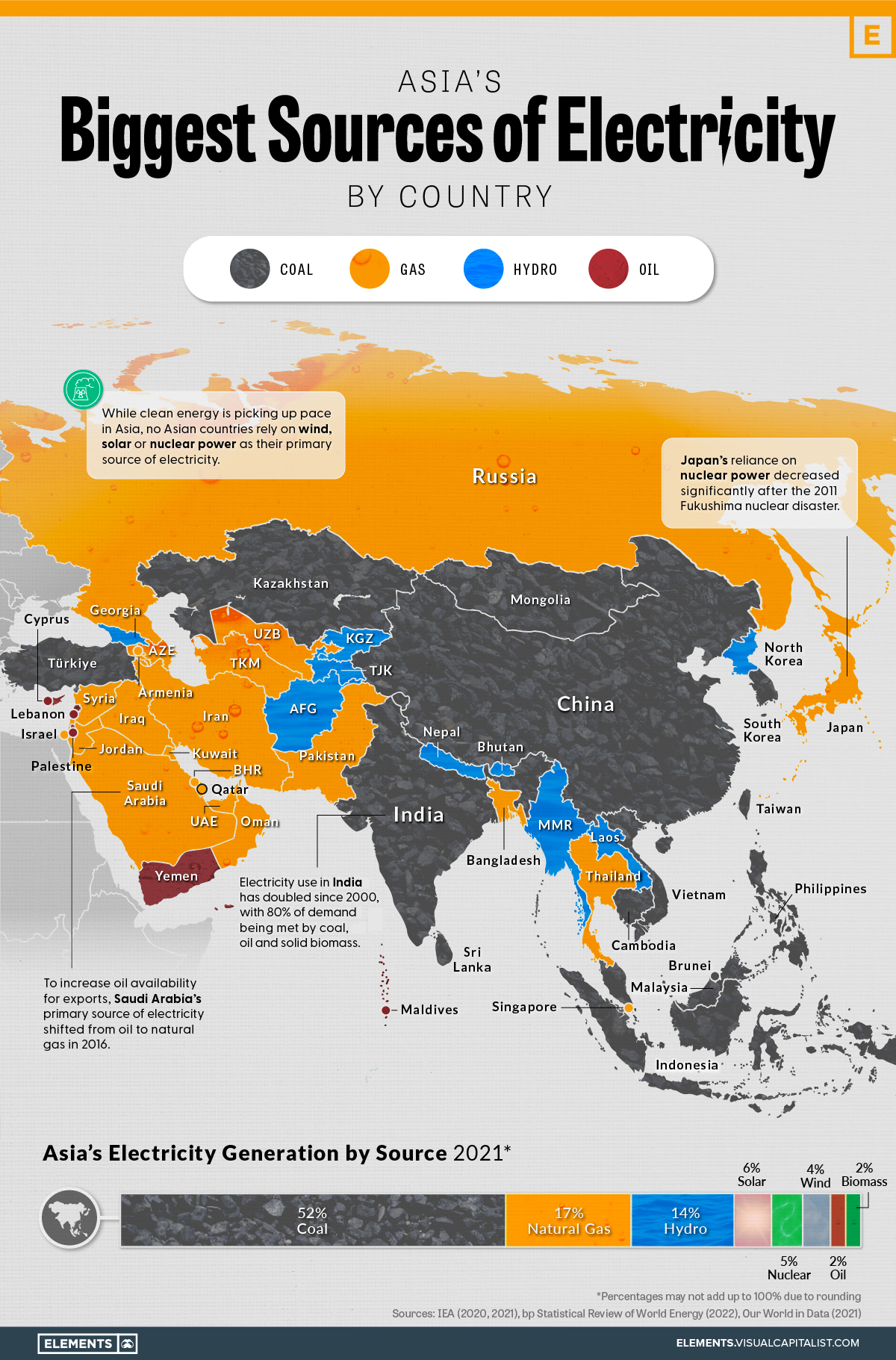
The International Energy Agency (IEA) predicts that Asia will account for half of the world’s electricity consumption by 2025, with one-third of global electricity being consumed in China.

To explore how this growing electricity demand is currently being met, the above graphic maps out Asia’s main sources of electricity by country, using data from the BP Statistical Review of World Energy and the IEA.

A Coal-Heavy Electricity Mix

Although clean energy has been picking up pace in Asia, coal currently makes up more than half of the continent’s electricity generation.

No Asian countries rely on wind, solar, or nuclear energy as their primary source of electricity, despite the combined share of these sources doubling over the last decade.

 % of total electricity mix, 2011% of total electricity mix, 2021 
Coal55%52% 
Natural Gas19%17%
Hydro12%14%
Nuclear5%5%
Wind1%4%
Solar0%4%
Oil6%2%
Biomass1%2%
Total Electricity Generated9,780 terawatt-hours15,370 terawatt-hours

The above comparison shows that the slight drops in the continent’s reliance on coal, natural gas, and oil in the last decade have been absorbed by wind, solar, and hydropower. The vast growth in total electricity generated, however, means that a lot more fossil fuels are being burned now (in absolute terms) than at the start of the last decade, despite their shares dropping.

Following coal, natural gas comes in second place as Asia’s most used electricity source, with most of this demand coming from the Middle East and Russia.

Zooming in: China’s Big Electricity Demand

Tiếp tục đọc “Mapped: Asia’s Biggest Sources of Electricity by Country”

What is just energy transition? And why is it important?

UNDP

November 3, 2022

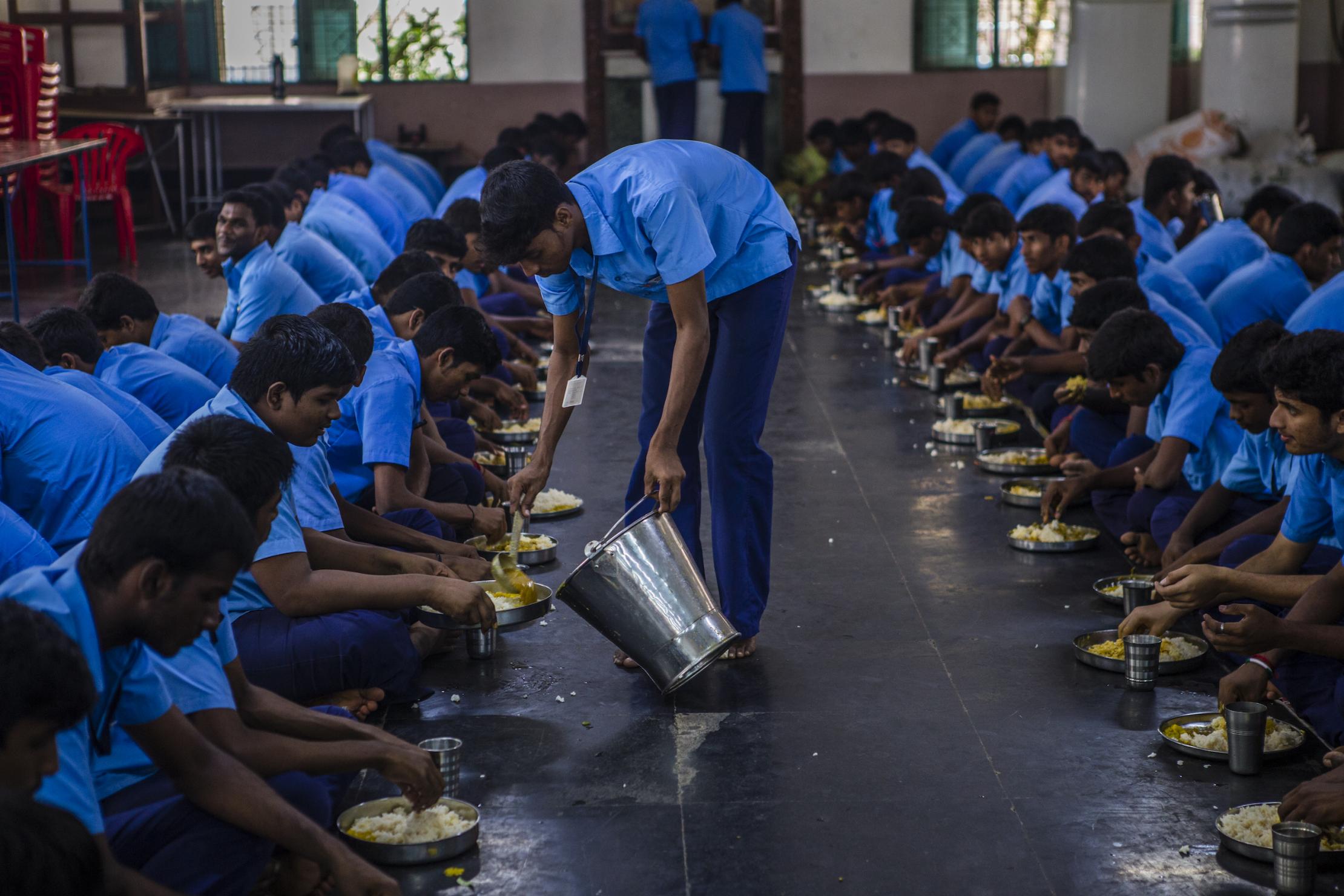
Students from India eat lunch cooked with the steam generated from a solar energy-based steam generator

Photo: Prashanth Vishwanathan/UNDP India

Since the industrial revolution, fossil fuels have powered extraordinary growth and development, albeit with huge costs to our climate. As a direct result, we are today in a climate emergency.

To avert catastrophe, we must now radically switch to a sustainable, net-zero future. This transition needs to happen fast, but it also has to happen in a fair and inclusive way.

If done right, the transition offers immense opportunities: a systems change in which all communities, workers, and countries are lifted up.

Promisingly, momentum around “just transition” is gathering pace. We are seeing it emerge in the global dialogue around decarbonization and net zero. More countries are referencing it in their short and long-term climate plans. Partners are coming together, and coalitions are forming.

So what’s it all about?

What is “just transition”?

The concept of “just transition” has been around since the 1980s, when it was used in a movement by US trade unions to protect workers affected by new water and air pollution regulations. 

In recent years, the concept has gained traction with reference to meeting climate goals by ensuring the whole of society – all communities, all workers, all social groups – are brought along in the pivot to a net-zero future.

Tiếp tục đọc “What is just energy transition? And why is it important?”

Tình trạng di cư, sự chênh lệch về mức sống là thách thức lớn cho ĐBSCL

HƯƠNG MAI  –  Thứ ba, 02/08/2022 17:54 (GMT+7)

laodong.vn

Sự khác nhau về mức sống và cơ hội việc làm dẫn đến việc người dân từ ĐBSCL di cư lên các đô thị và khu công nghiệp ở TP.Hồ Chí Minh, Đông Nam Bộ.

Tình trạng di cư, sự chênh lệch về mức sống là thách thức lớn cho ĐBSCL

Trong công bố báo cáo kinh tế thường niên năm 2022 về tình hình kinh tế ĐBSCL và những vấn đề quan trọng của vùng, ở phương diện xã hội, thách thức đầu tiên của ĐBSCL là thiếu việc làm ở nông thôn.

Tỉ lệ thiếu việc làm trong độ tuổi lao động của ĐBSCL năm 2020 là 3,47%, cao thứ 2 toàn quốc, chỉ sau Tây Nguyên; tỉ lệ thiếu việc làm ở khu vực nông thôn ĐBSCL cao gấp đôi so với khu vực thành thị (3,97% so với 1,87%).

Tiếp tục đọc “Tình trạng di cư, sự chênh lệch về mức sống là thách thức lớn cho ĐBSCL”

Country Climate and Development Report for Vietnam

worldbank.org

Vietnam CCDR Report

Vietnam is increasingly seeing its development affected by climate change and now faces critical questions about how to respond. The Vietnam Country Climate and Development Report proposes that Vietnam shift its development paradigm by incorporating two critical pathways – resilient pathway and decarbonizing pathway – that will help the country balance its development goals with increasing climate risks.

After more than two decades of steady growth, Vietnam has set an ambitious goal of reaching high-income status by 2045. It has been recognized in the 2021-2030 Socioeconomic Development Strategy that the country’s economic transformation will greatly depend on better management of natural capital – the extensive stocks of agricultural, forest, and mineral resources that have helped drive development.

Yet Vietnam, with over 3,200 km of coastline and many low-lying cities and river delta regions, is one of the most vulnerable countries in the world to climate change. Climate change impacts  – mainly higher and more variable temperatures and sea level rise  – are already disrupting economic activity and undermining growth. Initial calculations suggest that Vietnam lost $10 billion in 2020, or 3.2 percent of GDP, to climate change impacts.

Tiếp tục đọc “Country Climate and Development Report for Vietnam”

Brace yourself for more record heat

DW

Current high temperatures in the northern hemisphere are set to continue. Climate change means we’re likely to experience very hot summers more often — even though we’re already struggling with health consequences now.

    
Bildergalerie : Sommer / Abkühlung (picture-alliance/dpa)

Europe is in the throes of a heat wave, and it’s not letting up — on the contrary. More hot air is coming over from Africa, and is even bringing desert dust with it.

Southwestern European countries are being hit especially hard. Authorities in Portugal issued a nationwide health warning, including for dust from the Sahara. Warnings were also issued for 40 of Spain’s 50 provinces. The southeastern Portuguese town of Beja is expected to see a peak of 47 degrees Celsius (117 degrees Fahrenheit) on Saturday.
Tiếp tục đọc “Brace yourself for more record heat”

Losing Earth: The Decade We Almost Stopped Climate Change

NYtimes

Editor’s Note

This narrative by Nathaniel Rich is a work of history, addressing the 10-year period from 1979 to 1989: the decisive decade when humankind first came to a broad understanding of the causes and dangers of climate change. Complementing the text is a series of aerial photographs and videos, all shot over the past year by George Steinmetz. With support from the Pulitzer Center, this two-part article is based on 18 months of reporting and well over a hundred interviews. It tracks the efforts of a small group of American scientists, activists and politicians to raise the alarm and stave off catastrophe. It will come as a revelation to many readers — an agonizing revelation — to understand how thoroughly they grasped the problem and how close they came to solving it. Jake Silverstein

Vietnam: Typhoon Damrey leaves dozens dead, thousands homeless


https://www.youtube.com/watch?v=zjDB6S5AYdc

Bản đồ hoá hiện trạng nước mặt toàn cầu: Mapping long-term global surface water occurrence

ec.europa.eu_In an article published in Nature on 7 December 2016, JRC scientists describe how, in collaboration with Google, they have quantified changes in global surface waters and created interactive maps which highlight the changes in the Earth’s surface water over the past 32 years.

The data show that the impacts of climate on where and when surface water occurs can be measured, and that the presence of surface water can be substantially altered by human activities.The data show that the impacts of climate on where and when surface water occurs can be measured, and that the presence of surface water can be substantially altered by human activities.
©EU/Google 2016

Based on over three million satellite scenes (1 823 Terabytes of data) collected between 1984 and 2015, the Global Surface Water Explorer was produced using 10 000 computers running in parallel. The individual images were transformed into a set of global maps with a 30-metre resolution, which enable users to scroll back in time to measure the changes in the location and persistence of surface water globally, by region, or for a specific area. The maps are available for all users, free of charge. Tiếp tục đọc “Bản đồ hoá hiện trạng nước mặt toàn cầu: Mapping long-term global surface water occurrence”

The Food Security Solution

May 20, 2016

CSIS – In a world that has become increasingly interconnected and chaotic, with more displaced persons since World War II, and with an array of humanitarian disasters that has outstripped the international community’s budgets and capacity to respond, why should global food security remain an imperative development priority? Why has the United States invested so heavily, to the tune of $5.6 billion over the past five years, in agricultural development and nutrition to reduce extreme poverty?

Agriculture’s Economic Power

Agriculture is the primary source of employment and income for 70 percent of the world’s rural poor, and it contributes more than a third of gross domestic product (GDP) in many of the least developed countries. In light of evidence that GDP growth originating in agriculture can be four times more effective than growth in other sectors in raising incomes of the extremely poor, the economic leverage of agriculture for development is hard to dispute.

Aligning foreign assistance with country-led strategies for agricultural growth is the most effective approach to achieving results for vulnerable smallholder farmers, their families, and their communities. Government ownership is critical to sustaining development investments and to ensuring a sound policy environment for private-sector engagement. In order for agriculture to reach its potential to generate employment, raise smallholder incomes, and catalyze markets, both the will of country leadership to dedicate resources and the ability of local and international private companies to invest along the value chain are required. In some cases, this translates into tough policy reforms that take time to understand, to implement, and to enforce.

National Security Risks Tiếp tục đọc “The Food Security Solution”