THIS WEEK: Politburo meeting projects institutional continuity after purges, Xi balances Putin and Trump diplomacy, Beijing signals reserve-currency ambitions, “future industries” take center stage in the 15th Five-Year Plan, and Shanxi marks a clean-energy turning pointRead back issues in the China 5 Archive.
China’s President Xi Jinping stands with Politburo Standing Committee members at the Monument to the People’s Heroes on Martyrs’ Day in Beijing’s Tiananmen Square on September 30, 2025. (Photo by Greg Baker/AFP via Getty Images)
1. A Signal of Institutional Stability Following High-Profile Purges
What Happened: On January 30, Xi Jinping chaired a routine Politburo meeting to review the annual Party affairs work reports of the National People’s Congress, the State Council, the Chinese People’s Political Consultative Conference, the Supreme People’s Court, the Supreme People’s Procuratorate, and the Chinese Communist Party Central Secretariat. The meeting also discussed “other matters,” a phrase sometimes used to conceal politically sensitive issues from public reporting. Tiếp tục đọc “The latest on what’s happening in China from Asia Society Policy Institute’s Center for China Analysis”→
chatthamhouse.org Research paper Published 20 April 2020 ISBN: 978 1 78413 391 7
Royal Navy Vanguard Class submarine HMS Vigilant returning to HMNB Clyde after extended deployment. The four Vanguard-class submarines form the UK’s strategic nuclear deterrent force. Photo: Ministry of Defence.21st century. Researchers at Chatham House have worked with eight experts to produce this collection of essays examining four contested themes in contemporary policymaking on deterrence.
China has officially unveiled its latest large autonomous drone, the Wing Loong X, at the Dubai Airshow 2025. Ostensibly the same as its predecessor, Wing Loong drone siblings, this new drone is reportedly the first unmanned aerial vehicle (UAV) in the world capable of fully independent anti-submarine warfare (ASW).
If true, this is a big deal, as anti-submarine missions are widely considered the most difficult of all maritime military aviation operations. The new drone is huge, with a reported wingspan of well over 65.6 feet, or 20 meters (that’s roughly the same size as a small business jet).
Summary: Researchers using China’s “artificial sun” fusion reactor have broken through a long-standing density barrier in fusion plasma. The experiment confirmed that plasma can remain stable even at extreme densities if its interaction with the reactor walls is carefully controlled. This finding removes a major obstacle that has slowed progress toward fusion ignition. The advance could help future fusion reactors produce more power
China’s “artificial sun” fusion reactor has crossed a critical plasma density threshold that scientists once thought was unreachable. The result brings fusion ignition closer than ever. Credit: Shutterstock
Scientists working with China’s fully superconducting Experimental Advanced Superconducting Tokamak (EAST) have successfully reached a long-theorized “density-free regime” in fusion plasma experiments. In this state, the plasma remains stable even when its density rises far beyond traditional limits. The results, published in Science Advances on January 1, shed new light on how one of fusion energy’s most stubborn physical barriers might finally be overcome on the road to ignition.
China dominates global rare earth mining, but undeveloped reserves elsewhere could reshape future supply chains.
Greenland holds an estimated 1.5 million metric tons of rare earth reserves despite having no commercial production.
U.S. President Donald Trump has once again put Greenland at the center of global attention.
His renewed threat to assert U.S. control over the Arctic territory has drawn sharp reactions from European leaders and Denmark, which governs Greenland as an autonomous territory.
While the island’s strategic location is often cited, another underlying motivation is increasingly tied to its vast mineral potential. In particular, Greenland’s rare earth reserves have become a focal point in a world racing to secure critical resources.
This visualization compares rare earth mine production and reserves across countries, placing Greenland’s untapped resources in a global context.
China remains the backbone of the global rare earth market. In 2024, it produced roughly 270,000 metric tons, accounting for well over half of global output.
China also controls the largest reserves, estimated at 44 million metric tons. This combination of scale and integration gives Beijing significant leverage over industries ranging from electric vehicles to defense systems.
Country
Reserves (Metric Tons)
Rare Earth Production 2024 (Metric Tons)
🇨🇳 China
44.0M
270,000
🇧🇷 Brazil
21.0M
20
🇮🇳 India
6.9M
2,900
🇦🇺 Australia
5.7M
13,000
🇷🇺 Russia
3.8M
2,500
🇻🇳 Vietnam
3.5M
300
🇺🇸 United States
1.9M
45,000
🇬🇱 Greenland
1.5M
0
🇹🇿 Tanzania
890K
0
🇿🇦 South Africa
860K
0
🇨🇦 Canada
830K
0
🇹🇭 Thailand
4.5K
13,000
🇲🇲 Myanmar
0
31,000
🇲🇬 Madagascar
0
2,000
🇲🇾 Malaysia
0
130
🇳🇬 Nigeria
0
13,000
🌍 Other
0
1,100
🌐 World total (rounded)
>90,000,000
390,000
Large Reserves, Limited Production Elsewhere
Outside China, many countries with sizable reserves play only a minor role in production.
Brazil holds an estimated 21 million metric tons of rare earth reserves yet produces almost nothing today. India, Russia, and Vietnam show similar patterns.
Why Greenland Matters
Greenland’s estimated 1.5 million metric tons of rare earth reserves exceed those of countries like Canada and South Africa. Yet the island has never had commercial rare earth production.
Environmental protections, infrastructure constraints, and local political opposition have slowed development. Still, as supply chain security becomes a priority for major economies, Greenland’s position is becoming harder to ignore.
Trump’s interest in Greenland is driven by more than symbolism. Rare earths are essential for advanced manufacturing, clean energy technologies, and military hardware. With China firmly entrenched as the dominant supplier, policymakers in Washington are increasingly focused on alternative sources.
In the early 2010s, the coal industry attracted a large wave of investment, banking on surging coal imports from China and India.
When this growth didn’t materialise, coal oversupply and depressed prices sent major companies bankrupt with significant value destruction for shareholders.
The LNG industry risks repeating the coal industry’s mistakes, as investment levels outstrip future demand, with potentially more severe consequences for the capital-intensive industry.
Peddling a ‘supercycle’ for coal in the 2010s
In the early 2010s, the coal industry was on the rise. Global trade had tripled between 1990 and 2011, with the 2000s experiencing “the largest growth in coal demand in history – greater than the previous four decades combined”. This growth was expected to accelerate after China and India entered the global coal import market (Figure 1). Between 2011 and 2012, global coal imports increased by 13% and coal prices doubled (Figure 2).
CNA More than half of Chinese adults are overweight or obese, a potential ticking timebomb for the country’s healthcare sector. So, last March, China announced greater efforts to tackle rising obesity rates, with health authorities rolling out a nationwide weight management campaign during the annual ‘Two Sessions’ meeting.
How did China go from food scarcity two generations ago to rapid weight gain now? What does diet, lifestyle and education have to do with it? As beating obesity becomes a national priority, can China beat the bulge?
If you’ve been following travel trends this year, you might have noticed something interesting: social media feeds are filling up with foreigners riding Chinese high-speed trains, walking through ancient towns, and paying for everything with their phones—in China.
China’s Tourism Explodes in 2025: 100% More Visitors, and Here’s Why
If you’ve been following travel trends this year, you might have noticed something interesting: social media feeds are filling up with foreigners riding Chinese high-speed trains, walking through ancient towns, and paying for everything with their phones—in China.
According to data from the Chinese online travel platform Ctrip, inbound tourism to China surged by over 100% in 2025 compared to last year. And it’s not just about more arrivals—spending is up sharply, with U.S. tourist expenditure growing 50% and French visitors’ spending jumping an astonishing 160%.
CNA Few countries are better prepared against China threatening their rare earth supplies than Japan, says David Fickling for Bloomberg Opinion.
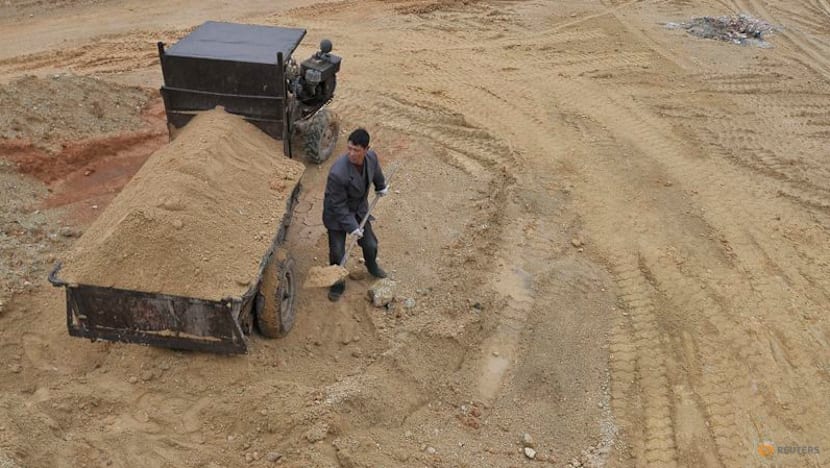
A labourer works at a site of a rare earth metals mine at Nancheng county, Jiangxi province, China, on Mar 14, 2012. (File photo: Reuters)
David Fickling 09 Jan 2026 05:59AM(Updated: 09 Jan 2026 09:30AM)
SYDNEY: To a hammer, every problem is a nail. If your most potent means of geopolitical leverage is threatening supplies of high-strength magnets, rare earth elements will always be the solution.
The most obvious victim of this threat will be rare earth magnets made with the elements neodymium and praseodymium, and increasingly spiced up with rarer samarium, dysprosium and terbium. They’re used everywhere from charging cables to the switchgear in wind turbines to motors powering electric vehicles, missile guidance systems and aircraft flaps.
Bất chấp sức ép từ thuế nhập khẩu của Mỹ, Trung Quốc vẫn thặng dư 1.000 tỷ USD chỉ trong 11 tháng – kỷ lục chưa quốc gia nào đạt được.
Một năm trước, ông Donald Trump tái đắc cử Tổng thống Mỹ. Lo ngại cuộc chiến thương mại mới diễn ra, các hãng sản xuất Trung Quốc gấp rút đẩy mạnh xuất khẩu. Trong chiến dịch tranh cử, ông Trump tuyên bố sẽ áp thêm thuế nhập khẩu lên hàng hóa Trung Quốc, nhằm thu hẹp thâm hụt thương mại ngày càng lớn của Mỹ.
Một năm sau, Tổng thống Mỹ thực hiện đúng cam kết. Nhưng Trung Quốc cũng đã chuyển hướng chiến lược, và thậm chí còn xuất khẩu nhiều hơn.
Going into the 2022 election, improving relations with Southeast Asia was at the top of the foreign policy to-do list for the Australian Labor Party, led by now prime minister Anthony Albanese. While the outgoing Liberal-National coalition government had notched up some achievements in its engagement with the region, there was also a sense of drift. The Pacific Step Up policy had focused on boosting ties with one of Australia’s two near regions, but Southeast Asia had not received the same level of diplomatic focus. Among the Labor Party’s pledges were appointing a special envoy for Southeast Asia, providing A$470 million in new aid to the region, and creating an office for Southeast Asia within the Department of Foreign Affairs and Trade. [1] For the most part, the Albanese government has followed through on its commitment to strengthen ties with Southeast Asia through more active diplomatic outreach, an economic strategy to boost two-way trade and investment, and a more nuanced approach to managing sensitive issues in Australia’s relations with the region, especially China-related issues and Middle East policy.
During the new term of government beginning in 2025, it is likely that the Albanese government will maintain Southeast Asia, along with the Pacific Islands, as a region of high priority. Albanese’s July 2025 John Curtin Oration articulated what he called Labor’s “constructive and creative role” and gave high billing to efforts to intensify economic engagement with Southeast Asia and deepen security cooperation with Indonesia. [2] While other global relationships may fluctuate according to events, the central importance of Southeast Asia within this distinctively Labor worldview suggests that engagement with this region, especially Indonesia, will remain high on Australia’s agenda for the next three years.
This essay analyzes the achievements of the Albanese government in its relations with Southeast Asia. It also assesses the continued challenges Australia faces both in deepening economic relations with the region and in continuing to balance regional ties with the U.S. alliance, especially given a less predictable and more demanding administration in Washington.
On Oct. 13 of this year, the PRC state media outlet CPNN, reported that China is pulling ahead in advanced nuclear power technology development with the launch of the large-scale production “Hualong One” (also known as HPR1000). As it develops, China not only aims to tackle the transmission bottleneck in the south, but also to export to countries like Pakistan as the PRC’s “business card” to the world.
China’s dual goals of localization and export orientation have long defined its nuclear strategy. Led by state-owned giants such as the China National Nuclear Corporation (CNNC), Beijing has invested heavily in domestic innovation while aggressively expanding into overseas markets. Beijing has sought to expand its reactor sales to markets such as Argentina and the United Kingdom, while also securing control over upstream uranium resources. CNNC’s 2019 acquisition of Namibia’s Rössing Uranium Mine, one of the world’s largest open-pit uranium operations, underscored China’s growing dominance across the nuclear value.
Beijing’s policy support for state-owned enterprises has enabled it to build a vertically integrated nuclear industry, driving rapid advances in small modular reactors (SMRs), fourth-generation technologies, and nuclear fusion research (the Artificial Sun). Furthermore, intensifying US–China competition is reshaping global nuclear exports and deepening the geopolitical risks of dependence on Chinese nuclear systems.






 CVD
CVD 