Beware neocons expanding Israel-Gaza bloodbath to draw China into proxy war – John Lander

Former Australian diplomat John Lander returns to CITIZENS INSIGHT in the wake of the Israel-Gaza war to discuss the broader global geopolitical ramifications.

Interview with John Lander, Former Deputy Ambassador to China (1974-76), Former Ambassador to Iran (1985–87) Hosted by Robert Barwick, Research Director of the Australian Citizens Party

From Israel-Hamas War of Genocide to China-Taiwan issue, analysis to see the “rule-based order” of the US and Its allies, in which the “rules” keep changing to serve US’ and ít allies’ interests and no one really knows what the rules are.

After the Youtube clip is the computer-generated transcrip of the talk.

Tiếp tục đọc “Beware neocons expanding Israel-Gaza bloodbath to draw China into proxy war – John Lander”

When titans clash 2 (3 parts)

US-China: Is A New NATO Emerging In Asia? | When Titans Clash 2 – Part 1/3 | CNA Documentary

CNA Insider – 29-4-2022

As the Ukraine crisis unfolds, China accuses the US of creating an Indo-Pacific version of NATO, and warns of a “Ukraine style tragedy” for Asia. On the other hand, countries like Japan, Philippines, India, Australia and South Korea, seek closer ties to the US as concerns emerge over China’s actions. Could Asia witness a war in the years ahead? Tiếp tục đọc “When titans clash 2 (3 parts)”

Warren Buffett’s shifting Asian portfolio

Geopolitics push ‘Oracle of Omaha’ to move away from China and invest in Japan

asia.nikkei.com

KENJI KAWASE, Nikkei Asia chief business news correspondentMAY 24, 2023 04:30 JST

OMAHA, U.S. — For Antonius Budianto, an independent stock investor from Indonesia, it was a dream come true to be in Omaha, Nebraska for the first time.

Traveling from East Java with his wife and 14-year-old daughter, Antonius was standing in a queue in front of Omaha’s CHI Health Center at 3 a.m. to grab a seat at the annual general shareholders meeting of investment company Berkshire Hathaway on May 6. Antonius said they wanted to be “as close as possible” to the podium as his two business idols — Warren Buffett and Charlie Munger — sat and took questions from shareholders in the audience and around the world.

Antonius has been investing in listed stocks in Indonesia for over 20 years, faithfully following the Buffett method: focus on a few companies with strong earnings, handsome dividend payments and sound corporate governance, and hold on to them, sometimes for decades. At Berkshire, this strategy has been distilled into the oft-repeated maxim: “Just hold the goddamn stock,” as Munger put it that day.

For his part, Antonius has been making a living as a full-time professional investor since 2010.

Tiếp tục đọc “Warren Buffett’s shifting Asian portfolio”

China and Taiwan: A Torrid Backstory

Tensions between the United States and China over Taiwan have been on the rise. Here’s what lies behind them.

Monday, April 17th, 2023 New York Times

This transcript was created using speech recognition software. While it has been reviewed by human transcribers, it may contain errors. Please review the episode audio before quoting from this transcript and email transcripts@nytimes.com with any questions.

Sabrina Tavernise: From “The New York Times,” I’m Sabrina Tavernise. And this is “The Daily.” [MUSIC PLAYING]

The posturing between the US and China has been intensifying in recent weeks, especially when it comes to Taiwan. Today, my colleague, Edward Wong, on why China is so fixated on Taiwan and how the US got in the middle of it.

It’s Monday, April 17.

So, Ed, Taiwan has been back in the news again for the past few weeks. Tell us why.

Edward Wong: Well, Sabrina, we saw tensions spike this month over Taiwan. Earlier this month, the president of Taiwan, Tsai Ing-wen, stopped in Los Angeles on her way back to Taiwan from Central America. Archived Recording (Tsai Ing-Wen)

Tiếp tục đọc “China and Taiwan: A Torrid Backstory”

The world after Taiwan’s fall

Read full articles on Pacific Forum:
Part one >>
Part two >>

Excerpt:

The study’s main finding is that Taiwan’s fall would have devastating consequences for the United States and many countries in the region and beyond. Regardless of how it happens (without or despite US/allied intervention), Taiwan’s fall to the PRC would be earth shattering. The PRC could eclipse US power and influence in the region once and for all. Taiwan’s fall could lead to the advent of a Pax Sinica where Beijing and its allies would pursue their interests much more aggressively and with complete impunity. Nuclear proliferation in several parts of the Indo-Pacific could also be the net result of Taiwan’s fall, leading to much more dangerous regional and international security environments. To several authors, it would thus be necessary to build an Asian equivalent to the North Atlantic Treaty Organization to prevent PRC adventurism and ultimately retake Taiwan.

Accordingly, the United States, its allies, and others should take major action—rapidly—to prevent such a development. In particular, the United States should lead an effort to strengthen collective deterrence and defense in the Indo-Pacific; this is especially important in the aftermath of the Russian invasion of Ukraine, which has shown territory takeovers still happen in the twenty-first century. The United States should also give serious consideration to establishing region-wide nuclear sharing arrangements; at a minimum, it should jumpstart research to examine the benefits, costs, and risks that such arrangements would bring to the Indo-Pacific security architecture, as well as assess the opportunities and challenges that such a development would present.

Read full articles on Pacific Forum:
Part one >>
Part two >>

China misreads the room in Munich

FEBRUARY 20, 2023

Noah

by Noah Barkin, GMF

China’s post-pandemic charm offensive with Europe was supposed to shift into overdrive this past week.

Instead, a visit by China’s top diplomat, Wang Yi, showed just how challenging it will be for Beijing to get its relationship with Europe back on track, at a time when China’s ties with Russia appear to be deepening and those with Washington are sinking to new depths.

Wang’s appearance at the Munich Security Conference, sandwiched between trips to Paris, Rome, Budapest, and Moscow, was the clearest illustration to date of the diplomatic dilemma China faces as it emerges from three years of self-imposed COVID isolation, the last of which clouded by the war in Ukraine.

Tiếp tục đọc “China misreads the room in Munich”

Dealing with Increased Chinese Aggressiveness (2 parts)

Download Document

Written By

MEDIA QUERIES

Georgette Almeida
Executive Assistant

 (808) 521-6745

PacNet #7 – Dealing with Increased Chinese Aggressiveness – PART ONE

The following are some of the key findings and recommendations from the August 2022 US-Taiwan Deterrence and Defense Dialogue. PacNet 7 provides a summary of the dialogue. The full report, with expanded key findings and recommendations can be found here.

Taiwan is under attack by the People’s Republic of China (PRC) politically, economically, psychologically, and militarily—the latter through more aggressive Chinese People’s Liberation Army (PLA) gray zone military operations short of actual direct conflict. This multidimensional threat requires a multidimensional response in ways that complement and enhance military deterrence. PRC behavior represents a global—and not just a Taiwan or US—problem which demands a global response.

Tiếp tục đọc “Dealing with Increased Chinese Aggressiveness (2 parts)”

South China Sea: Taiwan’s live-fire drills irked Vietnam. Was Beijing the real target?

  • Taiwan’s recent military exercises near Taiping Island, which Vietnam claims, were ‘illegal’ and a ‘serious’ territorial violation, Hanoi fumed
  • But observers say the drills were aimed more at Beijing, as Taipei fears its far-flung islands could be easy pickings for mainland China’s military
Maria Siow

Maria Siow

scmp – Published: 8:30am, 11 Dec, 2022

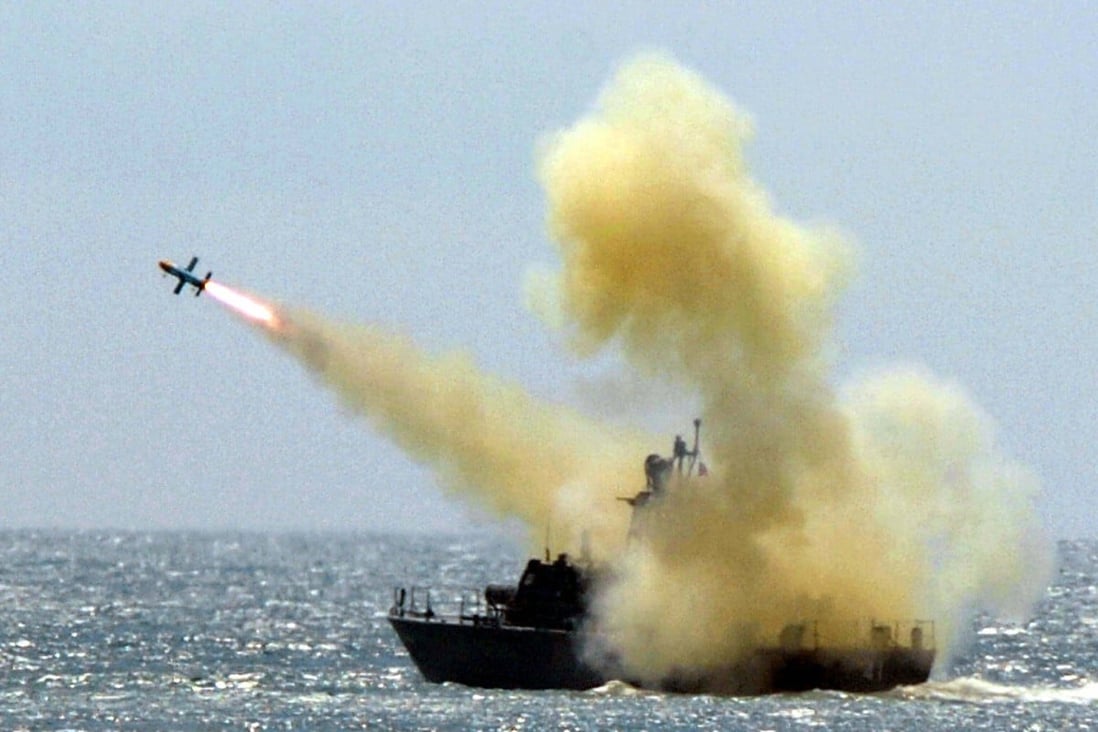
A Taiwanese patrol boat fires a ship-to-ship missile during a military drill in 2006. Vietnam slammed Taiwan’s recent live-fire exercises near Taiping Island as “illegal”. Photo: AFP

A Taiwanese patrol boat fires a ship-to-ship missile during a military drill in 2006. Vietnam slammed Taiwan’s recent live-fire exercises near Taiping Island as “illegal”. Photo: AFP

Vietnam was quick to voice its displeasure this month at Taiwanese military drills near a South China Sea island that both claim, but analysts say the incident speaks more to Taipei’s anxiety for its outlying islands’ continued security than the state of its relations with Hanoi.

Tiếp tục đọc “South China Sea: Taiwan’s live-fire drills irked Vietnam. Was Beijing the real target?”

Xi Jinping’s ’37-year plan’ for Taiwan reunification

Attacks on the mind and a looming crisis

nikkei – Nov. 1, 2022

The administration of Taiwan’s President Tsai Ing-wen is wary of a Chinese attack launched from the nearby provinces of Fujian and Guangdong. This September photo shows piles to prevent Chinese ships from landing on the island of Kinmen, just off the mainland.

With the Chinese Communist Party’s 20th National Congress now finished, President Xi Jinping is closer than ever to becoming a leader on a par with founding father Mao Zedong. His third term as party leader will be the final stage of the “Great China” project, an initiative fraught with contradictions. This series will examine the next five years by unpacking China’s perspective and logic.

Tiếp tục đọc “Xi Jinping’s ’37-year plan’ for Taiwan reunification”

Surveying the Experts: China’s Approach to Taiwan

Surveying the Experts: China’s Approach to Taiwan, CSIS

As China’s recent unprecedented military exercises around Taiwan demonstrated, the Taiwan Strait is a major flashpoint that threatens to undermine regional and global stability. Yet crucial questions remain about the dynamics shaping the Taiwan Strait. What is China’s approach to Taiwan and how long is Beijing willing to wait for Taiwan’s unification? Will China use significant military force against Taiwan, and when? How does Beijing view the potential of U.S. intervention in a Taiwan contingency?

To shed light on these questions, ChinaPower polled 64 leading experts on the People’s Republic of China (PRC), Taiwan, and cross-Strait relations.1 The experts polled include 28 former high-level U.S. government (USG) officials from both Democrat and Republican administrations, as well as 23 former USG policy and intelligence analysts and 13 top experts from academia and think tanks.2 Responses were collected from August 10–September 8, 2022, amid the Fourth Taiwan Strait Crisis.

Tiếp tục đọc “Surveying the Experts: China’s Approach to Taiwan”

China White Paper: The Taiwan Question and China’s Reunification in the New Era (Full Text)

Source: Xinhua

Editor: huaxia

2022-08-10 10:00:00


BEIJING, Aug. 10 (Xinhua) — The Taiwan Affairs Office of the State Council and the State Council Information Office of the People’s Republic of China published a white paper titled “The Taiwan Question and China’s Reunification in the New Era” on Wednesday.

The following is the full text of the white paper:

The Taiwan Question and China’s Reunification in the New Era

The People’s Republic of China

The Taiwan Affairs Office of the State Council and The State Council Information Office

August 2022

Contents

Preamble

I. Taiwan Is Part of China – This Is an Indisputable Fact

II. Resolute Efforts of the CPC to Realize China’s Complete Reunification

III. China’s Complete Reunification Is a Process That Cannot Be Halted

IV. National Reunification in the New Era

V. Bright Prospects for Peaceful Reunification

Conclusion

Preamble

Resolving the Taiwan question and realizing China’s complete reunification is a shared aspiration of all the sons and daughters of the Chinese nation. It is indispensable for the realization of China’s rejuvenation. It is also a historic mission of the Communist Party of China (CPC). The CPC, the Chinese government, and the Chinese people have striven for decades to achieve this goal.

The 18th National Congress of the CPC in 2012 heralded a new era in building socialism with Chinese characteristics. Under the strong leadership of the CPC Central Committee with Xi Jinping at the core, the CPC and the Chinese government have adopted new and innovative measures in relation to Taiwan. They have continued to chart the course of cross-Straits relations, safeguard peace and stability across the Taiwan Straits, and promote progress towards national reunification. However, in recent years the Taiwan authorities, led by the Democratic Progressive Party (DPP), have redoubled their efforts to divide the country, and some external forces have tried to exploit Taiwan to contain China, prevent the Chinese nation from achieving complete reunification, and halt the process of national rejuvenation.

Tiếp tục đọc “China White Paper: The Taiwan Question and China’s Reunification in the New Era (Full Text)”

What’s the fallout from Nancy Pelosi’s visit to Taiwan?

What’s the fallout from Nancy Pelosi’s visit to Taiwan? | Inside Story

Al Jazeera English – 4-8-2022

U.S. House Speaker Nancy Pelosi has ended her controversial tour of Taiwan.

Despite warnings from China, the most senior American politician to visit in 25 years pledged an ‘iron-clad’ commitment to the self-ruled Island’s democracy.

Beijing is responding with live-fire military drills and import bans.

So how will Taipei and Washington deal with the consequences?

Presenter: Kim Vinnell

Guests:

Vincent Chao – Former Director of the Political Division, Taipei Economic and Cultural Representative Office in the United States.

June Teufel Dreyer – Professor of Political Science, University of Miami.

Henry Huiyao Wang- Founder and President, Center for China and Globalization.

The semiconductor problem

The military relies on advanced semiconductors. The U.S. doesn’t make any.

Chips on display in Taiwan.
Chips on display in Taiwan.Credit…Ann Wang/Reuters
David Leonhardt

By David Leonhardt

NYTimes – July 14, 2022

The most advanced category of mass-produced semiconductors — used in smartphones, military technology and much more — is known as 5 nm. A single company in Taiwan, known as TSMC, makes about 90 percent of them. U.S. factories make none.

The U.S.’s struggles to keep pace in semiconductor manufacturing have already had economic downsides: Many jobs in the industry pay more than $100,000 a year, and the U.S. has lost out on them. Longer term, the situation also has the potential to cause a national security crisis: If China were to invade Taiwan and cut off exports of semiconductors, the American military would be at risk of being overmatched by its main rival for global supremacy.

Tiếp tục đọc “The semiconductor problem”

A looming threat

NYT Russia’s invasion of Ukraine has civilians in Taiwan taking China’s aggression more seriously.

Civilians participating in a battle simulation during a combat medic training workshop near Taipei in May. Since the war in Ukraine began, a growing number of Taiwanese have been making their own preparations for war.
Civilians participating in a battle simulation during a combat medic training workshop near Taipei in May. Since the war in Ukraine began, a growing number of Taiwanese have been making their own preparations for war.Credit…Lam Yik Fei for The New York Times
Ian Prasad Philbrick

By Ian Prasad Philbrick

June 19, 2022, 7:26 a.m. ET

Taiwan has spent more than seven decades under the threat of an invasion: China sees the island as a breakaway part of its territory. In the months since Russia invaded Ukraine, Taiwanese citizens have come to view a Chinese incursion as a more serious possibility than ever. My colleague Amy Qin, who’s based in Taipei, Taiwan’s capital, recently reported on how the island is preparing. I called her to learn more.

Tiếp tục đọc “A looming threat”