4,913,455 plays | Martin Jacques | TEDSalon London 2010
• October 2010
Conversations on Vietnam Development
Thứ bảy, 13/12/2025, 16:30 (GMT+7) VNExpress
Bất chấp sức ép từ thuế nhập khẩu của Mỹ, Trung Quốc vẫn thặng dư 1.000 tỷ USD chỉ trong 11 tháng – kỷ lục chưa quốc gia nào đạt được.
Một năm trước, ông Donald Trump tái đắc cử Tổng thống Mỹ. Lo ngại cuộc chiến thương mại mới diễn ra, các hãng sản xuất Trung Quốc gấp rút đẩy mạnh xuất khẩu. Trong chiến dịch tranh cử, ông Trump tuyên bố sẽ áp thêm thuế nhập khẩu lên hàng hóa Trung Quốc, nhằm thu hẹp thâm hụt thương mại ngày càng lớn của Mỹ.
Một năm sau, Tổng thống Mỹ thực hiện đúng cam kết. Nhưng Trung Quốc cũng đã chuyển hướng chiến lược, và thậm chí còn xuất khẩu nhiều hơn.
Tiếp tục đọc “Trung Quốc đạt thặng dư thương mại 1.000 tỷ USD như thế nào”lowyinstitute.org By Susannah Patton 6 November 2025

On this page
Listen to this journal article
Going into the 2022 election, improving relations with Southeast Asia was at the top of the foreign policy to-do list for the Australian Labor Party, led by now prime minister Anthony Albanese. While the outgoing Liberal-National coalition government had notched up some achievements in its engagement with the region, there was also a sense of drift. The Pacific Step Up policy had focused on boosting ties with one of Australia’s two near regions, but Southeast Asia had not received the same level of diplomatic focus. Among the Labor Party’s pledges were appointing a special envoy for Southeast Asia, providing A$470 million in new aid to the region, and creating an office for Southeast Asia within the Department of Foreign Affairs and Trade. [1] For the most part, the Albanese government has followed through on its commitment to strengthen ties with Southeast Asia through more active diplomatic outreach, an economic strategy to boost two-way trade and investment, and a more nuanced approach to managing sensitive issues in Australia’s relations with the region, especially China-related issues and Middle East policy.
During the new term of government beginning in 2025, it is likely that the Albanese government will maintain Southeast Asia, along with the Pacific Islands, as a region of high priority. Albanese’s July 2025 John Curtin Oration articulated what he called Labor’s “constructive and creative role” and gave high billing to efforts to intensify economic engagement with Southeast Asia and deepen security cooperation with Indonesia. [2] While other global relationships may fluctuate according to events, the central importance of Southeast Asia within this distinctively Labor worldview suggests that engagement with this region, especially Indonesia, will remain high on Australia’s agenda for the next three years.
This essay analyzes the achievements of the Albanese government in its relations with Southeast Asia. It also assesses the continued challenges Australia faces both in deepening economic relations with the region and in continuing to balance regional ties with the U.S. alliance, especially given a less predictable and more demanding administration in Washington.
Tiếp tục đọc “Australia’s Strategic Priorities and Challenges with Southeast Asia”
On Oct. 13 of this year, the PRC state media outlet CPNN, reported that China is pulling ahead in advanced nuclear power technology development with the launch of the large-scale production “Hualong One” (also known as HPR1000). As it develops, China not only aims to tackle the transmission bottleneck in the south, but also to export to countries like Pakistan as the PRC’s “business card” to the world.
China’s dual goals of localization and export orientation have long defined its nuclear strategy. Led by state-owned giants such as the China National Nuclear Corporation (CNNC), Beijing has invested heavily in domestic innovation while aggressively expanding into overseas markets. Beijing has sought to expand its reactor sales to markets such as Argentina and the United Kingdom, while also securing control over upstream uranium resources. CNNC’s 2019 acquisition of Namibia’s Rössing Uranium Mine, one of the world’s largest open-pit uranium operations, underscored China’s growing dominance across the nuclear value.
Beijing’s policy support for state-owned enterprises has enabled it to build a vertically integrated nuclear industry, driving rapid advances in small modular reactors (SMRs), fourth-generation technologies, and nuclear fusion research (the Artificial Sun). Furthermore, intensifying US–China competition is reshaping global nuclear exports and deepening the geopolitical risks of dependence on Chinese nuclear systems.
Tiếp tục đọc “Nuclear energy: Where China is getting with small modular and fusion reactors”
Having placed artificial intelligence at the centre of its own economic strategy, China is driving efforts to create an international system to govern the technology’s use.

Despite risks ranging from exacerbating inequality to causing existential catastrophe, the world has yet to agree on regulations to govern artificial intelligence. Although a patchwork of national and regional regulations exists, for many countries binding rules are still being fleshed out.
Tiếp tục đọc “China wants to lead the world on AI regulation — will the plan work?”
Trung Quốc là 1 trong 4 nền văn minh cổ nhất thế giới, bắt nguồn từ lưu vực của hai con sông: Hoàng Hà và Trường Giang. Trải qua hơn 5.000 năm, văn minh Trung Hoa đã phát triển trở thành một trong số nền văn minh rực rỡ nhất thế giới trong thời cổ đại và trung đại, đặc trưng bởi hệ thống triết học thâm sâu (trong đó có Nho giáo, Đạo giáo và thuyết Âm dương ngũ hành), các thành tựu khoa học kỹ thuật (phát minh ra giấy, la bàn, thuốc súng, địa chấn kế, kỹ thuật in ấn…), hoạt động giao thương xuyên châu Á (Con đường tơ lụa) và những đô thị có quy mô dân số và trình độ kiến trúc hàng đầu thế giới vào thời trung cổ.
Video tóm tắt toàn bộ chiều dài lịch sử trung quốc, chi tiết & đầy đủ trong 10 tiếng, qua các thời kỳ: thời cổ đại, triều Hạ, triều Thương, triều Chu, thời kỳ xuân thu – chiến quốc, triều Tần, thời kỳ hán – sở tranh hùng, triều Hán, thời kỳ Tam Quốc, triều Tấn, thời kỳ Nam Bắc triều, triều Tùy, triều Đường, thời kỳ ngũ đại thập quốc, triều Tống, triều Nguyên, triều Minh, triều Thanh, Trung Hoa Dân Quốc, và CHND Trung Hoa.

Vientiane, Lao PDR, 6 November 2025 – The Mekong River Commission (MRC) and the Government of Australia have reinforced their long-standing partnership through additional Australian support and the use of new digital innovations to enhance water monitoring and management in the Mekong region.
At a ceremony held today at the MRC Secretariat in Vientiane, Australia formalised an additional USD 1.71 million to support the MRC’s Environment and River Profile Survey, a key program that helps the MRC to enhance monitoring of river conditions, improve forecast changes, and better assess the health of the basin. This ensures the MRC can continue gathering and analysing data effectively that inform decisions on the river’s management and protection.
Australia’s support for the Environment and River Profile Survey builds on its core support to the MRC under the Mekong-Australia Partnership, which seeks to strengthen water security, economic resilience and sustainable growth in the sub-region. “Australia is proud to support this project as it will benefit the MRC, its member countries, and the river’s communities, economy, and environment” said H.E. Ms Megan Jones, Australian Ambassador to Lao PDR.
Joining the event was His Excellency Dr Linkham Douangsavanh, Minister of Agriculture and Environment of Lao PDR. Together with the MRC and Australia, he witnessed the formal launch of a new “Digital Twin” platform, a real-time modelling tool that integrates hydrological, meteorological and spatial data to help visualise how changes in rainfall, flow or land-use could affect communities and ecosystems.
“With this Digital Twin platform, we are giving our communities and partners a window into the river’s future,” said Dr Douangsavanh. “When we see what may come, we can plan better, respond faster and protect the peoples and their livelihoods and nature that depend so much on the Mekong.”
“Today we harness new digital capabilities and advanced capabilities so that we can ensure shared benefits for the sustainable development of the Mekong River Basin. The MRC is grateful for this timely support from Australia that has allowed this to happen,” said H.E. Ms Busadee Santipitaks, Chief Executive Officer of the MRC Secretariat.
About the Mekong River Commission
The MRC is an intergovernmental organisation established in 1995 to boost regional dialogue and cooperation in the Lower Mekong River Basin. Based on the Mekong Agreement among Cambodia, Lao PDR, Thailand, and Viet Nam, the MRC serves as both a regional platform for water diplomacy and a knowledge hub – to manage water resources and support sustainable development of the region.
By Niccolo Conte Graphics/Design: Sabrina Lam

Global debt levels continue to rise, with 2025 marking another year of fiscal strain across both advanced and developing economies.
Tiếp tục đọc “Government Debt to GDP by Country in 2025”japantimes.co.jp 2025.07.02

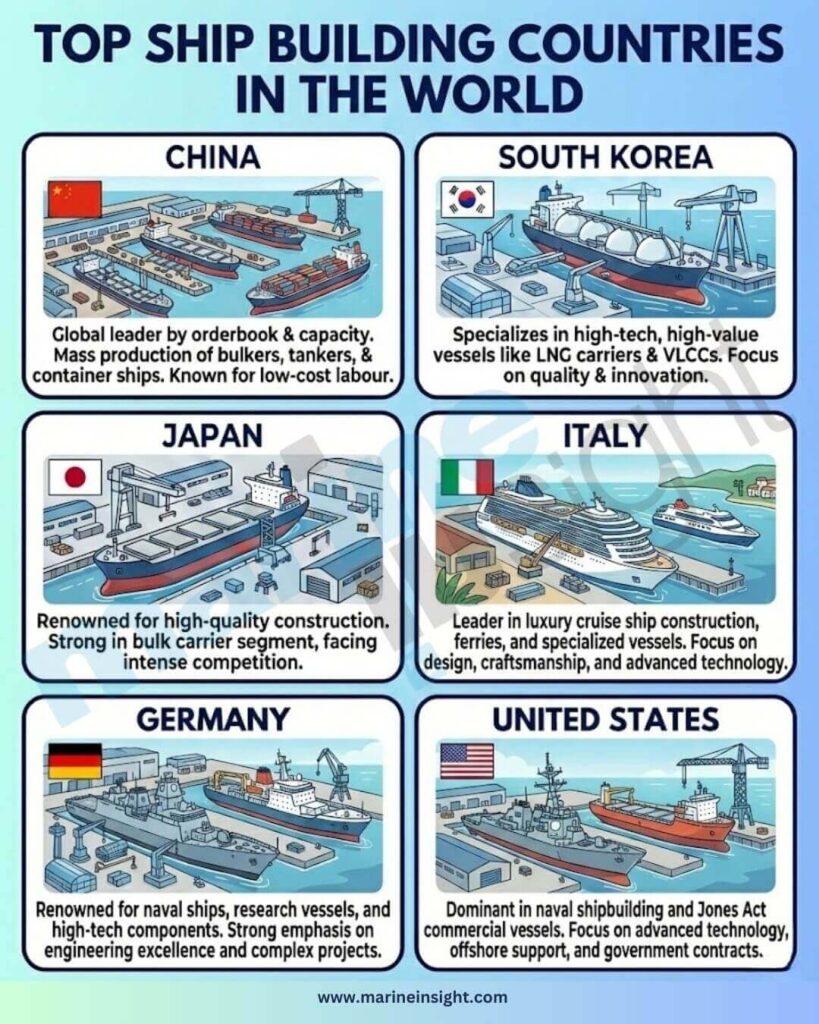
China’s unparalleled shipbuilding capacity has the U.S., Japan and its allies — both military and economic — rightly concerned about maritime threats to trade and security.
Without a concerted effort and international cooperation to challenge Beijing’s commanding lead in the global shipbuilding industry, those threats will materialize furthering China’s alarming dominance.
According to 2024 data from the Chinese government, the country ranks first worldwide in ship completions, new orders and order backlogs — claiming global shares of 55.7%, 74.1% and 63.1%, respectively. China is also expanding its capabilities in high value-added vessels, surpassing South Korea and Japan, while consolidating its role as a “shipbuilding superpower.”
Shipbuilding is not merely an economic activity — it underpins both global trade and national defense. Civilian shipbuilding provides the foundation for training engineers and skilled workers essential to naval production. As such, the growth of China’s shipbuilding sector carries profound implications, not only for maritime commerce but also for the international security architecture.
Tiếp tục đọc “China’s shipyard dominance leads to geoeconomic risks”
Griffith.edu.au May 19, 2025 By Dr Hai Thanh Luong
From fake job offers to cryptocurrency fraud and online romance scams, Southeast Asia has become a global hub for transnational scam operations.
These aren’t isolated crimes, they are organised, cross-border and industrial-scale criminal enterprises that exploit vulnerable people and expose the limits of international law enforcement.
New research shows this surge in scams represents more than just a regional issue. It’s a transnational emergency, and it demands an urgent, coordinated response.
Several factors have turned Southeast Asia into a hotbed for scam syndicates.
The collapse of rule of law in parts of Myanmar has created ungoverned spaces where criminal operations flourish.
Meanwhile, countries like Cambodia, Laos and the Philippines offer a fertile environment for transnational crime due to weak governance, corruption, and limited oversight.
These scam centres don’t just target foreign victims. They also lure and trap workers—many of them young people from poorer nations—under the false promise of legitimate employment. Once inside, many are subjected to forced labour, abuse and trafficking.
This has become a humanitarian crisis as scam compounds across Southeast Asia have held thousands of people against their will, forcing them to commit fraud under threat of violence.
The rise of digital technologies has only made these operations harder to trace and easier to scale. From encrypted messaging to unregulated cryptocurrency, scam networks have globalised rapidly, while enforcement efforts remain stuck behind borders.
One of the key challenges in confronting this crisis is the fragmented nature of law enforcement.
Scams that begin in one country can target victims in another, while using platforms, payment systems, and communication tools hosted across multiple jurisdictions.
But many national police forces are not equipped to act beyond their borders. And transnational criminal syndicates have exploited the lack of international coordination to operate with relative impunity.
Even where political will exists, legal mismatches and diplomatic bottlenecks prevent timely investigations, arrests or prosecutions.
Countries tend to focus inward, launching isolated crackdowns that fail to dismantle the broader networks.
This mismatch between the global nature of the threat and the localised nature of responses is precisely what allows these scams to thrive.
To seriously confront this growing criminal economy, regional governments must prioritise coordinated responses, cross-border investigations, and robust intelligence sharing.
This includes:
ASEAN, Interpol, and UNODC all have a role to play. But meaningful cooperation remains patchy, slow and overly politicised. Tackling scams as a global crisis, not just a regional one, will require serious investment and political leadership.
Scams are often dismissed as digital annoyances or consumer issues.
The response to this crisis cannot be local, slow or siloed. The fight against transnational scams cannot be won in isolation.
Only by working together can states dismantle the criminal networks exploiting the region’s vulnerabilities.
But what we are seeing in Southeast Asia is a complex ecosystem of transnational organised crime, often underpinned by exploitation and violence.
Billions of dollars are being stolen. Thousands of people are being trafficked and abused. And public trust in digital systems is eroding as scams become more sophisticated.
Agency says gangs caused $37bn in losses in Asia as they gain new footholds in Africa, South America, and Middle East.
Where Beijing once celebrated its manufacturing and export prowess, it now openly discusses the need to curb “involution”. This is a dramatic departure from its previous stance, says Enodo Economics’ Diana Choyleva.

LONDON: For years, Beijing dismissed Western concerns about Chinese overcapacity as protectionist rhetoric. When the United States and European Union complained about cheap Chinese exports flooding global markets, China’s response was predictable: These were simply competitive advantages in a free market economy.
That narrative has now fundamentally shifted. In a remarkable policy U-turn, China has not only started acknowledging the overcapacity problem but is treating it as a national priority that requires urgent intervention.
While there have been signs of this narrative change for a while, the clearest signal of this messaging transformation came through recently on China’s own policy channels.
In July, the Communist Party’s leading journal Qiushi warned that “disorderly competition has destroyed entire industry ecology”. This wasn’t diplomatic language about market dynamics – it was an admission that destructive competition had reached crisis proportions.
Tiếp tục đọc “Why China is finally starting to acknowledge its overcapacity problem”
Cambodia’s central bank has reportedly revoked the banking license of a conglomerate accused of illicit online activities. But doubts abound about Phnom Penh’s commitment to taking action against cyberfraud networks.

The banking arm of a Cambodia-based conglomerate accused of running the world’s “largest ever illicit online marketplace” has had its banking license revoked by the Cambodia’s central bank, Radio Free Asia reported last week.
Huione Guarantee, the Telegram marketplace of Huione Group, has reportedly processed up to €22 billion ($24 billion) in illicit transactions since 2021, making it by far the world’s largest illegal online marketplace, cryptocurrency compliance firm Elliptic reported last year.
Huione Pay, the group’s banking arm, had its license withdrawn because of noncompliance with “existing regulations and recommendations that may have been made by the regulators,” a National Bank of Cambodia spokesperson told Radio Free Asia, a US Congress-funded media outlet.
Tiếp tục đọc “Is Cambodia serious about ending organized cyberscams?”
Massive glacial bursts are becoming more frequent and more dangerous due to the climate crisis, experts tell Mukesh Pokhrel, warning: ‘They are not going to stop anytime soon’
Wednesday 16 July 2025 12:25 BST

Up until a disastrous day earlier this month, more than 150 trucks crossed daily over a border bridge between Nepal and China. Known by locals as the Miteri Pul (Friendship Bridge), the Rasuwagadhi crossing served as the main trade route between the two countries, with over $50m of goods passing over it last year alone.
But on the 8 July, floodwaters tore through northern Nepal’s Rasuwa district, sweeping away parts of this critical border highway. According to the National Disaster Risk Reduction & Management Authority, seven people lost their lives, and 20 were missing, including six Chinese nationals.
The Chinese nationals were working on a 200 megawatt hydro project in the Tirsuli River, which was also damaged by the floods. Initial estimates suggest Nepal has sustained losses of over $100m in the incident as a whole.
Tiếp tục đọc “A ‘Himalayan tsunami’ has just devastated Nepal. It should be a wake-up call”
visualcapitalist.com June 30, 2025

Emerging markets often attract foreign investors with prospects for higher economic growth and diversification.
Where are global business leaders placing their foreign direct investment (FDI) bets in 2025?
This chart highlights the top 25 emerging markets by FDI confidence score in 2025, based on a survey conducted by Kearney. The rankings are drawn from responses by 536 senior executives at global companies with annual revenues above $500 million.
China (including Hong Kong) remains the top emerging market for foreign investor confidence in 2025. However, FDI inflows have slowed in recent years, hitting multi-year lows in 2023.
Following China, the UAE and Saudi Arabia also retain their places as the second and third-most favored developing economies for FDI.
Here’s a look at the full list of top emerging markets for FDI confidence in 2025:Search:
| Rank | Country | FDI Confidence Score |
|---|---|---|
| 1 | China (including Hong Kong) 🇨🇳🇭🇰 | 1.97 |
| 2 | United Arab Emirates 🇦🇪 | 1.86 |
| 3 | Saudi Arabia 🇸🇦 | 1.76 |
| 4 | Brazil 🇧🇷 | 1.59 |
| 5 | India 🇮🇳 | 1.53 |
| 6 | Mexico 🇲🇽 | 1.51 |
| 7 | South Africa 🇿🇦 | 1.48 |
| 8 | Poland 🇵🇱 | 1.46 |
| 9 | Argentina 🇦🇷 | 1.46 |
| 10 | Thailand 🇹🇭 | 1.45 |
Brazil and India—two of the biggest emerging economies by GDP—round out the top five, with Brazil overtaking India in FDI confidence in the 2025 rankings.
These rankings align with investors’ FDI priorities from the same survey, where the efficiency of legal and regulatory processes and domestic economic performance top the list.
South Africa made the largest upward move in 2025, jumping from 11th to 7th in the rankings. It also recorded FDI inflows of around $661 million in Q1 2025, up 56% from the fourth quarter of 2024.
Overall, 11 of the top 25 emerging markets for FDI confidence are in Asia and the Middle East.
The factors driving FDI confidence vary for each economy.
In China, tech innovation was the leading driver of investor confidence, while economic performance ranked highest for the UAE and Saudi Arabia.
Meanwhile, the talent/skill of the labor pools in India and Mexico were the strongest factors attracting investors.
There is a human trafficking crisis in Southeast Asia. The UN estimates that 120,000 people have been trafficked to scam centres in Myanmar and another 100,000 in Cambodia. Many of them are brought through the border with Thailand. The victims are often forced to work as scammers, defrauding billions of dollars from unsuspecting targets across the world. These scam syndicates have been linked to the Chinese mafia as well as local rebels in Myanmar.
How do these scam centres operate? Who are the trafficking victims and how did they end up in this predicament? How is Thailand’s economy suffering from these trafficking networks, and what is being done to stamp them out? Insight investigates.
00:00 Introduction
01:22 Chinese victim in Myanmar’s scam factory
03:34 Why Southeast Asia is breeding ground for scams
06:23 High-profile kidnap of Chinese actor
07:52 Why war-torn Myanmar attracts scam kingpins
13:26 Changing demographic of trafficked victims 15:23 What happens inside scam centres
23:47 The voluntary scammers
25:21 How scams work
29:34 Romance gone wrong
34:49 China’s role in scam crackdown
37:21 What’s Thailand doing to fight scammers