Australia: Historic pay deal with Uber Eats and DoorDash could set minimum pay for gig economy delivery workers

abc.net.au Tuesday 25 November 2025

Man with helmet and yellow jacket on e-bike with neon yellow Uber Eats bag
A new deal looks set to provide wideranging new minimum conditions to delivery riders and drivers who work for Uber Eats and DoorDash. (ABC News: Abubakr Sajid)

In short:

The Transport Workers Union has reached an agreement with Uber Eats and DoorDash for minimum safety net pay rates and other conditions for delivery drivers and riders.

The union says it is a “significant step” towards improving fairness in the gig economy.

What’s next?

The deal requires approval from the Fair Work Commission.

A historic deal could transform Australia’s gig economy, with the country’s two largest on-demand delivery platforms agreeing to minimum pay rates and providing wide-ranging improvements and protections for riders and drivers.

The agreement struck between the Transport Workers Union (TWU) and Uber Eats and DoorDash followed years of campaigning by workers and the union.

Minimum safety net pay rates would put a floor beneath what have been wildly variable earnings for delivery workers, who have often taken home far less than Australia’s minimum wage under current pay arrangements, which see them paid per delivery, not for time worked.
Tiếp tục đọc “Australia: Historic pay deal with Uber Eats and DoorDash could set minimum pay for gig economy delivery workers”

The cost of human labor behind AI development

Digital sweatshops of the Global South

So, where does this hidden labor take place? According to Casilli’s research, workers are in countries including Kenya, India, the Philippines, and Madagascar — regions with high levels of digital literacy, access to English- or French-speaking workers, and little in the way of labor protection or union representation. 

Do Better Team

Behind most of today’s AI models lies the labor of workers in the Global South, who are exposed to disturbing content and poor working conditions. This reality raises urgent questions about the transparency and ethics of AI development.

Picture working 10-hour days tagging distressing images to train an AI model — and getting paid not in money, but in a kilogram of sugar. This isn’t dystopian fiction, but reality for some of the workers behind today’s most advanced artificial intelligence. 

While the development of AI is undoubtedly enhancing the lives of many by streamlining processes and offering efficient solutions, it also raises a pressing question: What is the true cost of AI, and who is paying for it? 

Antonio Casilli, Professor of Sociology at Télécom Paris and Founder of DipLab, addressed this question during an Esade seminar on the promises and perils of the digitalization of work. The event was part of the kick-off for the DigitalWORK research project, which explores how digital technologies are transforming work and promoting fair, equitable and transparent labor conditions, with Anna Ginès i Fabrellas and Raquel Serrano Olivares (Universitat de Barcelona) as principal investigators. 

AI isn’t autonomous, it’s human-powered

Tiếp tục đọc “The cost of human labor behind AI development”

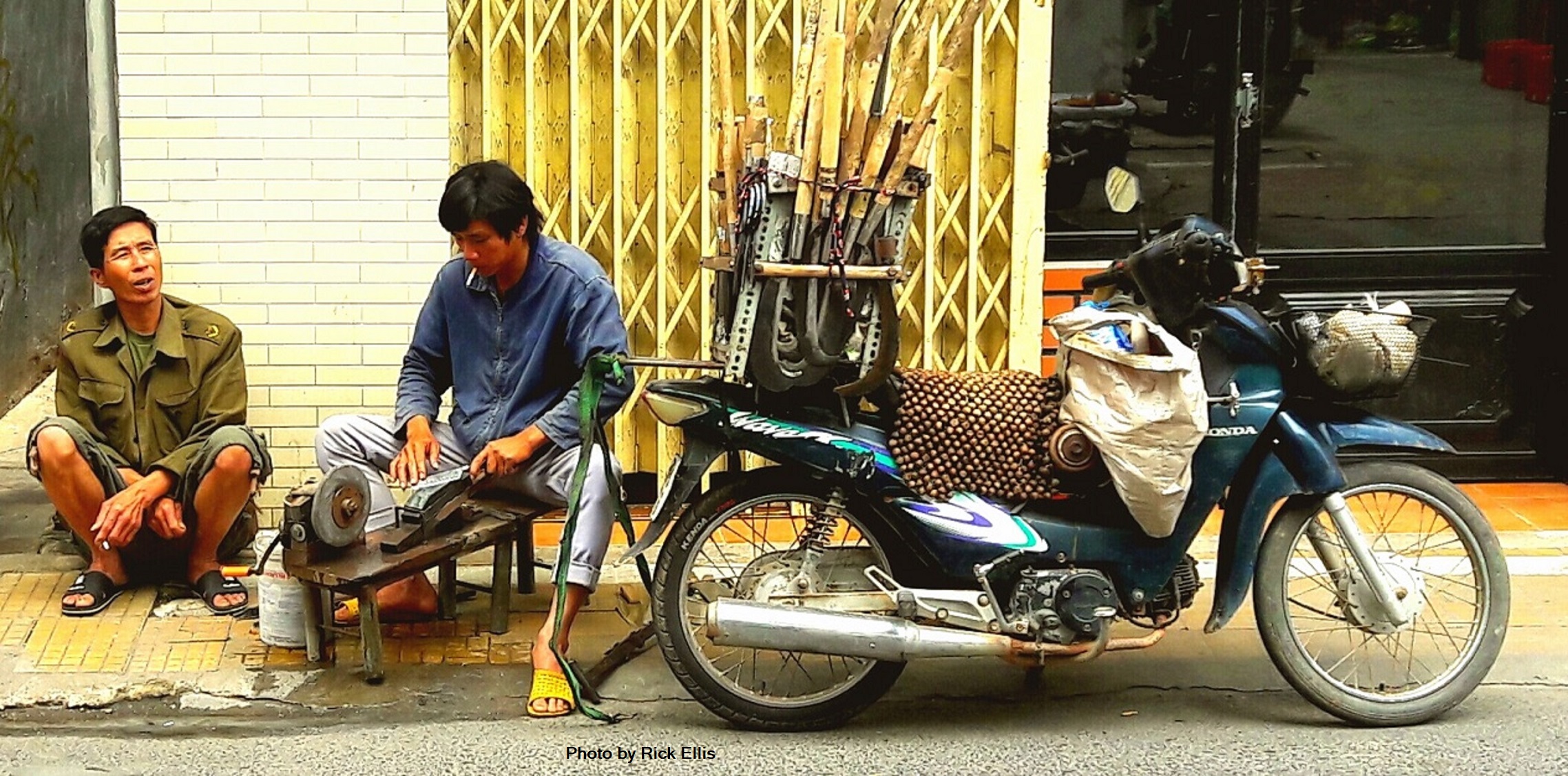
Businesses on wheels in Vietnam

Sunday, November 24, 2019, 10:07 GMT+7 Tuoi Tre
Businesses on wheels in Vietnam
Knife-sharpener and his pal
A while back I wrote about all the activities routinely taking place on sidewalks, preparing travellers to cope with the endless commotion that turns a relaxing stroll into a game of hopscotch and a mad dash down the gauntlet (Read here).One example of the clutter is a cafe that uses the sidewalk to wash and dry dishes, prepare vegetables, store mops, garbage, brooms, and write letters to faraway relatives. I reported they have everything but the kitchen sink out on the sidewalk (an expression meaning a lot of items), then later realized the kitchen sink is right there too, in the midst of the hubbub! Tiếp tục đọc “Businesses on wheels in Vietnam”

The smartphone is eventually going to die, and Apple, Google, Microsoft, and Facebook are racing to kill it