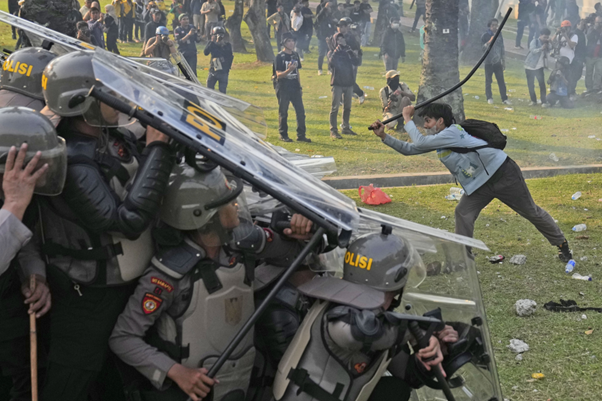
Cuối tháng 8/2025, Indonesia chứng kiến làn sóng biểu tình dữ dội bùng nổ sau sự việc của một tài xế xe công nghệ trong vụ va chạm với xe bọc thép cảnh sát. Từ một sự cố mang tính bộc phát, phong trào nhanh chóng lan rộng khắp các đô thị lớn, tập hợp hàng chục nghìn sinh viên, tài xế và các tầng lớp lao động trẻ xuống đường. Các cuộc đụng độ với cảnh sát đã khiến nhiều người thiệt mạng và hàng trăm người bị bắt giữ, làm dấy lên lo ngại về một cuộc khủng hoảng chính trị sâu sắc. Sự kiện này diễn ra trong bối cảnh Indonesia vừa giữ vai trò trung tâm của ASEAN vừa phải cân bằng giữa cạnh tranh Mỹ–Trung ở khu vực Ấn Độ Dương – Thái Bình Dương. Bởi vậy, sự kiện khủng hoảng này không chỉ đặt ra vấn đề nội bộ của riêng Indonesia mà còn gợi mở nhiều tín hiệu đáng lưu ý với các quốc gia lân cận trong đó có Việt Nam.
Ngồi vào bàn đàm phán với Mỹ về nâng cấp quan hệ, với việc nộp đơn xin gia nhập BRICS, tiếng nói của Việt Nam có trọng lượng hơn, Việt Nam có thể “mặc cả” nhiều hơn và đạt nhiều lợi ích hơn.
Mới đây, tại cuộc họp báo về Hội nghị thượng đỉnh Nhóm các nền kinh tế mới nổi BRICS sẽ diễn ra ngày 22-24/8/2023 tại Johannesburg, Nam Phi dưới sự chủ trì của nước này, Bộ trưởng Bộ Ngoại giao và Hợp tác Nam Phi Naledi Pandor tuyên bố, đơn xin gia nhập khối BRICS (bao gồm 5 nước Brazil, Nga, Ấn Độ, Trung Quốc, Nam Phi) chính thức được 23 quốc gia đệ trình và vấn đề mở rộng hiệp hội sẽ được thảo luận tại hội nghị cấp cao sắp tới của BRICS.
Trong danh sách 23 quốc gia mà bà Ngoại trưởng Nam Phi đề cập tới có Việt Nam. Thông tin này thật sự gây bất ngờ lớn đối với cả giới chuyên gia và cộng đồng mạng.
Trong cuộc phỏng vấn chuyên gia quan hệ quốc tế, Tiến sỹ Hoàng Giang, Sputnik đã xoay quanh đề tài đang nóng này.
By Adnan Aamir, Marwaan Macan-Markar, Shaun Turton and Cissy Zhou – AUGUST 10, 2022
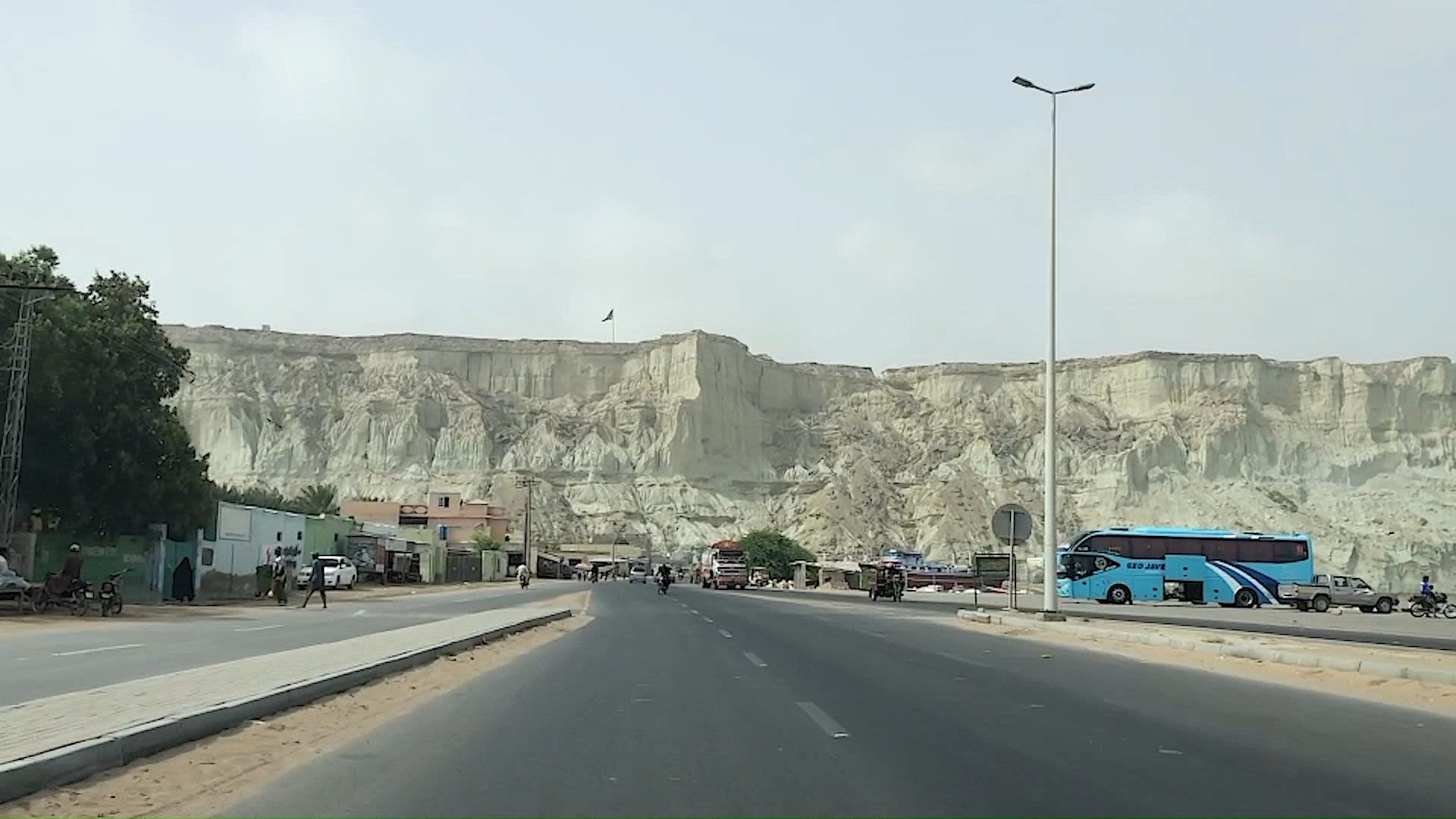
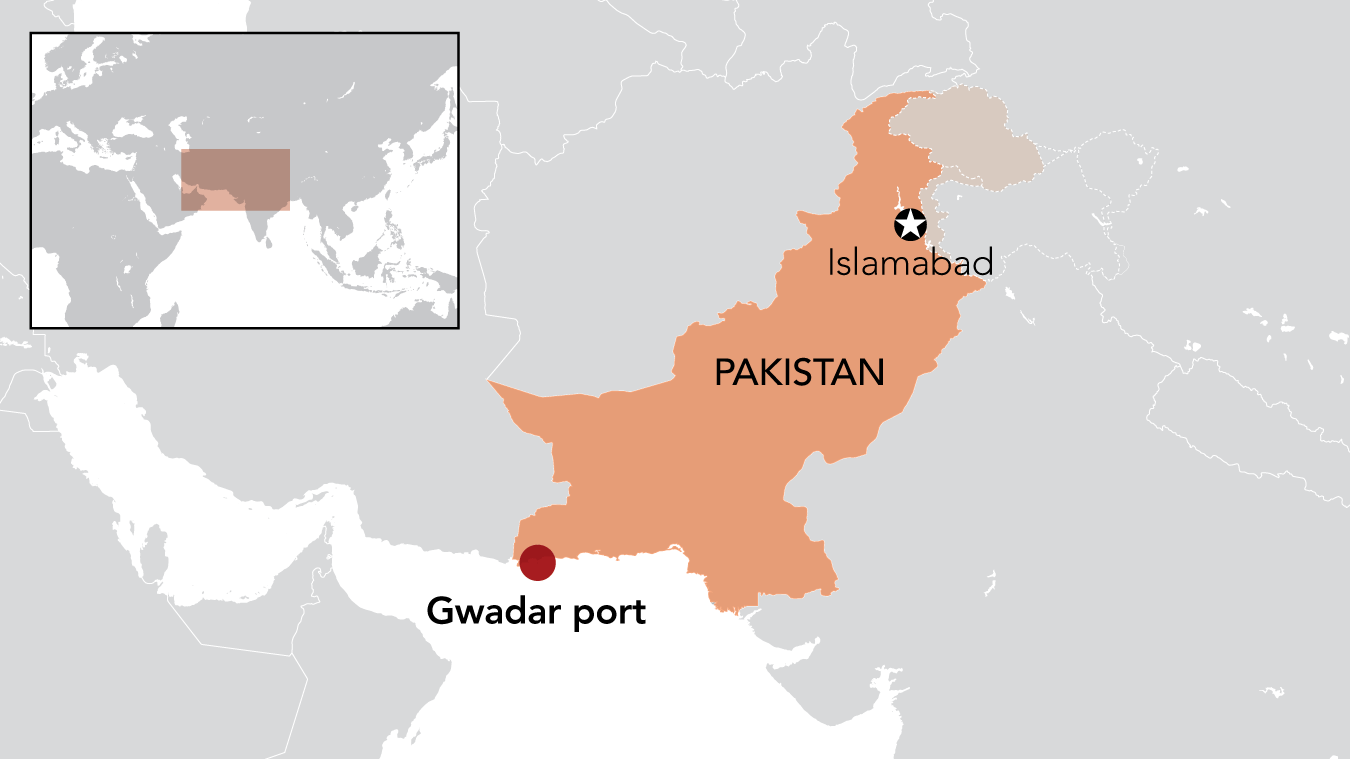
The drive to Pakistan’s port of Gwadar takes seven and a half hours from Karachi via the Makran coastal highway. Much of the 600-km route is deserted, with no restaurants, restrooms or even fuel stations. On a recent journey, around 200 vehicles in total could be counted during the entire drive.
Arriving in the city on Pakistan’s Indian Ocean coast, Chinese and Pakistani flags are ubiquitous, and Chinese-financed construction projects loom, but the city is spookily devoid of economic activity. Near the seafront, broad avenues are curiously empty of vehicles. Inside the city center, the roads are narrow, congested and covered with foul smelling drain water, with few multistory buildings aside from the Chinese-built port compound.
It is hard to visualize Gwadar as the launch pad of a new global paradigm, but that is what Beijing would have the world believe.
Nine years ago it was plucked out of obscurity — a backwater in Pakistan’s restive Balochistan region — and presented as China’s commercial window onto the Indian Ocean, a hub for regional integration under the Belt and Road Initiative, which was to harness the juggernaut of the Chinese economy to the goal of Asian economic development.
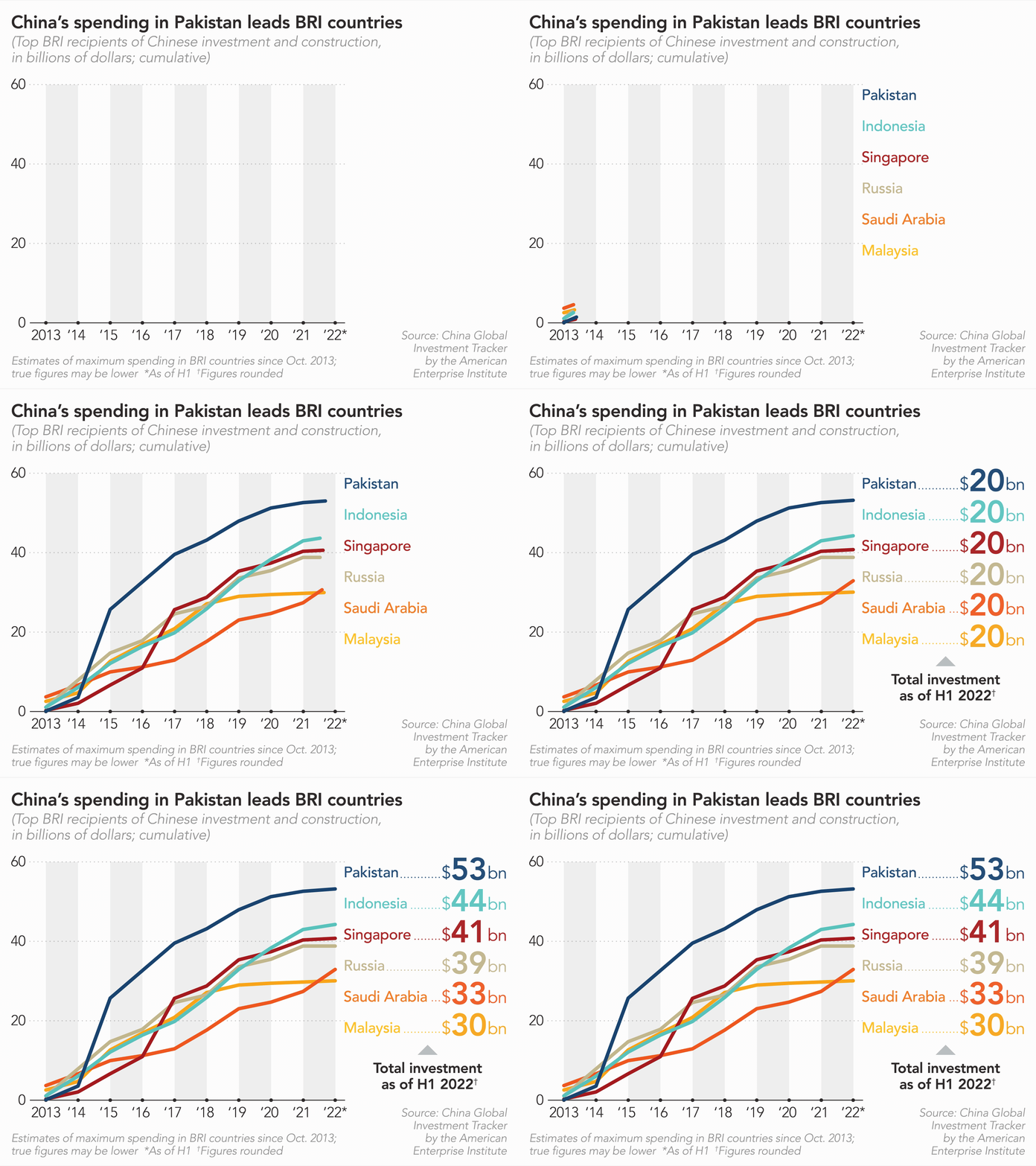
The BRI is an audacious program of lending, aid and infrastructure contracts totaling over $880 billion, according to the American Enterprise Institute.
The initiative, which includes pledges to 149 countries, aims to promote Chinese-led regional integration — and sow economic dependence on Beijing.
First announced in a speech by Chinese President Xi Jinping in 2013 as the “Silk Road,” the BRI was fleshed out in April 2015 with the announcement of the China-Pakistan Economic Corridor (CPEC), stretching from Gwadar to the Chinese city of Kashgar, in Xinjiang. The CPEC showcased the China-Pakistan “all-weather friendship” with $46 billion in pledged funds that has since grown to $50 billion. It was to be the backbone of the now renamed Belt and Road Initiative.
While the G7 group of nations (Canada, France, Germany, Italy, Japan, the United Kingdom, and the United States together with the European Union) has been meeting in Germany, the BRICS nations (Brazil, Russia, India, China, and South Africa) have been meeting in China for the 14th Summit. The contrasts could not be more different – one the grouping of mainly white, powerful Western nations, representing contemporary global leadership, the other a grouping of globally powerful emerging markets wanting a larger say in the developing world. The BRICS nations differ from the G7 in two main factors, most notably in the populations they serve – 3 billion as opposed to the G7’s 987 million (including the EU), and GDP, where the G7’s GDP is currently US$33.93 trillion and the BRICS about US$23.5 trillion.
Western economists as a result tend to talk up the G7’s role in global financial strength however the growth rates of both the G7 and BRICS predicted by the IMF suggest that the latter could be responsible for 50% of all global trade by the 2030’s. This means that paying attention to the BRICS consensus leads to some direction over how the global economy is likely to change over the next decade.
At present, the G7 appear determined to continue with the existing world order, which China and Russia in particular view as ‘unipolar’, meaning centered around the United States and directed by whatever US foreign, global and domestic policies are at the time. Both countries (and others) are looking for a more inclusive role in global affairs as befits their status. China for example is the world’s second largest economy, and India the fifth. Yet neither have the percentage say in global financial institutions such as the World Bank and IMF they would like – hence the development of alternative policy banks such as the Asian Infrastructure Investment Bank and the BRICS own New Development Bank. There are also accusations that global institutions such as the United Nations (based in New York) has begun to be too influenced by Washington’s policies than global ones. Calls for reform are increasingly being heard.
Lãnh đạo các nước BRICS tại một cuộc họp thượng đỉnh.
***
K1: Giấc mơ BRIC
(ĐTTCO) – Tháng 9 năm nay đánh dấu tròn 10 năm bộ trưởng ngoại giao các nước BRIC (Brazil, Nga, Ấn Độ và Trung Quốc) họp mặt lần đầu tiên, mở màn cho các cuộc họp cấp cao sau đó của khối này. Khối này ra đời với những kỳ vọng rất lớn từ chính các thành viên lẫn những nhà đầu tư quốc tế, tuy nhiên liệu kỳ vọng đó đang thành hình, hay dần biến thành ảo mộng? Tiếp tục đọc “BRICS: Kỳ vọng và ảo mộng – 2 kỳ”→




 CVD
CVD