Sau nhiều năm, tôi mới gặp lại ngư dân Tu Thanh Sơn với bước chân tập tễnh vì từng bị dính đạn ở gần đảo Phú Lâm, quần đảo Hoàng Sa.
Ngư dân Tu Thanh Sơn dù bị thương nhưng vẫn quay trở lại Hoàng Sa
Anh Sơn trông gầy yếu hơn và cho biết, vẫn phải đi lặn, vẫn quay lại Hoàng Sa mưu sinh để lo cho gia đình. Anh cũng đặt câu hỏi về việc đi giữ đảo nhưng bị Trung Quốc bắn bị thương thì Nhà nước có chính sách hỗ trợ gì. Tiếp tục đọc “‘Thương binh’ Hoàng Sa tập tễnh mưu sinh”→
On August 31, 1951, representatives of the United States and the Republic of the Philippines signed the Mutual Defense Treaty (MDT) in Washington. In recognition that “an armed attack in the Pacific Area on either of the Parties would be dangerous to [the] peace and safety” of both countries, the treaty declared that each state would “act to meet the common dangers in accordance with its constitutional processes.”i However, like most conventional defense treaties and standards, the MDT is not clear about the increasingly common unconventional gray zone threats that skirt the definition of war to avoid prompting a kinetic response. Since its inception, the United States’ commitment to the MDT regarding attacks on Philippine assets in contested waters in the South China Sea has been unclear. Along with the controversial policies of the administration of Philippine President Rodrigo Duterte, the uncertainty of the MDT has strained U.S.-Philippine relations and caused Philippine Defense Secretary Delfin Lorenzana to call for a review of the relevance of the MDT in October 2018 with the main goal of determining whether the government should “maintain it, strengthen it, or scrap it.”ii
The USS John S. McCain neared the contested Spratly Islands on Tuesday. Photo: US Navy via APThe US Navy sent a destroyer near the Spratly Islands in the disputed South China Sea on Tuesday to “challenge restrictions on innocent passage imposed by China, Vietnam, and Taiwan”.The operation came after the United States military warned in a document last week that it would be “more assertive” against Beijing. The document set out objectives for the US Navy, Marines and Coast Guard for 2021.
BEIJING (Reuters) – An aircraft carrier group led by China’s newest carrier, the Shandong, has sailed through the Taiwan Strait on its way to routine drills in the South China Sea, China’s navy said on Monday, after Taiwan mobilised its forces to monitor the trip.
More than most, four men shaped the oft-cited “strategic tensions” over the South China Sea.
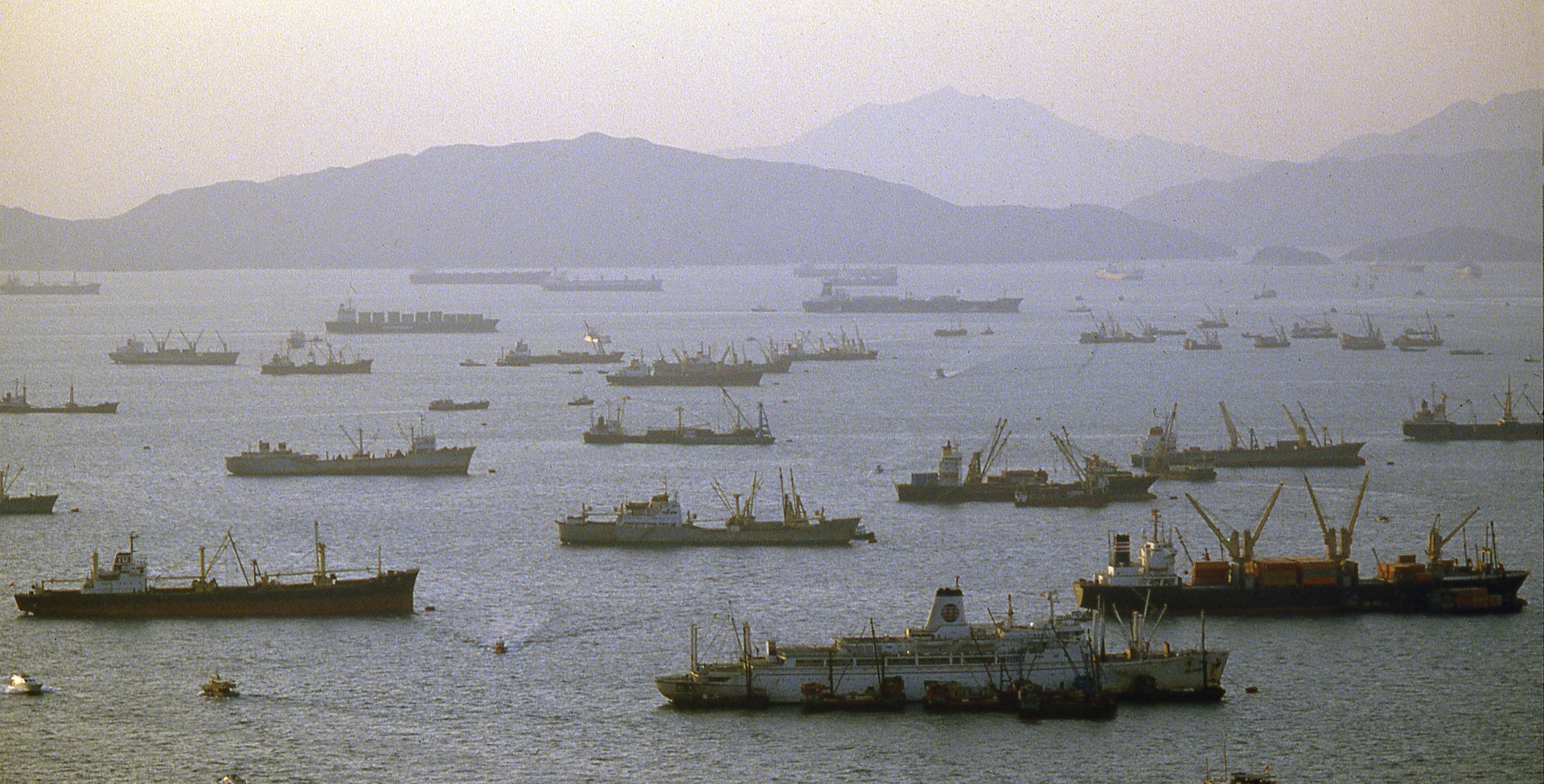
Nik Wheeler / Corbis / Getty
The south china sea is the most important body of water for the world economy—through it passes at least one-third of global trade. It is also the most dangerous body of water in the world, the place where the militaries of the United States and China could most easily collide.
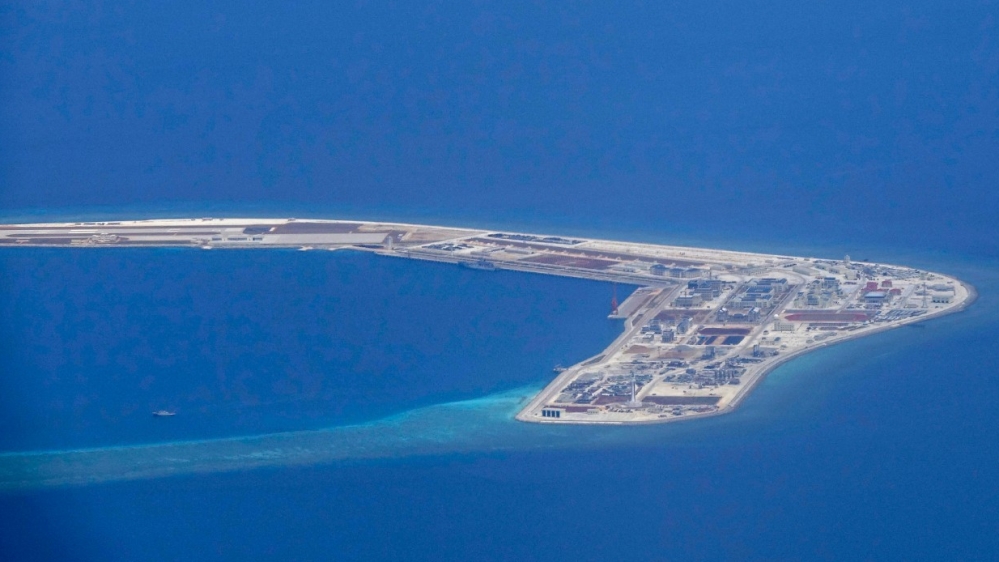
By Vu Ngoc December 3, 2020 | 06:36 pm GMT+7 vnexpressSatellite photo shows North Island, part of the Paracel Islands in the East Sea, September 2017. Photo by Planet Labs via Reuters.Vietnam Thursday asked China to stop escalating tensions with actions that exacerbate violations of Vietnam’s sovereignty over the Hoang Sa and Truong Sa archipelagos.
Having secured an alliance with Philippine President Rodrigo Duterte during a state visit to Beijing in 2016, Chinese President Xi Jinping underlined it when he visited Manila in 2018, promising a new chapter in the two nations’ diplomatic ties and vowing to turn the disputed South China Sea into “a sea of peace”.
The suggestion was that China had been in contact with the archipelago long before Europeans arrived and named it Las Islas Filipinas after Spain’s King Felipe II. It was also a way for Xi to bolster China’s claims in the South China Sea – based on its “nine-dash line” and long contested by the Philippines, Vietnam, Malaysia, Brunei and Indonesia.
The problem is that the evidence suggests Zheng never set foot in the future Philippine islands.
“All the scholars all over the world are unanimous: Zheng He never visited the Philippines,” Antonio Carpio said in an online lecture earlier this month, calling Xi’s anecdote “totally false”. The former Philippine Supreme Court justice also presented official Chinese records that debunk Beijing’s “historical maritime rights” over the South China Sea – thereby raising new questions about its standing in the region as tensions escalate.
On Monday, the US raised the stakes, saying “Beijing’s claims to offshore resources” across most of the disputed seas were “completely unlawful”. US Secretary of State Mike Pompeo added that the world would “not allow Beijing to treat the South China Sea as its maritime empire.” In response, Beijing accused Washington of unnecessarily inflaming the situation.
Earlier, the US deployed the warships USS Nimitz and USS Ronald Reagan to assert what it calls its freedom of navigation in the waters. A sailor on one of the ships told Al Jazeera that the operations could last for weeks. China held a large-scale naval exercise in the area from July 1 to 5.
‘History vs facts on the ground’
Historical records may not favour China in the continuing debate on the control of the South China Sea, through which as much as $5.3 trillion in global trade passes annually.
Refuting the Chinese president’s claim, Carpio presented evidence from China’s own Naval Hydrographic Institute, chronicling Zheng’s visit to the then-Cham Kingdom of central Vietnam. A translation mixup of the kingdom’s Chinese name incorrectly referred to it later as a Philippine island.
A 2019 Ancient History Encyclopedia article also traced Zheng’s expeditions in the early 1400s as far as Arabia and Africa, but nowhere in the story did it mention Zheng’s supposed visit to the Philippines.
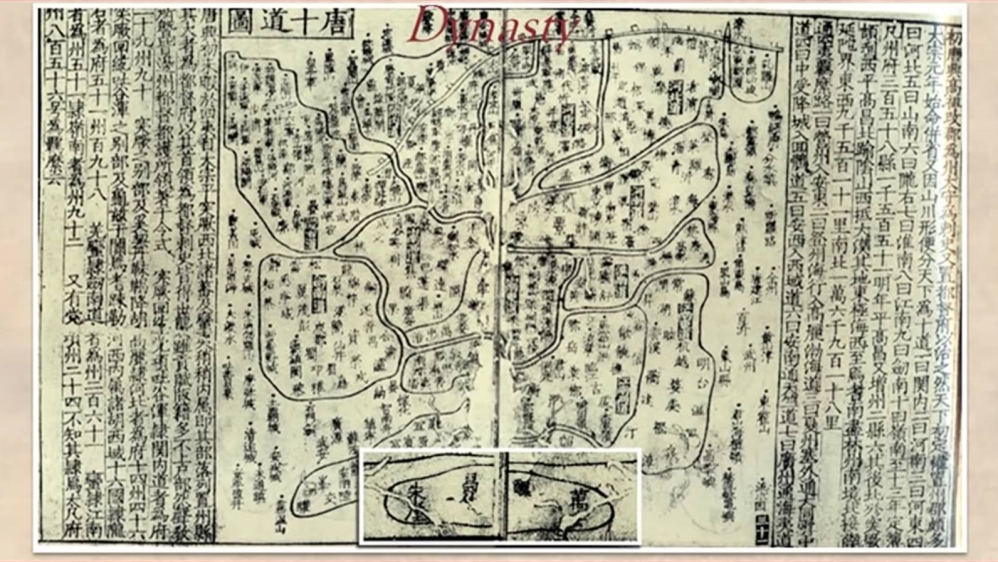
To further disprove China’s claim of “historical rights”, Carpio presented several ancient Chinese maps, dating as far back as 900 years ago, to the Song and Tang dynasties. All the maps showed that China’s southernmost territory was the island of Hainan.
Additionally, the 1947 Constitution of the Republic of China, also identified Hainan as the country’s southernmost part, raising questions over what would later emerge as the “nine-dash line” claim.
Regardless of the historical evidence, the reality is that China already “controls almost all the facts on the ground” and now has a “real and credible foothold” in the South China Sea, said Thomas Benjamin Daniel, senior foreign policy expert at Malaysia’s Institute of Strategic and International Studies (ISIS Malaysia).
Still, Daniel and other analysts urge China and other stakeholders in the region to abide by the principles and spirit of international law, to keep the peace and avoid situations that would lead “down a very dangerous road.”https://platform.twitter.com/embed/index.html?dnt=true&embedId=twitter-widget-0&frame=false&hideCard=false&hideThread=false&id=1280864233396285443&lang=en&origin=https%3A%2F%2Fwww.aljazeera.com%2Fnews%2F2020%2F7%2F16%2Fchinas-own-records-debunk-historic-rights-over-disputed-seas&theme=light&widgetsVersion=ed20a2b%3A1601588405575&width=550px
‘Nine-dash line’
For years, China has anchored its South China Sea claims on the “nine-dash line”, under which it lays claim to almost 90 percent of the disputed waters as far south as the coasts of Malaysian Borneo and Brunei. Images published by China showed the imaginary line almost hugging the shores of neighbouring countries.
Using the controversial line, Beijing has been ramping up activities in the South China Sea, starting with the Paracel Islands in the 1970s and 1980s, the Spratly Islands in the 1990s, and the Scarborough Shoal in the early 2000s.
Chester Cabalza, a security analyst and fellow at the National Defence University in Beijing, said China has been strategic in approaching the “South China Sea conundrum”. He added that the ongoing coronavirus pandemic has only provided the country even more opportunities to advance its interests.
“It seems like China is winning,” he told Al Jazeera, noting how it had militarised the disputed waters by developing rocks and atolls into islands in recent years.
ISIS Malaysia’s Daniel added that China “is playing the long game”, as it attempts to solidify and “normalise” its regional maritime position.
The Hague ruling
Beijing’s approach encountered resistance in 2016 with the landmark ruling of the Permanent Court of Arbitration in The Hague, which declared that China’s “historical rights” had no legal basis.
The ruling also said that the rocks and the partly submerged features on which China had built its naval and aerial facilities, were within the 200 nautical-mile (370.4km) Exclusive Economic Zone of the Philippines, as defined by the UN. An EEZ is an area where only the country it belongs to can fish and explore natural resources, although safe passage is granted to foreign vessels.
The court also established the EEZs of Malaysia, Brunei, Indonesia and Vietnam, boosting their positions in relation to China.
Furthermore, the court said China’s reclaimed areas and artificial islands were not entitled to a 12-nautical-mile (22.2km) territorial sea, because they were not habitable in their original form. As such, freedom of navigation and overflight are allowed in those areas.
China refused to participate in the arbitration case, dismissing the ruling as “null and void”.
It has also continued to expand its facilities in the South China Sea, including a three-km (1.86-mile) military-grade runway, barracks and radars on Mischief Reef, which is within the Philippine EEZ.
Maritime incidents have also escalated, with a Vietnamese boat being sunk in April, an incident blamed on a Chinese surveillance vessel. All eight fishermen survived. In June 2019, at least 22 Filipino fishermen were left to drown when their fishing boat was rammed under suspicious circumstances by an alleged Chinese militia boat. They were later rescued by Vietnamese fishermen.
On Tuesday, Malaysia revealed that Chinese coastguard and navy ships had encroached into its waters at least 89 times between 2016 and 2019. Earlier this year, there were also reports of a Chinese government survey ship “tagging” a Malaysian oil-exploration vessel within the Malaysian EEZ.
Cabalza, of the National Defence University in Beijing, described China’s behaviour as “schizophrenic”, as it tries to employ both confrontation and cooperation in dealing with its neighbours.
‘Code of Conduct’
As part of its effort to defuse tensions in the region, the Association of the Southeast Asian Nations (ASEAN) has been pressing China for years to reach agreement on the so-called Code of Conduct, which would govern countries’ behaviour in the South China Sea.
Differences between members – some of whom have no claim to the sea but are close to China – mean there has been little headway made.
Cabalza says the 10-nation bloc must present a more unified voice before it takes on China, which prefers bilateral negotiation, adding that ASEAN nations “should not become submissive” in negotiating an equitable deal with Beijing.
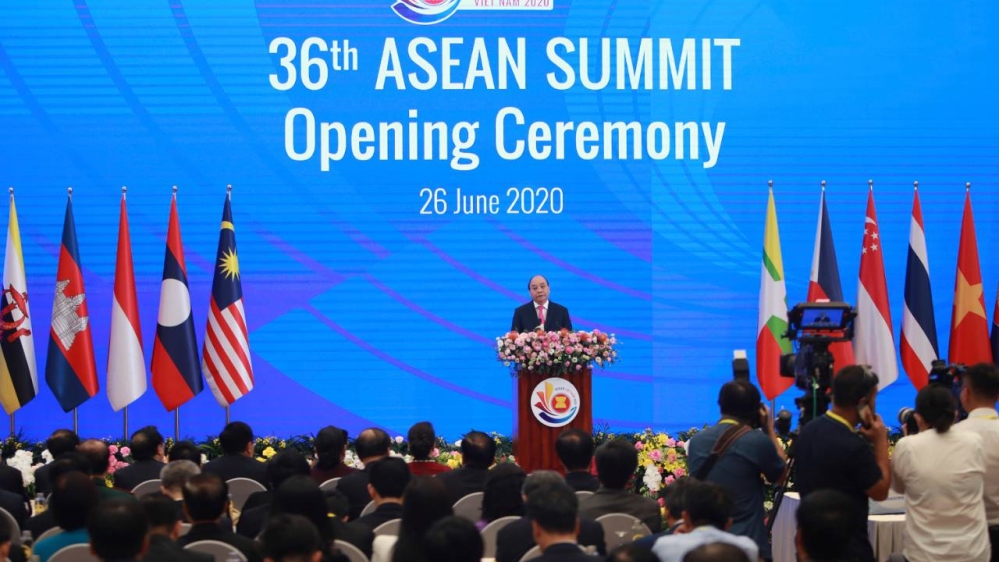
On June 26, ASEAN leaders held a virtual summit hosted by Vietnam, in which they declared that the 1982 United Nations oceans treaty should be the foundation for sovereign rights and entitlements in the South China Sea. However, the leaders were unable to make significant progress on the Code of Conduct.
Daniel says he is “not very optimistic” that an agreement can be reached soon to help ease tension.
“ASEAN is an association of 10 member states with different national and foreign priorities, that makes decisions based on consensus. Consensus here often means the lowest common denominator.”
In the absence of a consensus, the increased presence of the US in the South China Sea could prove a useful counterweight.
Daniel said the “marked increase” of US freedom of navigation operations and sharper rhetoric, show that Washington wants to remain relevant in the region.
On Wednesday, Pompeo issued another statement saying the US would “support countries all across the world who recognise that China has violated their legal territorial claims as well – or maritime claims as well.”
Meanwhile, Carpio said the world’s navies should be encouraged to sail through the South China Sea and exercise freedom of navigation – to deliver a message to Beijing that it does not control the area.
He also urged Malaysia, Brunei, Indonesia and Vietnam to help the Philippines in explaining that China’s claim of “historical right” is “totally false.”
“We should continue resorting to the rule of law, because we have no other choice,” Carpio said.
The China Coast Guard (CCG) and Royal Malaysian Navy (RMN) are involved in another standoff over hydrocarbon exploration in the South China Sea. China Coast Guard ship 5402 harassed a drilling rig and its supply ships operating just 44 nautical miles from Malaysia’s Sarawak State on November 19. Malaysia deployed a naval vessel in response, which continues to tail the 5402. The incident seems to have followed two weeks of increasing tensions between the CCG and RMN in the area.
By: Lt.j.g. Samuel Hardgrove, USS Barry, cpf.navy.mil
Posted November 21, 2020
USS Barry (DDG 52) transits waters of the Taiwan Strait, Nov. 20. (U.S. Navy/MCSN Molly Crawford)
SOUTH CHINA SEA – After conducting its fourth routine transit through the Taiwan Strait this year, Arleigh Burke-class guided-missile destroyer USS Barry (DDG 52) returned to South China Sea, Nov. 21, to conduct maritime security operations and promote peace and stability in the region.
“A continued presence in the South China Sea is vital in maintaining a free and open Indo-Pacific,” said Cmdr. Chris Gahl, Barry’s commanding officer. “The freedom of all nations to navigate in international waters is critically important. Barry’s transit of the Taiwan Strait yesterday ensured the right and instills the confidence of all nations to trade and communicate in the South China Sea.”
Increasingly complicated and tense developments related to the South China Sea are attracting international attention. Meanwhile, some information sources are trying to mislead the public in different countries as to the nature of the issue, its causes and actual developments. The Vietnam Peace and Development Foundation (VPDF) would like to introduce the collection of analysis by experts at the VPDF, with the hope of helping international friends and the people of various countries, including China, to have a better understanding of the issue.
President-elect Joe Biden is likely to mobilize the power of multilateral mechanisms to deal with the South China Sea and other issues involving China, analysts say.
“I expect President-elect Biden will be considerably more hawkish on China than some fear, the entire Democratic Party has shifted in that direction given China’s moves in the South China Sea, Xinjiang, Hong Kong,” Gregory Poling of the Center for Strategic and International Studies (CSIS), a U.S. think tank, told VnExpress International.
By Phuong Vu November 18, 2020 | 08:30 pm GMT+7 vnexpressChinese structures are pictured at Vietnam’s Spratly Islands in the East Sea, 2017. Photo by Reuters/Erik De Castro.Canadian defense minister Harjit Sajjan has made it clear that his nation is against militarization in the South China Sea.
“Canada opposes unilateral actions that have escalated tensions in the region and undermined stability in the South China Sea. We are against the threat or use of force, large-scale land reclamation, building outposts on disputed entities and using them for military purposes in the sea,” he said.


 Satellite photo shows North Island, part of the Paracel Islands in the East Sea, September 2017. Photo by Planet Labs via Reuters.Vietnam Thursday asked China to stop escalating tensions with actions that exacerbate violations of Vietnam’s sovereignty over the Hoang Sa and Truong Sa archipelagos.
![A ruling at The Hague in 2016 tossed out Beijing's 'nine-dash line' claim in the South China Sea [File: Andy Wong/AP]](https://www.aljazeera.com/wp-content/uploads/2020/07/6f6dc0f898114f2991eaabc9a19a814d_18.jpeg?resize=770%2C513)

 Chinese structures are pictured at Vietnam’s Spratly Islands in the East Sea, 2017. Photo by Reuters/Erik De Castro.Canadian defense minister Harjit Sajjan has made it clear that his nation is against militarization in the South China Sea.
 CVD
CVD 