Summit of ambitions

Emmanuel Macron’s summit meeting has given new momentum to investment in sustainable development and climate financing

MICHAEL JACOBS PARIS 24 JUNE 2023 2517 WORDS Inside Stories

North and South: French president Emmanuel Macron greets Barbadian prime minister Mia Mottley, whose Bridgetown Initiative inspired this week’s New Global Financing Pact Summit in Paris. Ludovic Marin/AFP via Getty Images

SHARE


When world leaders meet for their much-vaunted “summits,” what do they actually do? The question was posed by last week’s meeting in Beijing between US secretary of state Anthony Blinken and Chinese president Xi Jinping. The meeting lasted a whole thirty-five minutes. It was barely long enough to exchange diplomatic pleasantries, let alone to make progress on the various areas of US–China rivalry, in the South China Sea, on trade, technology and Ukraine. The actual negotiations had clearly happened elsewhere. The summit was mainly an exercise in symbolism: a handshake for the cameras and a carefully worded communique for the record.

Tiếp tục đọc “Summit of ambitions”

Nam Thủy Bắc Điều – tham vọng chuyển nước nhiều tranh cãi của Trung Quốc

VNE – Thứ ba, 30/8/2022, 19:00 (GMT+7)

Nam Thủy Bắc Điều – tham vọng chuyển nước nhiều tranh cãi của Trung Quốc

Nam Thủy Bắc Điều là đại dự án đưa nước từ các con sông miền nam tới miền bắc khô hạn của Trung Quốc, nhưng gây nhiều tranh cãi về môi trường.

Sơ đồ các tuyến dẫn nước trong dự án Nam Thủy Bắc Điều. Nguồn dữ liệu: Global Times

Hãng thông tấn Xinhua của Trung Quốc cho biết dự án Nam Thủy Bắc Điều, hệ thống vận chuyển nước lớn nhất thế giới, đưa nước từ miền nam lên miền bắc Trung Quốc xuyên qua lòng sông Hoàng Hà, được thử nghiệm thành công ngày 25/8. Đợt thử nghiệm được tiến hành nhằm đánh giá quá trình vận hành toàn bộ 155 đơn vị và đưa toàn bộ đại dự án vào hoạt động.

Tiếp tục đọc “Nam Thủy Bắc Điều – tham vọng chuyển nước nhiều tranh cãi của Trung Quốc”

Sản xuất, kinh doanh khốn đốn vì thiếu điện

Phương Nga 16:02 07/06/2023

Kinhtedothi – Tình trạng cắt điện luân phiên tại các địa phương đang khiến hoạt động sản xuất, kinh doanh của doanh nghiệp đảo lộn, ngưng trệ, chi phí đội lên cao… Để đảm bảo duy trì sản xuất, doanh nghiệp mong muốn ngành điện có phương án cân đối nguồn điện ưu tiên cho những ngành đặc thù.

Sản xuất ngưng trệ, đội chi phí

Những ngày này, anh Nguyễn Văn Chữ – Chủ tịch chuỗi thực phẩm sạch Organic Green như ngồi trên đống lửa khi nhìn vào lịch cắt điện luân phiên dày đặc. Bởi doanh nghiệp của anh hoạt động trong lĩnh vực sản xuất, chế biến và kinh doanh thực phẩm sạch, vì vậy nguồn điện rất cần cho các kho bảo quản thực phẩm tươi sống.

Anh Chữ chia sẻ, mặc dù cơ sở đã trang bị máy phát điện nhưng chỉ đủ duy trì một số hoạt động cơ bản và khu văn phòng, không đảm bảo được hệ thống cấp đông, bảo quản sản phẩm. Nếu mất điện lâu, doanh nghiệp có thiệt hại tới hàng chục tỷ đồng. Bởi mặt hàng thực phẩm tươi sống cần được bảo quản trong nhiệt độ thấp, nếu không được bảo quản sẽ bị giã đông và ảnh hưởng chất lượng.

Kho bảo quản thực phẩm tại chuỗi thực phẩm Organic Green

Ngoài ra, cũng vì mất điện, nên nhà máy sản xuất thức ăn chăn nuôi của doanh nghiệp này cũng phải tạm dừng hoạt động. Ngừng hoạt động khiến công ty không đủ hàng giao cho các đại lý. “Lịch cắt điện không phải chỉ luân phiên 1-2 tiếng, mà cắt cả ngày cả đêm, nên ảnh hưởng nghiêm trọng đến hoạt động sản xuất kinh doanh của Công ty” – anh Chữ bức xúc.

Tiếp tục đọc “Sản xuất, kinh doanh khốn đốn vì thiếu điện”

Ten hydroelectric reservoirs reach ‘dead level’

vietnamplus.vn

Hydroelectric reservoirs’ water levels are lower than annual averages, according to a May 10 report from Vietnam Electricity Group (EVN), and 10 are either close to or under the ‘dead level’.

Current water levels at Lai Chau hydroelectric reservoir. (Photo: kinhtedothi.vn)

Hanoi (VNS/VNA) – Hydroelectric reservoirs‘ water levels are lower than annual averages, according to a May 10 report from Vietnam Electricity Group (EVN), and 10 are either close to or under the ‘dead level’.

During the monitoring of the national electricity system in April and early May, prolonged intense heat waves across a wide area led to a significant increase in electricity consumption.

Even though the early May heatwave in the northern region only lasted a few days, it resulted in very high levels of power capacity and electricity consumption throughout the country.

For instance, the total power consumption on May 6, albeit a Saturday, reached 43,300 megawatts, while the total energy consumption reached 895 million kilowatts per hour (kWh).

Forecast for the upcoming months of May, June, and July indicates that the northern region will enter the peak period of hot weather, resulting in an increasing trend of electricity consumption, surpassing the planned operation of the national power system approved by the Ministry of Industry and Trade.

Meanwhile, the hydrological situation of reservoirs in recent months has experienced unfavourable fluctuations, significantly lower than the multi-year average.

Many hydropower reservoirs across the country are facing water shortages, with several hydropower reservoirs in the central and southern regions experiencing low water levels.

According to the EVN, 10 are close or under the “dead level”, which means that the total consumption is under 4,500 megawatts.

These reservoirs are Lai Chau, Tri An, Ialy, Ban Chat, Huoi Quang, Trung Son, Buon Kuop, Buon Tua Srah, Srepok 3, and Song Ba Ha.

The remaining electricity production in the entire system is 4.5 billion kWh, which is 1.6 billion kWh lower than the planned amount and 4.1 billion kWh lower than the same period in 2022.

According to the forecast by the National Centre for Hydro-Meteorological Forecasting (NCHMF), as El Nino is expected to occur in the later months of 2023, there will be higher temperatures and lower rainfall compared to the multi-year average, which will further contribute to a decreasing trend in water inflow to reservoirs during the second half of the year.

To deal with this situation, EVN asked its customers to tighten energy-saving consumption, especially in the noon and evening hours.

EVN recommends putting air conditioners at a reasonable level, between 26 to 27 degrees Celsius, and avoiding using multiple high-capacity electrical devices simultaneously./.

Earth Commission Releases First Major Study Quantifying Earth System Boundaries

Download PDF >>

Humans are taking colossal risks with the future of civilization and everything that lives on Earth, a new study published in the journal Nature shows. Developed by an international science commission engaging more than 40 researchers from across the globe, the scientists deliver the first quantification of safe and just Earth system boundaries on a global and local level for several biophysical processes and systems that regulate the state of the Earth system. 

For the first time, safety and justice for humanity on Earth is assessed and quantified for the same control variables regulating life support and Earth stability. Justice, assessed based on avoiding significant harm to people across the world, tightens the Earth system boundaries, providing even less available space for humans on Earth. This is extremely challenging, as the Earth Commission concludes that numerous of the safe boundaries are already crossed today. 

Convened by Future Earth, the Earth Commission is the scientific cornerstone of the Global Commons Alliance.

“We are in the Anthropocene, putting the stability and resilience of the entire planet at risk. This is why, for the first time, we present quantifiable numbers and a solid scientific foundation to assess the state of our planetary health not only in terms of Earth System stability and resilience but also in terms of human wellbeing and equity / justice.” said Prof. Johan Rockström, Earth Commission Co-Chair, lead author and Director of the Potsdam Institute for Climate Impact Research.  

Justice is a necessity for humanity to live within planetary limits. This is a conclusion seen across the scientific community in multiple heavyweight environmental assessments. It is not a political choice. Overwhelming evidence shows that a just and equitable approach is essential to planetary stability. We cannot have a biophysically safe planet without justice. This includes setting just targets to prevent significant harm and guarantee access to resources to people and for as well as just transformations to achieve those targets”  said co-author Prof. Joyeeta Gupta, Co-Chair of the Earth Commission, Professor of Environment and Development in the Global South at the University of Amsterdam and Professor of Law and Policy in Water Resources and Environment at IHE Delft Institute for Water Education.

Read the paper

Safe and just Earth system boundaries

Published: , Earth Commission , nature.com

Download PDF >>

Authors:

  • Johan Rockström
  • Joyeeta Gupta
  • Dahe Qin
  • Steven J. Lade
  • Jesse F. Abrams
  • Lauren S. Andersen
  • David I. Armstrong McKay
  • Xuemei Bai
  • Govindasamy Bala
  • Stuart E. Bunn
  • Daniel Ciobanu
  • Fabrice DeClerck
  • Kristie Ebi
  • Lauren Gifford
  • Christopher Gordon
  • Syezlin Hasan
  • Norichika Kanie
  • Timothy M. Lenton
  • Sina Loriani
  • Diana M. Liverman
  • Awaz Mohamed
  • Nebojsa Nakicenovic
  • David Obura
  • Daniel Ospina
  • Xin Zhang 
  • Nature (2023)Cite this article

    Abstract

    The stability and resilience of the Earth system and human well-being are inseparably linked1,2,3, yet their interdependencies are generally under-recognized; consequently, they are often treated independently4,5. Here, we use modelling and literature assessment to quantify safe and just Earth system boundaries (ESBs) for climate, the biosphere, water and nutrient cycles, and aerosols at global and subglobal scales. We propose ESBs for maintaining the resilience and stability of the Earth system (safe ESBs) and minimizing exposure to significant harm to humans from Earth system change (a necessary but not sufficient condition for justice)4. The stricter of the safe or just boundaries sets the integrated safe and just ESB. Our findings show that justice considerations constrain the integrated ESBs more than safety considerations for climate and atmospheric aerosol loading. Seven of eight globally quantified safe and just ESBs and at least two regional safe and just ESBs in over half of global land area are already exceeded. We propose that our assessment provides a quantitative foundation for safeguarding the global commons for all people now and into the future.

    Tiếp tục đọc “Earth Commission Releases First Major Study Quantifying Earth System Boundaries”

    Global warming to bring record hot year by 2028 – probably our first above 1.5°C limit

    Academic rigour, journalistic flair, The Conversation

    Lindsey Wasson/AP/AAP

    Published: May 17, 2023 11.01am BST

    Author

    1. Andrew KingSenior Lecturer in Climate Science, The University of Melbourne

    Disclosure statement

    Andrew King receives funding from the National Environmental Science Program.

    Partners

    University of Melbourne provides funding as a founding partner of The Conversation AU.

    View all partners

    CC BY NDWe believe in the free flow of information

    One year in the next five will almost certainly be the hottest on record and there’s a two-in-three chance a single year will cross the crucial 1.5℃ global warming threshold, an alarming new report by the World Meteorological Organization predicts.

    The report, known as the Global Annual to Decadal Climate Update, warns if humanity fails to reduce greenhouse gas emissions to net zero, increasingly worse heat records will tumble beyond this decade.

    So what is driving the bleak outlook for the next five years? An expected El Niño, on top of the overall global warming trend, will likely push the global temperature to record levels.

    Has the Paris Agreement already failed if the global average temperature exceeds the 1.5℃ threshold in one of the next five years? No, but it will be a stark warning of what’s in store if we don’t quickly reduce emissions to net zero.

    boy plays in fountain during heatwave
    One year in the next five will almost certainly be the hottest on record, bringing more heatwaves like this boy experienced in Britain around the time the last record was set. Andy Rain/EPA

    Read more: Two trillion tonnes of greenhouse gases, 25 billion nukes of heat: are we pushing Earth out of the Goldilocks zone?


    Warming makes record heat inevitable

    The World Meteorological Organization update says there is a 98% chance at least one of the next five years will be the hottest on record. And there’s a 66% chance of at least one year over the 1.5℃ threshold.

    Tiếp tục đọc “Global warming to bring record hot year by 2028 – probably our first above 1.5°C limit”

    Eight things the world must do to avoid the worst of climate change

    Latest IPCC report highlights key measures countries must take to avoid climate catastrophe

    Fiona Harvey, Environment editor, The Guardian Tue 21 Mar 2023 19.10 GMT

    The Intergovernmental Panel on Climate Change published the “synthesis report” of its sixth assessment report (AR6) on Monday. Eight years in preparation, this mammoth report encompasses the entire range of human knowledge of the climate system, compiled by hundreds of scientists from thousands of academic papers, and published in four parts, in August 2021, February and April 2022, and March 2023.

    The report drew together the most important findings – but also highlighted some key measures that governments and countries must take immediately if we are to avoid climate catastrophe:

    Reduce methane

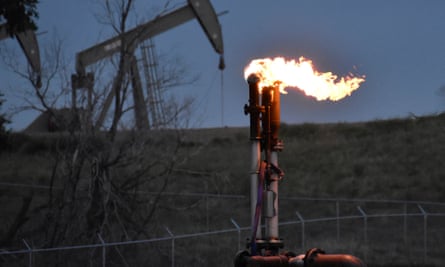
    A flare to burn methane from oil production in North Dakota, US.
    A flare to burn methane from oil production in North Dakota, US. Photograph: Matthew Brown/AP

    Sharp cuts to short-lived climate pollutants, methane chief among them, could cut more than half a degree from global heating. Produced from oil and gas operations and coalmines, and from animal husbandry and natural sources – such as decaying vegetation – methane is a greenhouse gas about 80 times more powerful than carbon dioxide. But it lasts only for about 20 years before degrading into CO2.

    Tiếp tục đọc “Eight things the world must do to avoid the worst of climate change”

    Rừng đang ‘chết’ bởi tay ai?

    .tuoitre.vn

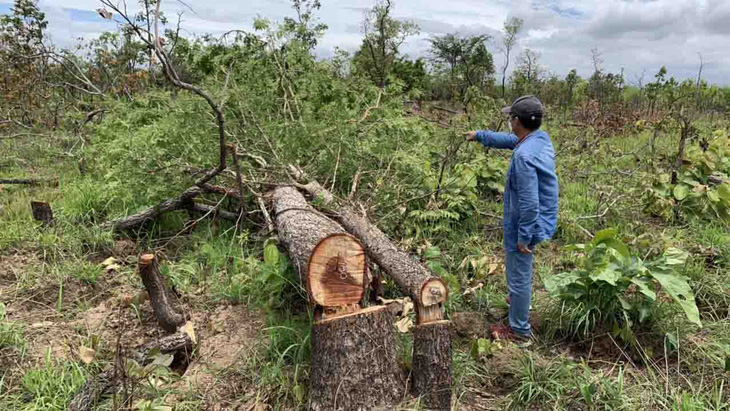
    TTO – Tôi viết những dòng này trong tâm trạng xót xa khi báo chí đưa tin lại có thêm 382ha rừng ở xã Ya Tờ Mốt, huyện Ea Súp, Đắk Lắk bị lâm tặc tàn phá.

    Rừng đang chết bởi tay ai? - Ảnh 1.

    Hiện trường vụ phá gần 400ha rừng tại xã Ya Tờ Mốt, Ea Súp, Đắk Lắk – Ảnh: TÂM AN

    382ha! Một con số không hề nhỏ chút nào! Một vụ phá rừng với diện tích khủng nhất tại địa phương. 

    Để phá được chừng ấy diện tích rừng, dù là rừng nghèo, “sản lượng gỗ thất thoát là không đáng kể vì rừng trồng và cây nhỏ, ít có giá trị về kinh tế” như một vị lãnh đạo Chi cục Kiểm lâm tỉnh từng nói, hẳn lâm tặc đã phải huy động một lực lượng lớn người, xe cộ và máy móc. 

    Chỉ riêng những âm thanh ghê rợn phát ra từ cưa máy, tiếng cây đổ ầm ầm cũng đủ khiến người yếu tim cảm thấy ớn lạnh.

    Họ đã ra tay tàn sát những thân cây vô tội, rừng Ea Tờ Mốt đau đớn và tuyệt vọng trước sự bạo tàn của con người. Một cảnh tượng rùng rợn diễn ra trong suốt hai tuần nhưng lại như tàng hình trước tai mắt của chính quyền địa phương và lực lượng kiểm lâm. 

    Có phải do thời tiết xấu, đêm tối, địa hình phức tạp và cả dịch bệnh COVID-19 nữa đã cản trở “tầm nhìn”, diện “phủ sóng” của nhà chức trách?

    Tiếp tục đọc “Rừng đang ‘chết’ bởi tay ai?”

    Cà phê Tây Nguyên – Những cơn khát

    tiasang – Võ Kiều Bảo Uyên

    Thiếu nước đang đe dọa cây cà phê ở Tây Nguyên, nhưng ở chiều ngược lại, cây cà phê cũng đẩy vùng đất này đối mặt với những cơn khát do các hoạt động canh tác thiếu bền vững.

    Cây cà phê héo rũ vì khát nước ở Đắk Lắk. Ảnh: Thành Nguyễn

    Vài tháng trong năm, khi cây cà phê chưa vào vụ, bà Hoa(*) sẽ rời quê nhà Đắk Lắk, Tây Nguyên xuống các thành phố phía Nam tìm các công việc thời vụ. Đây là cách một người phụ nữ 50 tuổi kiếm thêm thu nhập khi rẫy cà phê của gia đình bà mấy năm liền năng suất kém do thiếu nước.

    “Trong thôn nhiều người cũng đi. Phải đi, vì mình đâu có tin tưởng được là đến mùa sẽ có trái thu hoạch”, nông dân người Thái này nói trong một cuộc phỏng vấn hồi tháng 11 năm ngoái, khi đang làm bảo vệ cho một tòa nhà ở TP.HCM, cách quê bà hơn 300km.

    Hạn hán vào mùa khô năm 2020 làm 4 hecta cà phê của bà bị rụng bông, héo cành, không đậu trái. Nhưng đó chưa phải là thứ tệ nhất mà bà Hoa chứng kiến, toàn bộ miếng rẫy đã chết khát trong trận hạn hán lịch sử bốn năm trước đó.

    Tiếp tục đọc “Cà phê Tây Nguyên – Những cơn khát”

    Secretary-General’s remarks to the General Assembly on the request of an Advisory Opinion of the International Court of Justice on the Obligations of States in Respect of Climate Change [as delivered]

    29 March 2023

    Excellencies,

    Ladies and gentlemen,

    Earlier this month, the Intergovernmental Panel on Climate Change – IPCC – confirmed that humans are responsible for virtually all global heating over the last 200 years.

    The IPCC report shows that limiting temperature rise to 1.5-degree is achievable, but time is running out.

    The window is rapidly closing to avoid the worst impacts of the climate crisis. 

    Tiếp tục đọc “Secretary-General’s remarks to the General Assembly on the request of an Advisory Opinion of the International Court of Justice on the Obligations of States in Respect of Climate Change [as delivered]”

    Ten photographs that made the world wake up to climate change

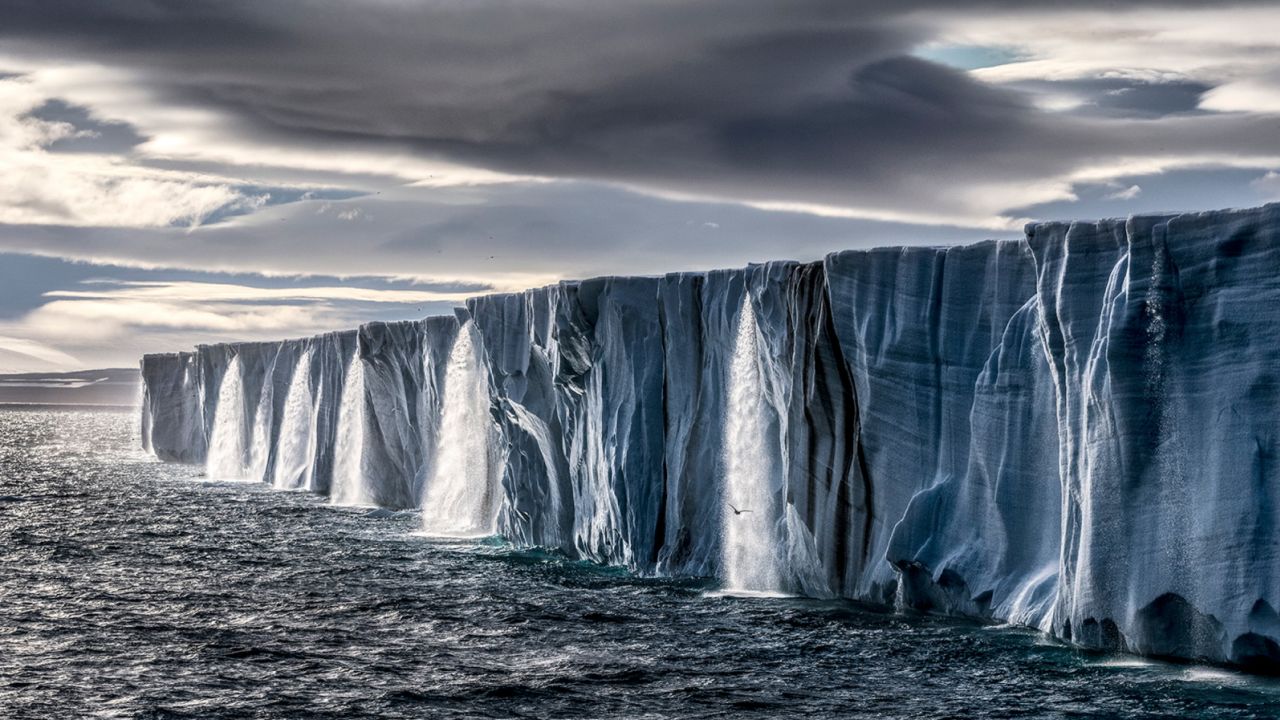
    Waterfalls pour off a Nordaustlandet ice cap in Svalbard, Norway, during an unusually warm summer in 2014.

    Waterfalls pour off a Nordaustlandet ice cap in Svalbard, Norway, during an unusually warm summer in 2014.Courtesy of Paul Nicklen

    Ten photographs that made the world wake up to climate change

    By Nell Lewis, CNN

    Published 4:34 AM EDT, Wed March 29, 2023

    Editor’s Note: Call to Earth is a CNN editorial series committed to reporting on the environmental challenges facing our planet, together with the solutions. Rolex’s Perpetual Planet initiative has partnered with CNN to drive awareness and education around key sustainability issues and to inspire positive action.CNN — 

    Water cascading from a wall of ice with gray brushstrokes of clouds overhead makes for a beautiful image – but the story behind it is one of destruction; Earth’s glaciers are melting at an unprecedented rate due to human-caused climate change.

    Canadian photographer Paul Nicklen remembers taking the photograph. It was August 2014, and temperatures in Svalbard, Norway, were unusually warm – hovering above 70 degrees Fahrenheit (21 degrees Celsius). As he came around the corner of an ice cap on Nordaustlandet island, he saw more than a dozen waterfalls pouring off its face.

    “It was the most poetic, beautiful scene I’d ever seen, but it was also haunting and scary,” he recalls. The picture came to symbolize the realities of climate change and became Nicklen’s best-selling fine art image. It appeared multiple times in National Geographic, was used by Al Gore in his climate talks, and graced the cover of Pearl Jam’s 2020 album “Gigaton,” the title of which refers to the unit used to calculate ice mass.

    Its beauty is central to its impact, believes Nicklen. “When you take a photograph that is in focus, properly exposed, moody and powerful, it creates a visceral reaction,” he says. “It has to be beautiful and engaging, it has to invite you in … and it has to have a conservation message.”

    In 2014, Nicklen, along with his wife Cristina Mittermeier, and later joined by Andy Mann (both also award-winning photographers), co-founded the nonprofit organization SeaLegacy, which uses film and photography to raise awareness of climate issues and help protect the planet.

    “Photography is one of the most effective and powerful tools we have to tell complex stories, like the story of climate change,” says Mittermeier.

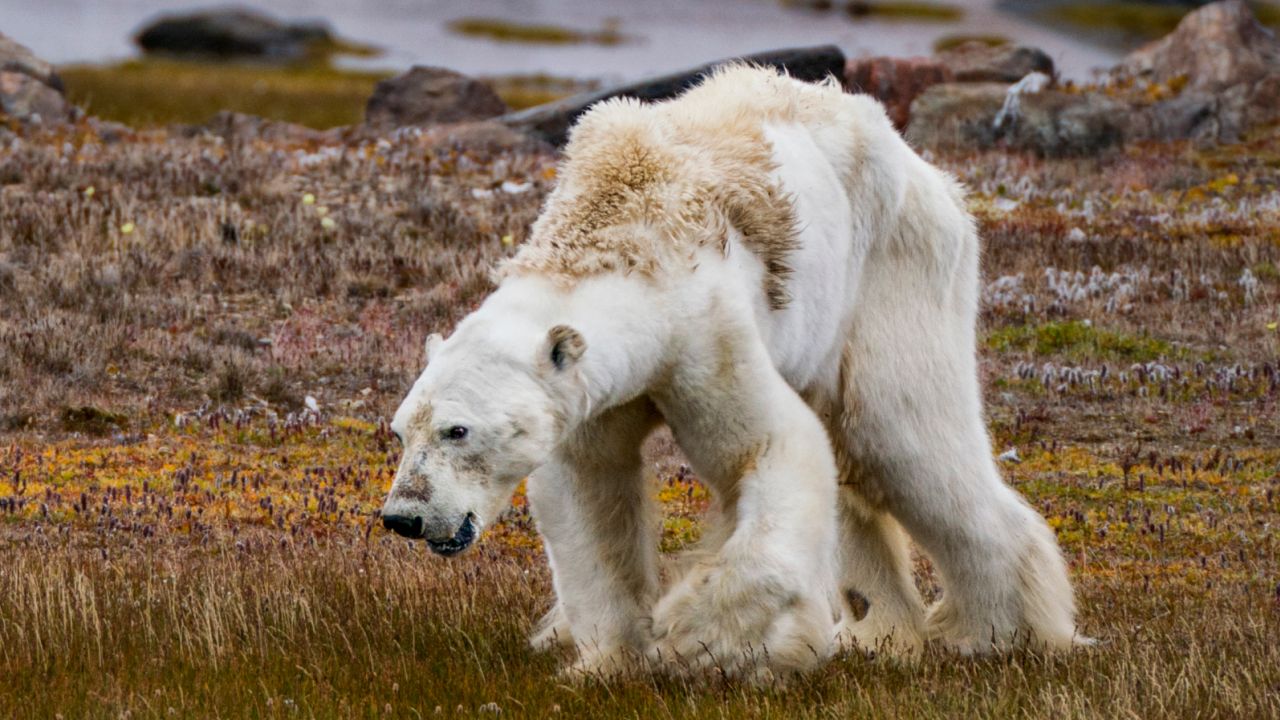
    An emaciated polar bear staggers on the search for food. The photograph, taken in 2017, received widespread attention, sparking a conversation around climate change.

    An emaciated polar bear staggers on the search for food. The photograph, taken in 2017, received widespread attention, sparking a conversation around climate change.Courtesy of Cristina Mittermeier

    Tiếp tục đọc “Ten photographs that made the world wake up to climate change”

    AR6 Synthesis Report: Climate Change 2023

    The Intergovernmental Panel on Climate Change (IPCC) is the United Nations body for assessing the science related to climate change.

    Summary for Policy Makers >>

    Longer Report >>

    More information >>

    Headline Statements

    Headline statements are the overarching conclusions of the approved Summary for Policymakers which, taken together, provide a concise narrative.

    ACurrent Status and Trends
    Observed Warming and its Causes
    A.1Human activities, principally through emissions of greenhouse gases, have unequivocally caused global warming, with global surface temperature reaching 1.1°C above 1850–1900 in 2011–2020. Global greenhouse gas emissions have continued to increase, with unequal historical and ongoing contributions arising from unsustainable energy use, land use and land-use change, lifestyles and patterns of consumption and production across regions, between and within countries, and among individuals (high confidence). {2.1, Figure 2.1, Figure 2.2}.
    Observed Changes and Impacts
    A.2Widespread and rapid changes in the atmosphere, ocean, cryosphere and biosphere have occurred. Human-caused climate change is already affecting many weather and climate extremes in every region across the globe. This has led to widespread adverse impacts and related losses and damages to nature and people (high confidence). Vulnerable communities who have historically contributed the least to current climate change are disproportionately affected (high confidence). {2.1, Table 2.1, Figure 2.2 and 2.3} (Figure SPM.1)
    Current Progress in Adaptation and Gaps and Challenges
    A.3Adaptation planning and implementation has progressed across all sectors and regions, with documented benefits and varying effectiveness. Despite progress, adaptation gaps exist, and will continue to grow at current rates of implementation. Hard and soft limits to adaptation have been reached in some ecosystems and regions. Maladaptation is happening in some sectors and regions. Current global financial flows for adaptation are insufficient for, and constrain implementation of, adaptation options, especially in developing countries (high confidence). {2.2, 2.3}
    Current Mitigation Progress, Gaps and Challenges
    A.4Policies and laws addressing mitigation have consistently expanded since AR5. Global GHG emissions in 2030 implied by nationally determined contributions (NDCs) announced by October 2021 make it likely that warming will exceed 1.5°C during the 21st century and make it harder to limit warming below 2°C. There are gaps between projected emissions from implemented policies and those from NDCs and finance flows fall short of the levels needed to meet climate goals across all sectors and regions. (high confidence) {2.2, 2.3, Figure 2.5, Table 2.2}
    BFuture Climate Change, Risks, and Long-Term Responses
    Future Climate Change
    B.1Continued greenhouse gas emissions will lead to increasing global warming, with the best estimate of reaching 1.5°C in the near term in considered scenarios and modelled pathways. Every increment of global warming will intensify multiple and concurrent hazards (high confidence). Deep, rapid, and sustained reductions in greenhouse gas emissions would lead to a discernible slowdown in global warming within around two decades, and also to discernible changes in atmospheric composition within a few years (high confidence). {Cross-Section Boxes 1 and 2, 3.1, 3.3, Table 3.1, Figure 3.1, 4.3} (Figure SPM.2, Box SPM.1)
    Climate Change Impacts and Climate-Related Risks
    B.2For any given future warming level, many climate-related risks are higher than assessed in AR5, and projected long-term impacts are up to multiple times higher than currently observed (high confidence). Risks and projected adverse impacts and related losses and damages from climate change escalate with every increment of global warming (very high confidence). Climatic and non-climatic risks will increasingly interact, creating compound and cascading risks that are more complex and difficult to manage (high confidence). {Cross-Section Box.2, 3.1, 4.3, Figure 3.3, Figure 4.3} (Figure SPM.3, Figure SPM.4)
    Likelihood and Risks of Unavoidable, Irreversible or Abrupt Changes
    B.3Some future changes are unavoidable and/or irreversible but can be limited by deep, rapid and sustained global greenhouse gas emissions reduction. The likelihood of abrupt and/or irreversible changes increases with higher global warming levels. Similarly, the probability of low-likelihood outcomes associated with potentially very large adverse impacts increases with higher global warming levels. (high confidence) {3.1}
    Adaptation Options and their Limits in a Warmer World
    B.4Adaptation options that are feasible and effective today will become constrained and less effective with increasing global warming. With increasing global warming, losses and damages will increase and additional human and natural systems will reach adaptation limits. Maladaptation can be avoided by flexible, multi-sectoral, inclusive, long-term planning and implementation of adaptation actions, with co-benefits to many sectors and systems. (high confidence) {3.2, 4.1, 4.2, 4.3}
    Carbon Budgets and Net Zero Emissions
    B.5Limiting human-caused global warming requires net zero CO2 emissions. Cumulative carbon emissions until the time of reaching net-zero CO2 emissions and the level of greenhouse gas emission reductions this decade largely determine whether warming can be limited to 1.5°C or 2°C (high confidence). Projected CO2 emissions from existing fossil fuel infrastructure without additional abatement would exceed the remaining carbon budget for 1.5°C (50%) (high confidence). {2.3, 3.1, 3.3, Table 3.1}
    Mitigation Pathways
    B.6All global modelled pathways that limit warming to 1.5°C (>50%) with no or limited overshoot, and those that limit warming to 2°C (>67%), involve rapid and deep and, in most cases, immediate greenhouse gas emissions reductions in all sectors this decade. Global net zero CO2 emissions are reached for these pathway categories, in the early 2050s and around the early 2070s, respectively. (high confidence) {3.3, 3.4, 4.1, 4.5, Table 3.1} (Figure SPM.5, Box SPM.1)
    Overshoot: Exceeding a Warming Level and Returning
    B.7If warming exceeds a specified level such as 1.5°C, it could gradually be reduced again by achieving and sustaining net negative global CO2 emissions. This would require additional deployment of carbon dioxide removal, compared to pathways without overshoot, leading to greater feasibility and sustainability concerns. Overshoot entails adverse impacts, some irreversible, and additional risks for human and natural systems, all growing with the magnitude and duration of overshoot. (high confidence) {3.1, 3.3, 3.4, Table 3.1, Figure 3.6}
    CResponses in the Near Term
    Urgency of Near-Term Integrated Climate Action
    C.1Climate change is a threat to human well-being and planetary health (very high confidence). There is a rapidly closing window of opportunity to secure a liveable and sustainable future for all (very high confidence). Climate resilient development integrates adaptation and mitigation to advance sustainable development for all, and is enabled by increased international cooperation including improved access to adequate financial resources, particularly for vulnerable regions, sectors and groups, and inclusive governance and coordinated policies (high confidence). The choices and actions implemented in this decade will have impacts now and for thousands of years (high confidence). {3.1, 3.3, 4.1, 4.2, 4.3, 4.4, 4.7, 4.8, 4.9, Figure 3.1, Figure 3.3, Figure 4.2} (Figure SPM.1; Figure SPM.6)
    The Benefits of Near-Term Action
    C.2Deep, rapid and sustained mitigation and accelerated implementation of adaptation actions in this decade would reduce projected losses and damages for humans and ecosystems (very high confidence), and deliver many co-benefits, especially for air quality and health (high confidence). Delayed mitigation and adaptation action would lock-in high-emissions infrastructure, raise risks of stranded assets and cost-escalation, reduce feasibility, and increase losses and damages (high confidence). Near-term actions involve high up-front investments and potentially disruptive changes that can be lessened by a range of enabling policies (high confidence). {2.1, 2.2, 3.1, 3.2, 3.3, 3.4, 4.1, 4.2, 4.3, 4.4, 4.5, 4.6, 4.7, 4.8}
    Mitigation and Adaptation Options across Systems
    C.3Rapid and far-reaching transitions across all sectors and systems are necessary to achieve deep and sustained emissions reductions and secure a liveable and sustainable future for all. These system transitions involve a significant upscaling of a wide portfolio of mitigation and adaptation options. Feasible, effective, and low-cost options for mitigation and adaptation are already available, with differences across systems and regions. (high confidence) {4.1, 4.5, 4.6} (Figure SPM.7)
    Synergies and Trade-Offs with Sustainable Development
    C.4Accelerated and equitable action in mitigating and adapting to climate change impacts is critical to sustainable development. Mitigation and adaptation actions have more synergies than trade-offs with Sustainable Development Goals. Synergies and trade-offs depend on context and scale of implementation. (high confidence) {3.4, 4.2, 4.4, 4.5, 4.6, 4.9, Figure 4.5}
    Equity and Inclusion
    C.5Prioritising equity, climate justice, social justice, inclusion and just transition processes can enable adaptation and ambitious mitigation actions and climate resilient development. Adaptation outcomes are enhanced by increased support to regions and people with the highest vulnerability to climatic hazards. Integrating climate adaptation into social protection programs improves resilience. Many options are available for reducing emission-intensive consumption, including through behavioural and lifestyle changes, with co-benefits for societal well-being. (high confidence) {4.4, 4.5}
    Governance and Policies
    C.6Effective climate action is enabled by political commitment, well-aligned multilevel governance, institutional frameworks, laws, policies and strategies and enhanced access to finance and technology. Clear goals, coordination across multiple policy domains, and inclusive governance processes facilitate effective climate action. Regulatory and economic instruments can support deep emissions reductions and climate resilience if scaled up and applied widely. Climate resilient development benefits from drawing on diverse knowledge. (high confidence) {2.2, 4.4, 4.5, 4.7}
    Finance, Technology and International Cooperation
    C.7Finance, technology and international cooperation are critical enablers for accelerated climate action. If climate goals are to be achieved, both adaptation and mitigation financing would need to increase many-fold. There is sufficient global capital to close the global investment gaps but there are barriers to redirect capital to climate action. Enhancing technology innovation systems is key to accelerate the widespread adoption of technologies and practices. Enhancing international cooperation is possible through multiple channels. (high confidence) {2.3, 4.8}

    El Nino sẽ khiến mùa hè năm nay nắng nóng, khô hạn diện rộng

    SKĐS – Chu kỳ La Nina chấm dứt để chuyển sang El Nino, dự báo mùa hè năm 2023 sẽ khắc nghiệt với khô hạn diện rộng, nắng nóng gay gắt với nền nhiệt cao.

    Nắng nóng đến sớm

    Theo Trung tâm Khí tượng thủy văn quốc gia nhận định, nắng nóng có khả năng xuất hiện cục bộ tại Tây Bắc Bộ, vùng núi phía Tây Bắc và Trung Trung Bộ trong nửa cuối tháng 3, đầu tháng 4/2023; riêng khu vực Nam Bộ có thể xuất hiện nhiều ngày nắng nóng, tập trung ở các tỉnh miền Đông Nam Bộ.

    Cao điểm nắng nóng năm nay xuất hiện từ tháng 6 đến tháng 8, chủ yếu ở Bắc Bộ và Trung Bộ, cường độ nắng nóng có thể gay gắt hơn so với cùng thời kỳ năm 2022. Trong các tháng này, nhiệt độ trên phạm vi cả nước phổ biến ở mức cao hơn khoảng 0,5 độ C so với trung bình nhiều năm cùng thời kỳ.

    Cũng theo cơ quan khí tượng, từ tuần sau, các hình thế thời tiết gây nắng nóng bắt đầu xuất hiện đó là vùng áp thấp nóng phía Tây mở rộng về nước ta, áp cao cận nhiệt đới ổn định và khối khí biển từ vịnh Bengal thổi tới theo hướng Tây Nam. Đối với Bắc Bộ và Trung Bộ, thời gian xảy ra nắng nóng dự báo khoảng từ ngày 21 đến ngày 24/03, còn Nam Bộ khả năng cường độ nắng sẽ tiếp tục duy trì.

    El Nino sẽ khiến mùa hè năm nay nắng nóng, khô hạn diện rộng - Ảnh 2.
    Mùa hè năm nay sẽ đến sớm và nắng nóng gay gắt hơn.

    Tiếp tục đọc “El Nino sẽ khiến mùa hè năm nay nắng nóng, khô hạn diện rộng”

    A translation problem – Americans use Fahrenheit, but many climate reports exclusively use Celsius.

    March 21, 2023
    By German Lopez, The Morning, New York Times
    A thermometer reading in Death Valley National Park.Roger Kisby for The New York Times
    Clear communication
    The world’s top scientists released their latest report yesterday warning that the Earth is on pace for severe damage from climate change. But many Americans might have a hard time understanding the report because the analysis, like those before it, talks about temperatures exclusively in Celsius.
    The U.S. is among just a few countries that still use Fahrenheit temperatures. And while Americans are a relatively small audience on a global scale, they are an important one for climate science: The U.S. has historically emitted more planet-warming greenhouse gases than any other country. Improving Americans’ understanding of the issue could be crucial to any push for changes.
    Tiếp tục đọc “A translation problem – Americans use Fahrenheit, but many climate reports exclusively use Celsius.”