Higher Education’s Donor Problem

time.com

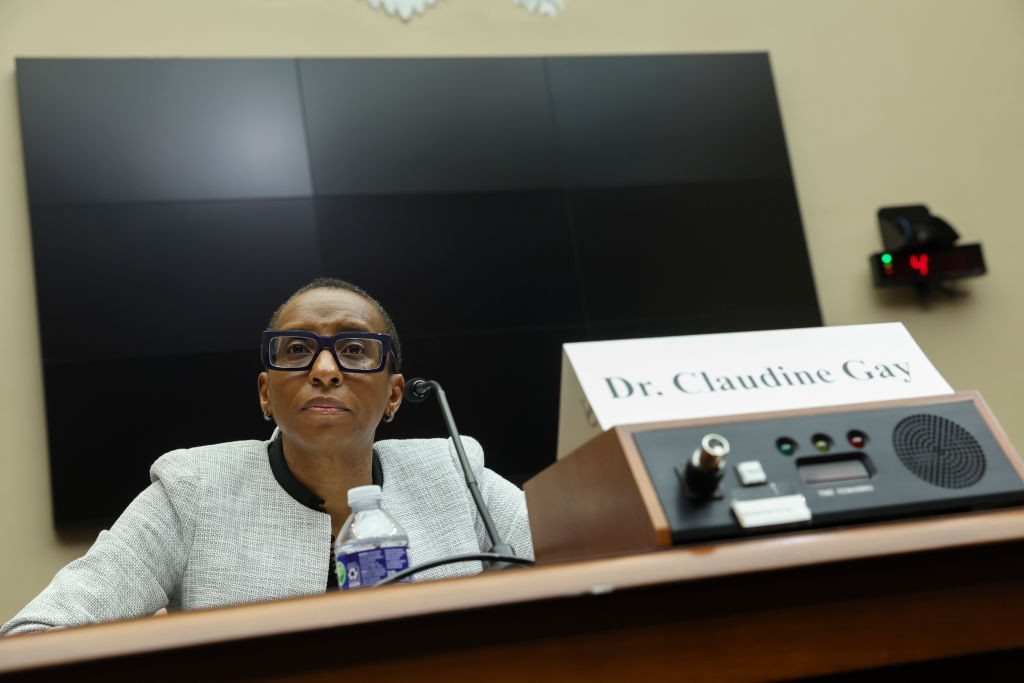
University Presidents Testify In House Hearing On Campus Antisemitism
Dr. Claudine Gay testifying before the House Education and Workforce Committee at the Rayburn House Office Building on December 05, 2023 in Washington, DC. She has since resigned from her post as President of Harvard University.Kevin Dietsch—Getty Images

BY NICHOLAS DIRKS JANUARY 11, 2024 2:02 PM EST

Dirks is currently the president of the New York Academy of Sciences and author of the new book CITY OF INTELLECT: The Uses and Abuses of the University

The end of Claudine Gay’s brief and turbulent presidency at Harvard has hardly put an end to controversies about elite university leadership and governance. Bill Ackman, the “activist” donor and Harvard graduate, is calling for further resignations from the Harvard Corporation, while baiting MIT’s President, Sally Kornbluth, with the Shakespearean query: “et tu?” Meanwhile, Mark Rowan, the board member who engineered the takedown of the University of Pennsylvania’s erstwhile president, Elizabeth McGill—the first of the Washington three to step down—has now been pressing his advantage in calling for major reforms of an academic nature at Penn. Philanthropy and academic freedom are colliding in ways that have the potential to undermine the true purpose and mission of our universities.

As much as these, and some other, donors have appeared to embody popular discontent with those at the pinnacle of higher education, it is easy to forget that not long ago the scandals around these universities had to do with donors who used their gifts as leverage to secure admission for their children, making visible the problematic relationship between some individual philanthropy and private interests. We all called for firewalls then but seem now to have forgotten those critiques of the relationship between private interests and higher education.

https://imasdk.googleapis.com/js/core/bridge3.612.0_en.html#goog_765384836

Tiếp tục đọc “Higher Education’s Donor Problem”

Israel-Gaza war is having a chilling effect on academic freedom

theconversation.com 

Listen to podcast https://shows.acast.com/60087127b9687759d637bade/65804f3a3c61a300185b8044

In the UK we’ve seen suspension of students and staff from their universities. We’ve seen cancelling of events … of student activities like protests and sit-ins. We’ve seen a few cases of students that were arrested. We’ve seen students whose visas are threatened to be revoked.

Across parts of academia, concerns are mounting that the Israel-Gaza war is having a chilling effect on academic freedom. In the second of two episodes of The Conversation Weekly exploring how the war is affecting life at universities, we speak to an Israeli legal scholar, now based in the UK, about the pressures that academics and students are facing to rein in their views about the war.https://embed.acast.com/60087127b9687759d637bade/65804f3a3c61a300185b8044

In the two months since the October 7 Hamas attack on Israel and subsequent Israeli war on Gaza, Neve Gordon is worried that there’s been a major clampdown on academic freedom in the US, Europe and Israel.

After teaching for 17 years in southern Israel, Gordon moved to the UK in 2016 and he’s now a professor of human rights and humanitarian law at Queen Mary University of London. His research looks at the laws of war with a special focus on Israel-Palestine, and on definitions of antisemitism.

He’s also the vice-president at the British Society for Middle Eastern Studies and chair of its committee on academic freedom. In this role, he’s been following the impact of the conflict on free speech at universities, and recently hosted an international webinar on the issue.

In the UK we’ve seen suspension of students and staff from their universities. We’ve seen cancelling of events … of student activities like protests and sit-ins. We’ve seen a few cases of students that were arrested. We’ve seen students whose visas are threatened to be revoked.

In Israel, Gordon told us he was aware of 113 cases in Israel of students and staff who have been suspended or dismissed, and at least ten students who have been arrested for their criticism of Israel’s attack on Gaza. “We have several students sitting behind bars for Facebook or tweets that basically express empathy for the suffering of the Palestinians,” he says.


Read more: American universities in the spotlight over reaction to Israel-Gaza war – podcast


Meanwhile, in Germany, many protests supporting Palestinian rights have been banned and Gordon says colleagues in Germany have told him that “the situation is untenable”.

All this, Gordon says, is having a chilling effect across academia.

I’m getting phone calls from friends in different universities in different countries saying that they want to cancel their Israel-Palestine course for next semester because they’re afraid that things that they will say in class can be interpreted by students as antisemitic.

Listen to the full interview with Neve Gordon on The Conversation Weekly podcast, where you can also listen to the first of our two episodes on the way the Israel-Gaza war is affecting life at universities, focusing on what’s been happening at one American public university.

Quyền tự do học thuật trong giáo dục đại học – Right to Academic Freedom

Viện Nghiên Cứu Lập Pháp UBTVQH

TS. BÙI TIẾN ĐẠT Khoa Luật, Đại học quốc gia Hà Nộ

Tóm tắt: Tự do học thuật được quan niệm rộng rãi là một phần của quyền tự do ngôn luận vốn đã được luật nhân quyền quốc tế và các Hiến pháp Việt Nam ghi nhận. Tuy nhiên, vấn đề này còn ít được quan tâm nghiên cứu và chú trọng đảm bảo trong thực tiễn ở Việt Nam. Luật Giáo dục đại học 2012 sửa đổi, bổ sung năm 2018 đã bổ sung điều khoản về tự chủ học thuật của cơ sở giáo dục đại học và giảng viên. Bài viết này phân tích tầm quan trọng thiết yếu của quyền tự do học thuật trong giáo dục đại học từ kinh nghiệm thế giới và từ đó đưa ra một số khuyến nghị nhằm bảo đảm quyền này ở Việt Nam.

Từ khóa: Tự do học thuật, tự do ngôn luận, Luật Giáo dục đại học, cơ sở giáo dục đại học, giảng viên.

Abstract: Freedom of academics is universally conceptualised as part of right to freedom of expression, which has been well-recognised by international law on human rights and the Constitutions of Vietnam. However, it can be observed that little attention is put to review and assure for implementation in Vietnam. The 2018 amenments of Law on Higher Education of 2012 record supplemental provisions on academic autonomy of universities and lecturers. This article provides analysis of the essential inportance of the right to freedom of academic in higher education and also provides recommendations for assurance of this right in Vietnam.

Keywords: Academic freedom, freedom of expression, Law on Higher Education; university; lecturer.

Năm 2013, các thảo luận về Đề án đổi mới giáo dục được cho là sẽ “làm lay chuyển nền giáo dục”, đã bàn tới chủ đề tự do học thuật[1]. Luật Giáo dục đại học 2012 trong lần sửa đổi, bổ sung năm 2018 gần đây đã bổ sung điều khoản về tự chủ học thuật của cơ sở giáo dục đại học và giảng viên. Theo đó, cơ sở giáo dục đại học có “quyền tự chủ trong học thuật, trong hoạt động chuyên môn”[2] và giảng viên có quyền “độc lập về quan điểm chuyên môn trong giảng dạy, nghiên cứu khoa học”[3].  Mặc dù các điều khoản này không dùng thuật ngữ “tự do học thuật” nhưng vẫn thể hiện tinh thần của quyền này. Sửa đổi vừa nêu góp phần nâng cao quyền tự do học thuật của cả cơ sở giáo dục đại học và giảng viên. Vậy quyền tự do học thuật là gì? Vai trò của nó trong cải cách giáo dục ra sao? Cần lưu ý vấn đề gì nhằm bảo đảm quyền tự do học thuật trong giáo dục đại học ở Việt Nam?

1. Quan niệm chung và vai trò của tự do học thuật trong cải cách giáo dục trên thế giới

Quan niệm về quyền tự do học thuật

Lịch sử loài người đã trải qua những bài học quý báu cho thấy sự cần thiết của tự do học thuật (academic freedom) trong phát triển xã hội. Socrates (470-399 TCN) đã phải chịu án tử hình vì những tư tưởng của ông bị cho là đầu độc giới trẻ Athens. Galileo (1564-1642) đã phải chịu án chung thân vì ủng hộ thuyết nhật tâm của Copernic. Trong thời hiện đại, nhiều giáo viên từng bị sa thải vì giảng dạy về thuyết tiến hóa của Darwin[4].

Về lịch sử giáo dục, tự chủ đại học được áp dụng tại Đại học Humboldt (lấy tên của Wilhelm von Humboldt) để cải cách đại học kiểu Napoleon thành đại học nghiên cứu[5]. Quyền tự do học thuật được hiểu là bộ phận của quyền tự do ngôn luận và cần được bảo vệ ở mọi cấp độ giáo dục[6]. Đây là một quyền phổ quát của giới học giả[7]. Ở Hoa Kỳ, quyền này được bảo vệ bởi Tu chính án thứ nhất của Hiến pháp. Ở nhiều nơi trên thế giới với nền giáo dục, khoa học phát triển, “tự do học thuật tồn tại trong môi trường giáo dục đại học (GDĐH) như một lẽ đương nhiên”[8]. Năm 1997, UNESCO công bố bản Khuyến nghị về vai trò của giảng viên đại học, trong đó dành sự quan tâm rất lớn đến vấn đề tự do học thuật[9].

Tiếp tục đọc “Quyền tự do học thuật trong giáo dục đại học – Right to Academic Freedom”

Professor accused of selling secrets to China sues the U.S. government

USnews.com

Temple Prof Seeks Reinstatement of Damage Claims Against FBI

A Temple University physicist who was charged with sharing scientific technology with China only for the case to collapse before trial and be dismissed by the Justice Department is asking a federal appeals court to reinstate his claims for damages against the FBI agent who investigated him.

By Associated Press

The Associated Press

FILE – An American flag flies outside the Department of Justice in Washington, March 22, 2019. A Temple University physicist who was charged with sharing scientific technology with China only for the case to collapse before trial and be dismissed by the Justice Department is asking a federal appeals court to reinstate his lawsuit against the FBI agent who investigated him. Lawyers for Xiaoxing Xi and his wife say in a brief filed Monday with a Philadelphia-based appeals court that a judge erred last year when he dismissed their claims for damages. (AP Photo/Andrew Harnik, File) THE ASSOCIATED PRESS

By ERIC TUCKER, Associated Press

WASHINGTON (AP) — A Temple University physics professor who was charged with sharing scientific technology with China only for the case to collapse before trial and be dismissed by the Justice Department asked a federal appeals court on Monday to reinstate his clams for damages against the U.S. government.

Tiếp tục đọc “Professor accused of selling secrets to China sues the U.S. government”

Why some researchers struggle to escape the ivory tower

theconversation.com

Academics are increasingly expected to share their research widely beyond academia. However, our recent study of academics in Australia and Japan suggests Australian universities are still very much focused on supporting the production of scholarly outputs. They offer relatively limited support for researchers’ efforts to engage with the many non-academics who can benefit from our research.

One reason engagement is expected is that government, industry and philanthropic sources fund research. And when academics share their research with the public, industry and policymakers, this engagement is good for the university’s reputation. It can also lead to other benefits such as research funding.


Tiếp tục đọc “Why some researchers struggle to escape the ivory tower”

Unfolding various academic mobility experiences of Southeast Asian women

Pages 1-19 | Received 19 Dec 2016, Accepted 17 Aug 2017, Published online: 08 Nov 2017

http://www.tandfonline.com/

This article draws on data from a qualitative research study undertaken with the main aim of investigating the issue of the gender dimension of the academic mobility of Southeast Asian women. Our research describes Southeast Asian women’s experiences of mobility, narrating why they choose to be mobile, how the experience of going abroad was responded to and/or rejected by their family, how they experienced life in a different country, and what evaluations they make about these experiences in personal, familial, and professional terms. The article stresses the need to improve the understanding of the factors that are still determining the chances of women to be mobile and obtain fruitful gains from these experiences. For this to be attained, the article follows through an intersectional approach to mobility, considering it is of much use as it allows to comprehend that the disadvantages associated with gender are cumulative, multi-layered, resulting from effects of several variables, including of the emotional, social, economic, and political contexts. Tiếp tục đọc “Unfolding various academic mobility experiences of Southeast Asian women”