Tóm lược Cộng đồng Kinh tế ASEAN (AEC)

29/04/2014 – TTWTO

GIỚI THIỆU CHUNG VỀ AEC

Lịch sử hình thành:

– Tại Tuyên bố Tầm nhìn ASEAN 2020 thông qua tháng 12/1997, các nhà lãnh đạo ASEAN đã định hướng phát triển ASEAN thành một Cộng đồng ASEAN.

– Ý tưởng đó được tái khẳng định tại Hội nghị cấp cao ASEAN 9 tháng 10/2003, thể hiện trong Tuyên bố Hoà hợp ASEAN II (hay còn gọi là Tuyên bố Ba-li II). Theo đó, ASEAN nhất trí hướng đến mục tiêu hình thành một cộng đồng ASEAN vào năm 2020 với 3 trụ cột chính là hợp tác chính trị – an ninh (Cộng đồng an ninh ASEAN – ASC), hợp tác kinh tế (Cộng đồng Kinh tế ASEAN – AEC) và hợp tác văn hoá xã hội (Cộng đồng Văn hoá Xã hội ASEAN – ASCC).

– Tại Hội nghị Cấp cao ASEAN lần thứ 12 tháng 1/2007 các nước ASEAN đã quyết định rút ngắn thời hạn hình thành Cộng đồng Kinh tế ASEAN từ 2020 xuống 2015. Tiếp tục đọc “Tóm lược Cộng đồng Kinh tế ASEAN (AEC)” →

Hỏi đáp về các Hiệp định Thương mại Tự do (FTA)

01/12/2015

TTWTO – Hiệp định Thương mại tự do (FTA) là kết quả chính thức của một quá trình thương lượng giữa hai hay nhiều quốc gia ký kết nhằm hạ thấp hoặc loại hẳn các rào cản đối với thương mại. Một FTA thường bao gồm những vấn đề quy định về thuế nhập khẩu, hạn ngạch và lệ phí đối với hàng hóa/dịch vụ được giao dịch giữa các thành viên ký kết FTA nhằm cho phép các nước mở rộng tiếp cận thị trường của nhau.

Hiệp định Thương mại Tự do (FTA) là gì?

Trả lời: Cho tới nay đã có rất nhiều các tổ chức và quốc gia khác nhau đưa ra các khái niệm về FTA cho riêng mình. Điều này thể hiện những quan điểm khác nhau về FTA cũng như sự phát triển đa dạng của các quốc gia. Tuy nhiên theo cách hiểu chung nhất, FTA là một thỏa thuận giữa hai hay nhiều quốc gia hoặc vùng lãnh thổ nhằm mục đích tự do hóa thương mại về một hoặc một số nhóm mặt hàng nào đó bằng việc cắt giảm thuế quan, có các quy định tạo thuận lợi cho trao đổi hàng hóa, dịch vụ và đầu tư giữa các thành viên. Ngày nay, FTA còn có cả các nội dung mới xúc tiến và tự do hóa đầu tư, chuyển giao công nghệ, lao động, môi trường… Tiếp tục đọc “Hỏi đáp về các Hiệp định Thương mại Tự do (FTA)” →

Nuclear waste storage sites in rock salt may be more vulnerable than previously thought

Date: November 26, 2015

Source:University of Texas at Austin

Summary:Research shows that rock salt, used by Germany and the United States as a subsurface container for radioactive waste, might not be as impermeable as thought.

Research from The University of Texas at Austin shows that rock salt, used by Germany and the United States as a subsurface container for radioactive waste, might not be as impermeable as thought or as capable of isolating nuclear waste from groundwater in the event that a capsule or storage vessel failed.

sciencedaily – A team of researchers from the university has used field testing and 3-D micro-CT imaging of laboratory experiments to show that rock salt can become permeable. Their findings, published in the Nov. 27 issue of Science, has implications for oil and gas operations, and, most notably, nuclear waste storage. The team includes researchers from the university’s Cockrell School of Engineering and Jackson School of Geosciences.

“What this new information tells us is that the potential for permeability is there and should be a consideration when deciding where and how to store nuclear waste,” said Maša Prodanovic, assistant professor in the Department of Petroleum and Geosystems Engineering. “If it’s an existing nuclear waste storage site, you may want to re-evaluate it with this new information.”

Salt generally blocks fluid flow at shallow depth, a feature that allows oil reservoirs to form. But scientists have long suspected that salt becomes permeable at greater depth. Jackson School professor James E. Gardner confirmed this theory through laboratory experiments with synthetic rock salt. Tiếp tục đọc “Nuclear waste storage sites in rock salt may be more vulnerable than previously thought” →

Communist China’s Barbaric Consistency – Xi Jinping is no reformer.

Guy Sorman
December 1, 2015

Photo by WPA Pool/Getty Images

city-journal: Western adoration of China is a chronic and profound sickness, proof of which can be found in the non-reaction to the continued incarceration of Liu Xiaobo, the Nobel Prize winner imprisoned for his democratic writings. Not a single renowned European or American intellectual has demanded his freedom, and the same goes for our governments. But more damning proof comes from the positive reaction of many in the West to the Chinese government’s recent decision to authorize families to have two children instead of just one. We should decry any government that presumes to decide how many children a family can have. The Chinese people are just like you and me—they are no less concerned than we are with freedom and the right to decide the size of their own families.

There is nothing liberal about China’s new family policy. It simply recognizes the mistake made by Deng Xiaoping, who imposed the one-child policy in 1979. The consequences of this system are being felt today, as aging parents are left without family support in a country with no pension system outside the cities. In the past, children would share the responsibility of caring for their elderly parents. Another tragic consequence is that families only allowed one child have preferred to have boys, which has led to an enormous imbalance between the sexes. China currently “lacks” some 50 million women—victims either of sex-selective abortion or infanticide—which has made marriage impossible for the equivalent number of men. This disequilibrium has in turn led to aggressive competition between men and widespread prostitution. Tiếp tục đọc “Communist China’s Barbaric Consistency – Xi Jinping is no reformer.” →

Laos: Save the Mekong calls for cancellation of Don Sahong Dam citing far-reaching consequences on food & livelihood security

Author: Save the Mekong, Published on: 30 November 2015

“Save the Mekong Statement Calling for Cancellation of The Don Sahong Dam”, 25 Nov 2015

business-humanrights: The Save the Mekong Coalition urges Mekong governments to take immediate action to cancel the Don Sahong Dam before construction begins at the end of November.

The Government of Laos have announced that they intend to commence construction on the Don Sahong Dam, in Southern Laos, despite strong opposition to the project from local communities across the Mekong region, an absence of regional agreement and no resolution to the 1995 Mekong Agreement’s Prior Consultation process.

The Don Sahong Dam poses a significant transboundary risk to the Mekong’s valuable and irreplaceable inland fisheries. Blocking the Hou Sahong Channel will permanently disrupt fish migration and irreversibly alter the area’s complex ecosystem, with far-reaching consequences for food and livelihood security throughout the region…

Read the full post here

Tiến trình giảm thuế theo các cam kết mà Việt Nam đã ký kết

Cập nhật ngày 20/07/2015 – 08:11:34

KTVDB – Bài viết tổng hợp tiến trình giảm thuế theo các cam kết mà Việt Nam đã ký kết trong thời gian qua, khái quát các mức giảm thuế Việt Nam đã, đang và sẽ thực hiện trong thời gian tới.

Cam kết WTO

Việt Nam cam kết loại bỏ dần thuế nhập khẩu đối với nông sản trong vòng 3-5 năm kể từ khi ngày chính thức gia nhập WTO (ngày 1/11/2007). Việc giảm thuế đã hoàn thành trong giai đoạn 2009-2012 với nhiều loại sản phẩm khác nhau.

Về sản phẩm thuộc phân ngành nông nghiệp: Thuế suất áp dụng trung bình đối với ngành nông nghiệp là 23.5% cho giai đoạn đầu mới gia nhập và thuế suất cuối cùng là 20%. Cam kết cắt giảm thuế trong giai đoạn từ 3-5 năm đối với tổng số 1118 dòng thuế. Tiếp tục đọc “Tiến trình giảm thuế theo các cam kết mà Việt Nam đã ký kết” →

Don’t Panic — End Poverty

Hans Rosling asks: Has the UN gone mad?

The United Nations just announced their boldest goal ever: To eradicate extreme poverty for all people everywhere, already by 2030.

Gapminder – Looking at the realities of extremely poor people the goal seems impossible. The rains didn’t fall in Malawi this year. The poor farmers Dunstar & Jenet, gather a tiny maize harvest in a small pile on the ground outside their mud hut. But Dunstar & Jenet know exactly what they need to break the vicious circle of poverty. And Hans Rosling shows how billions of people have already managed. This year’s “hunger season” may very well be Dunster’s & Jenet’s last.

Up-to-date statistics show that recent global progress is ‘the greatest story of our time – possibly the greatest story in all of human history. The goal seems unrealistic to many highly educated people because their worldview is lagging 60 years behind reality.

About the film

The visualizations are based on original graphics and stories by Gapminder. The data sources are listed here.

The Dollar Street project, featured in this film, will launch later this year.
Learn more and stay tuned here.

This film follows the previous award-winning BBC productions Don’t Panic – The Facts About Population and The Joy Of Stats.

The film was produced by Wingspan Productions and broadcasted on BBC TWO on September 23, 2015. Director & Producer: Dan Hillman. Executive Producer: Archie Baron. ©Wingspan Productions for BBC, 2015

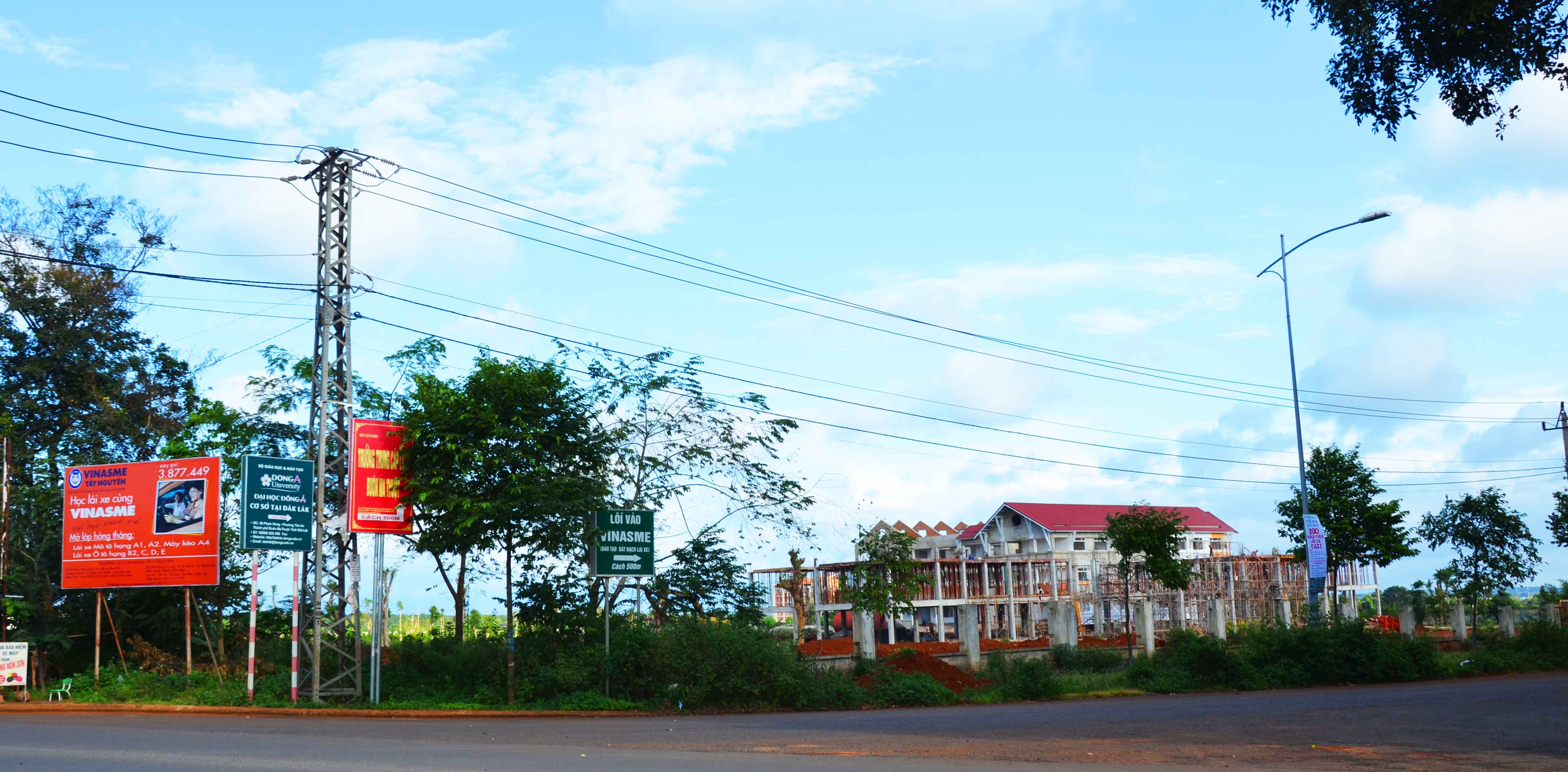
Loạn đào tạo nghề ở Đắk Lắk: Học rồi chẳng biết đi đâu?!

TP – Nhiều trường trung cấp, cao đẳng được Nhà nước đầu tư lớn, nhưng tuyển sinh không ra vì kém chiêu trò quảng cáo, khuyến mãi so với các nhóm “cò” biến giáo dục thành miếng mồi béo bở để làm giàu. Hàng vạn thanh niên lạc trong mê hồn trận của các lớp liên kết!

Loạn đào tạo nghề ở Đắk Lắk: Học rồi chẳng biết đi đâu?! - ảnh 1
Các trường của Hà Nam và Quảng Ngãi tuyển sinh tại Đắk Lắk

 
Đua nhau “săn lùng” thí sinh

Mười năm trước, giai đoạn đầu của chủ trương “xã hội hóa giáo dục”, các trường nghề của những nhà giáo tâm huyết tiên phong ra đời như làn gió mới của ngành giáo dục, đáp ứng nhu cầu học nghề trong xã hội. Nhưng sau đó chẳng bao lâu, tình hình đã biến tướng với sự xuất hiện của đủ các loại liên kết dạy nghề, lợi dụng kẽ hở để lách luật, trốn thuế, bán bằng thu lãi khiến chất lượng đào tạo ngày càng xuống cấp, không còn đáng tin cậy . Tiếp tục đọc “Loạn đào tạo nghề ở Đắk Lắk: Học rồi chẳng biết đi đâu?!” →

Liên kết đào tạo kiểu … đi về đâu hỡi em !

Mấy năm gần đây, trên địa bàn tỉnh Đắk Lắk đã xảy ra nhiều vụ khiếu nại về đào tạo nghề, có nguyên nhân từ việc quá nhiều trường nghề được cấp phép đào tạo đủ các ngành, nhưng lại không chịu sự giám sát chặt chẽ nào về chất lượng dạy và học. Báo Tiền Phong đã được cơ quan chức năng cung cấp các thông tin về tệ nạn “loạn đào tạo” nhức nhối này. 

Nhiều trường nghề xây san sát

Giáo dục ” đánh bắt xa bờ”

Một trong những trường để xảy ra nhiều sai phạm nghiêm trọng, tai tiếng hơn cả, là trường trung cấp Y dược Hà Nam (YDHN). Được cấp phép mở phân hiệu II tại Đắk Lắk từ tháng 1/2013, văn phòng bé tí tựa lưng ngay vào tường rào của trường Đại học Tây Nguyên, ban đầu YDHN tự giới thiệu tuyển sinh 2 ngành Y sĩ, Điều dưỡng với quy mô tăng dần, từ 250 học viên (HV) năm 2012-2013, đến 1.200 học viên năm 2015-2016. Tuy nhiên, dù thiếu thốn cả đội ngũ giáo viên lẫn phòng ốc, trang thiết bị, chỉ tới tháng 5/2014, YDHN đã có báo cáo lên Sở GD-ĐT Đắk Lắk là ngay trong năm 2012-2013 YDHN đã tuyển sinh và đào tạo tới 1.300 HV, và ” nhân tiện” đề nghị Sở tham mưu cho UBND tỉnh cho phép trường ” được gửi đào tạo 60 chỉ tiêu đại học chính quy, gồm 50 bác sĩ đa khoa và 10 dược sĩ đại học. Tiếp tục đọc “Liên kết đào tạo kiểu … đi về đâu hỡi em !” →

Obama’s nuclear play

Allen Greenberg | Nov 29, 2015

Here’s a nice bit of irony:

Energybiz – James Hansen, the scientist who was first to raise the alarm about climate change, fueling calls to shut down coal-fired power plants, will later this week urge the expansion of nuclear power.

In other words, depending on how things work out, utilities that were forced to close down or convert their coal-powered operations because of Hansen’s work, could soon find themselves thanking him for encouraging policymakers and regulators to approve plans to build new nuclear plants.

Hansen will issue his call in Paris, during the two-week climate conference that kicks off Monday. The conference is expected to draw some 20,000 attendees, including President Obama and 120 or so other world leaders.

Also read: First U.S. small modular reactor inches ahead

The hope of the climate talks is to keep global temperatures from rising more than 2 degrees Celsius compared to pre-industrial levels. Few, however, expect the conference to deliver anything meaningful. That’s because the pledges being made to cut greenhouse gas emissions are voluntary and are unlikely to be enough to stave off environmental catastrophe. Tiếp tục đọc “Obama’s nuclear play” →

How clean is clean coal?

16 November 2015Articles and blogs
Ilmi Granoff and Sam Pickard

ODI – The coal industry argues that more efficient and less polluting ‘advanced coal’ will help reduce carbon emissions and other pollution. What we can’t forget, ahead of next week’s World Coal Association meeting and OECD talks on coal policy, is that there are cheaper and cleaner options.

Burning coal generates about 40% of fossil fuel emissions. Current G7 and Chinese plants, alongside a dramatic expansion of coal power planned in the developing world, stand to blow our carbon budget.

To address this threat, the coal industry proposes replacing the most polluting coal technologies with advanced ‘high-efficiency, low emissions’ coal technologies. It claims that this will reduce emissions enough to keep global mean temperature under two degrees while taking advantage of coal as a cheap energy source.

Some also advocate that ‘climate finance’ should cover the price mark-up from conventional to advanced coal. For this to make sense, advanced coal would either need to be cleaner or cheaper than the alternatives – it is neither.

Advanced coal pollutes far more than alternatives Tiếp tục đọc “How clean is clean coal?” →

Will the SDGs influence domestic policy? Some lessons from the MDGs

20 November 2015 Articles and blogs

ODI – With the Sustainable Development Goals (SDGs) agreed, the next big question is: are governments going to use them?

Despite many years of experience implementing the Millennium Development Goals (MDGs), we still know surprisingly little about how national governments actually use these kinds of international frameworks.

How countries responded to the MDGs

A new qualitative study of five governments finds that they used the MDGs in three ways:

  • They set up new institutions to track progress – for example, since 2012 Nigeria has convened a quarterly committee of over 25 state governors, heads of ministries and other government officials to monitor national progress towards the MDGs;
  • Some, such as Indonesia, referenced the MDGs in national development strategies;
  • They saw the MDGs as an opportunity to show international leadership – Mexican politicians, for example, used them to raise the country’s profile across the region.

However, it took countries up to 10 years to translate the MDGs into domestic institutional commitments – they often waited until they had to renew existing domestic targets before doing so. UN-led efforts, particularly the MDG Acceleration Frameworks established in 2010, may have helped prompt eventual action.

Did the MDGs influence government priorities and budgets? Tiếp tục đọc “Will the SDGs influence domestic policy? Some lessons from the MDGs” →

Guiding Principles on Business and Human Rights

This publication contains the “Guiding Principles on Business and Human Rights:
Implementing the United Nations ‘Protect, Respect and Remedy’ Framework”, which
were developed by the Special Representative of the Secretary-General on the issue
of human rights and transnational corporations and other business enterprises. The
Special Representative annexed the Guiding Principles to his final report to the
Human Rights Council (A/HRC/17/31), which also includes an introduction to the
Guiding Principles and an overview of the process that led to their development.
The Human Rights Council endorsed the Guiding Principles in its resolution 17/4
of 16 June 2011

Trường phổ thông chỉ dạy 4 môn!

05:13 AM – 28/11/2015 TN

Học sinh Trường THPT tư thục Hai Bà Trưng - Ảnh: Bích Thanh

Học sinh Trường THPT tư thục Hai Bà Trưng – Ảnh: Bích Thanh

Chỉ học những môn thi ĐH, những môn khác không học nhưng vẫn có điểm trong học bạ. Những điều này đang diễn ra tại một số trường phổ thông ngoài công lập tại TP.HCM.

“Không phải học, chỉ cần cuối năm có điểm”

Học bạ vẫn có đầy đủ điểm và yên tâm là thi có hướng dẫn hết. Gia đình không phải lo

Ông H.M.H (Chủ tịch HĐQT Trường  THPT tư thục Hai Bà Trưng, Q.Tân Bình, TP.HCM )

Chiều 26.11, trong vai phụ huynh đi xin chuyển trường cho đứa cháu lớp 12 có định hướng thi khối C từ Cà Mau lên TP.HCM, chúng tôi đến Trường THPT tư thục Hai Bà Trưng (đường Nguyễn Thị Nhỏ, P.9, Q.Tân Bình, TP.HCM) tìm hiểu. Chúng tôi được đích thân Chủ tịch HĐQT của trường là ông H.M.H dẫn đi tham quan cơ sở vật chất cũng như hướng dẫn các thủ tục cần thiết cho việc chuyển trường. Chính vị Chủ tịch HĐQT tư vấn: “Cứ cho cháu lên học trước, không nhất thiết phải có hồ sơ mới học, miễn sao dưới đó họ cho rút hồ sơ là trên này nhận”. Tiếp tục đọc “Trường phổ thông chỉ dạy 4 môn!” →

World Energy Outlook 2015

 WEO-2015 cover
Order online here
WEO-2015 Table of Contents
WEO-2015 Acknowledgements
Introduction and ScopeExecutive SummaryArabic | Chinese | English | French | German | Italian | Japanese | Korean | Polish | Russian  | Spanish | ‌Turkish

Press Release
Presentation to the Press
Factsheets

The precipitous fall in oil prices, continued geopolitical instability and the ongoing climate negotiations are witness to the dynamic nature of energy markets. In a time of so much uncertainty, understanding the implications of the shifting energy landscape for economic and environmental goals and for energy security is vital. The World Energy Outlook 2015 (WEO-2015) presents updated projections for the evolution of the global energy system to 2040, based on the latest data and market developments, as well as detailed insights on the prospects for fossil fuels, renewables, the power sector and energy efficiency and analysis on trends in CO2 emissions and fossil-fuel and renewable energy subsidies.

In addition, the WEO-2015 is informed by in-depth analysis on several topical issues:

— A lower oil price future? The decline in oil prices and changed market conditions have prompted a broad debate over how and when the oil market will re-balance. This analysis examines the implications for markets, policies, investment, the fuel mix and emissions if oil prices stay lower for longer. Tiếp tục đọc “World Energy Outlook 2015” →