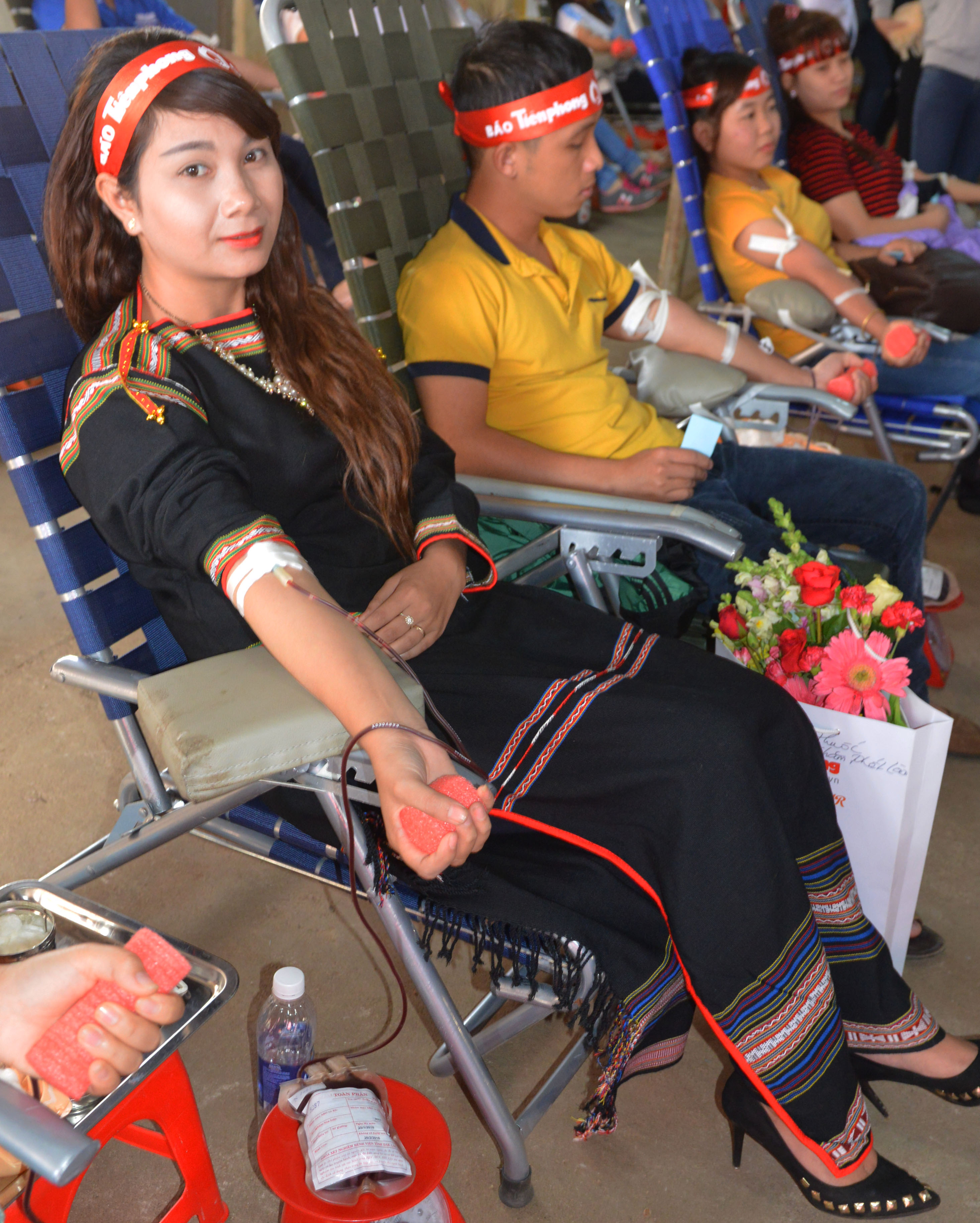
Năm nay số sinh viên đăng ký tham gia Chủ Nhật Đỏ tại trường Đại học Tây Nguyên đông hẳn hơn năm trước. Trong gió chiều lạnh giá, hàng nghìn bạn trẻ các dân tộc khác nhau đứng chờ được gọi tên, để hiến máu cứu người.
Conversations on Vietnam Development

Năm nay số sinh viên đăng ký tham gia Chủ Nhật Đỏ tại trường Đại học Tây Nguyên đông hẳn hơn năm trước. Trong gió chiều lạnh giá, hàng nghìn bạn trẻ các dân tộc khác nhau đứng chờ được gọi tên, để hiến máu cứu người.
Nguyễn Vạn Phú – Thứ Năm, 31/12/2015, 08:11 (GMT+7)
 Bác sĩ, y tá, nha sĩ là những nghề được quyền chuyển đổi nơi làm việc bên trong ASEAN, bên cạnh nghề trắc địa viên, người làm trong ngành du lịch, kế toán và kiến trúc sư. Ảnh: MINH KHUÊ
(TBKTSG) – Cái mặc cảm không biết gì về Cộng đồng kinh tế ASEAN (AEC) không chỉ luẩn quẩn trong đầu nhiều doanh nhân; nó còn ám ảnh người có chút áy náy về chuyện thế sự. Hôm nay, ngày 31-12-2015, AEC chính thức hình thành – một cột mốc quan trọng như thế mà mình không biết gì về nó cả.
Thật ra nhiều người dân ASEAN cũng tự vấn như thế – nên mới có các phần hỏi đáp trên nhiều báo. Ví dụ, câu hỏi nhiều người đặt ra nhất là AEC có giống Liên hiệp châu Âu (EU) không? Mới nhìn qua thì AEC cũng giống EU lúc mới hình thành cái gọi là Cộng đồng Kinh tế châu Âu vào năm 1957 nhưng về bản chất thì khác hẳn. AEC không có kế hoạch cho ra đời đồng tiền chung, không có một ngân hàng trung ương chung, không có nghị viện chung nên nói là cộng đồng kinh tế nhưng chưa có sự gắn bó chặt chẽ như EU hiện nay. Tiếp tục đọc “AEC có liên quan gì đến bạn không?”
PGS.TS. Võ Trí Hảo (*)Thứ Sáu, 1/1/2016, 16:46 (GMT+7)

(TBKTSG) – Giờ này, ở bên kia bán cầu, hàng chục ứng viên đang tìm cách phô diễn tài năng xuất chúng, phẩm chất trong sạch, sự am hiểu dân nguyện trong cuộc đua trở thành ứng viên vào vị trí quyền lực nhất thế giới: Tổng thống Mỹ. Giám khảo trong cuộc đua này không ai khác chính là công chúng trong các cuộc thăm dò dư luận (poll).
Khi các ứng viên bắt đầu cuộc đua, thì thời điểm kết thúc hai nhiệm kỳ của Tổng thống Obama ngày càng tới gần; ông ta không còn bất kỳ cơ hội tái cử nào. Nhưng “hoàng hôn nhiệm kỳ” không diễn ra trong suốt 44 đời tổng thống của xứ sở này, không phải vì các tổng thống là thánh thần, mà bởi vì ở xứ đó tồn tại một thứ đóng vai trò khắc tinh của “hoàng hôn nhiệm kỳ”: thương hiệu chính trị. Tiếp tục đọc “Thương hiệu chính trị – khắc tinh của “hoàng hôn nhiệm kỳ””
Tư Giang – Chủ Nhật, 10/1/2016, 17:32 (GMT+7)
 Hàng loạt máy nông nghiệp như máy canh tác, máy chế biến, thiết bị bảo quản… sản phẩm trong nước mới đáp ứng 30% nhu cầu thị trường, còn lại là máy nhập khẩu. Ảnh: LÊ HOÀNG VŨ
(TBKTSG) – Số phận của Vinaxuki có vẻ đang trở thành định mệnh chung của ngành công nghiệp ô tô 20 năm tuổi của Việt Nam.
Số phận Vinaxuki
Ông Bùi Ngọc Huyên chậm rãi bước những bước nhỏ nặng nề. Trước mặt người đàn ông 73 tuổi, tóc bạc trắng là cả khu nhà xưởng ô tô rộng lớn, im lìm. Cả nhà máy ô tô Xuân Kiên, ngụ tại địa phận tỉnh Vĩnh Phúc từng náo nhiệt một thời, nay lặng như tờ. Bên ngoài, những khóm hoa, cỏ dại đang mọc lên um tùm; bên trong, những khung xe ô tô chất đống và bắt đầu gỉ sét. Từ xa, thi thoảng mới vang lại tiếng động của những phụ tùng ô tô va vào nhau khi được vài người công nhân ít ỏi cuối cùng xếp lại. Khẽ thở dài, ông nói: “Tất cả còn nguyên đây, mà chúng tôi đang khó khăn quá”. Tiếp tục đọc “Công nghiệp hóa – cuộc đời không như là mơ”
Thái BìnhThứ Sáu, 22/1/2016, 09:50 (GMT+7)
 Diễn đàn Kinh tế thế giới WEF 2016 sẽ diễn ra tại Davos, Thụy Sỹ từ nay đến cuối tuần để thảo luận những vấn đề cấp bách của thế giới. Ảnh: GETTY IMAGES
(TBKTSG) – Hai ngàn năm trăm nhà lãnh đạo chính trị và doanh nghiệp toàn cầu đã tập trung về Davos, khu nghỉ dưỡng mùa đông nổi tiếng trên dãy Alpine của Thụy Sỹ để dự diễn đàn thường niên về kinh tế thế giới, khai mạc vào tối thứ Ba vừa qua và kéo dài bốn ngày. Nội dung diễn đàn sẽ xoay quanh 8 chủ đề lớn – 8 vấn đề mà thế giới hiện phải đối mặt.
1. Sự trỗi dậy của rô bốt
Chủ đề chính thức của hội nghị WEF 2016 là “Làm chủ cuộc cách mạng công nghiệp thứ tư”. Điều đó có nghĩa là “làm sao hòa trộn và làm chủ những công nghệ đang xóa nhòa ranh giới giữa các lĩnh vực vật lý, kỹ thuật số và sinh học”.
Tiếp tục đọc “WEF Davos 2016: Tám vấn đề của thế giới đương đại”
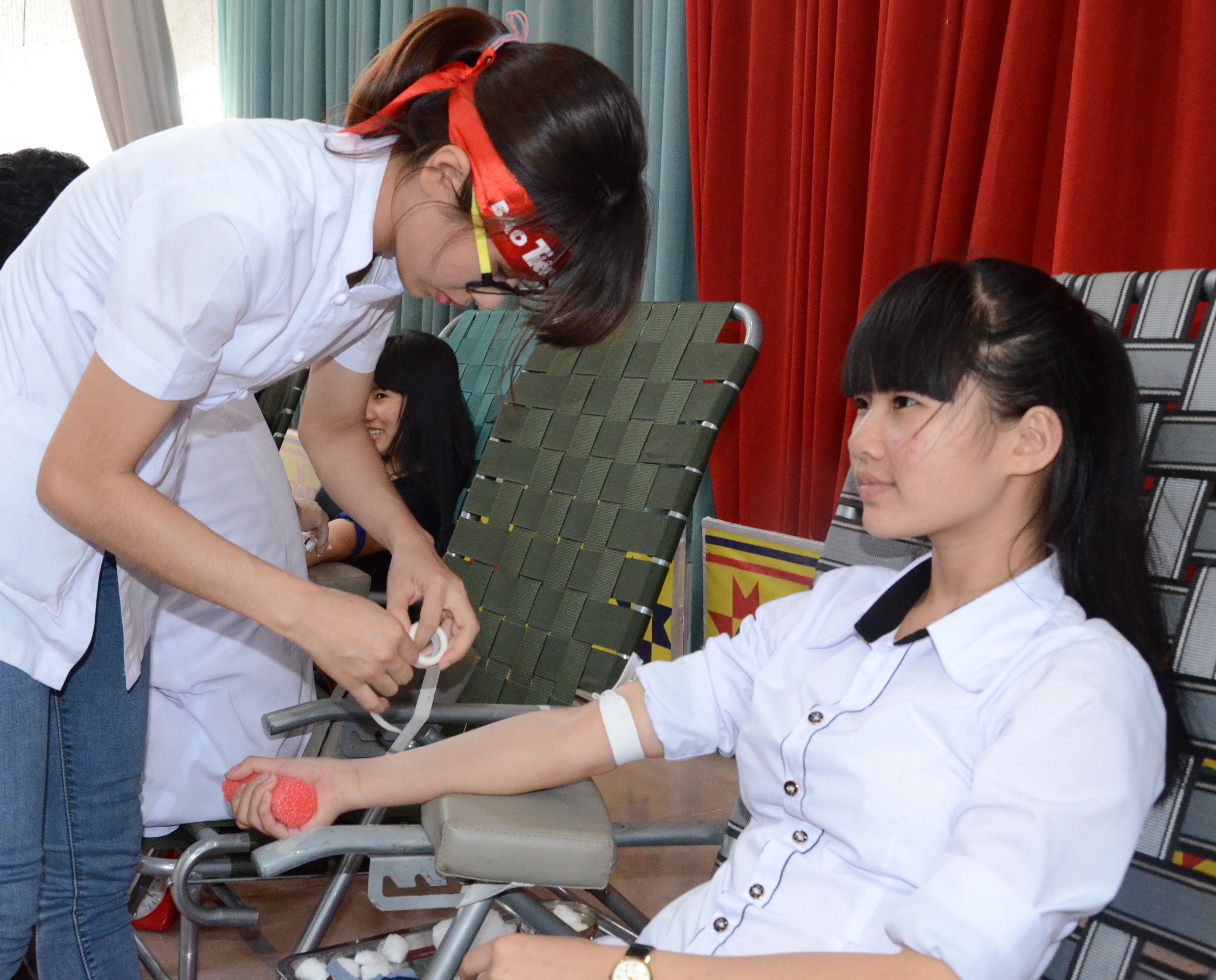
Trong 3 địa điểm đăng cai tổ chức Chủ Nhật Đỏ lần thứ 3 ở tỉnh Đắk Lắk, huyện Ea Kar là nơi có đến trên hai nghìn người đăng ký tham gia. Gần trọn ngày 23/1/2016, đông đảo nhân dân, cán bộ, đồng bào các dân tộc từ nhiều buôn làng, thôn xã, thị trấn lũ lượt kéo về Nhà Văn hóa Trung tâm huyện đông vui như trẩy hội.
Học trò, nhà giáo, công an tích cực hiến máu
Từ sáng sớm, Trung tâm văn hoá huyện Ea Kar đã chật như nêm người và xe đến đăng kí tham gia hiến máu. Trong đó có cả già lẫn trẻ, thanh niên, công chức, học sinh.
Đây là lần đầu tiên được hiến máu, nữ sinh Nông Thị Nguyệt dân tộc Tày ở xã Xuân Phú hồi hộp kể : Khi nghe trường thông báo cách đây 3 tuần là chương trình Chủ Nhật Đỏ (CNĐ) sẽ được báo Tiền Phong tổ chức tại Ea Kar, lập tức hơn 20 bạn lớp 12C4 trường THPT Trần Nhân Tông đã chen nhau đăng ký.
Tiếp tục đọc “Điểm hẹn số 2 tại Đắk Lắk – Đồng bào thôn xã trẩy hội Chủ Nhật Đỏ”
Amy Barwise Saturday 23 January 2016 06.29 GMT
As a youth worker, Amy Barwise is used to dealing with pregnancies and sexually transmitted infections, but after a week of revelations at home and work she decided safer was better than sorry

The doctor told me that teens are most likely to have sex after school before their parents get home from work. Photograph: Graeme Robertson for the Guardian
theguardian – An hour before the kids get home from school on Friday, I check the kitchen drawer where I’ve left about 400 condoms for the boys. It’s virtually empty. Clearly it’s been a busy week on the sexual front in my small house. Nothing to do with me and I’ve been in all week, so I know there’s been no action within these four walls.
I make a cup of tea and mull it over. It’s been a hectic week.
Last Friday, the landline rang. As it usually means it’s someone over 40 calling, nobody else answers, so I do. But it was my son Ben’s best mate; sunny, chatty Danny. He sounded like he was a million miles away. He asked if Ben was in and when I said yes, he explained he needed to talk to him and was coming straight over. And he was gone.
I told Ben, who looked shifty. Nothing unusual in that.
I guessed the call had something to do with last Saturday’s sleepover at another friend’s house. Danny had siphoned off the top inch of spirits from his parents’ collection and mixed them into such a lethal cocktail that he was hospitalised and his dad was called. Tiếp tục đọc “Why I put 400 condoms in the kitchen drawer for my sons”
huffingtonpost – DAVOS, SWITZERLAND — One of the guiding forces behind the scenes of theParis climate agreement is an 89-year-old Vietnamese Zen Buddhist monk.
Christiana Figueres, who led the climate talks, has credited Thich Nhat Hanh with having played a pivotal role in helping her to develop the strength, wisdom and compassion needed to forge the unprecedented deal backed by 196 countries.
Figueres, the executive secretary of the United Nations Framework Convention on Climate Change, says the teachings of Thay, as he is known to his hundreds of thousands of followers around the world, “literally fell into my lap” when she was going through a deep personal crisis three years ago.
She says the Buddhist philosophy of Thay, who is currently recovering from a serious stroke, helped her to deal with the crisis while also allowing her to maintain her focus on the climate talks.
 CYRUS MCCRIMMON VIA GETTY IMAGES
Figueres said she realized that “I have to have something here, because otherwise I can’t deal with this and do my job, and it was very clear to me that there was no way that I could take a single day off,” she told The Huffington Post this week at the World Economic Forum’s annual meeting in Davos, Switzerland.
“This has been a six-year marathon with no rest in between,” she said. “I just really needed something to buttress me, and I don’t think that I would have had the inner stamina, the depth of optimism, the depth of commitment, the depth of the inspiration if I had not been accompanied by the teachings of Thich Nhat Hanh.” Tiếp tục đọc “This Buddhist Monk Is An Unsung Hero In The World’s Climate Fight”
weforum – This year’s World Economic Forum challenges participants to consider and assess the “Fourth Industrial Revolution,” an era of sweeping and rapid technological advances that will disrupt industries and change the future in ways that none of us can predict. What is predictable, however, is that inequality will continue to cast a long shadow on humanity’s progress unless we choose to act.
What role does higher education have to play in ensuring that more individuals are prepared to reap the benefits of the coming age? Knowledge is — and will remain — the most powerful currency, and economic mobility continues to be contingent, in large part, on access to quality education.
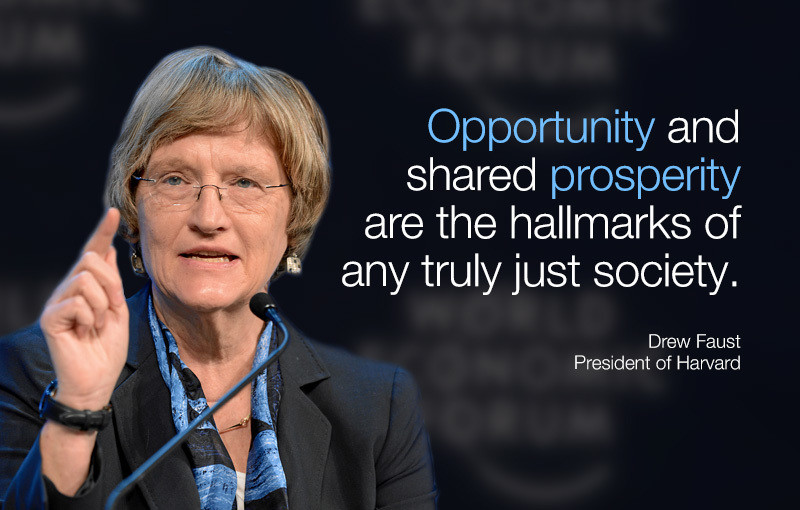
Universities expand opportunity and prepare young people for meaningful engagement with their work and with the world. Students encounter points of view and ways of thinking that may be completely foreign to them—and learn to situate their own lives in a broader context as a result. They develop habits of mind that privilege flexibility and resilience, and they graduate with economic advantages that persist throughout their lifetimes.
foreignaffair – We stand on the brink of a technological revolution that will fundamentally alter the way we live, work, and relate to one another. In its scale, scope, and complexity, the transformation will be unlike anything humankind has experienced before. We do not yet know just how it will unfold, but one thing is clear: the response to it must be integrated and comprehensive, involving all stakeholders of the global polity, from the public and private sectors to academia and civil society.
The First Industrial Revolution used water and steam power to mechanize production. The Second used electric power to create mass production. The Third used electronics and information technology to automate production. Now a Fourth Industrial Revolution is building on the Third, the digital revolution that has been occurring since the middle of the last century. It is characterized by a fusion of technologies that is blurring the lines between the physical, digital, and biological spheres.
There are three reasons why today’s transformations represent not merely a prolongation of the Third Industrial Revolution but rather the arrival of a Fourth and distinct one: velocity, scope, and systems impact. The speed of current breakthroughs has no historical precedent. When compared with previous industrial revolutions, the Fourth is evolving at an exponential rather than a linear pace. Moreover, it is disrupting almost every industry in every country. And the breadth and depth of these changes herald the transformation of entire systems of production, management, and governance. Tiếp tục đọc “The Fourth Industrial Revolution: What It Means and How to Respond”
Nguyễn Cung Thông
nguyencungthong@yahoo.com

Trích một đoạn từ bài viết:

Governments usually provide subsidies based on overall adoption targets, such as the number of cars or solar panels they would like to see purchased over a period of time. But green technologies are often new products, and no one really knows how many consumers are waiting to buy them.
Peter Dizikes | MIT News Office
January 21, 2016
new.MIT.edu – Governments often offer subsidies to consumers for clean-technology products, from home solar panels to electric vehicles. But what are the right levels of subsidy, and how should they be calculated? As a new paper co-authored by MIT researchers shows, governments can easily make subsidies too low when they ignore a basic problem: Consumer demand for these products is usually highly uncertain.
Indeed, the paper’s analysis suggests this has already happened in the case of the Chevy Volt, an electric car introduced in 2010 that suffered slow initial sales before gaining more traction in the marketplace.
“The government will miss their target by a lot when ignoring demand uncertainty,” says Georgia Perakis, the William F. Pounds Professor of Management at the MIT Sloan School of Management and a co-author of the paper.
While discussion of “demand uncertainty” might sound a bit abstract, it matters. Governments usually provide subsidies based on overall adoption targets, such as the number of cars or solar panels they would like to see adopted over a period of time. But green technologies are often new products, and no one really knows how many consumers are waiting to buy them. Tiếp tục đọc “Sensible subsidies – How should backing for clean technology be designed?”

VHNA – Lời BBT: Đài Loan cùng với Hàn Quốc là hai xã hội thành công nhất của thế kỷ XX. Cả hai đất nước những năm 50 (thế kỷ XX) đều ở tình trạng thiếu tài nguyên với hàng triệu người sống ở mức nghèo đói, nhưng sau khoảng 30 năm đã “cất cánh”, hoá rồng và dân chủ hóa. Điều thần kỳ về kinh tế Đài Loan được coi là kém ngoạn mục so với điều thần kỳ về đời sống xã hội. Chính quyền nhận ra giá trị của dân chủ và có ý thức cải biến xã hội. Các lực lượng chính trị cố gắng chuyển đổi xã hội trong khuôn khổ một trật tự ôn hòa, cải cách, chứ không cách mạng. Người dân được làm quen với các giá trị dân chủ và chẳng bao lâu đã làm chủ được giá trị dân chủ. Nền kinh tế – xã hội phát triển năng động, biết phát huy nguồn lực con người đã dẫn đến sự xuất hiện tầng lớp trung lưu quan tâm đến văn hóa, văn minh, dân chủ và tiến bộ xã hội. Một xã hội tôn trọng học vấn, có nền giáo dục tiên tiến, có trình độ nguồn nhân lực cao và đồng đều, có nền văn hóa kết hợp được truyền thống và hiện đại. Một xã hội có chính thể tiếp thu được áp lực quốc tế, chuyển từ độc đoán, độc tài sang thể chế dân chủ và đã ghi được những tư tưởng này vào Hiến pháp. Một xã hội có tầng lớp lãnh đạo có trách nhiệm, dám quyết định; chính phủ sẵn sàng với mọi trách nhiệm quốc gia và quốc tế. Một xã hội dân sự đủ trưởng thành, gánh được các trách nhiệm dân sự, điều tiết được các hoạt động xã hội theo hướng lành mạnh. Một xã hội có pháp luật nghiêm và tương đối công bằng, không chùn bước trước tham nhũng, không nương nhẹ với chủ nghĩa tư bản thân hữu, kiểm soát được tội phạm và tệ nạn xã hội. Một xã hội mà về đại thể, quần chúng nhân dân trở thành một lực lượng chính trị ôn hòa, đấu tranh bất bạo động cho các mục tiêu tiến bộ v.v.
Bài viết này cố gắng đề cập đến gần hết những điều nói nói trên thông qua phân tích các sự kiện đã diễn ra ở Đài Loan từ những năm 50 đến những năm 90 của thế kỷ XX. Tiếp tục đọc “Độc tài, “hóa rồng” và dân chủ ở Đài Loan”
One thing I’ve learned in my work with Microsoft is that the process of innovation tends to take longer than many people expect, but it also tends to be more revolutionary than they imagine. We are seeing this dynamic play out right now in the way digital technology is fundamentally reorganizing life for the poorest people in the world.
Twenty years ago, when the Internet was brand new, a lot of people thought computers would quickly become part of daily life in developing countries. And when I say “a lot of people,” I include myself. But those people weren’t thinking about all the facts.
In 1997, I traveled to South Africa for the first time. I spent most of my time in big office buildings in downtown Johannesburg. One day, though, I took a side trip to Soweto, where Microsoft was donating computers and software to a community center—the same kind of thing we did in the United States. Tiếp tục đọc “Why the Future Is Bright for the World’s Poorest Farmers”

By Phuong Nguyen (@PNguyen_DC), Associate Fellow, Chair for Southeast Asia Studies (@SoutheastAsiaDC), CSIS
January 21, 2015
The landslide election in Taiwan of pro-independence opposition leader Tsai Ing-wen to be president has led to speculation of a possible recalibration in Chinese foreign policy, at least in the year ahead. Observers believe that stable cross-strait relations over the past eight years have allowed Beijing the bandwidth to explore greener pastures such as the once-dormant South China Sea dispute and expand its footprint across Southeast Asia. Tiếp tục đọc “CSIS: Southeast Asia from Scott Circle Jan. 21, 2016”

