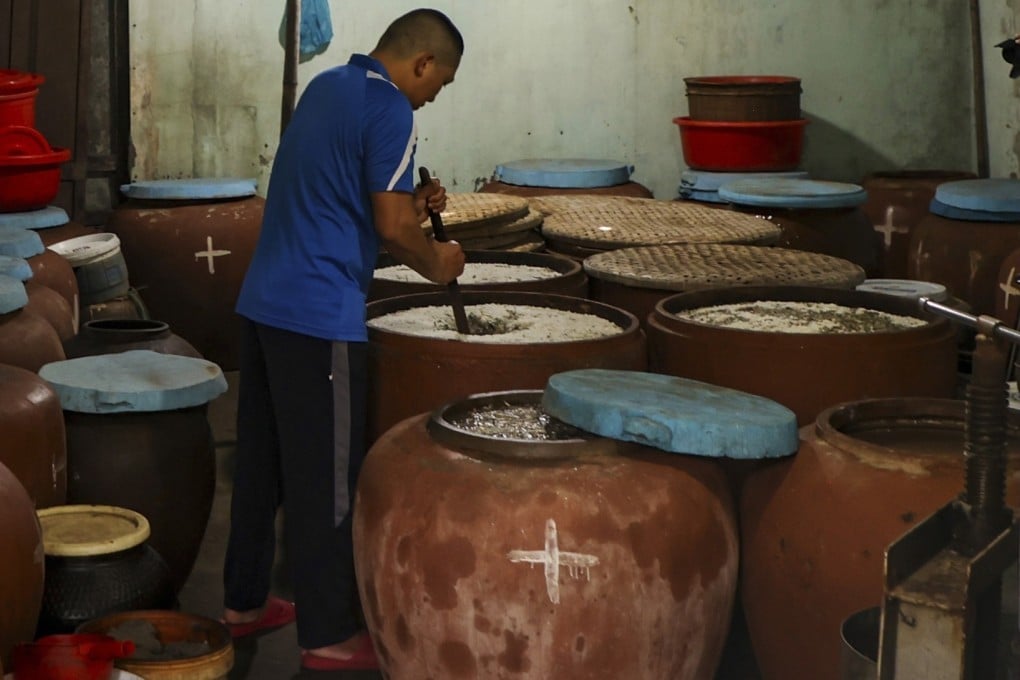
Bui Van Phong faced a choice when the Vietnam war ended 50 years ago: stay in his small village and help his parents carry on the family’s centuries-old tradition of making fish sauce, or join the hundreds of thousands of people fleeing his country for a better life.
Phong chose to stay behind and nurtured a business making the beloved condiment, known as nuoc mam in Vietnam, that is now in its fourth generation with his son, Bui Van Phu, 41, at the helm.
“Allowing for stops, the first train to run on the S&DR averaged a speed of 8mph (13km/h) on its inaugural journey.”
It also cost £5.1m (in today’s money) and took only 3 years to complete.
Thus 2025, is the 200th anniversary of the existence of passenger rail.
At that time, the Tokugawa shogunate (Edo period) still ruled Japan, which remained more or less closed off to the rest of the world. And wouldn’t start opening up until it was forced to do so by the Americans from 1853.
Japan wouldn’t open it’s first railway line from Tokyo to Yokohama until 1872 almost 50 years after the UK.
Are you ready to be liberated?Donald Trump’s ingenious plan to escalate his global trade war is set to start tomorrow, which the president vows will lay the groundwork for a golden era for the US economy. What the hell does that mean?
In the simplest terms, “Liberation Day” will impose significant tariff increases on all imports, while forcing companies to relocate supply chains to the US. That’s because, in Trump’s mind, foreign countries have “really abused us” for decades.
Are you ready to be liberated?Donald Trump’s ingenious plan to escalate his global trade war is set to start tomorrow, which the president vows will lay the groundwork for a golden era for the US economy. What the hell does that mean?
In the simplest terms, “Liberation Day” will impose significant tariff increases on all imports, while forcing companies to relocate supply chains to the US. That’s because, in Trump’s mind, foreign countries have “really abused us” for decades.
High seas cover over half of our planet’s surface, and represent two-thirds of the entire ocean. They serve as a crucial habitat for countless marine species, many of which remain undiscovered. They also play a vital role in climate regulation. The high seas are also home to secret treasures that could potentially reshape medical science. Painkillers, antibiotics and many other drugs have been produced from genetic material found in the depths of the ocean.
Despite their immense ecological and medical importance, only 1% of these international waters are legally protected. Since they fall outside the jurisdiction of any country, high seas are not governed by anyone. This has led to patchy regulation and uncoordinated management, leaving them vulnerable to threats like overfishing, shipping traffic, and ocean acidification.
An international treaty aims to address these concerns. Last year, countries around the world agreed upon the Agreement on Marine Biodiversity of Areas Beyond National Jurisdiction (BBNJ Treaty) after decades of discussions and negotiations. The historic treaty aims to establish legal frameworks for the conservation and sustainable use of marine resources. The treaty has created a blueprint for countries that want to propose and create protected areas in the high seas. It tackles prior assessment of potentially damaging activities like deep sea mining while also trying to figure out a way to share and distribute marine resources in an equitable manner. Sixty countries will have to ratify the treaty before it goes into effect.
Watch this video to learn more about the high seas, the significance of the BBNJ treaty and the questions that remain unanswered
As global demand for critical minerals grows, it will be important to anticipate and address the potential harms the mining and metals sector can have on societies, communities and the environment. Overlooking these risks can ultimately disrupt supply for clean energy technologies.
Traceability systems can, when used as part of a wider risk-based due diligence process, help meet emerging policy goals by providing ways to integrate data on origin, evolution, and ownership of minerals. Some traceability approaches can also provide a platform for embedding data on environmental, social and governance issues. To work effectively, however, traceability systems must be carefully designed – balancing standardisation and context, maintaining data quality, and adapting to varying supply chain complexities. They also require strong collaboration among companies, governments and civil society, backed by cost-sharing, reliable verification and secure data-sharing protocols. Above all, traceability should serve clear objectives rather than become an end in itself: policy makers and practitioners should adopt a measured approach, progressively deploying mechanisms where necessary while allowing for inclusive participation and access to markets and investment.
This report includes a practical eight-step roadmap, from setting policy objectives to building trust mechanisms, which can help ensure traceability systems are fit for purpose and aligned with the realities of global supply chains.
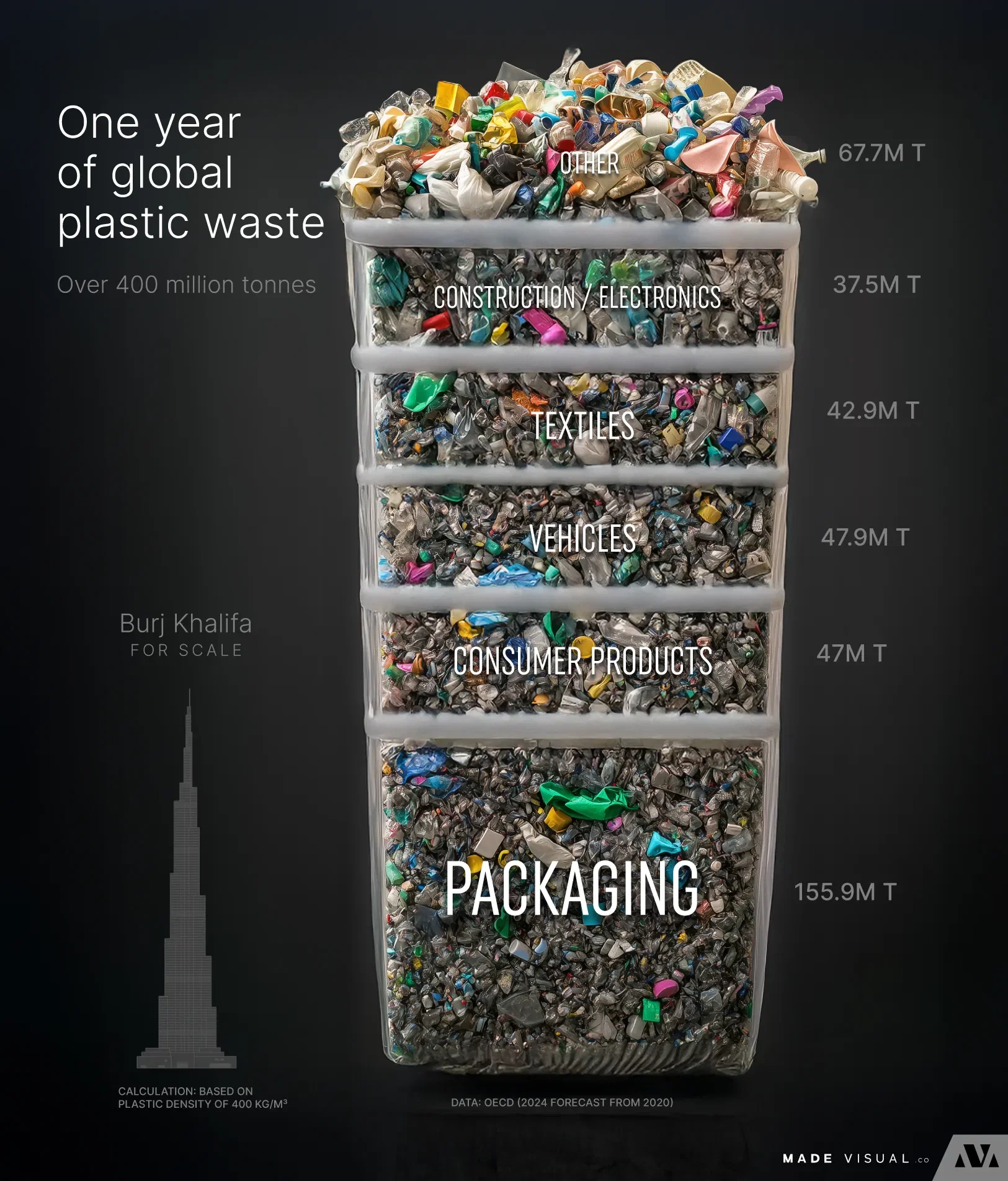
Over 400 million tonnes of plastic was projected to be wasted in 2024 according to an OECD report from 2020. Further, plastic waste is expected to nearly triple worldwide by 2060, with half of all waste expected to be in landfill while less than one-fifth of it will be recycled.
Unbelievably, if all this plastic waste were put in a kitchen bin and scaled up uniformly, this would double the height of the Burj Khalifa.
TP Huế – Nguyễn Xuân Bình, thành viên tổ chức khủng bố “Chính phủ Quốc gia Việt Nam lâm thời” bị cáo buộc chuẩn bị truyền đơn để rải vào dịp 30/4, nhằm lật đổ chính quyền.
Nguyễn Xuân Bình (trái) khi bị bắt giữ. Ảnh: Sông Hương
Ngày 28/3, Thượng tá Dương Văn Thoan, Phó giám đốc Công an thành phố Huế, cho biết cơ quan điều tra đã bắt tạm giam Bình, 49 tuổi, về hành vi Hoạt động nhằm lật đổ chính quyền nhân dân theo Điều 109 Bộ luật Hình sự.
Khám xét nơi ở của bị can, lực lượng chức năng thu giữ nhiều tài liệu, tang vật liên quan đến vụ án.
BYD’s logo is seen at a showroom in Warsaw, Poland on March 22, 2025. Stringer/NurPhoto/Getty ImagesHong KongCNN —
In the world of electric vehicles, there’s a Chinese company outdoing Elon Musk’s Tesla. And it’s just getting started.
BYD, the Shenzhen-based Chinese EV champion, eclipsed Tesla in annual sales last year. Last week, it unveiled a revolutionary battery charging technology that it says adds 250 miles of range in five minutes, outpacing Tesla’s Superchargers, which take 15 minutes to add 200 miles. And last month, BYD launched “God’s Eye,” an advanced driver-assistance system rivaling Tesla’s Full Self-Driving feature, at no extra cost for most of its cars.
Công an tỉnh Nam Định đã có mặt tại Công ty Thanh Bình An Lạc Viên để điều tra làm rõ vụ việc người dân tố cáo, bị ép mua hũ tro cốt giá cao.
Kênh Toàn Cảnh 24H, VTV9, March 6, 2025
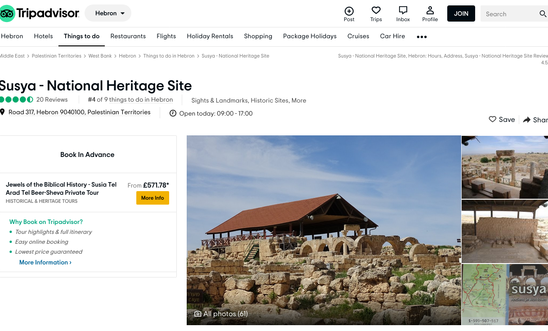
TripAdvisor listing of settler-managed historical sight on Palestinian land
The image above is a TripAdvisor listing of a heritage site managed by settlers in the village of Susiya – on Palestinian land. The UN has released a list of over 100 other companies that also have business interests in Israeli settlements built on Palestinian land.
But why is this a problem?
Illegal Settlements
In 1967, Israel began the process of building settlements on occupied Palestinian territory.
Firstly, what is a settlement?
It is Israel’s building of villages, towns and cities on occupied Palestinian territory.
What makes them illegal?
The transfer of Israeli civilians to these settlements is illegal under international law. In fact it is a war crime according to the Rome Statute of the International Criminal Court.
Hundreds of thousands Displaced
Since 1948, hundreds of thousands of Palestinians had to flee their homes to escape violence or were forcibly removed. Not just their they lost their land and businesses too. Many are remain in refugee camps till this day. Here they have become parents and even grand parents.
Suffocating laws
Some Palestinians stayed behind and refused to give up their land. Their lives have been made impossible as consecutive governments have introduced discriminatory laws and policies, in the hope they will eventually leave. But as the settlements continue to expand some are still standing their ground.
What TripAdvisor doesn’t show you
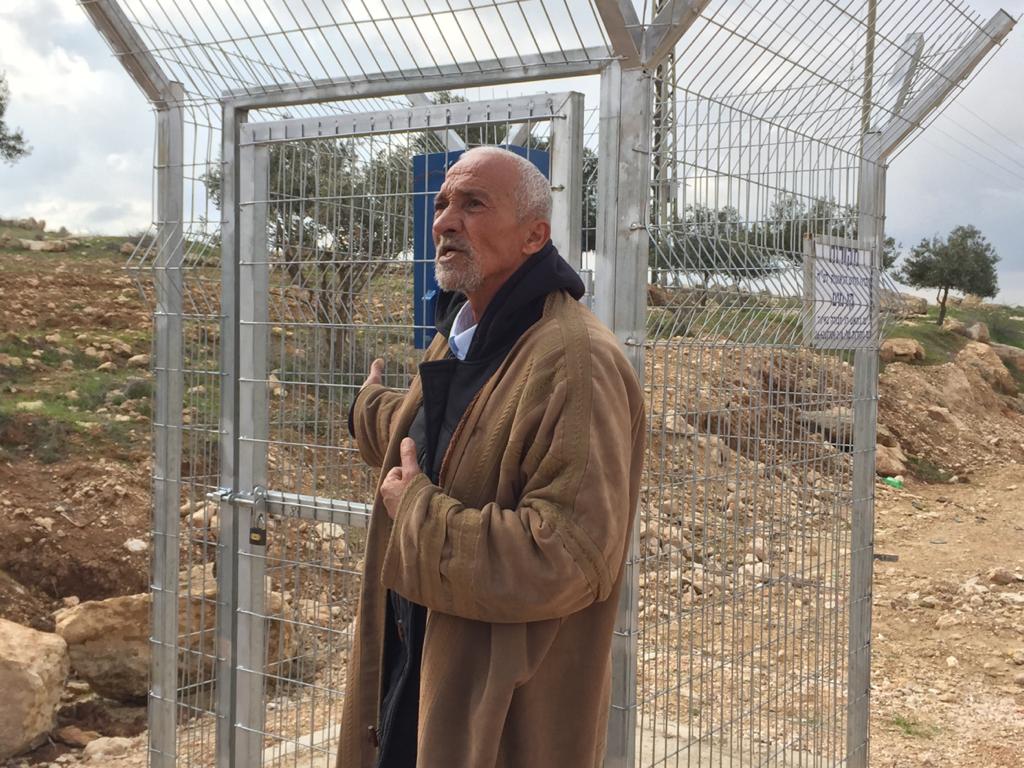
(A resident of Susiya shows us a water system installed on his land for the sole benefite of the nearby settlement)
The Palestinian village of Susiya, in the occupied West Bank is home to around 300 Palestinians. The village has a few tents and shacks, a couple of water cisterns and some sheep. There is no access to electricity or running water.
Tens of thousands of former farmworkers claim they’ve been rendered sterile by a highly toxic pesticide known as DBCP, unable to ever have children.
Though DBCP was banned by the U.S. government in the 70s, U.S. fruit companies continued to use it abroad in poorer countries with fewer regulations.
Decades later, these farmworkers are still fighting for justice, filing lawsuits against some of the world’s biggest corporations. Yara travels to Costa Rica to investigate one of the most devastating occupational health disasters in history.
There are more than 200,000 foreign domestic workers in Singapore.
Under the law, they have to be at least 23 years old.
But one NGO says it is seeing more and more minors at its shelter for abused maids.
Most of these girls come from Myanmar, where investigations reveal a web of deceit and corruption in the recruitment process, and immigration officials are regularly bribed to doctor birthdates on travel documents.
Because of their youth, the girls are often easy targets for abusive employers and sexual predators.
But just how bad is the problem and what is being done to remedy it? 101 East investigates.
Far from being a tragedy for Africa, the demise of the United States Agency for International Development (USAID) at the hands of President Donald Trump’s administration should be cause for celebration, argues Arikana Chihombori-Quao, the former ambassador of the African Union to the US.
Chihombori-Quao tells host Steve Clemons that USAID doesn’t have much to show for its decades of education and healthcare projects in Africa and often destabilised countries under the guise of environmental, human rights or social justice agendas.
And if the US is not interested in Africa, African leaders shouldn’t beg for better relations, she said. “It takes two to tango,” the former diplomat said.




 CVD
CVD 