Giáo dục giới tính và tình dục toàn diện là gì?

UNESCO.org

Chuỗi bài Giáo dục giới tính và tình dục toàn diện (GDGTTDTD)

Đặc điểm của các chương trình GDGTTDTD hiệu quả

Vai trò của ngành giáo dục trong GDGTTDTD

Khung tiêu chuẩn cho GDGTTDTD

Triển khai GDGTTDTD ở cấp khu vực và quốc gia

Các rào cản đối với việc thực hiện GDGTTDTD

Giáo dục giới tính và tình dục toàn diện (GDGTTDTD) là một quá trình dạy và học tích hợp trong chương trình giáo dục về các khía cạnh nhận thức, tâm lý, thể chất và xã hội của giới tính và tình dục. GDGTTDTD hướng tới trang bị cho trẻ em và thanh thiếu niên các kiến thức, kỹ năng, thái độ và giá trị cần thiết để giúp các em: nhận thức được sức khoẻ, lợi ích và giá trị con người của bản nhân mình; hình thành các mối quan hệ xã hội và quan hệ tình dục trên cơ sở tôn trọng lẫn nhau; nhận thức được lựa chọn của mình ảnh hưởng tới bản thân và người khác như thế nào; nhận thức cũng như đảm bảo việc bảo vệ các quyền của mình trong suốt cuộc đời.

Tiếp tục đọc “Giáo dục giới tính và tình dục toàn diện là gì?”

Phỏng vấn Ngô Thế Vinh – người đi dọc 4.800km sông Mekong

NĐT –  10:05 | Chủ nhật, 15/05/2016 0

LTS. Gần 20 năm tâm huyết với các vấn đề trên dòng Mekong cũng như đồng bằng sông Cửu Long (ĐBSCL), bác sĩ Ngô Thế Vinh không chỉ là một nhà văn với hai tác phẩm Cửu Long cạn dòng, Biển Đông dậy sóng và Mekong – dòng sông nghẽn mạch, ông còn là một nhà hoạt động môi trường bền bỉ. Ông đã có những chuyến đi dọc dòng Mekong dài 4.800km, từ Tây Tạng đổ xuống Biển Đông. Người Đô Thị có cuộc phỏng vấn ông Ngô Thế Vinh về các vấn đề nóng bỏng hiện nay trên dòng Mekong và ĐBSCL.

Thưa, dù đã 17 năm trôi qua, từ những chuyến đi dọc dòng sông Mekong dài 4.800km, bức tranh sống động mà ông “phác họa” về những tác hại khủng khiếp do các con đập thủy điện gây ra cho đời sống người dân lưu vực sông Mekong đến nay vẫn nóng hổi tính thời sự. Từ những dự cảm rất sớm về những hậu quả do các đập thủy điện gây ra trên dòng Mekong và cho ĐBSCL nói riêng, ông nhận định gì về thực trạng hiện nay?

Năm 2000, khi nói “Cửu Long cạn dòng”, nhiều người xem đó là phát biểu “nghịch lý” bởi đó là năm có lụt lớn ở miền Tây. Một vị tu sĩ đang tất bật lo việc cứu trợ, mới nghe tên cuốn sách đã phát biểu: “Đang lũ lụt ngập trời với nhà trôi người chết mà lại nói “Cửu Long cạn dòng” là thế nào?” Nhưng cần hiểu rằng lũ và hạn tương ứng với mùa mưa và mùa khô là chu kỳ tự nhiên đã có hàng ngàn năm trên dòng Mekong và các vùng châu thổ, và đến nay thì mức độ càng trầm trọng và gay gắt.

Chúng ta không thể đổ lỗi hết cho “thiên tai”, mà cần can đảm gọi cho đúng tên những yếu tố “nhân tai” bởi do chính con người gây ra qua suốt quá trình phát triển không bền vững và có tính tự hủy từ nhiều thập niên qua, đã làm gãy đổ sự cân bằng của cả một hệ sinh thái vốn phức tạp nhưng cũng hết sức mong manh của dòng Mekong.

Băng qua Biển Hồ đến khu Bảo tồn sinh thái Tonle Sap (nguồn: tư liệu Ngô Thế Vinh)

Tiếp tục đọc “Phỏng vấn Ngô Thế Vinh – người đi dọc 4.800km sông Mekong”

Hệ sinh thái thiện nguyện tại Việt Nam: Những điều trông thấy…

NĐT –  16:55 | Thứ bảy, 21/05/2022 0

“Thách thức quan trọng với sự phát triển bền vững của Việt Nam hiện nay là công nhận và coi trọng vai trò cũng như đóng góp của các tác nhân phi lợi nhuận, thiện nguyện và các tác nhân khác cho khối xã hội và xã hội nói chung”, bà Tôn Nữ Thị Ninh, Chủ tịch Quỹ Hòa bình và Phát triển TP.HCM, nhận định.

Hình ảnh người dân xếp hàng nhận gạo tại cây “ATM gạo” đầu tiên trên đường Vườn Lài, quận Tân Phú. “Ông chủ ATM gạo” là doanh nhân Hoàng Tuấn Anh. Sau mô hình “ATM gạo”, “ATM khẩu trang”  trong đợt dịch lần thứ 4 này, Hoàng Tuấn Anh tiếp tục phát động mô hình “ATM Oxy” nhằm kịp thời hỗ trợ cho những bệnh nhân COVID-19 cách ly tại nhà trở nặng, phải cần đến máy thở. Ảnh: Trung Dũng

Quỹ Hòa bình và Phát triển TP.HCM (HPDF) vừa công bố Báo cáo Khảo sát thực tiễn hệ sinh thái thiện nguyện tại Việt Nam(*) . Báo cáo được thực hiện trong bối cảnh Việt Nam đang thiếu nhận thức chung và hiểu biết cơ bản về toàn bộ hệ sinh thái thiện nguyện, trong đó có sự hiện diện đa dạng của một loạt chủ thể và các bên liên quan trải rộng khắp toàn khối cộng đồng thiện nguyện – một chuỗi các loại hình hoạt động, từ hình thức thiện truyền thống đến thể chế thiện nguyện lớn nhỏ, cho đến trách nhiệm xã hội doanh nghiệp (CSR) và thiện nguyện doanh nghiệp, đến kinh doanh vì xã hội, và đầu tư tạo tác động cho xã hội, môi trường. Điều này dẫn đến một thực tế là vai trò của khối xã hội/ phi lợi nhuận chưa được các cơ quan nhà nước và dư luận nói chung nhìn nhận một cách thích đáng như một yếu tố then chốt vào sự phát triển bền vững của Việt Nam.

Tiếp tục đọc “Hệ sinh thái thiện nguyện tại Việt Nam: Những điều trông thấy…”

Cambodian mega dam’s resurrection on the Mekong ‘the beginning of the end’

mongabay – by Gerald FlynnNehru Pry on 15 September 2022

  • Cambodian authorities have greenlit studies for a major hydropower dam on the Mekong River in Stung Treng province, despite a ban on dam building on the river that’s been in place since 2020.
  • Plans for the 1,400-megawatt Stung Treng dam have been around since 2007, but the project, under various would-be developers, has repeatedly been shelved over criticism of its impacts.
  • This time around, the project is being championed by Royal Group, a politically connected conglomerate that was also behind the hugely controversial Lower Sesan 2 dam on a tributary of the Mekong, prompting fears among local communities and experts alike.
  • This story was supported by the Pulitzer Center’s Rainforest Investigations Network where Gerald Flynn is a fellow.

STUNG TRENG, Cambodia — A long-dormant plan to build a mega dam on the mainstream of the Mekong River in Cambodia’s northeastern Stung Treng province appears to have been revived this year, leaving locals immediately downstream of the potential sites worried and experts confounded.

Tiếp tục đọc “Cambodian mega dam’s resurrection on the Mekong ‘the beginning of the end’”

What Big Oil knew about climate change, in its own words

theconversation.com

Four years ago, I traveled around America, visiting historical archives. I was looking for documents that might reveal the hidden history of climate change – and in particular, when the major coal, oil and gas companies became aware of the problem, and what they knew about it.

I pored over boxes of papers, thousands of pages. I began to recognize typewriter fonts from the 1960s and ‘70s and marveled at the legibility of past penmanship, and got used to squinting when it wasn’t so clear.

What those papers revealed is now changing our understanding of how climate change became a crisis. The industry’s own words, as my research found, show companies knew about the risk long before most of the rest of the world.

Surprising discoveries

At an old gunpowder factory in Delaware – now a museum and archive – I found a transcript of a petroleum conference from 1959 called the “Energy and Man” symposium, held at Columbia University in New York. As I flipped through, I saw a speech from a famous scientist, Edward Teller (who helped invent the hydrogen bomb), warning the industry executives and others assembled of global warming.

Tiếp tục đọc What Big Oil knew about climate change, in its own words

Around the Halls: Assessing the 2022 National Security Strategy

Brookings Institute

Shadi HamidDaniel S. HamiltonRyan HassBruce JonesPatricia M. KimSuzanne MaloneyAmy J. NelsonMichael E. O’HanlonNatan SachsBruce RiedelMelanie W. SissonMireya SolísConstanze Stelzenmüller, and Andrew Yeo Friday, October 14, 2022

ORDER FROM CHAOS

On October 12, 2022, U.S. President Joe Biden’s administration released the 2022 National Security Strategy (NSS). Brookings experts reflect on the document and what it reveals about the United States’ security trajectory.

SHADI HAMID (@shadihamid)
Senior Fellow, Center for Middle East Policy


In the past, I have been critical of the administration’s tendency to instrumentalize democracy by suggesting that its strength and value hinges on its ability to produce “good” outcomes. As I argue in “The Problem of Democracy“, this way of thinking about the democratic idea can easily lead to incoherence. Policymakers have little choice but to be incoherent, some of the time; the world is complicated. Still, identifying these tensions is worthwhile, in anticipation of when they might cause problems for U.S. foreign policy. In this case, they almost certainly will, because they already have.

Tiếp tục đọc “Around the Halls: Assessing the 2022 National Security Strategy”

The Massive Gas Field That Europe Can’t Use

Earthquake risks in the Netherlands have locals unwilling to plug the Russia-related energy shortfall.

The gas Megafield Europe Can’t use

By Cagan Koc and Diederik Baazil

11:01 GMT+7 6 tháng 10, 2022, Bloomberg

Beneath the windmill-dotted marshlands of the Netherlands lies Europe’s largest natural gas reserve. The sprawling Groningen field has enough untapped capacity to replace, as soon as this winter, much of the fuel Germany once imported from Russia.

Instead the field is in the process of shutting down, and the Netherlands is rebuffing calls to pump more, even as Europe braces for perhaps its toughest winter since World War II. The reason: Drilling has led to repeated earthquakes, and Dutch officials are loath to risk a backlash from residents by breaking promises.

Tiếp tục đọc “The Massive Gas Field That Europe Can’t Use”

As the US-Saudi oil spat intensifies, what are Biden’s options?

Analysis by Nadeen Ebrahim and Abbas Al Lawati, CNN

Updated 11:20 AM EDT, Fri October 14, 2022

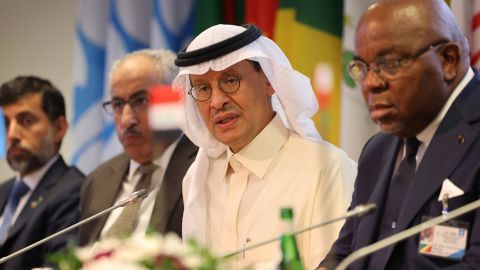
Abdulaziz bin Salman, Saudi Arabia's energy minister, center, speaks during a news conference following a meeting of OPEC+ countries in Vienna, Austria, on October 5.

Abdulaziz bin Salman, Saudi Arabia’s energy minister, center, speaks during a news conference following a meeting of OPEC+ countries in Vienna, Austria, on October 5.Akos Stiller/Bloomberg/Getty Images

Editor’s Note: A version of this story first appeared in CNN’s Meanwhile in the Middle East newsletter, a three-times-a-week look inside the region’s biggest stories. Sign up here.Abu DhabiCNN — 

The Saudi-American relationship appears to have hit rock bottom.

After a move by the Saudi-led OPEC+ oil cartel to cut oil production, which could see inflation in the United States soaring just weeks ahead of the midterm elections, President Joe Biden told CNN’s Jake Tapper that it’s time for the US to rethink its relationship with Saudi Arabia.

Tiếp tục đọc “As the US-Saudi oil spat intensifies, what are Biden’s options?”

China’s economy is ‘in deep trouble’ as Xi heads for next decade in power

Laura He

Analysis by Laura He, CNN Business

Published 7:52 PM EDT, Fri October 14, 2022

Video Ad Feedback

‘Are the best days behind China now?’ Disillusioned Chinese ponder future

14:05 – Source: CNNHong KongCNN Business — 

When Xi Jinping came to power a decade ago, China had just overtaken Japan to become the world’s second largest economy.

It has grown at a phenomenal pace since then. With an average annual growth rate of 6.7% since 2012, China has seen one of the fastest sustained expansions for a major economy in history. In 2021, its GDP hit nearly $18 trillion, constituting 18.4% of the global economy, according to the World Bank.

Tiếp tục đọc “China’s economy is ‘in deep trouble’ as Xi heads for next decade in power”

Vietnam lender facing bank run now ‘stable,’ official says

  • Saigon Commercial Bank hikes deposit rates to lure customers
  • Police probe into real estate conglomerate tied to panic

Blomberg – By Nguyen Dieu Tu Uyen

October 11, 2022 at 11:27 AM GMT+7 Updated on

Listen to this article

The operations of Saigon Commercial Bank, which faced days of panicked customers pulling out their savings, are “stable” and some clients are now returning to deposit money, according to Vo Minh Tuan, head of the central bank’s Ho Chi Minh City branch.

“SCB’s situation has become more stable now as the number of people coming in to withdraw money has decreased,” he said by phone. The central bank on Monday issued a statement reaffirming the lender’s ability to pay depositors. 

Hundreds of bank customers rushed to branches to pull money out after police over the weekend announced the detention of Truong My Lan, chairwoman of real estate conglomerate Van Thinh Phat Holdings Group, and other company officials for allegedly obtaining property through fraudulent means. The conglomerate was believed to have ties to Saigon Commercial Bank, the nation’s fifth-largest commercial bank by deposits and assets.

SCB’s branches in the nation’s commercial hub of Ho Chi Minh City were significantly quieter Tuesday morning, with some workers saying operations were returning to normal.

relates to Vietnam Lender Facing Bank Run Now ‘Stable,’ Official Says
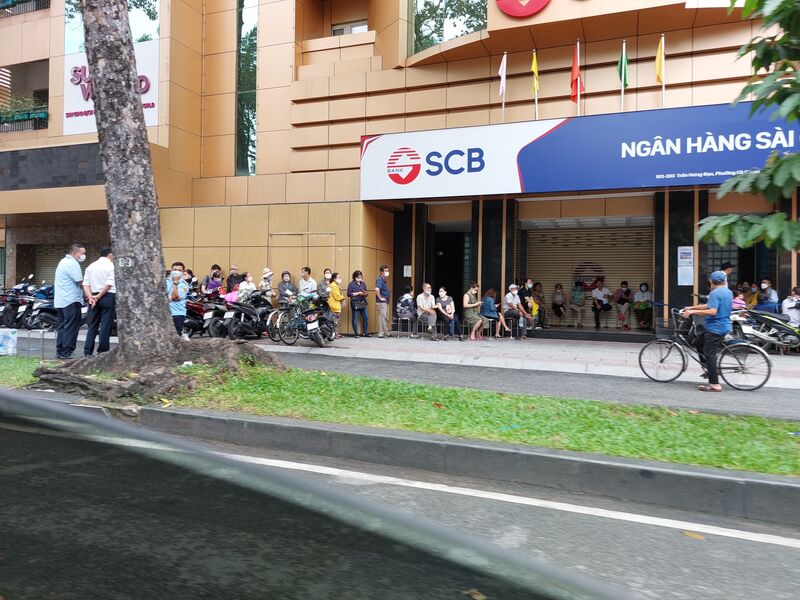
Customers line up in front of a Saigon Commercial Bank branch in Ho Chi Minh City on Oct. 10.Photographer: Mai Ngoc Chau/Bloomberg

Tiếp tục đọc “Vietnam lender facing bank run now ‘stable,’ official says”

Việt Nam cần bảo vệ dòng Sê Kông vì lợi ích của chính mình

IUCN – 27 Th9, 2021

Trong 18 tháng vừa qua, do sự hạn chế đi lại của đại dịch Covid, sự quan tâm chú ý đến các vấn đề môi trường trong khu vực ở hầu hết các khía cạnh đều ít nhiều bị hạn chế hoặc lơ là. Đây có thể là lý do vì sao chúng ta đã không kịp nhận biết khi một doanh nghiệp nhà nước của Việt Nam, Công ty Xây dựng Sông Đà 6, khởi động việc xây dựng đập Sê Kông A (hay còn gọi là đập Sê Kông 1) tại CNDCND Lào.

content hero image

Photo: Sekong river in Stung Treng, Cambodia © Center for People and Nature

Nếu được xây dựng ở vị trí này trên dòng chính sông Sê Kông, con đập sẽ cắt hầu hết sự kết nối của Sê Kông với dòng chính Mê Công, và vì vậy sẽ chặn đứng sự di cư của nhiều loài cá lên vùng sinh sản ở thượng nguồn. Sông Sê Kông là dòng nhánh lớn cuối cùng trong hệ thống sông Mê Công hầu như còn chảy thông suốt và việc xây dựng đập Sê Kông A sẽ đe dọa trực tiếp đến trữ lượng cá và an ninh lương thực khu vực: https://nhipcaudautu.vn/phong-cach-song/dap-se-kong-1-de-doa-dong-bang-song-cuu-long-3323435/.

Tiếp tục đọc “Việt Nam cần bảo vệ dòng Sê Kông vì lợi ích của chính mình”

US scrambles to avoid supply chain chaos after China export curbs

South Korea’s SK Hynix and Taiwan Semiconductor Manufacturing granted authorisation to supply operations in China.

Men wearing masks stand in front of large wall image of computer chip
The US is reportedly scrambling to avoid disruptions to the semiconductor supply chain after announcing new export curbs on China’s chip industry [File: Aly Song/Reuters]

Published On 13 Oct 202213 Oct 2022 Al Jareeza

The United States is scrambling to tackle the unintended consequences of its new set of export curbs on China’s chip industry that could inadvertently harm the semiconductor supply chain, people familiar with the matter have said.

Hours before the new restrictions took effect, South Korean memory chipmaker SK Hynix said the US had granted it authorisation to receive goods for its chip production facilities in China without additional licensing imposed by the new rules.

Tiếp tục đọc “US scrambles to avoid supply chain chaos after China export curbs”

The Biden-⁠Harris Administration’s National Security Strategy

OCTOBER 12, 2022

FACT SHEET: The Biden-⁠Harris Administration’s National Security Strategy

  1. HOME
  2. BRIEFING ROOM
  3. STATEMENTS AND RELEASES

Read the full strategy here

President Biden’s National Security Strategy outlines how the United States will advance our vital interests and pursue a free, open, prosperous, and secure world. We will leverage all elements of our national power to outcompete our strategic competitors; tackle shared challenges; and shape the rules of the road.

The Strategy is rooted in our national interests: to protect the security of the American people, to expand economic opportunity, and to realize and defend the democratic values at the heart of the American way of life. In pursuit of these objectives, we will:

  • Invest in the underlying sources and tools of American power and influence;
  • Build the strongest possible coalition of nations to enhance our collective influence to shape the global strategic environment and to solve shared challenges; and
  • Modernize and strengthen our military so it is equipped for the era of strategic competition.

COOPERATION IN THE AGE OF COMPETITION
In the early years of this decisive decade, the terms of geopolitical competition will be set while the window of opportunity to deal with shared challenges will narrow. We cannot compete successfully to shape the international order unless we have an affirmative plan to tackle shared challenges, and we cannot do that unless we recognize how heightened competition affects cooperation and act accordingly.

Strategic Competition. The most pressing strategic challenge we face as we pursue a free, open, prosperous, and secure world are from powers that layer authoritarian governance with a revisionist foreign policy.

  • We will effectively compete with the People’s Republic of China, which is the only competitor with both the intent and, increasingly, the capability to reshape the international order, while constraining a dangerous Russia.
  • Strategic competition is global, but we will avoid the temptation to view the world solely through a competitive lens, and engage countries on their own terms.

Shared Challenges. While this competition is underway, people all over the world are struggling to cope with the effects of shared challenges that cross borders—whether it is climate change, food insecurity, communicable diseases, or inflation. These shared challenges are not marginal issues that are secondary to geopolitics. They are at the very core of national and international security and must be treated as such.

  • We are building the strongest and broadest coalition of nations to enhance our collective capacity to solve these challenges and deliver for the American people and those around the world.
  • To preserve and increase international cooperation in an age of competition, we will pursue a dual-track approach. On one track, we will work with any country, including our competitors, willing to constructively address shared challenges within the rules-based international order and while working to strengthen international institutions. On the other track, we will deepen cooperation with democracies at the core of our coalition, creating a latticework of strong, resilient, and mutually reinforcing relationships that prove democracies can deliver for their people and the world.

INVESTING AT HOME
The Biden-Harris Administration has broken down the dividing line between domestic and foreign policy because our strength at home and abroad are inextricably linked. The challenges of our age, from strategic competition to climate change, require us to make investments that sharpen our competitive edge and bolster our resilience.

  • Our democracy is at the core of who we are and is a continuous work in progress. Our system of government enshrines the rule of law and strives to protect the equality and dignity of all individuals. As we strive to live up to our ideals, to reckon with and remedy our shortcomings, we will inspire others around the world to do the same.
  • We are complementing the innovative power of the private sector with a modern industrial strategy that makes strategic public investments in our workforce, strategic sectors, and supply chains, especially in critical and emerging technologies.
  • A powerful U.S. military helps advance and safeguard vital U.S. national interests by backstopping diplomacy, confronting aggression, deterring conflict, projecting strength, and protecting the American people and their economic interests. We are modernizing our military, pursuing advanced technologies, and investing in our defense workforce to best position America to defend our homeland, our allies, partners, and interests overseas, and our values across the globe.

OUR ENDURING LEADERSHIP
The United States will continue to lead with strength and purpose, leveraging our national advantages and the power of our alliances and partnerships. We have a tradition of transforming both domestic and foreign challenges into opportunities to spur reform and rejuvenation at home. The idea that we should compete with major autocratic powers to shape the international order enjoys broad support that is bipartisan at home and deepening abroad.

  • Our alliances and partnerships around the world are our most important strategic asset that we will deepen and modernize for the benefit of our national security.
  • We place a premium on growing the connective tissue on technology, trade and security between our democratic allies and partners in the Indo-Pacific and Europe because we recognize that they are mutually reinforcing and the fates of the two regions are intertwined.
  • We are charting new economic arrangements to deepen economic engagements with our partners and shaping the rules of the road to level the playing field and enable American workers and businesses—and those of partners and allies around the world—to thrive.
  • As we deepen our partnerships around the world, we will look for more democracy, not less, to shape the future. We recognize that while autocracy is at its core brittle, democracy’s inherent capacity to transparently course-correct enables resilience and progress.

AFFIRMATIVE ENGAGEMENT
The United States is a global power with global interests; we are stronger in each region because of our engagement in the others. We are pursuing an affirmative agenda to advance peace and security and to promote prosperity in every region.

  • As an Indo-Pacific power, the United States has a vital interest in realizing a region that is open, interconnected, prosperous, secure, and resilient. We are ambitious because we know that we and our allies and partners hold a common vision for the region’s future.
  • With a relationship rooted in shared democratic values, common interests, and historic ties, the transatlantic relationship is a vital platform on which many other elements of our foreign policy are built. To effectively pursue a common global agenda, we are broadening and deepening the transatlantic bond.
  • The Western Hemisphere directly impacts the United States more than any other region so we will continue to revive and deepen those partnerships to advance economic resilience, democratic stability, and citizen security.
  • A more integrated Middle East that empowers our allies and partners will advance regional peace and prosperity, while reducing the resource demands the region makes on the United States over the long term.
  • In Africa, the dynamism, innovation, and demographic growth of the region render it central to addressing complex global problems.

###

15 mln Vietnamese afflicted with mental illnesses: health ministry

VNE – By Le Nga   October 11, 2022 | 03:29 pm GMT+7

15 mln Vietnamese afflicted with mental illnesses: health ministry

A patient with depression is being treated at the National Institute of Mental Health in Hanoi. Photo by VnExpress/Thuy An

Around 15 million Vietnamese are afflicted with mental illnesses, with depression and anxiety taking the top spots, Deputy Health Minister Tran Van Thuan said.

At a Monday meeting to commemorate World Mental Health Day (Oct. 10), Thuan said around 14.9% of the Vietnamese population suffer mental illnesses. Most people in Vietnam associate mental illnesses with schizophrenia, while the condition actually only afflicts 0.47% of the population, he added.

Tiếp tục đọc “15 mln Vietnamese afflicted with mental illnesses: health ministry”