What is ZeroTrust Strategy?

TĐH: Traditional cybersecurity strategies are no longer sufficient for today’s cyberwar. The Zero Trust strategy is a new concept in cyberwar. To help understand this concept, I post here a paper by the US Department of Defense entitle “DOD Zero Trust Strategy.” This concept will involve not just DOD or military institutions, but also many private enterprises and individuals. Indeed, it involves the entire nation. I select the DOD presentation to post because, by nature of its job, DOD is probaly concerned about cybersecurity more than anyone else. Below is the Foreword of the DOD paper.

DOD ZERO TRUST STRATEGY

Download full paper >>

Foreword


Our adversaries are in our networks, exfiltrating our data, and exploiting the Department’s users. The rapid growth of these offensive threats emphasizes the need for the Department of Defense (DoD) to adapt and significantly improve our deterrence strategies and cybersecurity implementations. Defending DoD networks with high-powered and ever-more sophisticated perimeter defenses is no longer sufficient for achieving cyber resiliency and securing our information
enterprise that spans geographic borders, interfaces with external partners, and support to millions of authorized users, many of which now require access to DoD networks outside traditional boundaries, such as work from home. To meet these challenges, the DoD requires an enhanced cybersecurity framework built upon Zero Trust principles that must be adopted across the Department, enterprise-wide, as quickly as possible as described within this document.
Tiếp tục đọc “What is ZeroTrust Strategy?”

War Propaganda

historians.org

From What Is Propaganda? (1944) By Ralph D. Casey (Published July 1944)

The Nazis prepared for war from the moment Hitler came into power in 1933. In the feverish building up of German striking power, they had the support of the professional military men. The Nazis not only produced the weapons of war; they geared their economy for the strain of a future conflict. They carried on political intrigues to promote their purposes. Their propaganda machine had long been a going concern when Hitler felt ready to strike at Poland, the first step in an ambitious plan to lay the world at his feet.

Military, economic, political, and propaganda weapons were forged for the fray. Britain and France and, soon after, other peaceful nations were compelled to forge them to resist the Nazi onrush.

Today’s war is four-dimensional. It is a combination of military, economic, political, and propaganda pressure against the enemy. An appeal to force alone is not regarded as enough, in the twentieth century, to win final and lasting victory. War is fought on all four fronts at once—the military front, the economic front, the political front, and the propaganda front.

To understand how this four-dimensional warfare has come about, we have to look at history. We have to go back to the rise of nationalism in the eighteenth century.

Before the American and French revolutions took place at the end of the eighteenth century, many armies fought in the pay of monarchies, such as the Bourbons, Hapsburgs, and Hohenzollerns, or of individual leaders. They were mercenary armies. They did not fight for patriotic motives. They did not fight for causes. They fought because fighting was their business. No fight, no pay!

Tiếp tục đọc “War Propaganda”

Word war: In Russia-Ukraine war, information became a weapon

APnews.com

By DAVID KLEPPERFebruary 23, 2023

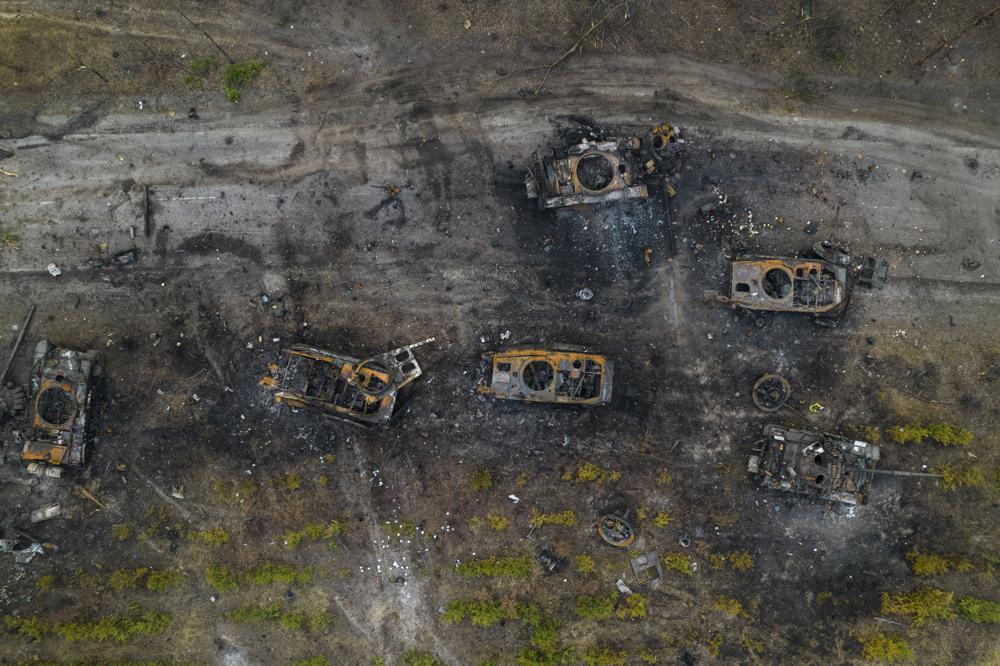
FILE - Destroyed Russian armored vehicles sit on the outskirts of Kyiv, Ukraine, March 31, 2022. In the year since Russia invaded Ukraine, disinformation and propaganda have emerged as key weapons in the Kremlin's arsenal. (AP Photo/Rodrigo Abd, File)

FILE – Destroyed Russian armored vehicles sit on the outskirts of Kyiv, Ukraine, March 31, 2022. In the year since Russia invaded Ukraine, disinformation and propaganda have emerged as key weapons in the Kremlin’s arsenal. (AP Photo/Rodrigo Abd, File)

WASHINGTON (AP) — Russia’s invasion of Ukraine is the deadliest conflict in Europe since World War II, and the first to see algorithms and TikTok videos deployed alongside fighter planes and tanks.

The online fight has played out on computer screens and smartphones around the globe as Russia used disinformation, propaganda and conspiracy theories to justify its invasion, silence domestic opposition and sow discord among its adversaries.

Now in its second year, the war is likely to spawn even more disinformation as Russia looks to break the will of Ukraine and its allies.

MORE WAR COVERAGE

Tiếp tục đọc “Word war: In Russia-Ukraine war, information became a weapon”

A Human Approach to World Peace

The 14th Dalai Lama of Tibet

When we rise in the morning and listen to the radio or read the newspaper, we are confronted with the same sad news: violence, crime, wars, and disasters. I cannot recall a single day without a report of something terrible happening somewhere. Even in these modern times it is clear that one’s precious life is not safe. No former generation has had to experience so much bad news as we face today; this constant awareness of fear and tension should make any sensitive and compassionate person question seriously the progress of our modern world.
 
It is ironic that the more serious problems emanate from the more industrially advanced societies. Science and technology have worked wonders in many fields, but the basic human problems remain. There is unprecedented literacy, yet this universal education does not seem to have fostered goodness, but only mental restlessness and discontent instead. There is no doubt about the increase in our material progress and technology, but somehow this is not sufficient as we have not yet succeeded in bringing about peace and happiness or in overcoming suffering.
 
We can only conclude that there must be something seriously wrong with our progress and development, and if we do not check it in time there could be disastrous consequences for the future of humanity. I am not at all against science and technology – they have contributed immensely to the overall experience of humankind; to our material comfort and well-being and to our greater understanding of the world we live in. But if we give too much emphasis to science and technology we are in danger of losing touch with those aspects of human knowledge and understanding that aspire towards honesty and altruism.
 
Science and technology, though capable of creating immeasurable material comfort, cannot replace the age-old spiritual and humanitarian values that have largely shaped world civilization, in all its national forms, as we know it today. No one can deny the unprecedented material benefit of science and technology, but our basic human problems remain; we are still faced with the same, if not more, suffering, fear, and tension. Thus it is only logical to try to strike a balance between material developments on the one hand and the development of spiritual, human values on the other. In order to bring about this great adjustment, we need to revive our humanitarian values.
 
I am sure that many people share my concern about the present worldwide moral crisis and will join in my appeal to all humanitarians and religious practitioners who also share this concern to help make our societies more compassionate, just, and equitable. I do not speak as a Buddhist or even as a Tibetan. Nor do I speak as an expert on international politics (though I unavoidably comment on these matters). Rather, I speak simply as a human being, as an upholder of the humanitarian values that are the bedrock not only of Mahayana Buddhism but of all the great world religions. From this perspective I share with you my personal outlook – that:

Tiếp tục đọc “A Human Approach to World Peace”

Lãng phí thực phẩm – bài toán khó của phát triển bền vững tại Việt Nam

Hồ Nguyên Thảo

Thứ Ba, 6/09/2022

Kinh tế Sài Gòn Online Việt Nam hiện đứng thứ hai trong khu vực châu Á – Thái Bình Dương về nạn lãng phí thực phẩm, với hơn 8 triệu tấn thực phẩm bị thất thoát hay vất bỏ mỗi năm khi vẫn còn ăn được hoặc tận dụng được, gây tổn hại khoảng 3,9 tỉ đô la Mỹ mỗi năm, gần 2% GDP hiện nay. Tỷ lệ lãng phí thực phẩm của Việt Nam hiện cao gấp hai lần các nền kinh tế tiên tiến và giàu có trên thế giới.

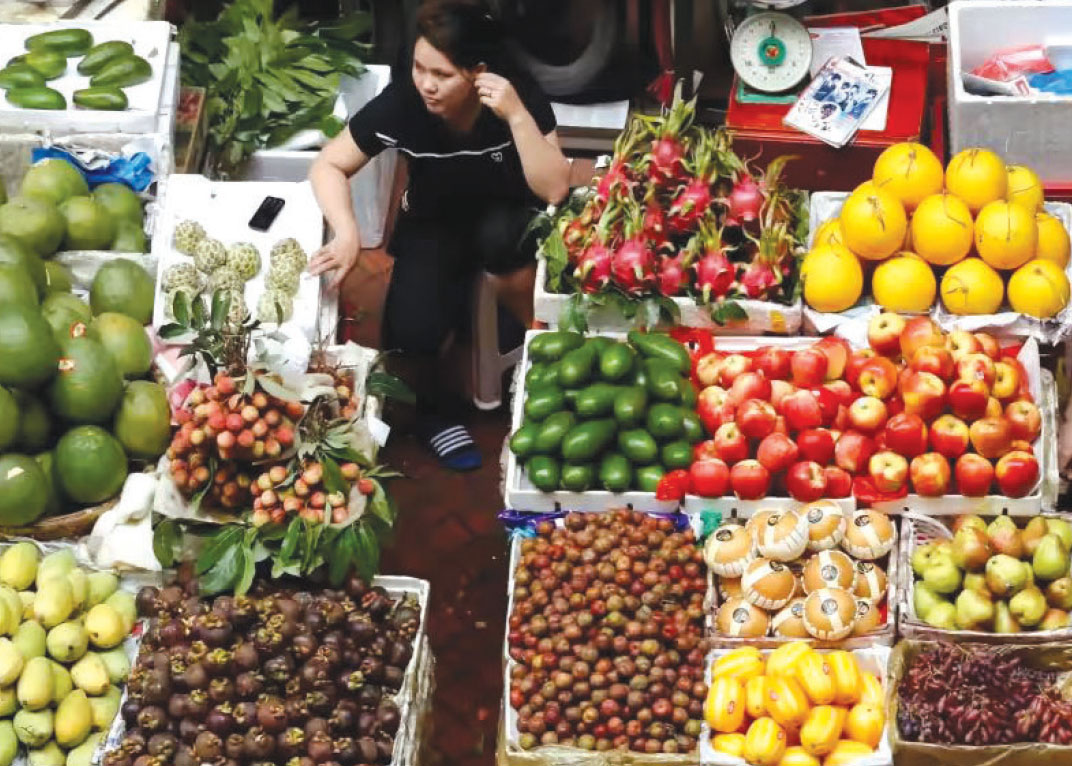
Sự gia tăng của tầng lớp trung lưu tại Việt Nam khiến hàng hóa tiêu dùng tăng nhanh, cùng với đó là nạn lãng phí thực phẩm nhiều gấp đôi các nước phát triển. Ảnh: Reuters

Chống lãng phí thực phẩm đòi hỏi sự tham gia trên nhiều lĩnh vực của người dân, doanh nghiệp và nhà nước. Và đây cũng là một mục tiêu phát triển bền vững mà Liên hiệp quốc đề ra.

Tiếp tục đọc “Lãng phí thực phẩm – bài toán khó của phát triển bền vững tại Việt Nam”

Từ dược thiện đến phát triển kinh tế dược liệu

Đỗ Quang Tuấn Hoàng – Thứ Năm, 26/01/2023

Kinh tế Sài Gòn OnlineHơn 2.000 năm trước, Hippocrates – người sáng lập trường y học Hippocrates – đã nói: “Hãy để thức ăn là thuốc của bạn”. Lời khuyên của bậc thánh hiền ấy vẫn còn nguyên giá trị cho đến ngày nay. Khái niệm biến thức ăn thành thuốc đang ngày càng được chấp nhận rộng rãi.

Người Mông hoa bán đương quy, dược thiện ở chợ Bắc Hà, tỉnh Lào Cai. Ảnh: Đỗ Quang Tuấn Hoàng

Bải hoải sau ba ngày đi rừng, về đến nhà của anh Giàng A Chinh, người Mông đen ở tổ 1, phường Hàm Rồng, thị xã Sa Pa, tỉnh Lào Cai, chúng tôi được vợ anh là Phạm Thị Hạnh, người Xa Phó đun ngay cho một nồi nước tắm.

Tiếp tục đọc “Từ dược thiện đến phát triển kinh tế dược liệu”

Cần những cải cách táo bạo với tài chính vi mô –

Bold Reforms Can Unleash the Power of Microfinance in Viet Nam

English version on ADB blog:

(ĐTCK) Thị trường vốn của Việt Nam đang đi theo một quỹ đạo tích cực, trong đó thị trường trái phiếu doanh nghiệp tăng trưởng nhanh hơn đáng kể so với các quốc gia láng giềng, còn lĩnh vực ngân hàng phát triển lành mạnh, được phản ánh trong triển vọng tích cực từ xếp hạng của Moody hồi đầu năm nay.

Việt Nam đặt ra mục tiêu mở rộng tín dụng vi mô tới 70% dân số trưởng thành

Việt Nam đặt ra mục tiêu mở rộng tín dụng vi mô tới 70% dân số trưởng thành

Hơn nữa, công nghệ tài chính (Fintech) đang tăng tốc, với việc Ngân hàng Nhà nước Việt Nam đã cấp phép cho hơn 40 công ty cung cấp dịch vụ trung gian thanh toán.

Tiếp tục đọc “Cần những cải cách táo bạo với tài chính vi mô –”

Kinh nghiệm phát triển tổ chức tài chính vi mô trên thế giới, bài học cho Việt Nam

(thitruongtaichinhtiente.vn) – Tại Việt Nam hiện nay, hoạt động của các tổ chức tài chính vi mô (TCVM) vẫn còn nhiều hạn chế và bất cập, vì thế cần thiết phải nghiên cứu mô hình hoạt động, xu hướng phát triển của các tổ chức TCVM các quốc gia trên thế giới, từ đó tìm ra bài học cho Việt Nam.

Các tổ chức tài chính vi mô (TCVM) được hình thành với mục tiêu trợ giúp cho các đối tượng khó khăn trong xã hội được tiếp cận dịch vụ tài chính, dịch vụ đào tạo, dịch vụ việc làm,… với mục tiêu xóa đói giảm nghèo, tăng chất lượng cuộc sống của người dân. Tại Việt Nam hiện nay, hoạt động của các tổ chức TCVM vẫn còn nhiều hạn chế và bất cập, vì thế cần thiết phải nghiên cứu mô hình hoạt động, xu hướng phát triển của các tổ chức TCVM các quốc gia trên thế giới, từ đó tìm ra bài học cho Việt Nam.

Chương trình, dự án của các tổ chức TCVM đầu tiên được hình thành và đến với người dân nghèo từ đầu thế kỷ 17 tại châu Âu. Tổ chức TCVM ban đầu chỉ bao gồm tín dụng vi mô và được tài trợ bởi một số cá nhân giàu có, tổ chức chính phủ và phi chính phủ trong cộng đồng, hoạt động ở khu vực không chính thức, không có tư cách pháp nhân.

Tiếp tục đọc “Kinh nghiệm phát triển tổ chức tài chính vi mô trên thế giới, bài học cho Việt Nam”

U.N. calls for Russia to leave Ukraine

[TĐH:Summarizing the ASEAN’s countries’ votes:

Members:

In favor (8): Bruinei, Indonesia, Cambodia, Thailand, Malaysia, Myanmar, Philippines, Singapore

Abstensions (2): Vietnam, Laos.

Observers (2): In favor: Papua New Guinea, Timor-Leste

Total: 10 in favors, 2 abstentions]

141 members of the 193-nation body voted in support of the nonbinding, largely symbolic resolution.

Monitors show result of a United Nations General Assembly vote for a U.N. resolution upholding Ukraine's territorial integrity and calling for a cessation of hostilities after Russia's invasion.

Monitors show result of a United Nations General Assembly vote for a U.N. resolution upholding Ukraine’s territorial integrity and calling for a cessation of hostilities after Russia’s invasion. | Bebeto Matthews/AP Photo

By MIA MCCARTHY, Reuters

02/23/2023 04:37 PM EST

The United Nations General Assembly on Thursday adopted a resolution calling for Russia to withdraw its troops from Ukraine, almost exactly one year after it invaded the neighboring country.

In the 193-member body, 141 members voted in support of the resolution, exceeding the two-thirds threshold needed to pass.

Tiếp tục đọc “U.N. calls for Russia to leave Ukraine”

Trừng phạt khắc nghiệt đối với trẻ em vi phạm pháp luật không ngăn chặn được tình hình tội phạm

UNICEF.org

Bài chia sẻ quan điểm – Độ tuổi tối thiểu chịu trách nhiệm hình sự của Youssouf Abdel-Jelil, Trưởng Đại diện UNICEF tại Việt Nam

Trừng phạt khắc nghiệt đối với trẻ em vi phạm pháp luật không ngăn chặn được tình hình tội phạm

UNICEF Việt Nam\Trương Việt Hùng

  • Ngôn ngữ tài liệu bằng:
  • English
  • Tiếng Việt

19 Tháng 6 2017

Độ tuổi chịu trách nhiệm hình sự của trẻ em là một chủ đề gây nhiều tranh cãi trên thế giới. Ở Việt Nam, vấn đề này đang được tranh luận trong quá trình sửa đổi bổ sung Bộ Luật Hình sự. Một số người tranh luận rằng phương thức tiếp cận “cứng rắn với tội phạm” là cần thiết để trừng phạt trẻ em nhằm phòng ngừa tình trạng phạm tội tiếp diễn.

Tuy nhiên, nghiên cứu quốc tế chỉ ra rằng do trẻ em còn đang trong giai đoạn phát triển, việc gán cho trẻ em và đối xử với trẻ em như những tội phạm ở độ tuổi nhỏ có thể tác động tiêu cực nghiêm trọng đến sự phát triển và khả năng cải tạo, phục hồi thành công của trẻ.

Đề xuất giảm độ tuổi tối thiểu chịu trách nhiệm hình sự không phù hợp với bằng chứng cho thấy não bộ của trẻ em còn chưa phát triển đầy đủ về cấu trúc và chức năng, có tác động đến khả năng ra quyết định và gia tăng xu hướng trẻ em có những hành vi liều lĩnh ở tuổi chưa thành niên. Khoa học cũng chỉ ra rằng trẻ em sẽ có khả năng “từ bỏ” được những hành vi này.

Nếu trẻ em có thể bị ảnh hưởng tiêu cực bởi những nhóm có ý đồ xấu dẫn đến vi phạm pháp luật, thì cũng có nghĩa là trẻ em có khả năng rất lớn ảnh hưởng tích cực để làm những việc tốt nếu trẻ em được đưa vào chương trình phục hồi, giáo dưỡng phù hợp thay vì bị trừng phạt một cách khắc nghiệt. 

Tiếp tục đọc “Trừng phạt khắc nghiệt đối với trẻ em vi phạm pháp luật không ngăn chặn được tình hình tội phạm”

Ngành tre Việt Nam trước thách thức hội nhập

VNE – Chu Khôi 06:00 19/08/2022

Với gần 1,6 triệu ha diện tích tre luồng, nhưng xuất khẩu sản phẩm từ tre hàng năm mới đem về chưa đến 400 triệu USD và chỉ chiếm 3% trong thương mại tre toàn cầu. Sản phẩm ngành tre Việt Nam vẫn tỏ ra yếu thế khi cạnh tranh với các đối thủ về chất lượng, mẫu mã sản phẩm, công nghệ kém và thiếu tính sáng tạo…

 “Rổ, rá” mây tre vươn ra thế giới
“Rổ, rá” mây tre vươn ra thế giới

Câu chuyện về đầu ra cho cây tre được làm “nóng” tại hội thảo “Vai trò của tre nguyên liệu đối với sự phát triển các chuỗi giá trị sản phẩm tre Việt Nam”, do Bộ Nông nghiệp và Phát triển nông thôn phối hợp với Liên đoàn Thương mại và Công nghiệp Việt Nam (VCCI) tổ chức ngày 4/8/2022.

Tiếp tục đọc “Ngành tre Việt Nam trước thách thức hội nhập”

UNDP: Institutional Bottlenecks and Viet Nam’s Prospects for Growth and Development

<object class="wp-block-file__embed" data="https://dcnreserve.files.wordpress.com/2023/02/policy-brief-institutional-bottlenecks-2023.02.15_v2.pdf&quot; type="application/pdf" style="width:100%;height:600px" aria-label="<b>policy-brief-institutional-bottlenecks-2023.02.15_v2policy-brief-institutional-bottlenecks-2023.02.15_v2Tải về

The North Atlantic Treaty

Washington D.C. – 4 April 1949

  • 04 Apr. 1949
  • |Last updated: 10 Apr. 2019 14:16

The Parties to this Treaty reaffirm their faith in the purposes and principles of the Charter of the United Nations and their desire to live in peace with all peoples and all governments.
They are determined to safeguard the freedom, common heritage and civilisation of their peoples, founded on the principles of democracy, individual liberty and the rule of law. They seek to promote stability and well-being in the North Atlantic area.
They are resolved to unite their efforts for collective defence and for the preservation of peace and security. They therefore agree to this North Atlantic Treaty :

Article 1

The Parties undertake, as set forth in the Charter of the United Nations, to settle any international dispute in which they may be involved by peaceful means in such a manner that international peace and security and justice are not endangered, and to refrain in their international relations from the threat or use of force in any manner inconsistent with the purposes of the United Nations.

Tiếp tục đọc “The North Atlantic Treaty”

China: The Global Security Initiative Concept Paper (full text)

Source: Xinhua

Editor: huaxia

2023-02-21 09:16:30


BEIJING, Feb. 21 (Xinhua) — China on Tuesday released “The Global Security Initiative Concept Paper.”

Please see the attachment for the full text of the Paper.  Enditem

Download Full text: The Global Security Initiative Concept Paper >>

READ FULL TEXT below

The Global Security Initiative

Concept Paper

  1. Background

The issue of security bears on the well-being of people of all countries, the lofty cause of world peace and development, and the future of humanity.

Today, our world, our times and history are changing in ways like never before, and the international community is confronted with multiple risks and challenges rarely seen before. Regional security hotspots keep flaring up, local conflicts and turbulence occur frequently, the COVID-19 pandemic persists, unilateralism and protectionism have risen significantly, and traditional and non-traditional security threats are entwined. The deficits in peace, development, security and governance are growing, and the world is once again at a crossroads in history.

Tiếp tục đọc “China: The Global Security Initiative Concept Paper (full text)”

China misreads the room in Munich

FEBRUARY 20, 2023

Noah

by Noah Barkin, GMF

China’s post-pandemic charm offensive with Europe was supposed to shift into overdrive this past week.

Instead, a visit by China’s top diplomat, Wang Yi, showed just how challenging it will be for Beijing to get its relationship with Europe back on track, at a time when China’s ties with Russia appear to be deepening and those with Washington are sinking to new depths.

Wang’s appearance at the Munich Security Conference, sandwiched between trips to Paris, Rome, Budapest, and Moscow, was the clearest illustration to date of the diplomatic dilemma China faces as it emerges from three years of self-imposed COVID isolation, the last of which clouded by the war in Ukraine.

Tiếp tục đọc “China misreads the room in Munich”