Soaring temperatures to record rainfall: Asia reels as climate crisis takes hold

By Heather Chen, CNN

Updated 9:54 PM EDT, Mon July 17, 2023

Hong KongCNN — 

The world’s largest and most populous continent is reckoning with the deadly effects of extreme summer weather, as countries endure blistering heatwaves and record monsoon rainfall, with governments warning residents to prepare for more to come.

This month torrential rains inundated parts of JapanChinaSouth Korea and India, upending the lives of millions and causing flash floods, landslides and power cuts. Record temperatures also led to a rise in heat-related illnesses, particularly among vulnerable communities such as the elderly.

On Saturday, at least 13 people in the central South Korean city of Cheongju died after waters from a burst riverbank flooded an underpass, trapping vehicles, including a public bus.

At least 41 people have died in South Korea in recent days and thousands more have been forced to evacuate their homes and seek temporary shelter, as heavy downpours hit central and southern parts of the country.

In response to the loss of life, South Korean President Yoon Suk Yeol called for an overhaul of the country’s approach to extreme weather.

“This kind of extreme weather event will become commonplace — we must accept climate change is happening, and deal with it,” Yoon said Monday.

Ad Feedback

Rescue workers at the flooded underpass in Cheongju, South Korea on July 16, 2023.

Rescue workers at the flooded underpass in Cheongju, South Korea on July 16, 2023.Kim Hong-ji/Reuters

In neighboring Japan, record rainfall in the southwest of the country resulted in devastating flooding that left at least six people dead, and many others still missing.

Tiếp tục đọc “Soaring temperatures to record rainfall: Asia reels as climate crisis takes hold”

Tăng học phí: Làm sao để người nghèo còn cơ hội vào đại học

tuoitre.vn TRẦN HUỲNH

Chính phủ vừa đồng ý phương án các trường đại học thực hiện lộ trình tăng học phí phù hợp theo nghị định 81. Việc tăng học phí là bất khả kháng nhưng vẫn khiến không ít người lo ngại.

Học sinh đang tìm hiểu về chương trình đào tạo, học phí tại gian tư vấn của một trường đại học trong Ngày hội tư vấn tuyển sinh - hướng nghiệp năm 2023 của báo Tuổi Trẻ - Ảnh: DUYÊN PHAN
Học sinh đang tìm hiểu về chương trình đào tạo, học phí tại gian tư vấn của một trường đại học trong Ngày hội tư vấn tuyển sinh – hướng nghiệp năm 2023 của báo Tuổi Trẻ – Ảnh: DUYÊN PHAN

Nghị định 81 cho phép từ năm học 2022 – 2023 các cơ sở giáo dục công lập được tăng học phí theo lộ trình, nhưng do ảnh hưởng của dịch COVID-19, Chính phủ đã yêu cầu giữ ổn định học phí trong hai năm học vừa qua.

Việc này đã gây khó khăn cho các trường trong cân đối nguồn lực để nâng cao chất lượng giáo dục trong điều kiện đầu tư hạn chế, ngân sách chi thường xuyên bị cắt giảm hằng năm.

Nếu chương trình không được thiết kế tinh giản, lược bớt những môn học không giúp cải thiện cơ hội việc làm cho sinh viên mà vẫn hạch toán tính vào chi phí đào tạo là không công bằng.

Ông Hoàng Ngọc Vinh

Băn khoăn học phí các chương trình “đạt kiểm định”

TS Hoàng Ngọc Vinh – nguyên vụ trưởng Vụ Giáo dục chuyên nghiệp (Bộ GD-ĐT) – cho rằng thực hiện tự chủ đại học mà Nhà nước cắt giảm đầu tư, các trường không tăng học phí thì không thể đảm bảo chất lượng giáo dục.

Tiếp tục đọc “Tăng học phí: Làm sao để người nghèo còn cơ hội vào đại học”

Asia’s Sinking Cities: Ho Chi Minh City | Vietnam

CNA Insider – 3/2/2021

Climate change has threatened to erase major cities in Vietnam, including its biggest metropolis, Ho Chi Minh City. A historic downpour which sank many parts of the city late last year was seen as a mere tip of the iceberg. It’s predicted that by 2050, the city will go underwater if no concrete measures are taken to prevent the phenomenon of rising sea levels, land subsidence, weak soil foundation due to groundwater extraction, rapid developments and population growth. What has been done to respond to the gradual sinking of the city? Can it survive a looming threat to its existence?

Gray Zone Tactics Playbook: Swarming

Swarming is a commonly used tactic involving dispatching a flotilla to overwhelm and intimidate other actors, assert dominance, or provide a security screen for certain Chinese ships on special missions.

Gaute Friis | JULY 6, 2023, Sealight 333

Gray Zone Tactics Playbook: Swarming
Chinese fishing vessels head out to sea from Zhoushan in Zhejiang Province, China. (Source: China Foto Press)

Gaute Friis

Team Member

Swarming is a commonly used tactic involving dispatching a flotilla (often a combination of militia, coast guard, and sometimes navy vessels) to overwhelm and intimidate other countries’ assets, assert dominance, or provide a security screen for certain Chinese ships on special missions. 

Examples: 

Starting on May 7, 2023, Chinese survey ship Xiang Yang Hong 10 and a flotilla of escort vessels consisting of China Coast Guard (CCG) and Maritime Militia (PAFMM) vessels spent nearly a month conducting survey operations deep within Vietnam’s Exclusive Economic Zone (EEZ). These activities led to a formal protest from the Vietnamese government. 

On March 4, 2023, one People’s Liberation Army Navy (PLAN) ship, one CCG ship and 42 PAFMM vessels gathered near Thitu Island. Thitu Island (also known as Pag-Asa) is home to one of the Philippines’ most important military outposts in the West Philippine Sea, as well as a small civilian population. 

On July 22, 2014, a Vietnamese fishing boat was surrounded by Chinese vessels 5 nautical miles South of Collins Reef. Chinese coast guard ships then rammed the fishing boat, which nearly sank.

On June 292014, 45 nautical miles to the southwest of Paracel Islands, about 34 Chinese fishing vessels, supported by 2 coast guard ships, closely followed, obstructed and intimidated Vietnamese fishing vessels operating in the area.

See the rest of the playbook here.

Buddha statues get bigger on mainland China in bid to lure tourists

scmp.com Published: 5:00pm, 4 Feb, 2014

Giant statues of sage spring up all over mainland as developers and officials bid to lure tourists

Tourists visit the popular Lingshan Grand Buddha at Wuxi, Jiangsu province, which stands 88 metres high. Photo: Shutterstock

Tourists visit the popular Lingshan Grand Buddha at Wuxi, Jiangsu province, which stands 88 metres high. Photo: Shutterstock

Local officials on the mainland are drawing inspiration from Buddha, but perhaps not in a way he might have intended.

Tourism bureaus and developers are racing to build ever-higher statues of Buddha, in an attempt to copy the success of the Lingshan Grand Buddha in Wuxi, Jiangsu province.

The 88-metre-high attraction drew about 3.8 million visitors last year, generating more than 1.2 billion yuan (HK$1.5 billion). Not a bad return on 725 tonnes of bronze sheet.

Hong Kong’s Tian Tan Buddha, at a modest 34 metres, would barely rise to the knees of the current behemoths such as the 208-metre-high Spring Temple Buddha in Lushan county in Henan province.

At least five others taller than Tian Tan are spread across the mainland and the list is set to grow, including a planned 88-metre-high statue of the bodhisattva Guanyin in Suzhou , Jiangsu province, a 99-metre depiction of the bodhisattva Ksitigarbha in Anhui province, and a 48-metre statue of Amitabha Buddha at Lu Mountain in Jiangxi province.

According to the New Weekly, the Aerosun Corporation, which built the Tian Tan Buddha on Lantau, is developing more than 10 such projects across the country this year.

Tiếp tục đọc “Buddha statues get bigger on mainland China in bid to lure tourists”

Thailand: Moving from punishment to treatment of people who use drugs

news.un.org Health

People who use drugs in Thailand are receiving more help to reduce the harm caused by their habit thanks to a change in formerly punitive drug laws and support from the UN Office on Drugs and Crime (UNODC).

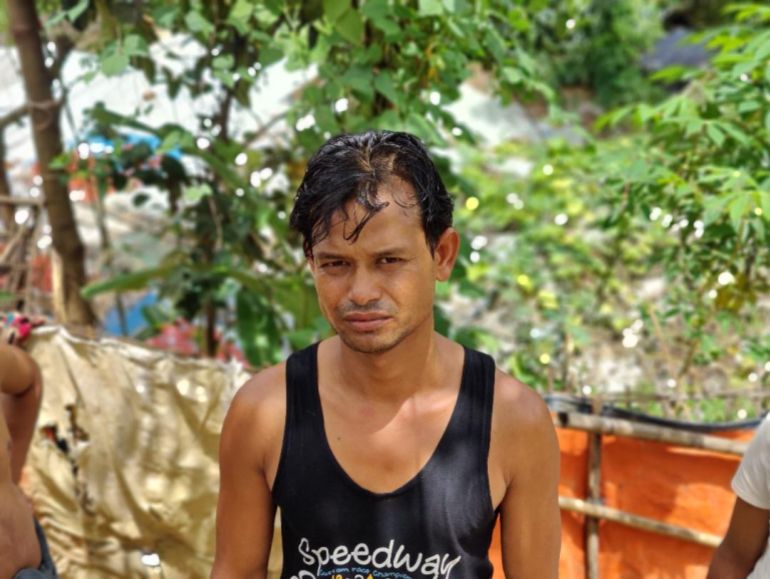
“I first started taking drugs when I was 15,” says 49-year-old Prapat Sukkeaw. “I smoked marijuana, but it was laced with heroin. I felt like I was floating, and it meant that I could forget about all the problems that I faced as a teenager. It was a beautiful feeling.”

Prapat Sukkeaw is one of an estimated 57,000 people who currently injects drugs in Thailand. His drugs of choice, marijuana and heroin, reflect a period in Thailand’s recent history when both illegal narcotics were the main stimulants being trafficked out of the storied Golden Triangle, a remote and somewhat inaccessible region which includes northern Thailand as well as Myanmar and Laos.

49-year-old Prapat Sukkeaw has used drugs since the age of 15.

UN News/Daniel Dickinson

49-year-old Prapat Sukkeaw has used drugs since the age of 15.

Employed by a non-governmental organization (NGO), he has on occasion wanted to give up heroin due to pressure from family and friends. Now, he has recognized that, even if he admits to being addicted, taking drugs “is my preference and my right”. He has now started taking the synthetic drug methamphetamine, as heroin has become progressively more expensive.

Tiếp tục đọc “Thailand: Moving from punishment to treatment of people who use drugs”

Huge increase in transnational crime and synthetic drugs in SE Asia requires cross-border cooperation

United Nations Office on Drugs and Crime

Bangkok (Thailand), 2 June 2023 – A Thai Navy launch travels at high speed down the muddy brown waters of the Mekong River close to the border town of Chiang Saen in the north of Thailand. To the right is Laos, where huge construction projects funded by foreign investment are rising out of the lush undergrowth along the riverbank and ahead to the left are the dense jungles of Myanmar.

This is the storied Golden Triangle where historically opium was grown to produce heroin for export but where, in recent years, the trade of even deadlier and more profitable synthetic drugs has taken over.

Thailand, Laos and Myanmar are at the frontlines of illicit trade in Asia dominated by transnational organized crime syndicates.

RIVER SEIZURE

UN News/Daniel Dickinson | Captain Phakorn Maniam is deployed to the Thai Navy Mekong Riverine Unit

UN News/Daniel Dickinson | Captain Phakorn Maniam is deployed to the Thai Navy Mekong Riverine Unit

RCEP- Regional Comprehensive Economic Partnership  – a boon or a bust for sustainable trade?

gtreview.com ASIA / 18-04-23 / BY ELEANOR WRAGG

As the Regional Comprehensive Economic Partnership (RCEP) machine whirrs into life and trade flows within the bloc increase, could its paucity of explicit ESG provisions lead to a lowering of sustainability ambitions for trade? Eleanor Wragg reports.

Just over a year has passed since RCEP, the world’s largest trade agreement, came into force. Covering a third of the world’s population and linking together least developed countries (LDCs) such as Laos, Cambodia and Myanmar to wealthier nations like Australia, China, South Korea and Japan, the deal promises to inject new impetus into regional integration and cement the position of ‘Factory Asia’ at the centre of the world’s supply chains.

The well-documented linkages between trade liberalisation and increased productivity, wages and employment could help some of RCEP’s poorest countries inch closer to achieving United Nations Sustainable Development Goals (SDGs) 1 – no poverty, and 8 – decent work and economic growth.

However, unlike most recent preferential trade pacts, RCEP does not contain provisions on topics such as the environment or labour rights, raising questions about the extent to which it balances economic interest with social and environmental protections.

A shot in the arm for Asian trade

Thrashed out over eight long years of painstaking negotiations between the 10 Asean member states, Australia, China, Japan, New Zealand, South Korea as well as India – which walked away from talks before they were finalised – RCEP streamlines the tangled web of bilateral trade agreements among its signatories into a bumper megadeal that spans 510 pages of agreement text and thousands upon thousands of pages of associated schedules.

Tiếp tục đọc “RCEP- Regional Comprehensive Economic Partnership  – a boon or a bust for sustainable trade?”

COP28 is a moment of truth for the oil and gas industry’s efforts on climate

IEA.org

Dr Fatih BirolDr Fatih Birol, Executive Director, International Energy AgencyCommentary — 13 May 2023

The COP28 Climate Change Conference in Dubai this year is a unique opportunity for the oil and gas industry to show it’s serious about tackling climate change.  

At a time when the impacts of climate change are increasingly being felt worldwide, oil and gas producers need to secure a new social license to operate. The world needs to see meaningful changes in the operations of both international and national oil companies, with clear and responsible strategies for bringing down their emissions rapidly.

Tiếp tục đọc “COP28 is a moment of truth for the oil and gas industry’s efforts on climate”

Chương trình Hành Động Quốc Gia về Kinh doanh có Trách Nhiệm

Quyết định 843/QĐ-TTg năm 2023 về Chương trình hành động quốc gia hoàn thiện chính sách và pháp luật nhằm thúc đẩy thực hành kinh doanh có trách nhiệm tại Việt Nam giai đoạn 2023-2027 do Thủ tướng Chính phủ ban hành

Đọc và download trên lawnet >>

THỦ TƯỚNG CHÍNH PHỦ
——-
CỘNG HÒA XÃ HỘI CHỦ NGHĨA VIỆT NAM
Độc lập – Tự do – Hạnh phúc
—————
Số: 843/QĐ-TTgHà Nội, ngày 14 tháng 7 năm 2023

QUYẾT ĐỊNH

BAN HÀNH CHƯƠNG TRÌNH HÀNH ĐỘNG QUỐC GIA HOÀN THIỆN CHÍNH SÁCH VÀ PHÁP LUẬT NHẰM THÚC ĐẨY THỰC HÀNH KINH DOANH CÓ TRÁCH NHIỆM TẠI VIỆT NAM GIAI ĐOẠN 2023 – 2027

THỦ TƯỚNG CHÍNH PHỦ

Căn cứ Luật Tổ chức Chính phủ ngày 19 tháng 6 năm 2015; Luật sửa đổi, bổ sung một số điều của Luật Tổ chức Chính phủ và Luật Tổ chức chính quyền địa phương ngày 22 tháng 11 năm 2019;

Căn cứ Nghị quyết số 99/NQ-CP ngày 30 tháng 8 năm 2021 của Chính phủ ban hành Chương trình hành động của Chính phủ nhiệm kỳ 2021 – 2026 thực hiện Nghị quyết của Quốc hội về Kế hoạch phát triển kinh tế – xã hội 5 năm 2021 – 2025;

Căn cứ Nghị quyết số 01/NQ-CP ngày 06 tháng 01 năm 2023 của Chính phủ về nhiệm vụ, giải pháp chủ yếu thực hiện kế hoạch phát triển kinh tế – xã hội, dự toán ngân sách nhà nước và cải thiện môi trường kinh doanh, nâng cao năng lực cạnh tranh quốc gia năm 2023;

Theo đề nghị của Bộ trưởng Bộ Tư pháp.

QUYẾT ĐỊNH:

Điều 1. Ban hành Chương trình hành động quốc gia hoàn thiện chính sách và pháp luật nhằm thúc đẩy thực hành kinh doanh có trách nhiệm tại Việt Nam giai đoạn 2023 – 2027 (sau đây gọi là Chương trình) với những nội dung chủ yếu sau đây:

Tiếp tục đọc “Chương trình Hành Động Quốc Gia về Kinh doanh có Trách Nhiệm”

China’s “National Unified Market” – Standardizing the Domestic Market to Spur Internal Circulation

china-briefing.com

April 14, 2022Posted by China BriefingWritten by Arendse HuldReading Time:  10 minutes

A new set of opinions from the central government describe how China will build a “national unified market” across a wide range of sectors and fields. The national unified market will seek to break down local protectionism and market segmentation by implementing standards and regulations that are applicable countrywide and integrating infrastructure across regions to increase market efficiency, promote fair competition, and ultimately boost domestic consumption and production. The national unified market is a key implementation of China’s “dual circulation” strategy and will likely act as a catalyst for further nationwide industry standards and market regulations in the coming years.

On April 10, 2022, the Central Committee of the Communist Party of China (CCCPC) and the State Council jointly released the Opinions on Accelerating the Construction of the National Unified Market (the “opinions”). This document outlines the creation of a “national unified market” to improve standardization and consistency in the implementation of regulations across a wide range of industries in China. 

Tiếp tục đọc “China’s “National Unified Market” – Standardizing the Domestic Market to Spur Internal Circulation”

Which countries are most exposed to the EU’s proposed carbon tariffs?

resourcetrade.earth Chris Kardish, Mattia Mäder, Mary Hellmich, and Maia Hall, 20 August 2021

The European Union (EU) is moving ahead with the world’s first border tax on the carbon content of imported goods which aims to strengthen its increasingly ambitious climate targets and policies, but is attracting criticism. How would it work and which trading partners are most vulnerable to its impacts?

Steel mill in Novokuznetsk, Russia. (Sergei Bobylev\TASS via Getty Images)

Contents

The EU is accelerating its climate ambition over the coming decade to support its 2050 long-term strategy of reaching net-zero greenhouse gas (GHG) emissions. Key aspects of this acceleration include raising its emissions reduction target from 40 per cent to at least 55 per cent below 1990 levels by 2030 and implementing a sweeping set of policy changes – especially to its flagship emissions trading system (ETS) which puts a price on pollution by requiring companies to purchase allowances for their emissions.

The costs of the allowances have skyrocketed recently and now hovers around record levels of €50 per tonne of carbon dioxide equivalent or above. This is due – at least in part – to those participating in the market expecting a tighter supply of allowances as the EU increases its climate targets. Prices are expected to continue rising over the coming decade as the EU implements its ambitious climate agenda.

Tiếp tục đọc “Which countries are most exposed to the EU’s proposed carbon tariffs?”

ATLAS of SDGs – Sustainable Development Goals 2023

datatopics.worldbank.org

The Atlas of Sustainable Development Goals 2023 presents interactive storytelling and data visualizations about the 17 Sustainable Development Goals. It highlights trends for selected targets within each goal and introduces concepts about how some SDGs are measured.

Explore stories for the 17 SDGs

The Atlas draws from the World Bank’s World Development Indicators database, as well as from a wide variety of relevant data sources, including international organizations, scientists, and other researchers worldwide.

We hope readers will find this fourth edition in the Atlas series engaging and informative, and will be inspired to discover, understand, and visualize progress towards achieving the SDGs, adopted by all member states of the United Nations in 2015.

Hội thẩm nhân dân là gì? Điều kiện trở thành hội thẩm nhân dân


Hội thẩm nhân dân là người được bầu hoặc cử theo quy định của pháp luật để làm nhiệm vụ xét xử những vụ án thuộc thẩm quyền của Toà án. Vậy, vai trò, chứng năng, nhiệm vụ của hội thẩm nhân dân là gì ? Bài viết phân tích và giải đáp cụ thể:

Mục lục bài viết

1. Lịch sử hình thành chế định hội thẩm

Chế độ Hội thẩm (phụ thẩm) nhân dân được ghi nhận và trở thành một chế định quan trọng trong hoạt động của Toà án bằng Sắc lệnh số 33/SL ngày 43.9.1945 và Sắc lệnh số 13/SL ngày 21.1.1946. Hiến pháp năm 1946 19.11.1946 bản Hiến pháp đầu tiên của Nhà nước ta đã chính thức ghi nhận nguyên tắc đại diện nhân dân tham gia xét xử. “Trong khi xét xử việc hình phải có Phụ thẩm nhân dân để tham gia ý kiến nếu là việc tiểu hình, hoặc cùng quyết định với Thẩm phán nếu là việc đại hình”. Bước vào những năm 50, nền tư pháp của chế độ mới đã có những cải cách lớn nhằm đáp ứng đầy đủ hơn nữa yêu cầu của cách mạng, đòi hỏi của nhân dân. Bằng Sắc lệnh số 85/SL ngày 22.5.1950 về cải cách bộ máy tư pháp và Luật tố tụng, phụ thẩm nhân dân được đổi là Hội thẩm nhân dân và đã quy định rõ hơn về địa vị pháp lí của Hội thẩm. Hiến pháp năm 1959 được ban hành và đã ghỉ nhận nguyên tắc Hội thẩm nhân dân tham gia xét xử. “Việc xét xử ở các Toà án nhân dân có Hội thẩm nhân dân tham gia theo quy định của pháp luật” (Điều 59). Trên cơ sở Hiến pháp năm 1959, Luật tổ chức Toà án nhân dân năm 1960 quy định: Khi xét xử sơ thẩm, Toà án nhân dân gồm có một Thẩm phán và hai Hội thẩm nhân dân… (Điều 112). Từ năm 1986, công cuộc đổi mới đất nước theo tinh thần Đại hội Đảng toàn quốc lần thứ VỊ được tiến hành. Để phù hợp với tỉnh thần đổi mới, Hiến pháp năm 1992 được ban hành để thay thế Hiến pháp năm 1980.

Tiếp tục đọc “Hội thẩm nhân dân là gì? Điều kiện trở thành hội thẩm nhân dân”