
Impact of global South research ‘should be recognised’

A Namibian female researcher flying a drone to capture images in the field. Perceptions around quality of global South research ‘need to change’, a panel of research funders and observers heard during the science summit on the sidelines of the UN General Assembly. Copyright: Miggan91 (CC BY-SA 4.0)
Speed read
- Perceptions around quality of global South research ‘need to change’
- Equitable partnerships key to research impact – report
- North-South funding imbalances ‘must be challenged’
By: Sarah Wild
The quality and applicability of research done by institutions in low- and middle-income countries needs to be more broadly recognised, a panel of research funders and observers heard as part of a science summit held on the sidelines of the UN General Assembly.
“When researchers in the global North produce research, it’s understood as if it was universal, whereas when research is done in the global South, then it’s only local and applicable to those settings,” Andrea Ordonez Llanos, executive director of Southern Voice, a network of think tanks in the global South, told the panel discussion on Thursday (21 September).
Tiếp tục đọc “Impact of global South research ‘should be recognised’”Cluster Munition Monitor 2023
Antipersonnel landmines are explosive devices designed to injure or kill people. They can lie dormant for years and even decades under, on, or near the ground until a person or animal triggers their detonating mechanism.
They can be activated by direct pressure from above, by pressure put on a wire or filament attached to a pull switch, by a radio signal or other remote firing method, or even simply by the proximity of a person within a predetermined distance. Because no one controls the detonation of landmines, they can be referred to as victim-activated weapons. Since mines are not aimed at a specific target they can indiscriminately kill or injure civilians, including children, soldiers, peacekeepers, and aid workers.Status of 2008 Convention on Cluster Munitions
Cluster Munition Casualties in 2022 and in Historical Record


Main South Africa Power Union Calls to Suspend Climate Finance Pact
- Transition to renewable energy generation must be ‘just’
- As many as 51,000 jobs could be affected, union says
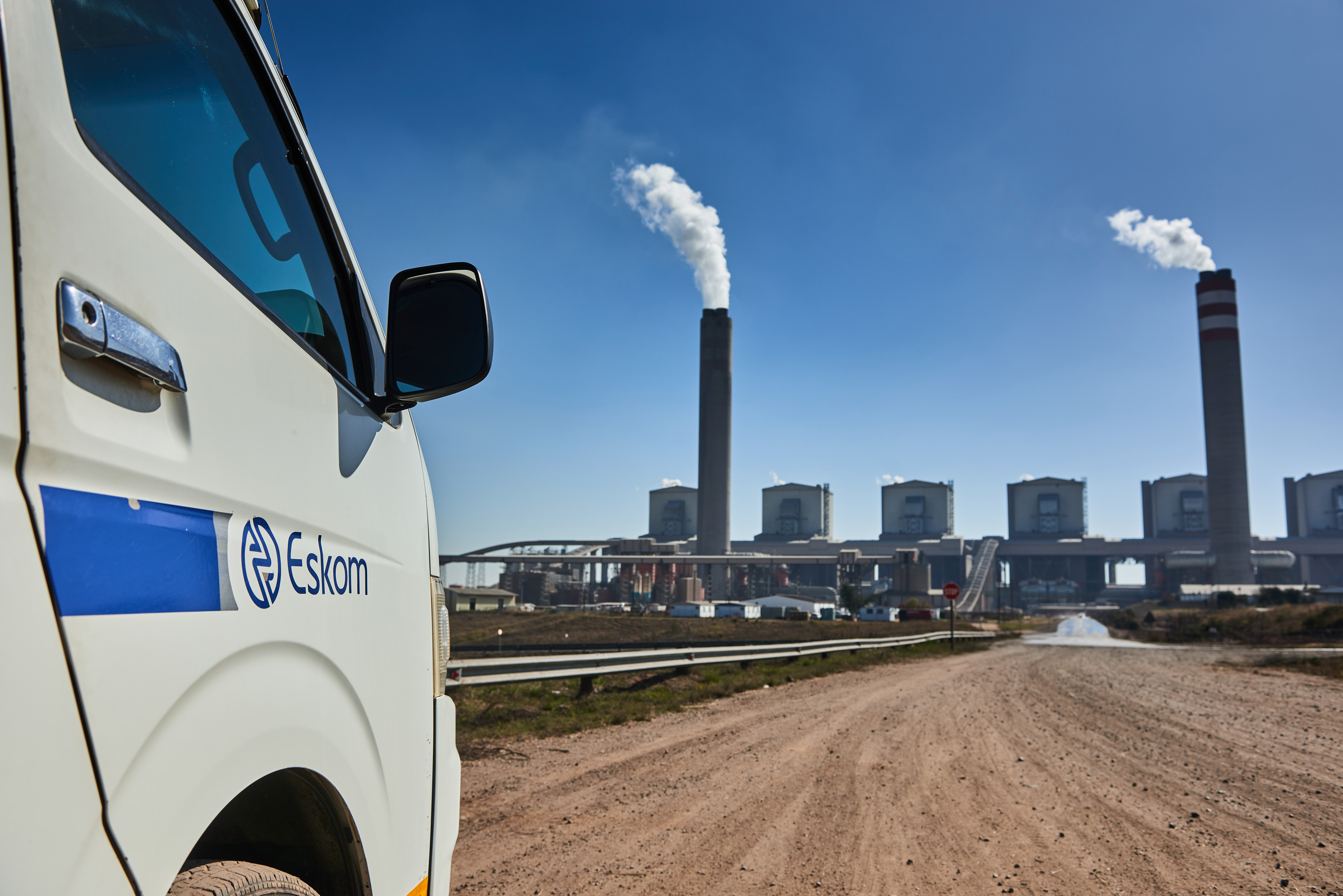
The main labor union at South Africa’s state power utility called for the suspension of an $8.5 billion climate finance pact with some of the world’s richest nations as well as plans to break up Eskom Holdings SOC Ltd. into separate units.
Under the Just Energy Transition Partnership, South Africa agreed to begin moving away from generating electricity from coal, the dirtiest fossil fuel, to producing more renewable energy using financing from Germany, France, the UK, the US and the European Union. As part of a broader transition plan, which didn’t use funding from the so-called JETP, Eskom last year shuttered its Komati coal-fired power plant, with more closures slated to follow.
Tiếp tục đọc “Main South Africa Power Union Calls to Suspend Climate Finance Pact”Critical Minerals Market Review 2023
Full report on IEA
Introduction
Critical minerals, essential for a range of clean energy technologies, have risen up the policy and business agenda in recent years. Rapid growth in demand is providing new opportunities for the industry, but a combination of volatile price movements, supply chain bottlenecks and geopolitical concerns has created a potent mix of risks for secure and rapid energy transitions. This has triggered an array of new policy actions in different jurisdictions to enhance the diversity and reliability of critical mineral supplies.
Since the International Energy Agency’s (IEA) landmark analysis on the Role of Critical Minerals in Clean Energy Transitions and the new ministerial mandates in March 2022, the Agency has expanded its work on critical minerals to help policymakers address these emerging challenges and ensure reliable and sustainable supplies of critical minerals. These efforts include a commitment to regular market monitoring, which aims to provide a clear understanding of today’s demand and supply dynamics and what they mean for the future. In this inaugural piece of analysis, we review the latest price, investment and production trends in the critical minerals sector. The first chapter provides a snapshot of industry developments in 2022 and early 2023. The second chapter reviews key trends in the battery sector given its importance in driving demand growth for critical minerals. The third chapter presents a concise review of key trends for each individual commodity. In the final chapter, we present implications for policy and industry stakeholders.
Tiếp tục đọc “Critical Minerals Market Review 2023”Negotiations and Vietnam: A Case Study of the 1954 Geneva Conference
Descriptive Note: Memorandum
Corporate Author: RAND CORP SANTA MONICA CA
Personal Author(s): Gurtov, Melvin
Report Date: 1968-07-01
Abstract:
An analysis is made of 1 U.S. policy and diplomacy during the 1954 Geneva Conference on Indochina, 2 the objectives of the participants in the conference, 3 the tactics used during the negotiations, and 4 the implications of those tactics for the present conflict. Although Vietnamese unity was not a priority objective of China or the Soviet Union, neither power may have expected a South Vietnamese regime to survive until the national elections. The U.S. goal, among others, was to maximize the Saigon governments chances of posing an authentic challenge in the elections of 1956. In terms of the present conflict, additional Communist participation might complicate rather than strengthen Hanois position by increasing the opportunity for division on issues of troop withdrawal and political settlement. Saigons influence could be reduced if the United States were to limit South Vietnams role to talks with the Viet Cong. In the realm of tactics, Geneva indicates, first, that an ambiguous commitment on the part of the United States to a negotiated settlement can have far greater value than an obvious disposition to accept terms second, that the threat of a use of force hitherto restrained can be more valuable to the U.S. bargaining position than force already applied.
Full report https://www.rand.org/content/dam/rand/pubs/research_memoranda/2005/RM5617.pdf
Mất an ninh lương thực và nước ngày càng trầm trọng do biến đổi khí hậu
05-09-2023 |
Một trong những vấn đề toàn cầu quan trọng hiện đang đe dọa nhân loại là tình trạng mất an ninh lương thực và nước. Tình trạng này ngày càng gia tăng bất chấp nhiều tiến bộ công nghệ vượt trội.

Trung Đông và Bắc Phi là các khu vực dễ bị tổn thương nhất khi xảy ra biến đổi khí hậu.
Ảnh: ec.europa.eu
Đó là nhận định của Tiến sĩ Majid Rafizadeh, nhà khoa học chính trị người Mỹ gốc Iran, từng tốt nghiệp Đại học Harvard, với mạng tin tức Arab (arabnews.com) ngày 3/9.
Theo Tiến sĩ Rafizadeh, khi nói đến hệ thống lương thục, điều quan trọng cần chỉ ra là mối quan hệ chặt chẽ giữa sản xuất lương thực và biến đổi khí hậu. Quá trình sản xuất lương thực toàn cầu tạo ra hơn 1/3 tổng lượng khí thải nhà kính. Đây là một trong những nguyên nhân góp phần gây ra hiện tượng nóng lên toàn cầu và biến đổi khí hậu.
Nhưng tại sao chỉ riêng quá trình sản xuất lương thực có thể tạo ra hơn 1/3 lượng khí thải nhà kính do con người gây ra? Điều này phần lớn liên quan đến quy trình sản xuất, chế biến, bảo quản, đóng gói, phân phối, tiêu thụ và thậm chí thải bỏ.
Các quy trình sản xuất lương thực, bao gồm cả việc sử dụng phân bón, là nguyên nhân hàng đầu gây ra “lượng khí thải tổng thể từ hệ thống sản xuất lương thực, hay 39% tổng lượng khí thải, trong khi khí methane từ chăn nuôi và trồng trọt chiếm 35% lượng khí thải nhà kính từ sản xuất lương thực.
Tiếp tục đọc “Mất an ninh lương thực và nước ngày càng trầm trọng do biến đổi khí hậu”The UN and the multilateral system are in crisis – what the Global South must do
Note taken from wiki:

Developed countries or territories (IMF) (blue)
Developing countries or territories (IMF) (yellow)
Least developed countries (UN) (red)
Data unavailable (grey)
World map showing country classifications per the IMF[1] and the UN[2] (last updated April 2023). The countries in light blue form the “Global North”, the rest are mostly categorized as belonging to the “Global South”, with few exceptions under some listings.
The concept of Global North and Global South (or North–South divide in a global context) is used to describe a grouping of countries along the lines of socio-economic and political characteristics. The Global South is a term that broadly comprises countries in the regions of Africa, Latin America and the Caribbean, Asia (without Israel, Japan, and South Korea), and Oceania (without Australia and New Zealand), according to the United Nations Conference on Trade and Development (UNCTAD).[3][4][a] Most of the countries in the Global South are characterized by low income, dense population, poor infrastructure, and often political or cultural marginalization.[5] The Global South forms one side of the divide; on the other is the Global North (broadly comprising Northern America and Europe, Israel, Japan and South Korea, as well as Australia and New Zealand, according to the UNCTAD).[3][4][a] As such, the terms Global North and Global South do not refer to the cardinal directions of north and south as many of the Global South countries are geographically located in the Northern Hemisphere.
The UN and the multilateral system are in crisis – what the Global South must do
Published: September 28, 2023 2.54pm BST The Conversation
Authors
- Monica Herz Full Professor, Institute of International Relations (PUC-Rio), Associate Dean for Research of the Social Science Center (PUC-Rio), Senior Researcher, BRICS Policy Center, Pontifícia Universidade Católica do Rio de Janeiro (PUC-Rio)
- Giancarlo Summa Co-fundador com Mônica Herz do projeto MUDRAL (Multilateralismo e Direita Radical na América Latina), Pesquisador no Centre d’Études Sociologiques et Politiques Raymond Aron (CESPRA), École des Hautes Études en Sciences Sociales (EHESS)
Disclosure statement
Tiếp tục đọc “The UN and the multilateral system are in crisis – what the Global South must do”Nhiều vụ học sinh đuối nước thương tâm tại Gia Lai
>> Gia Lai: 28 trẻ tử vong do đuối nước chỉ trong 4 tháng đầu năm 2023
Chủ nhật, ngày 01/10/2023 – 12:52 nhandan.vn
NDO – Sáng 1/10, ông Trần Văn Nhơn, Chủ tịch Ủy ban nhân dân xã Kông Lơng Khơng (huyện Kbang, tỉnh Gia Lai) xác nhận trên địa bàn xã vừa xảy ra một vụ đuối nước thương tâm khiến 2 cháu trai tử vong là em Đ.V.Đ (SN 2012) và Đ.V.K (sinh năm 2011, cùng làng Mơhra-Đáp).
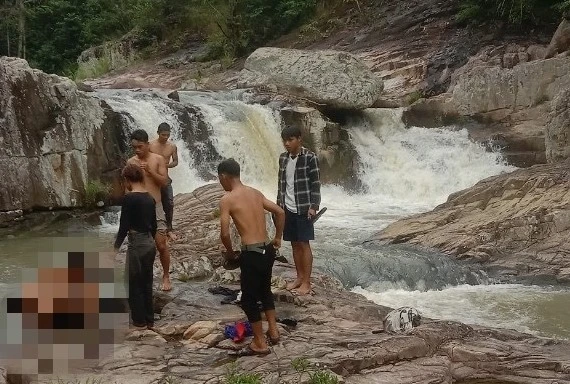 |
| Đoạn suối xã Tơ Tung nơi 2 cháu cháu Đ.V.Đ và Đ.V.K đuối nước. |
Vụ việc xảy ra vào lúc 15 giờ ngày 30/9, cháu Đ.V.Đ và Đ.V.K cùng với 2 em nhỏ khác cùng làng đi xuống suối đầu nguồn xã Tơ Tung (đoạn tiếp giáp giữa làng Đắk Pơ Kao và làng Stơr, xã Tơ Tung) để tắm.
Do trời mưa to, nước suối lên nhanh nên các cháu không may bị đuối nước.
Hai em nhỏ đi cùng thấy vậy liền chạy đi tìm người cứu, tuy nhiên, do suối ở xa khu dân cư nên lúc mọi người đến nơi thì các cháu đã tử vong.
Chính quyền, Mặt trận Tổ quốc và các đoàn thể xã Kông Lơng Khơng và huyện Kbang đã đến chia buồn và hỗ trợ 2 gia đình làm thủ tục mai táng cho 2 cháu.
Trước đó, vào ngày 7/9, trên địa bàn huyện Ia Grai (Gia Lai) cũng xảy ra vụ đuối nước khiến 2 nam sinh L.Đ.P.K (9 tuổi) và T.V.H (10 tuổi) là học sinh của Trường Tiểu học Nguyễn Viết Xuân, cùng trú tại làng Bek, xã Ia Bă, huyện Ia Grai đuối nước thương tâm.
Nguyên nhân là chiều 7/9, trường cho nghỉ học, nên 2 học sinh rủ nhau ra hồ nước ở làng Bek bắt cá, tắm. Đến 15 giờ cùng ngày, nghe tiếng kêu cứu, người dân đến hiện trường đưa 2 em lên bờ và chở đi cấp cứu nhưng L.Đ.P.K và T.V.H tử vong sau đó.
Biến đổi khí hậu đang trở thành thách thức an ninh
(Chinhphu.vn) – Dù ở mức độ quốc gia hay toàn cầu thì biến đổi khí hậu (BĐKH) luôn được xem là vấn đề cấp bách, có tác động tới tiến trình phát triển bền vững trên toàn thế giới. Tác động do BĐKH đang trở thành nguyên nhân gây ra những thách thức an ninh khí hậu.
Nhân Ngày Khí tượng thế giới (23/3) với chủ đề “Đại dương-thời tiết và khí hậu của chúng ta”, Báo điện tử Chính phủ có bài phỏng vấn TS. Tăng Thế Cường, Cục trưởng Cục Biến đổi Khí hậu, Bộ Tài nguyên và Môi trường.
Việt Nam là một trong những quốc gia chịu ảnh hưởng nặng nề nhất của BĐKH, xin ông cho biết tình trạng BĐKH đang diễn ra cực đoan như thế nào trên quy mô toàn cầu và ở Việt Nam?
TS. Tăng Thế Cường: BĐKH đang diễn ra nhanh, trực tiếp tác động mạnh đến an ninh lương thực toàn cầu do nhiệt độ tăng, thay đổi lượng mưa, tần suất các hiện tượng cực đoan, đồng thời làm gia tăng sức ép lên hệ thống đất đai, qua đó bùng phát nguy cơ cao về hoang mạc hoá, suy thoái đất. Những đợt sóng nhiệt, tăng cường, mưa bão, hạn hán, thiên tai, ngập lụt diễn ra ở phạm vi rộng hơn, đặc biệt là ở các thành phố ven biển, gây thiệt hại nặng nề đến cuộc sống con người và tiếp tục hủy hoại các hệ sinh thái. Nước biển dâng sẽ gây ra các đợt tị nạn quy mô lớn do BĐKH.
Tiếp tục đọc “Biến đổi khí hậu đang trở thành thách thức an ninh”Climate Security 101 – AN NINH KHÍ HẬU LÀ GÌ
I. Is climate change a security risk?
II. Will climate change cause wars?
III. Where is climate change the biggest threat to security?
IV. Why do militaries care about climate change?
V. How does climate change compare to other security risks?
VI. What does climate security mean for diplomacy and development?
VII. How can address the security risks of climate change?
VIII. Are only poor nations at risk?
IX. Is climate change only a long-term risk?
X. What’s more important for security: climate change adaptation or mitigation?
XI. What role does technology play in addressing the security risks of climate change?
XII. Should we be worried about “black swan” events?
XIII. Is there a list of relevant government and nongovernmental documents onclimate and security?
XIV. Is there a list of relevant government and nongovernmental documents on climate and security? By year of publication?
See Full report
Vatican: Nhân quyền bắt nguồn từ phẩm giá con người
Ngày 13/9, phát biểu tại phiên họp thứ 54 của Hội đồng Nhân quyền của Liên Hiệp Quốc, Đức Tổng Giám Mục Ettore Balestrero, Quan sát viên Thường trực của Tòa Thánh tại trụ sở Liên Hiệp Quốc ở Genève, Thụy Sĩ, nhắc lại rằng phá thai không phải là một quyền của con người chỉ bởi vì đa số quốc gia khẳng định, bởi vì nhân quyền bắt nguồn từ phẩm giá con người.
Vatican News
Sau khi nhắc lại trong năm 2023, cộng đồng quốc tế và Hội đồng sẽ kỷ niệm 75 năm Tuyên ngôn Quốc tế được thông qua, Đức Tổng Giám Mục Balestrero nhấn mạnh rằng nhân quyền không chỉ đơn giản là một đặc quyền được trao cho các cá nhân bởi sự đồng thuận của cộng đồng quốc tế. Đúng hơn,nhân quyền là biểu hiện của những giá trị khách quan và không tuỳ thuộc thời gian cần thiết cho sự phát triển con người. Tiếp tục đọc “Vatican: Nhân quyền bắt nguồn từ phẩm giá con người”
Detox Development: Repurposing Environmentally Harmful Subsidies
VIEWS9,301DOWNLOADS16,244
Files in English
English PDF (7.66 MB)
14,999 downloads
Other Files
Overview (8.33 MB)
817 downloadsEnglish Appendix (4.04 MB)
428 downloads
Date
2023-06-15
Published
2023-06-15
Author(s)
Abstract
Clean air, land, and oceans are critical for human health and nutrition and underpin much of the world’s economy. Yet they suffer from degradation, poor management, and overuse due to government subsidies. “Detox Development: Repurposing Environmentally Harmful Subsidies” examines the impact of subsidies on these foundational natural assets.
Explicit and implicit subsidies—estimated to exceed US$7 trillion per year—not only promote inefficiencies but also cause much environmental harm. Poor air quality is responsible for approximately 1 in 5 deaths globally. And as the new analyses in this report show, a significant number of these deaths can be attributed to fossil fuel subsidies.
Agriculture is the largest user of land worldwide, feeding the world and employing 1 billion people, including 78 percent of the world’s poor. But it is subsidized in ways that promote inefficiency, inequity, and unsustainability. Subsidies are shown to drive the deterioration of water quality and increase water scarcity by incentivizing overextraction. In addition, they are responsible for 14 percent of annual deforestation, incentivizing the production of crops that are cultivated near forests. These subsidies are also implicated in the spread of zoonotic and vector-borne diseases, especially malaria.
Finally, oceans support the world’s fisheries and supply about 3 billion people with almost 20 percent of their protein intake from animals. Yet they are in a collective state of crisis, with more than 34 percent of fisheries overfished, exacerbated by open-access regimes and capacity-increasing subsidies.
Although the literature on subsidies is large, this report fills significant knowledge gaps using new data and methods. In doing so, it enhances understanding of the scale and impact of subsidies and offers solutions to reform or repurpose them in efficient and equitable ways. The aim is to enhance understanding of the magnitude, consequences, and drivers of policy successes and failures in order to render reforms more achievable.
Citation
“Damania, Richard; Balseca, Esteban; de Fontaubert, Charlotte; Gill, Joshua; Kim, Kichan; Rentschler, Jun; Russ, Jason; Zaveri, Esha. 2023. Detox Development: Repurposing Environmentally Harmful Subsidies. © Washington, DC : World Bank. http://hdl.handle.net/10986/39423 License: CC BY 3.0 IGO.”
URI
http://hdl.handle.net/10986/39423
Collections
The Economics of E-Mobility for Passenger Tranportation
World Bank, Nov. 11, 2022
Overview
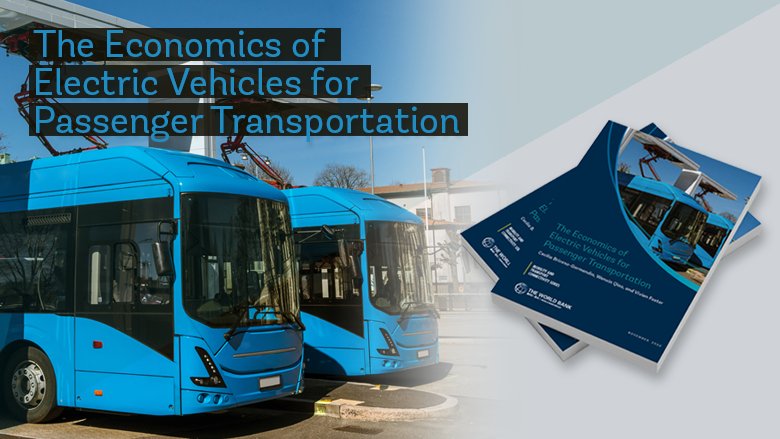
Electrification of transport is one of the most talked about instruments to set the world on a net-zero carbon trajectory. Despite the advantages electric vehicles bring, they remain a relative rarity in developing countries. Most of the world’s 6.6 million EV sales in 2021 were concentrated in major global markets such as China, Europe and the United States. The reason? Electric vehicles come at a cost premium, sometimes more than 70% compared to conventional vehicles, creating a financial hurdle for many consumers in developing countries.
But according to The Economics of E-Mobility for Passenger Transportation, feasible entry points to an electric mobility transition are emerging in several developing countries. Electric buses, which cover long mileage and high occupancy, and electric two- and three-wheeled vehicles, which provide last-mile connectivity, can be cost-effective starting points that also bring development benefits. In about half the countries studied in this report, there is already a strong economic case for e-mobility adoption that is likely to further improve in the next few years.
Tiếp tục đọc “The Economics of E-Mobility for Passenger Tranportation”

