Hanoi’s persistent air pollution reaches hazardous level

Related:

Unclean air: Study finds pollution at dangerous level in HCMC’s new urban areas

Vietnam’s air quality among the worst in the world: study

Hanoi most polluted city in Southeast Asia: expert

Smog begins to blanket Saigon as air pollution soars

Urban dilemma: Fast-growing Ho Chi Minh City misses most environmental targets

HANOI – Saturday, March 05, 2016 13:11

Bike riders ride past a dusty road in Hanoi. Photo: Le Hieu/Zing
thanhniennews – Air pollution in Hanoi is worsening and has reached dangerous levels this week, according to official data.

Many locals are worried that the capital city is becoming another Beijing while environment officials said the situation is bad, but not that bad.

The Real-time Air Quality Index on aqicn.org on recent days ranked the pollution in Hanoi as “unhealthy” and “very unhealthy,” which means outdoor exertion should be limited for everyone.

Aqicn.org uses data collected from Vietnam Center for Environment Monitoring from the environment ministry, the United Nations International School of Hanoi and the US Embassy in Hanoi.

The index in Hanoi on Tuesday morning reached the “hazardous” 388, a level in which everyone may experience more serious health effects and everyone should avoid all outdoor exertion, according to the site.

The peak index has prompted several local media outlets to compare Hanoi with Beijing, whose air pollution usually scores above 300.
Tiếp tục đọc “Hanoi’s persistent air pollution reaches hazardous level”

Đà Nẵng ban hành quyết định ‘bảo vệ’ người bán dâm

03:00 PM – 01/03/2016 TN

TP.Đà Nẵng nhận định việc chăm sóc, bảo vệ khẩn cấp người bán dâm có nguy cơ bị xâm hại, lạm dụng tình dục sẽ góp phần đảm bảo trật tự xã hội - Ảnh minh họa từ Shutterstock
TP.Đà Nẵng nhận định việc chăm sóc, bảo vệ khẩn cấp người bán dâm có nguy cơ bị xâm hại, lạm dụng tình dục sẽ góp phần đảm bảo trật tự xã hội – Ảnh minh họa từ Shutterstock

Theo UBND TP.Đà Nẵng, việc tiếp nhận đối tượng người bán dâm có nguy cơ bị xâm hại, lạm dụng tình dục vào cơ sở bảo trợ xã hội không bị coi là xử lý vi phạm hành chính.

Thông tin đăng tải trên Cổng thông tin điện tử TP.Đà Nẵng ngày 29.2 cho biết UBND TP.Đà Nẵng vừa ban hành quyết định về việc cho phép tiếp nhận người bán dâm trên địa bàn TP có nguy cơ bị xâm hại, bị lạm dụng tình dục vào cơ sở bảo trợ xã hội để chăm sóc, bảo vệ khẩn cấp góp phần đảm bảo trật tự xã hội. Tiếp tục đọc “Đà Nẵng ban hành quyết định ‘bảo vệ’ người bán dâm”

Rác thải y tế độc hại lọt từ bệnh viện ra thị trường: Sự thật khủng khiếp bên trong bệnh viện

– 7 NHÓM PHÓNG VIÊN 6:50 AM, 08/01/2016
Thay vì phải tiêu hủy, rác thải y tế độc hại được “âm thầm” phân loại ngay tại BV Bạch Mai (Hà Nội) để chuyển cho một đường dây thu gom.

Hàng chục tấn rác thải y tế độc hại lẽ ra phải bị tiêu hủy theo đúng quy trình nghiêm ngặt tại những cơ sở được cấp phép lại đang được “âm thầm” sơ chế tại một trong những cơ sở khám – chữa bệnh lớn và uy tín nhất Việt Nam: Bệnh viện Bạch Mai (Hà Nội). Để rồi, những phế phẩm vô cùng nguy hại này được tái chế thành những sản phẩm nhựa tại những cơ sở sản xuất thủ công ngay ngoại thành Hà Nội, và rất có thể chúng trở thành những chiếc thìa nhựa, cốc nhựa mà người dân vẫn sử dụng hằng ngày.

Tiếp tục đọc “Rác thải y tế độc hại lọt từ bệnh viện ra thị trường: Sự thật khủng khiếp bên trong bệnh viện”

Cancer burden in Vietnam: Avoidable consequences, preventable illness

Tuoi Tre News

Updated : 12/17/2015 07:55 GMT + 7

Death and the detrimental effects of cancer, which is itself a preventable disease, can be avoided by early detection and proper treatment.

>> Cancer burden in Vietnam: P2 – The culprits
>> Cancer burden in Vietnam – P1: Liabilities

tuoitrenews – Contrary to popular belief that a diagnosis of cancer means a death penalty, experts have asserted otherwise.

The cancer burden would be significantly eased by adopting a comprehensive preventative model, made possible with competent agencies’ effective administrative role and improved awareness.

Dr. Nguyen Chan Hung, chair of the Cancer Association of Vietnam, warned that diets rich in animal fat and meat, tainted food, dried salty fish or pickled vegetables, or insufficient vegetables and fruits are among the contributory factors of different types of cancer.

Those who smoke or drink heavily, and lead a sedentary lifestyle, also stand higher risks of contracting the illness.

According to Dr. Tran Thi Anh Tuong, vice head of the Nutrition Department of Ho Chi Minh City Oncology Hospital, all cancers start because abnormal cells grow out of control.

Cancerous cell growth is different from normal cell growth.

Instead of dying, cancerous cells continue to grow and form new, abnormal cells.

Cancer cells can also invade, or grow into, other tissues, something that normal cells cannot do.

Except for some unavoidable factors including genetic elements and old age, other causes are preventable thanks to a healthy lifestyle and adequate knowledge of the disease.

Early diagnosis saves lives, cuts costs

Dr. Mai Trong Khoa, deputy director of Bach Mai Hospital in Hanoi and director of the Nuclear Medicine and Oncology Center, told Tuoi Tre (Youth) newspaper earlier this month that approximately 100,000 out of 125,000 new cancer patients in Vietnam die of the illness each year.

New cancer cases have gone up especially fast recently, while the mortality rate has also been on the rise. Tiếp tục đọc “Cancer burden in Vietnam: Avoidable consequences, preventable illness”

In a world with no antibiotics, how did doctors treat infections?

Theconversation – The development of antibiotics and other antimicrobial therapies is arguably the greatest achievement of modern medicine. However, overuse and misuse of antimicrobial therapy predictably leads to resistance in microorganisms. Antibiotic-resistant bacteria such as methicillin-resistant Staphylococcus aureus (MRSA), vancomycin-resistant Enterococcus species (VRE) and carbapenem-resistant Enterobacteriaceae (CRE) have emerged. Certain CRE species are resistant to multiple antibiotics, and have been deemed “superbugs” in the news.

Alternative therapies have been used to treat infections since antiquity, but none are as reliably safe and effective as modern antimicrobial therapy.

Unfortunately, due to increasing resistance and lack of development of new agents, the possibility of a return to the pre-antimicrobial era may become a reality.

So how were infections treated before antimicrobials were developed in the early 20th century?

Blood, leeches and knives

Bloodletting was used as a medical therapy for over 3,000 years. It originated in Egypt in 1000 B.C. and was used until the middle of the 20th century.

Medical texts from antiquity all the way up until 1940s recommend bloodletting for a wide variety of conditions, but particularly for infections. As late as 1942, William Osler’s 14th edition of Principles and Practice of Medicine, historically the preeminent textbook of internal medicine, included bloodletting as a treatment for pneumonia. Tiếp tục đọc “In a world with no antibiotics, how did doctors treat infections?”

Nơi dòng máu các dân tộc hòa chung

        Năm nay số sinh viên đăng ký tham gia Chủ Nhật Đỏ tại trường Đại học Tây Nguyên đông hẳn hơn năm trước. Trong gió chiều lạnh giá, hàng nghìn bạn trẻ các dân tộc khác nhau đứng chờ được gọi tên, để hiến máu cứu người.

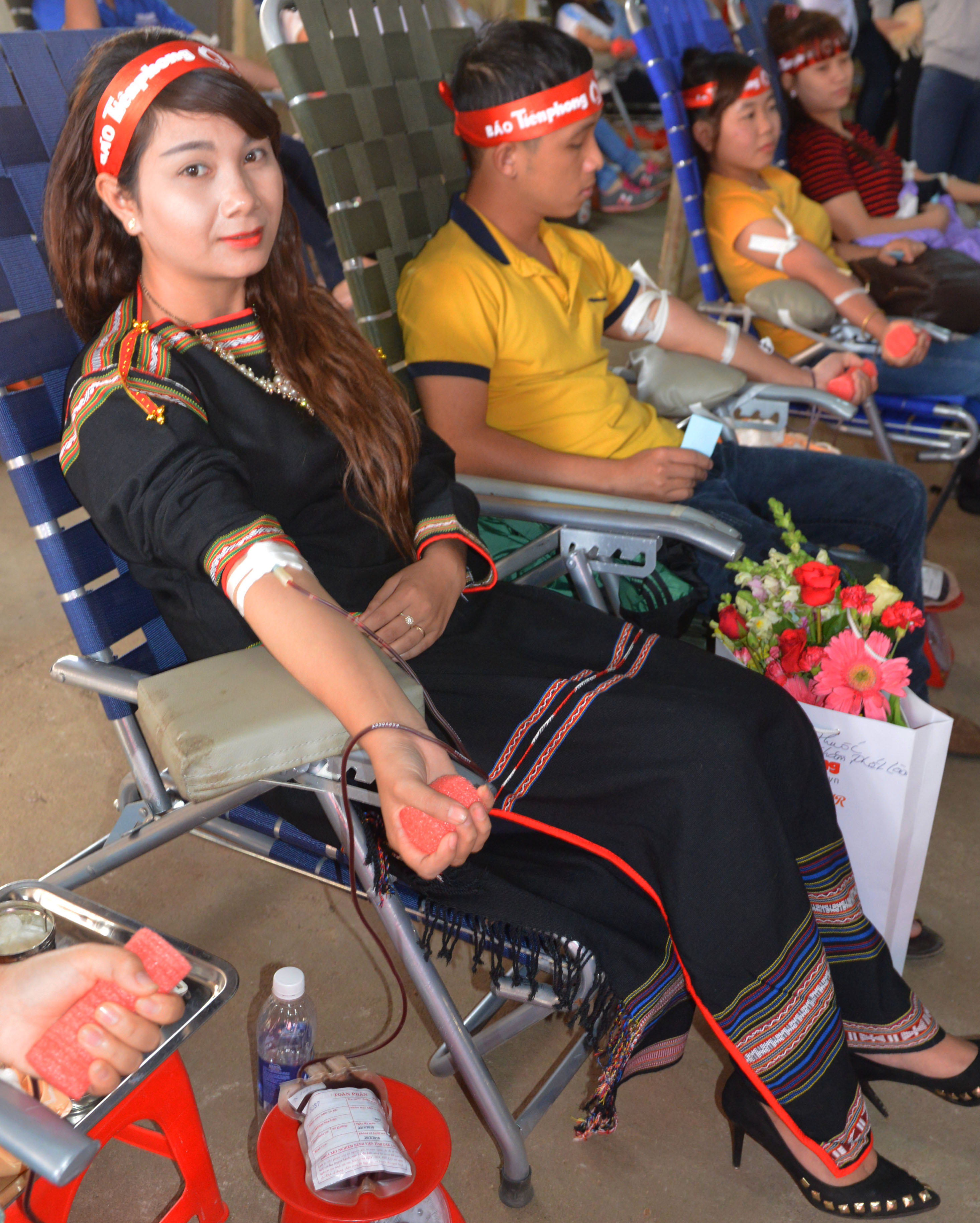
Hiến máu trong trang phục thổ cẩm Ê Đê

Tiếp tục đọc “Nơi dòng máu các dân tộc hòa chung”

Điểm hẹn số 2 tại Đắk Lắk – Đồng bào thôn xã trẩy hội Chủ Nhật Đỏ

          Trong 3 địa điểm đăng cai tổ chức Chủ Nhật Đỏ lần thứ 3 ở tỉnh Đắk Lắk, huyện Ea Kar là nơi có đến trên hai nghìn người đăng ký tham gia. Gần trọn ngày 23/1/2016, đông đảo nhân dân, cán bộ, đồng bào các dân tộc từ nhiều buôn làng, thôn xã, thị trấn lũ lượt kéo về Nhà Văn hóa Trung tâm huyện đông vui như trẩy hội.

Học trò, nhà giáo, công an tích cực hiến máu

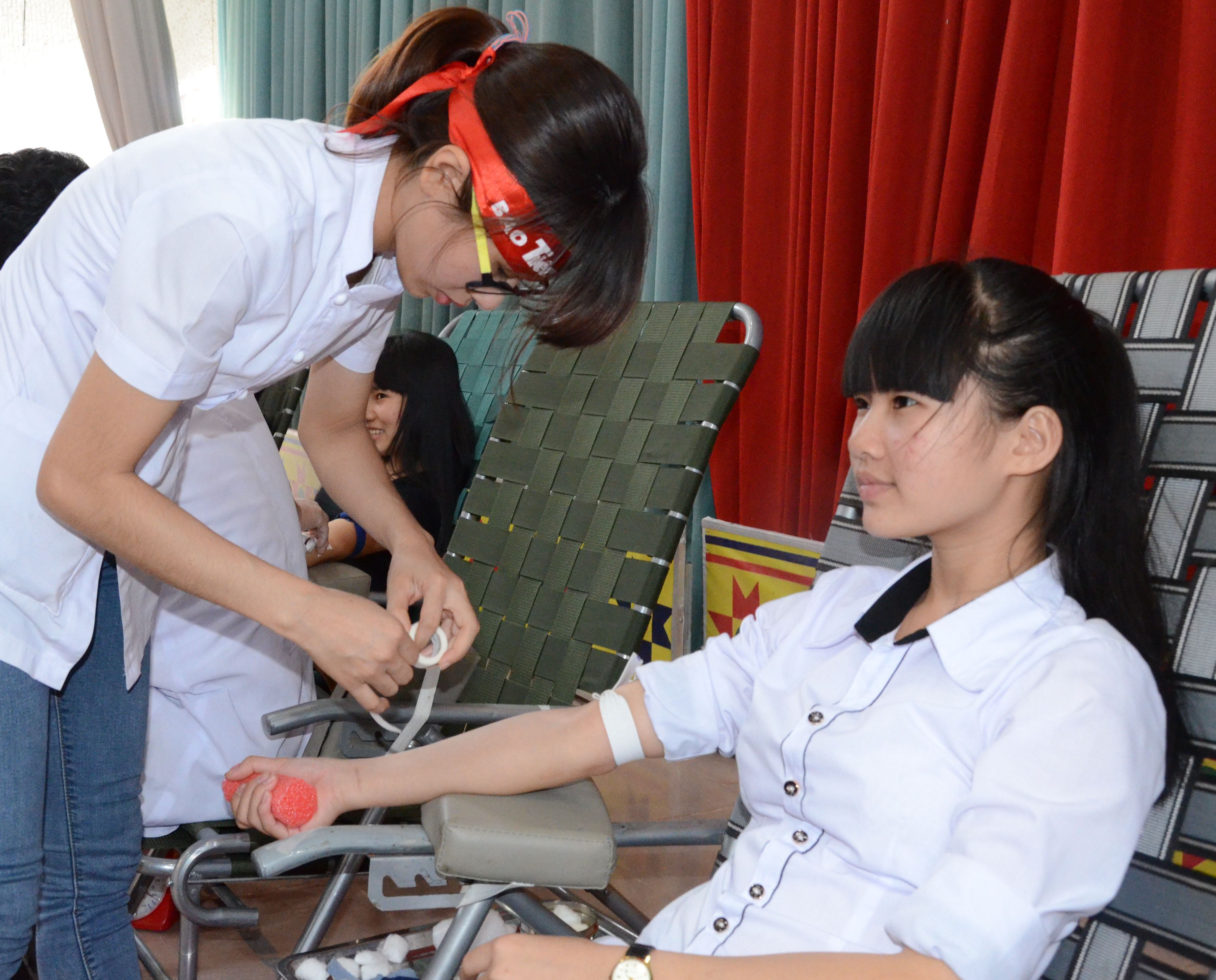
          Từ sáng sớm, Trung tâm văn hoá huyện Ea Kar đã chật như nêm người và xe đến đăng kí tham gia hiến máu. Trong đó có cả già lẫn trẻ, thanh niên, công chức, học sinh.

Đây là lần đầu tiên được hiến máu, nữ sinh Nông Thị Nguyệt dân tộc Tày ở xã Xuân Phú hồi hộp kể : Khi nghe trường thông báo cách đây 3 tuần là chương trình Chủ Nhật Đỏ (CNĐ) sẽ được báo Tiền Phong tổ chức tại Ea Kar, lập tức hơn 20 bạn lớp 12C4 trường THPT Trần Nhân Tông đã chen nhau đăng ký.

Nữ sinh Nông Thị Nguyệt dân tộc Tày lần đầu hiến máu

Tiếp tục đọc “Điểm hẹn số 2 tại Đắk Lắk – Đồng bào thôn xã trẩy hội Chủ Nhật Đỏ”

Mở màn Chủ Nhật Đỏ tại Đắk Lắk: Điểm hẹn đẹp nhất của tinh thần thiện nguyện

Ngày 21/1/2016, trường Cao đẳng sư phạm (CĐSP) tỉnh Đắk Lắk đã trở thành địa chỉ mở màn cho chuỗi sự kiện “Chủ nhật đỏ” lần thứ III – năm 2016 do báo Tiền Phong tổ chức trên địa bàn tỉnh Đắk Lắk.

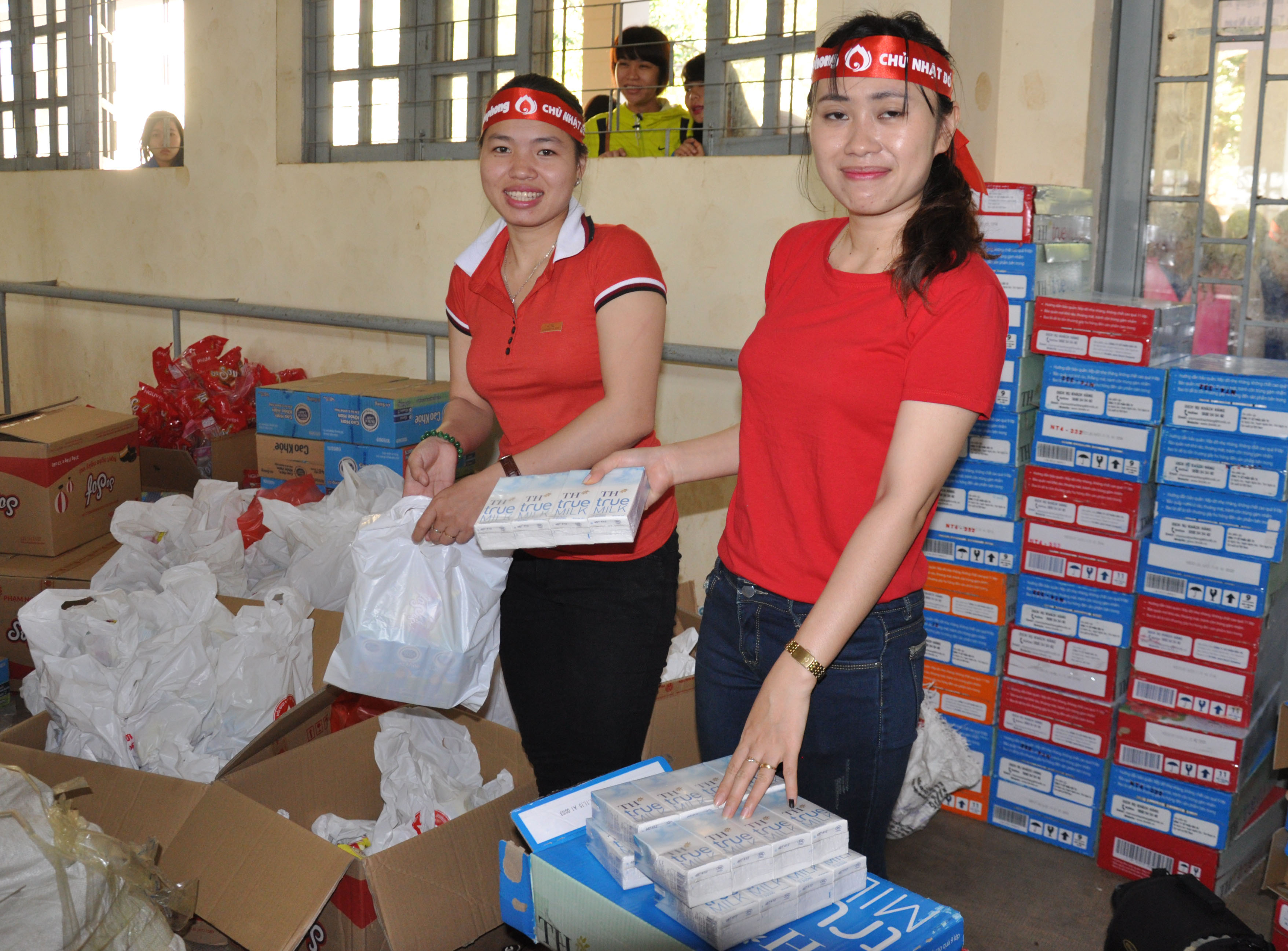
Từ 7 giờ sáng, khu vực nhà Thi đấu đa năng của trường CĐSP đã tấp nập các hoạt động chuẩn bị tiếp nhận máu của đội ngũ y bác sĩ, kỹ thuật viên; hàng trăm sinh viên, nhân viên các khoa phòng tới đăng ký hiến máu; Các phóng viên, nhân viên Ban Đại diện báo Tiền Phong chuẩn bị đầy đủ nước uống, quà tặng, sữa, hoa … phục vụ chương trình.

Chuẩn bị sữa và quà cho người tình nguyện hiến máu

Tiếp tục đọc “Mở màn Chủ Nhật Đỏ tại Đắk Lắk: Điểm hẹn đẹp nhất của tinh thần thiện nguyện”

Food firms failing to tackle nutrition crisis

Rising obesity and malnutrition are indicators that a global nutrition crisis is mounting, but the world’s largest food and beverage (F&B) companies are not doing enough to solve it, a new study says.

ecobusiness – Rising rates of obesity and malnourishment indicate that a global nutrition crisis is mounting, but the world’s largest food and beverage (F&B) companies are not doing enough to solve it, a new study says.

Released on Thursday in London, the Global Access to Nutrition Index report found that while leading food firms have made some progress towards improving consumers’ diets, there is much more the sector can do to tackle these widespread issues.

The index, which was first launched by the Netherlands-based non-profit Access to Nutrition Foundation (ANF) in 2013 and is now in its second edition, assesses the 22 largest food companies on how well their corporate strategy, product offering and marketing efforts address obesity and under-nutrition. Tiếp tục đọc “Food firms failing to tackle nutrition crisis”

Health care in Vietnam Limping along

Ordinary folk are sick and tired of their public hospitals

Full to overflowing

economist – WAS the tumour malignant? Nguyen Thi Hoat’s doctors could not tell because their public hospital lacks brain-scanners. Ms Hoat’s only option was to travel 130km (80 miles), on the back of her sister’s motorbike, from her village to a crowded public hospital in the capital. Yet her state insurance policy covers just 30% of any medical expenses incurred outside her home province. The $150 that Ms Hoat, a rice farmer, put towards blood tests and a brain scan is equal, for her, to a month’s earnings.

It is the job of the authorities to look after health care. The Communist Party of Vietnam first pledged health-sector reform as early as the 1920s, well before it declared the country independent in 1945. It developed a publicly financed health-care system even as it was fighting wars against France and then America. The provision of health care is supposed to be one of the pillars on which the party’s legitimacy is based.
Tiếp tục đọc “Health care in Vietnam Limping along”

Tình người trong mỗi giọt máu hiến

Phóng sự của Hoàng Thiên Nga

Từ thành thị tới buôn làng vùng sâu vùng xa, mỗi khi nghe vận động hiến máu lập tức đông đảo tình nguyện viên có mặt. Mươi năm trước điều đó chỉ có trong mơ ước, nhưng vài năm gần đây đã thành sự thật, và Đắk Lắk đã là một trong những tỉnh thành tích cực nhất trên cả nước về phong trào hiến máu cứu người.

Hiến máu đã trở thành phong trào rộng khắp trên cả tỉnh Đắk Lắk

Tiếp tục đọc “Tình người trong mỗi giọt máu hiến”

Family planning in Vietnam Running deer

A draft population law looks ill-considered and discriminatory

Làng chỉ có trẻ em

06/12/2015 08:15 GMT+7

TTỞ khu tái định cư thôn Giang Đông, xã Ea Đăh, huyện Krông Năng (Đắk Lắk) có hơn 100 trẻ em người Mông (6-18 tuổi) sinh sống, học tập và tự chăm sóc lẫn nhau.

Các em nhỏ ở khu tái định cư Giang Đông chơi trò kéo co - Ảnh: Tiến Thành
Các em nhỏ ở khu tái định cư Giang Đông chơi trò kéo co – Ảnh: Tiến Thành

Cha mẹ các em bỏ khu tái định cư quay lại thôn cũ cách đó 12km, nằm sâu trong rừng để kiếm sống và khoảng một tháng họ mới ra thăm, tiếp tế lương thực cho các em học hành.

Ông Giàng A Nụ – trưởng thôn Giang Đông – cho biết khu tái định cư được xây dựng từ năm 2004 với 87 căn nhà. Tiếp tục đọc “Làng chỉ có trẻ em”

Việt Nam sẽ là quốc gia siêu già vào năm 2050

Thứ tư, 02/12/2015 – 11:49 AM (GMT+7)
Việt Nam sẽ là quốc gia siêu già vào năm 2050

NDĐTSáng 2- 12, tại TP Vĩnh Yên, tỉnh Vĩnh Phúc, Bộ Y tế và Tổ chức Y tế thế giới tổ chức Đối thoại về chính sách y tế người cao tuổi. Tại đây các chuyên gia trong nước và các tổ chức quốc tế đều chỉ rõ, Việt Nam là một trong mười nước có tỷ lệ già hóa nhanh nhất thế giới. Việt Nam sẽ là quốc gia siêu già vào năm 2050.

Tỷ lệ người cao tuổi ở Việt Nam tăng nhanh và liên tục từ 7,1% dân số (năm 1989) lên 10,5% (năm 2013). Nước ta đã chính thức bước vào giai đoạn già hóa dân số từ năm 2011, nhanh hơn sáu năm so với dự báo (2017).

Tiếp tục đọc “Việt Nam sẽ là quốc gia siêu già vào năm 2050”

How to stop antibiotic resistance threatening global growth

This article is published in collaboration with Project Syndicate.

weforum – November marked a setback in the fight against drug-resistant infections. Scientists announced that they had found bacteria that were resistant to colistin, known as an antibiotic of last resort. Even more alarming, they discovered that the gene providing the resistance could migrate from one strain of bacteria to another, meaning other types of infections could also become untreatable. The announcement prompted public health experts to renew their warnings that the world risks slipping into a deadly, post-antibiotic era.

But November also brought some good news – even if it received less notice. When the G-20 met in Antalya, the leaders of the world’s largest economies agreed that antimicrobial resistance was a threat to global growth. Buried in the last paragraph of the communiqué issued at the conclusion of the summit was an agreement to put the issue on the agenda of the organization’s next meeting. “We agree that attention should be given to global health risks, such as antimicrobial resistance, infectious disease threats, and weak health systems,” read the communiqué. “These can significantly impact growth and stability.”

This is an important development. The G-20 would be an ideal forum in which to take international action against antimicrobial resistance. The countries most at risk from the problem include Brazil, Russia, India, and China (the BRICs), none of which is a G-7 member. These countries are also among those most likely to find solutions to the challenge. Furthermore, the attendees at the G-20’s summits include heads of state and economic ministers, without whom no solution can be implemented.

Tiếp tục đọc “How to stop antibiotic resistance threatening global growth”