
CFR.org Last Updated February 14, 2023
Explore how colonialism enriched empires and fundamentally reshaped countries such as India.
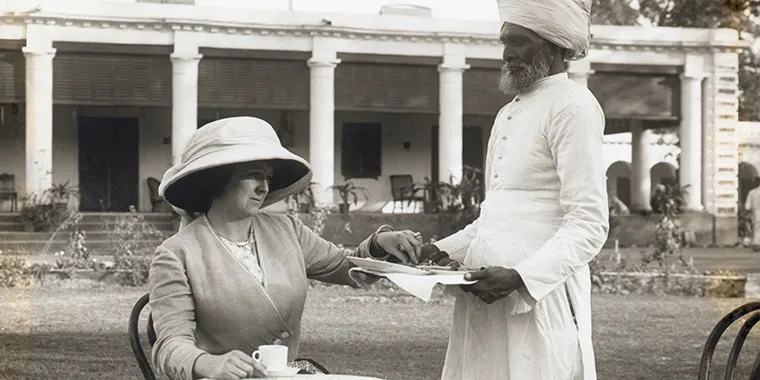
A Hindu servant serves tea to a European colonial woman in this undated photograph. Source: George Rinhart/Corbis via Getty ImagesSHARE
In the late seventeenth century, the Mughal Empire controlled almost all of the Indian subcontinent.
European visitors marveled at the empire’s wealth and grandeur. Antonio Monserrate, a Portuguese Jesuit missionary, called its cities “second to none either in Asia or in Europe with regards either to size, population, or wealth.”
For centuries, merchants around the world had traveled to India, eager to trade for coveted silk, spices, and textiles. And in 1700, India’s economy was larger than all of Western Europe’s put together, making up nearly 25 percent of the global economy. By 1973, however, that number had dropped to just 3 percent.
How did this happen?
The full story is long, winding, complex, and contentious. It involves centuries of war, technological innovation, and global trade that sent some economies soaring and brought others crashing down. But central to this story for India—and for so many countries around the world—is the history of colonialism, the practice of controlling another country or area and exploiting its people and resources.








 CVD
CVD 