Two Koreas, Two Development Policies

cfr.org

How did two countries with the same language, culture, and history turn out so differently?

Last Updated April 28, 2023

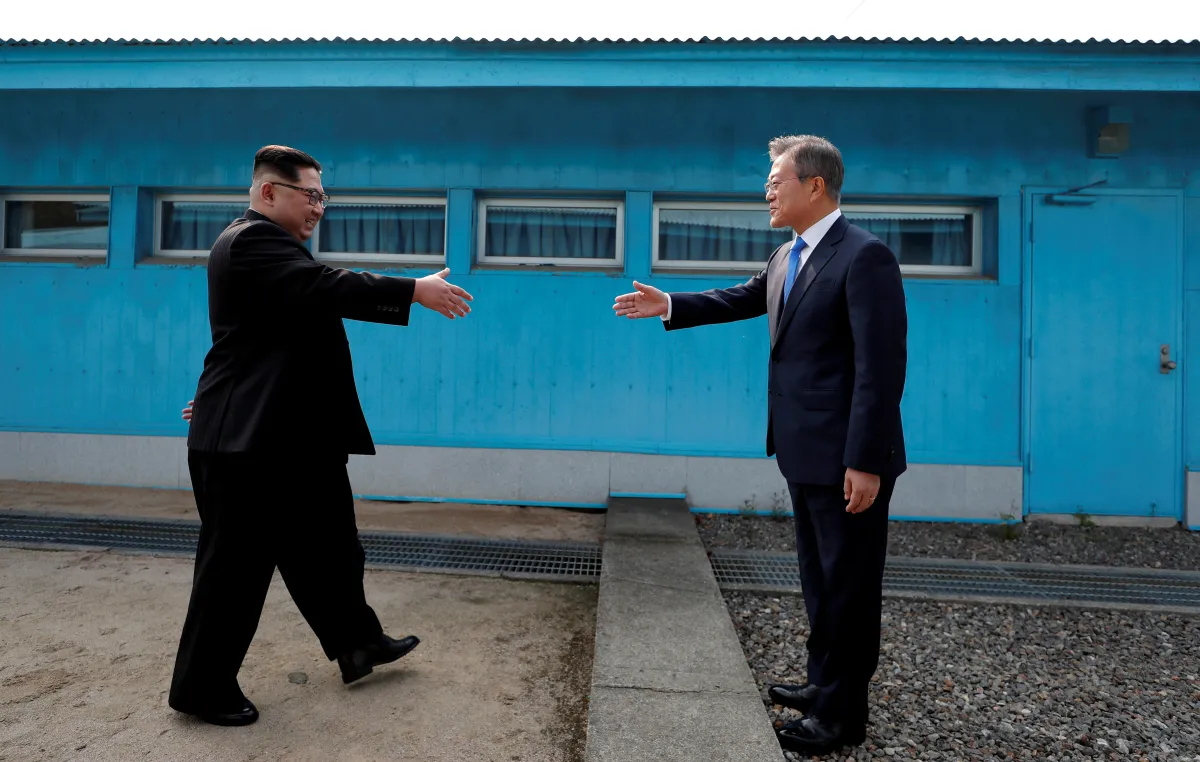
North Korean and South Korean leaders walking towards each other with arms extended for a handshake.

South Korean President Moon Jae-in and North Korean leader Kim Jong Un shake hands at the truce village of Panmunjom inside the demilitarized zone separating the two Koreas, South Korea, April 27, 2018.

Source: Korea Summit Press Pool via Reuters.SHARE

South Korea is one of the world’s most successful economies. It’s home to billion-dollar corporations like Samsung and produces some of the best high-tech electronics. But just across the border, North Korea is one of the most impoverished countries in the world. How can two countries with the same language, culture, and history—that were, not long ago, one united country—turn out so differently?

North and South Korea had been one nation for over a thousand years. Theoretically, they could have developed similarly after splitting in 1945, at the end of World War II. In fact, North Korea possessed the resources to outpace the south in development. But the political and economic decisions their leaders made destined the countries for completely different futures.

https://datawrapper.dwcdn.net/gOOgt/1/

The Division of the Koreas

Tiếp tục đọc “Two Koreas, Two Development Policies”

A controversial article praises colonialism. But colonialism’s real legacy was ugly.

washingtonpost.com September 19, 2017 at 6:00 a.m. EDT

Women and children prepare to flee with their belongings near the Central African Republic town of Grimari on May 7, 2014. (Siegfried Modola/Reuters)

How many of today’s problems in the Global South are a direct legacy of colonialism? A recent journal article by Bruce Gilley,  “The Case for Colonialism,” kicked up great controversy by arguing that the “orthodoxy” that Western colonialism was universally harmful to colonized peoples and countries is overstated. Colonialism, Gilley writes, was “both objectively beneficial and subjectively legitimate” in many places.

Gilley, a political scientist at Portland State University, studies Chinese politics and recently made waves for resigning his membership in the American Political Science Association over its alleged lack of political diversity. His article in Third World Quarterlyhowever, ignores many existing studies that answer these questions with better data and more rigorous analysis, and which come to a resounding conclusion of “no.”

Tiếp tục đọc “A controversial article praises colonialism. But colonialism’s real legacy was ugly.”

What Is Colonialism and How Did It Arise?

CFR.org Last Updated February 14, 2023

Explore how colonialism enriched empires and fundamentally reshaped countries such as India.

A Hindu servant serves tea to a European colonial woman in this undated photograph.

A Hindu servant serves tea to a European colonial woman in this undated photograph. Source: George Rinhart/Corbis via Getty ImagesSHARE

In the late seventeenth century, the Mughal Empire controlled almost all of the Indian subcontinent.

European visitors marveled at the empire’s wealth and grandeur. Antonio Monserrate, a Portuguese Jesuit missionary, called its cities “second to none either in Asia or in Europe with regards either to size, population, or wealth.”

For centuries, merchants around the world had traveled to India, eager to trade for coveted silk, spices, and textiles. And in 1700, India’s economy was larger than all of Western Europe’s put together, making up nearly 25 percent of the global economy. By 1973, however, that number had dropped to just 3 percent. 

How did this happen?

The full story is long, winding, complex, and contentious. It involves centuries of war, technological innovation, and global trade that sent some economies soaring and brought others crashing down. But central to this story for India—and for so many countries around the world—is the history of colonialism, the practice of controlling another country or area and exploiting its people and resources.

Tiếp tục đọc “What Is Colonialism and How Did It Arise?”

1,000 years of history sandwiched between Red River and Mekong delta on the Reunification Express through Vietnam

scmp.com Published: 1:15pm, 3 Sep, 2023

A journey from Hanoi, the Vietnamese capital, via former capitals Ninh Binh and Hue, to Ho Chi Minh City, its investment capital, reveals much about the country

It’s difficult not to think about trains while in downtown Hanoi, especially at mealtimes.

Long metal caravans shunting through town in plain view of the near-ubiquitous streetside eateries contribute a periodic clappity-clap rhythm to the city’s clamorous soundtrack.

Tracks girdle the historical heart of the Vietnamese capital like the head of a question mark and in doing so, connect two of Hanoi’s most popular sites: the Long Bien Bridge, a colonial structure spanning the Red River that was bombed so many times during the Vietnam war it became a symbol of national resistance, and Ngo 224 Le Duan (better known as Train Street), an alleyway along which trains pass perilously close to houses and makeshift cafes.

However, my travel inspiration comes not from the recurrent glimpses of locomotives, but from an old propaganda poster hanging in a tourist shop opposite the Cathedrale Saint-Joseph de Hanoi.

A train nuzzles its way down “Train Street”, a modern-day tourist attraction in Hanoi, Vietnam. Photo: Thomas Bird
Tiếp tục đọc “1,000 years of history sandwiched between Red River and Mekong delta on the Reunification Express through Vietnam”

Theravada Buddhism intheSpiritual Life ofKhmer People intheSouthern of Vietnam: Position, Role and Values

psychologyandeducation.net

Nguyen Huu Tho, Kien Giang University

Buddhist philosophy has long permeated the Khmer ethnic community. In this community, the relationship between ethnicity (Khmer people) and religion (Theravada Buddhism) is closely linked together. The Southern Khmer temple is a cultural center of this ethnic group. This place is associated with cultural activities and folk rituals, and at the same time is a traditional school that teaches the knowledge, human ethics, and handicraft. The pagoda is like a museum about Buddhism and the art of “Phum” and “Soc”, a place for Khmer people to rely on their souls when they live and send their ashes when they die. This study refers to the position and role of Theravada Buddhism for Khmer people. From there, state the current situation and make recommendations to the Vietnam Buddhist Sangha and state management agencies, in order to contribute to preserving and promoting the values ​​of Khmer Theravada Buddhism and strengthening the great national unity bloc.

Article Details Vol. 58 No. 5 (2021): Vol. 58 No. 5 (2021)

Sau 50 Năm Ðọc Lại Quốc Văn Giáo Khoa Thư

cadaotucngu.com

Tác giả: Nam Sơn Trần Văn Chi – Published: 08 Tháng Ba 2019

Trích bài 3 – Lớp Dự bị – Đi học để làm gì

“Bác hỏi tôi đi học để làm gì. Tôi xin nói bác nghe. Tôi đi học để biết đọc những thư từ người ta gởi cho tôi và viết những thư từ tôi gởi cho người ta. Tôi đi học để biết đọc sách, đọc nhật báo, thấy điều gì hay thì bắt chước. Tôi đi học để biết tính toán, biết mọi sự vật và biết phép vệ sinh mà giữ gìn thân thể cho khỏe mạnh.

Nhưng tôi đi học cốt nhất là biết luân lý, để hiểu cách ăn ở thành người con hiếu thảo và người dân lương thiện.

Bài 1: Thân phận lạc loài

Những ai, trong chúng ta, ở độ tuổi 60 trở về trước, hẳn còn nhớ bộ sách Quốc Văn Giáo Khoa Thư ( QVGKT); Có thể đã từng đọc qua hoặc đã nghe đâu đó kể, hoặc đọc qua một vài đoạn, vài bài trong đó. Ðã nửa thế kỷ qua đủ để chúng ta quên nó. Và đủ để chúng ta nhớ nó; nhưng dù thế nào nay đọc lại cũng gây cho chúng ta ít nhiều hoài niệm về thời thơ ấu. Thời mà ngày hai buổi cấp sách đến trường, thời ăn chưa no, lo chưa tới của tuổi học trò.

Trong buổi sơ khai của chữ quốc ngữ (không phải chữ Hán, chữ Tây), bộ QVGKT là bộ sách giáo khoa, do nhà nước Pháp, mà trực tiếp là Nha Học Chánh Ðông Pháp, giao cho quí ông Trần Trọng Kim, Nguyễn Văn Ngọc, Ðặng Ðình Phúc và Ðỗ Thận cùng biên soạn. Bộ QVGKT gồm có 3 quyển:

– Quyển dành cho lớp Ðồng Ấu ( Cours Enfantin) là quyển dạy về luân lý (Morale) qua các bài tập đọc và tập viết.

– Quyển dành cho lớp Dự Bị ( Cours Préparatoire)

– Và quyển dành cho lớp Sơ Ðẳng ( Cours Elementaire).

Hai quyển Dự Bị và Sơ Ðẳng gồm các bài tập đọc (lecture), chứa đựng nội dung bao gồm: Sử ký, Ðịa Dư, Cách trí, Vạn vật, Vệ Sinh, Ðạo Ðức, Gia Ðình…

Chưa có dịp tìm một cách chính xác xem coi bộ QVGKT xuất bản đầu tiên năm nào, nhưng theo bản mà chúng tôi đọc, xuất bản năm 1939 thì đã in lần thứ mười ba. Như vậy án chừng sách xuất bản đầu tiên vào những năm đầu thế kỷ 20.

Tiếp tục đọc “Sau 50 Năm Ðọc Lại Quốc Văn Giáo Khoa Thư”

Behind the Scenes, in the Forefront: Vietnamese Women in War and Peace

asiannetworkexchange.org

Lady Borton (The Gioi (World) Publishers)  Issue Volume 25 • Issue 1 • 2018 • Volume 25

This essay explores contributions to Vietnamese history by Việt Nam’s first historical generals (who were women) as well as by women from the Vietnamese Communist Party’s early years through the French-American War (1945–1954) and the American War (1954‒1975). It discusses how women used Confucian subservience, gender-determined dress, and traditional roles to supply local soldiers, gather intelligence, and resist the French and American armies. I provide information, documents, and photographs gathered by completing annotated book translations and by engaging in conversations and interviews conducted in Vietnamese over the course of nearly fifty years, including accounts from both famous and ordinary Vietnamese women. Their stories are unique yet representative of the experiences of many wartime participants.

Vietnamese Women in War and Peace

When we think about the French-American War (1945‒1954) and the American War in Việt Nam (which Americans often call the Vietnam War, 1954‒1975), we should address a seldom-spoken truth: Since the Vietnamese fought a people’s war (toàn dân—all the people), demographics suggest that half of those fighting against the American-allied front were women. The story of these women begins in the first century C.E. with another seldom-spoken truth: The first Vietnamese historical (as opposed to legendary) personages were women.

Rooted in Ancient Matriarchy

From time immemorial, Việt Nam was a matriarchy with a well-established religion of mother goddesses, whom many Vietnamese still worship today (See Illus. #1Hữu Ngọc 2016, 2017, 76–79). Matriarchy spawned Việt Nam’s first historical generals, the Trưng sisters— Trưng Trắc and Trưng Nhị (both ?–43 C.E.)—from an outlying district of modern-day Hà Nội. The Hán Chinese had occupied Việt Nam since 111 B.C.E. In 40 C.E., the sisters led a rebellion to avenge the death of Trưng Trắc’s husband, whom the Vietnamese annals say Chinese pro-consul Su Ting had assassinated. The sisters, their mother, and their women generals (whose names are known, affirming the sisters’ presence as historical characters) liberated Việt Nam from the Chinese. Before doing so, Trưng Trắc began Việt Nam’s tradition of generals writing poetry to galvanize their troops. Her “Oath at Hát River” in six-eight rhythm—a six-word line followed by an eight-word line—emphasizes the legendary Vietnamese Hùng Dynasty, which began in about 2870 B.C.E.:First pledge: Wash away the enemy Second pledge: Rebuild the Hùng Family’s ancient karma Third: Avenge injustices against my husband Fourth pledge: Execute this oath beginning to end (Borton 2007, 1).

Illus. #1

Illus. #1

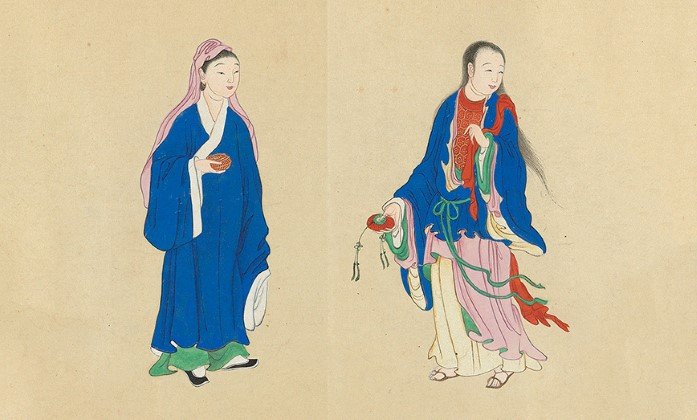
A Vietnamese mother goddess in a drawing collected by the French soldier Henri Oger, who published more than 4,000 drawings of traditional Vietnamese life depicted by Vietnamese artists. Scholar Olivier Tessier of École française d’Extrême-Orient (ÉFEO) oversaw the Oger Collection’s centennial publication in 2009. Source: Olivier Tessier, ÉFEO.

Tiếp tục đọc “Behind the Scenes, in the Forefront: Vietnamese Women in War and Peace”

Critical Minerals in World War 2

Arizona.edu

How Minerals Made Civilization, the UA Lowell Institute for Mineral Resources’ YouTube video series on the role of mineral resources in history, is launching a trilogy about how mineral resources influenced the war.  Part 1, posted today, covers mineral resources during the interwar buildup: how mineral resources figured in national (and transnational) politics in the 1930s, how resource-poor nations sought to build up their supplies, and how the struggle for resources eventually culminated in the outbreak of the war. From the video, here are a few fun facts you may not have known:

  •  Coins for combat: During the early to mid-1930s, both Germany and Japan reissued old silver coinages in nickel so they would have a nickel supply for gun steels when the war broke out.
  •  Coal, meet hydrogen: Coal-to-oil conversion was invented too late to change the outcome of World War 1, but it was about to play a major role in supplying Germany in the next war.
  •  Why we use molybdenum in steels: The Nazi-Soviet Pact of 1939 redirected Soviet manganese exports from the USA to Germany, so American metallurgists developed improved molybdenum-alloy steels as a substitute using molybdenum from Arizona and Colorado.

Tiếp tục đọc “Critical Minerals in World War 2”

Tự Lực Văn Đoàn, hay sống bằng ngòi bút trong kỳ loạn lạc – The Life, Death and Legacy of 7 Pillars of Vietnam’s Quốc Ngữ Literary Wealth

Read this article in English

Saigoneer.com Thứ sáu, 27 Tháng 5 2022. Viết bởi Linh Phạm. Ảnh bìa: Phan Nhi.

Trích or Triết là series về những danh nhân vang bóng một thời trong giới nghệ thuật và văn đàn Việt Nam. Các tác phẩm của họ đã để để lại những bài học mang giá trị xuyên thế kỷ về nhiều vấn đề xã hội hãy còn là nỗi nhức nhối ngày nay.Hồi mới bập bẹ vào nghề viết, tôi tự thấy vốn liếng quốc ngữ của mình còn nhiều khiếm khuyết. Vốn từ tiếng Anh tôi chủ yếu đến từ sách vở, nên để tự trau dồi tiếng Việt, tôi nghĩ cứ phải bắt đầu từ một cuốn sách bất kỳ. Mắt tôi dừng ở quyển Hà Nội Băm Sáu Phố Phường của Thạch Lam. Cuốn này đã ở trên giá sách nhà tôi lâu lắm rồi, hôm nay mới là lần đầu tiên tôi được lướt trên những câu chữ trong đấy.

Còn chưa vào đến câu nào của Thạch Lam, mới đọc lời tựa sách của Khái Hưng thôi, mà nước mắt tôi đã lã chã rơi. Một phần vì giọng văn hay quá, lối viết gãy gọn, gần gũi, mà lại rất đỗi thâm thúy. Phần khác tôi bị xúc động vì họ, những người tôi coi là đồng nghiệp, đã vạch ra một đường hướng văn chương mà tôi có thể theo đuổi suốt cuộc đời.

Logo của nhóm Tự Lực Văn Đoàn.

Thạch Lam và Khái Hưng thuộc Tự Lực Văn Đoàn, một nhóm các cây viết từ thời Pháp thuộc, được thành lập với mục đích “làm giầu thêm văn sản trong nước.” Từ chỗ mê lời văn của các anh, tôi bị cuốn vào câu chuyện của Tự Lực. Một câu chuyện không chỉ về việc viết văn, làm báo, mà còn về vận mệnh của cả một đất nước. Một câu chuyện mà những bi thương trong đó vẫn còn văng vẳng tới tận bây giờ.

“Câu chuyện về Tự Lực Văn Đoàn là cả một cái mâu thuẫn lớn của xã hội Việt Nam,” bác Nguyễn Đình Huynh nói. Nghiên cứu về nhóm Tự Lực đã hơn nửa thế kỷ, bác nhận thấy một kết nối khó tả với ba người đồng hương trong nhóm Tự Lực — ba anh em ruột — Thạch Lam, Hoàng Đạo, và Nhất Linh.

Tiếp tục đọc “Tự Lực Văn Đoàn, hay sống bằng ngòi bút trong kỳ loạn lạc – The Life, Death and Legacy of 7 Pillars of Vietnam’s Quốc Ngữ Literary Wealth”

Political Apologies Across Cultures

politicalapologies.com

In the past decades, there has been a considerable rise in the number of apologies offered by states for injustices and human rights violations. But are such gestures a viable reconciliatory tool and do they have a universal potential to redress injustice or restore harmony? Or do people across cultures have different notions about what political apologies mean, what purpose they serve, or how they can or should be expressed?

In this five year project funded by the European Research Council, we bring scholarship on transitional justice together with cross-cultural psychology and anthropology to address these questions and to investigate how political apologies are viewed across cultures. The overall objective is to understand whether political apologies can be a universal reconciliation tool, or whether a tailored approach based on cultural variation is more appropriate.

The Value and Meaning of Political Apologies across Cultures

A central idea behind political apologies is that collectivities such as states can and should take responsibility or express remorse for past wrongdoings, and that this will help restore justice or promote harmony. But are such notions regarding collective moral responsibility and collective guilt shared across cultures? And is there a similar understanding about the function and meaning of political apologies across cultures? The aim of this subproject is to analyze whether key assumptions regarding political apologies hold across cultures, or whether this varies as a function of cross-cultural differences in key values (collectivism and individualism) and norms (face and honor). For this, we rely upon an interdisciplinary and mixed-methods approach using in-depth interviews, vignette studies, and surveys. Data have been collected using community samples (incl. people aged 18 and above from both urban and rural regions with mixed educational backgrounds) across 33 countries.

PRELIMINARY SURVEY

FIELD SURVEY

IN-DEPTH INTERVIEWS

VIGNETTE STUDY

LARGE-SCALE SURVEY

The Expression and Reception of Political Apologies across Cultures

Over the past years, there has been considerable debate about the role of political apologies in reconciliation processes. Although some have heralded such gestures as a meaningful step, others have described them as political rituals that may be appropriate in some (cultural) contexts but not in others, as people may have different notions about what they mean, what purpose they serve, or how they should be expressed. What has been lacking, however, is a systematic analysis of how political apologies are expressed and received across the world. In this subproject, we aim to fill this gap by mapping and comparing the political apologies that have been made across the world, and by analyzing whether there are universals in how they are valued, expressed, and interpreted or whether this varies as a function of cross-cultural differences in key values (collectivism and individualism) and norms (face and honor). For this, we rely on a broad range of methods, varying from content analyses and in-depth interviews to (experimental) surveys. Data have been collected using community samples (incl. people aged 18 and above from both urban and rural regions with mixed educational backgrounds) across 32 countries. The Political Apologies Database is available on this website under the Database page. 


THE POLITICAL APOLOGIES DATABASE

CASE STUDIES: EL SALVADOR, REPUBLIC OF KOREA, AND THE UNITED KINGDOM

LARGE-SCALE MULTI-COUNTRY EXPERIMENTAL SURVEY

The Expression and Reception

3 ngôi đền thờ vua Hùng ở Sài Gòn

vnexpress.net

Ngoài đền thờ Vua Hùng ở Thảo Cầm Viên là di tích được xếp hạng để bảo tồn, thành phố còn có đền tưởng niệm lớn nhất Nam Bộ.

Đền thờ vua Hùng trong Thảo Cầm Viên

Đền thờ vua Hùng nằm cạnh quầy vé Thảo Cầm Viên (quận 1, TP HCM), do người Pháp xây dựng năm 1926. Công năng ban đầu của công trình là đền tưởng niệm những người Việt tử trận vì đi lính cho Pháp trong Thế chiến thứ nhất.

Sau năm 1954, khi người Pháp rút khỏi Việt Nam, công trình được đổi tên thành đền Quốc Tổ Hùng Vương. Trong đó, ngoài việc thờ vua Hùng, còn thờ một số nhân vật lịch sử khác như Trần Hưng Ðạo, Tả quân Lê Văn Duyệt. Sau năm 1975, đền được đổi thành đền thờ Hùng Vương và giao cho Bảo tàng lịch sử Việt Nam – TP HCM trực tiếp quản lý.

Ngôi đền có bình đồ hình vuông, mang phong cách kiến trúc thời nhà Nguyễn với bộ mái chồng diêm, tạo thành ba tầng mái cong. Về tổng thể, công trình phảng phất tòa Minh lâu của lăng Minh Mạng ở Huế.

Mỗi tuần, đền mở cửa miễn phí cho khách đến thăm từ thứ 3 đến ngày chủ nhật. Ngày giỗ tổ Hùng Vương mùng 10 tháng 3 âm lịch hàng năm, ở đây đều tổ chức lễ dâng hương.

Năm 2015, UBND TP HCM xếp hạng di tích lịch sử - văn hóa cấp thành phố cho công trình này. Ảnh: Quỳnh Trần
Năm 2015, UBND TP HCM xếp hạng di tích lịch sử – văn hóa cấp thành phố cho công trình này. Ảnh: Quỳnh Trần

Đền tưởng niệm các vua Hùng

Tiếp tục đọc “3 ngôi đền thờ vua Hùng ở Sài Gòn”

Rùa Hoàn Kiếm ở hồ Đồng Mô qua đời

tienphong.vn 24/04/2023 | 09:34

TPO – Cá thể rùa Hoàn Kiếm ở hồ Đồng Mô, một trong 3 cá thể rùa Hoàn Kiếm được ghi nhận chính thức trên thế giới đã qua đời, làm hẹp dần hy vọng khôi phục loài rùa quý hiếm nhất thế giới.

Nguồn tin của Tiền Phong xác nhận, cá thể rùa Hoàn Kiếm ở hồ Đồng Mô đã qua đời. Xác rùa nổi lên trên mặt hồ Đồng Mô hai ngày qua. Nguyên nhân cái chết của cá thể rùa cực kỳ quý hiếm này đang được các cơ quan chức năng làm rõ.

Theo một chuyên gia trong lĩnh vực bảo tồn, cá thể rùa Hoàn Kiếm ở hồ Đồng Mô có thể đã chết nhiều ngày trước khi nổi lên mặt nước, như chuyện từng xảy ra với cụ rùa Hồ Gươm cuối cùng. Cá thể này có chiều dài toàn thân 156cm, chiều dài mai rùa 98cm, chiều rộng mai rùa 76cm, cân nặng 93kg.

Theo nhận định, cá thể rùa Hoàn Kiếm bị chết nhiều khả năng chính là cá thể rùa đã được bẫy bắt thành công vào năm 2020. Khi đó, các nhà bảo tồn đã bẫy bắt thành công một cá thể rùa Hoàn Kiếm có cân nặng 86kg, chiều dài mai 99,5cm, rộng mai 75,5cm.

Tiếp tục đọc “Rùa Hoàn Kiếm ở hồ Đồng Mô qua đời”

An Giang: Đưa nghệ thuật múa Óc Eo vào trường học

Thứ tư, 26/04/2023 00:15 (GMT+7)

(ĐCSVN) – Đưa giáo dục di sản văn hoá tới học sinh, ngay tại khu di tích quốc gia đặc biệt Óc Eo – Ba Thê là một phương pháp rất hiệu quả để tuyên truyền, giáo dục truyền thống lịch sử văn hóa; giúp thế hệ trẻ nâng cao hiểu biết, thêm tự hào về di tích, thêm trân trọng tiền nhân và cùng ra sức giữ gìn các di tích của địa phương.

Điệu múa Óc Eo do diễn viên Trung tâm Văn hoá Nghệ thuật An Giang biểu diễn

Nghệ thuật múa Óc Eo

Theo một nghiên cứu của TS. Nguyễn Khánh Trung Kiên, Phó Viện trưởng Viện Khoa học xã hội vùng Nam Bộ, khoảng 2.000 năm trước, vùng đất An Giang từng là thời kỳ phát triển rực rỡ của văn hóa Óc Eo, với sự xuất hiện của một “đô thị” quan trọng của quốc gia cổ Phù Nam vào đầu Công nguyên.

Nơi đây từng có một thời hoàng kim với những hoạt động kinh tế nông nghiệp và thương mại sôi động, là điểm dừng quan trọng của những tuyến hàng hải đường dài kết nối phương Đông và phương Tây.

Tiếp tục đọc “An Giang: Đưa nghệ thuật múa Óc Eo vào trường học”