Councilonstrategicrisks.org February 4, 2025
Center for Climate and Security, CSR Blog
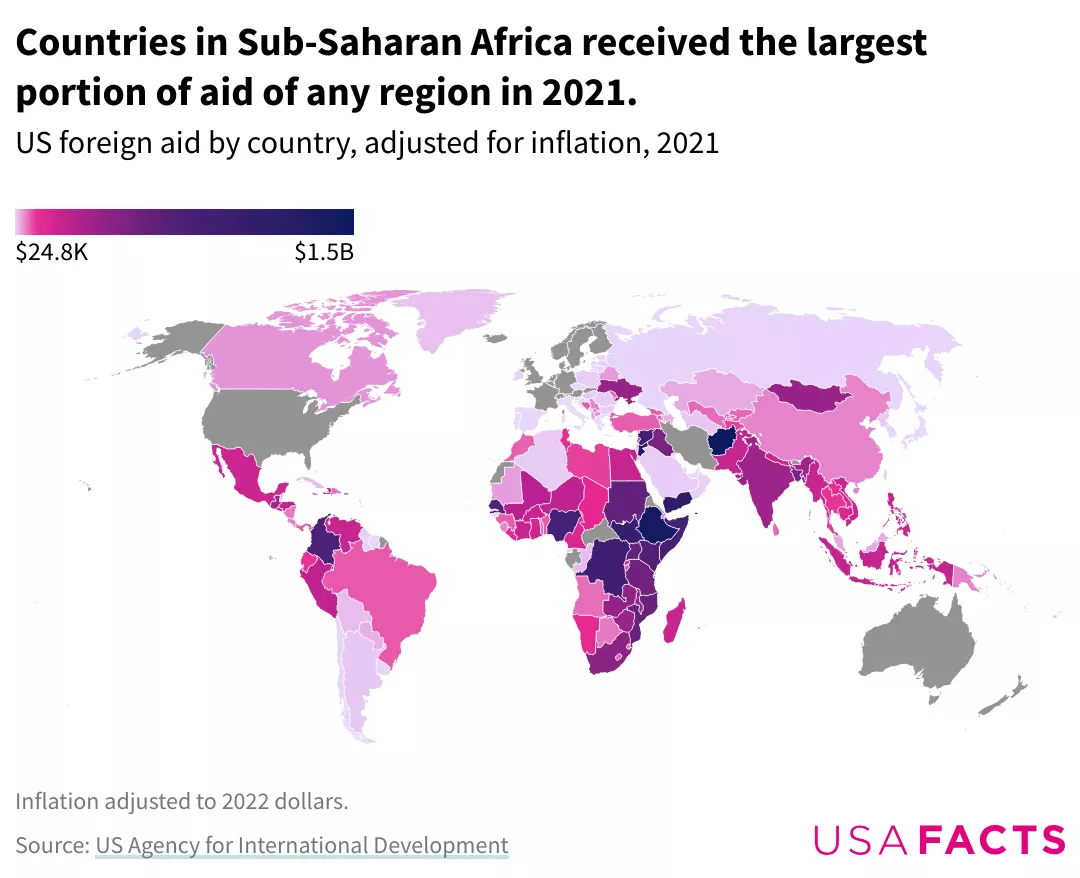
The Trump Administration’s effort to try to shut down USAID and pause all foreign aid directly harms US national security, including by interrupting critical investments into resilience, adaptation, conflict prevention, and peacebuilding. In 2021, 79 senior national security leaders, including 8 retired 4-star generals and admirals, a former Director of National Intelligence, and a former Director of the Central Intelligence Agency, signed the Challenge Accepted report, which argued that USAID investments in resilience and adaptation were critical to preventing instability and conflict and maintaining the US competitive edge with China.
In the Indo-Pacific, USAID investments in disaster response and resilience pay dividends in strengthening relationships with allies and partners critical to that competition with China. Take Papua New Guinea as an example, where the US signed a new security pact in 2022, gaining exclusive access to develop and operate out of PNG bases. As Admiral Sam Locklear, former head of US INDOPACOM, and Erin Sikorsky, Director of CCS, wrote, “To sustain and maintain this presence, the United States will need access to reliable energy sources, clean, fresh water, and an economically vibrant, healthy local population.” Those functions are all supported by USAID efforts, such as the $3.5 million in disaster response funds the agency allocated to PNG in 2024.
Meanwhile, in the Sahel region of Africa, USAID investments in climate adaptation and resilience help prevent extremist and terrorist group recruitment in communities affected by climate hazards. For example, the Resilience in the Sahel Enhanced (RISE) program funded by USAID aims to break cycles of crisis in the region that enable groups like Boko Haram and ISIS-W to thrive. AS US AFRICOM Commander Michael Langley noted in testimony to Congress, international aid and development programs “attack the roots of terrorism and tyranny more than bullets and air strikes ever will.”
Further, as we outlined in this article last week, USAID programs focused on agriculture resilience have helped curb irregular migration from Honduras to the United States by helping local farmers weather risk and stay in the country. Upstream investments before crises hit cost significantly less than waiting until such challenges become full-blown crises.
The bottom line is that addressing critical, bipartisan national security priorities requires a robust 3D approach to US foreign policy—defense, diplomacy, and development. Anything less is short-sighted and puts the country at risk. CCS Advisory Board member and former commander of US Central Command General Anthony Zinni (USMC, Ret.) has endorsed CCS recommendations to expand USAID work on climate and food security. He said as Co-Chair of the US Global Leadership Coalition’s National Security Advisory Council, “a freeze on all U.S. foreign assistance – at a time when our rivals are playing to win – takes the U.S. off the playing field and diminishes U.S. strength around the world.”




/cloudfront-us-east-1.images.arcpublishing.com/mco/4UTP67S2SJA55NMBBXWOOOTJEM.jpg)
 CVD
CVD