In 2008, many of Barack Obama’s supporters hoped he would bring the global war on terror to a close. Instead, he expanded it – and his successors have done nothing to change course. By Samuel Moyn
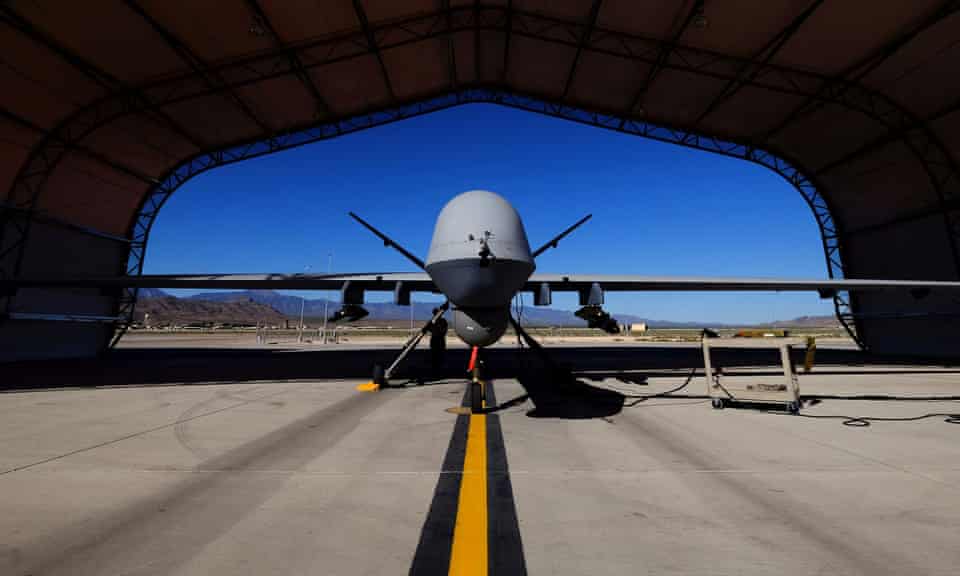
A US Reaper drone at a base in Nevada. Photograph: Josh Smith/Reuters
As a child, I fled Afghanistan with my family. When we arrived in Britain after a harrowing journey, we thought we could start our new life in safety. But the reality was very different.
NEW YORK — Welcome to Nikkei Asia’s podcast: Asia Stream.
Every week, Asia Stream tracks and analyzes the Indo-Pacific with a mix of interviews and original reporting by our correspondents from across the globe.
cfr – The 2021 coup returned Myanmar to military rule and shattered hopes for democratic progress in a Southeast Asian country beset by decades of conflict and repressive regimes.
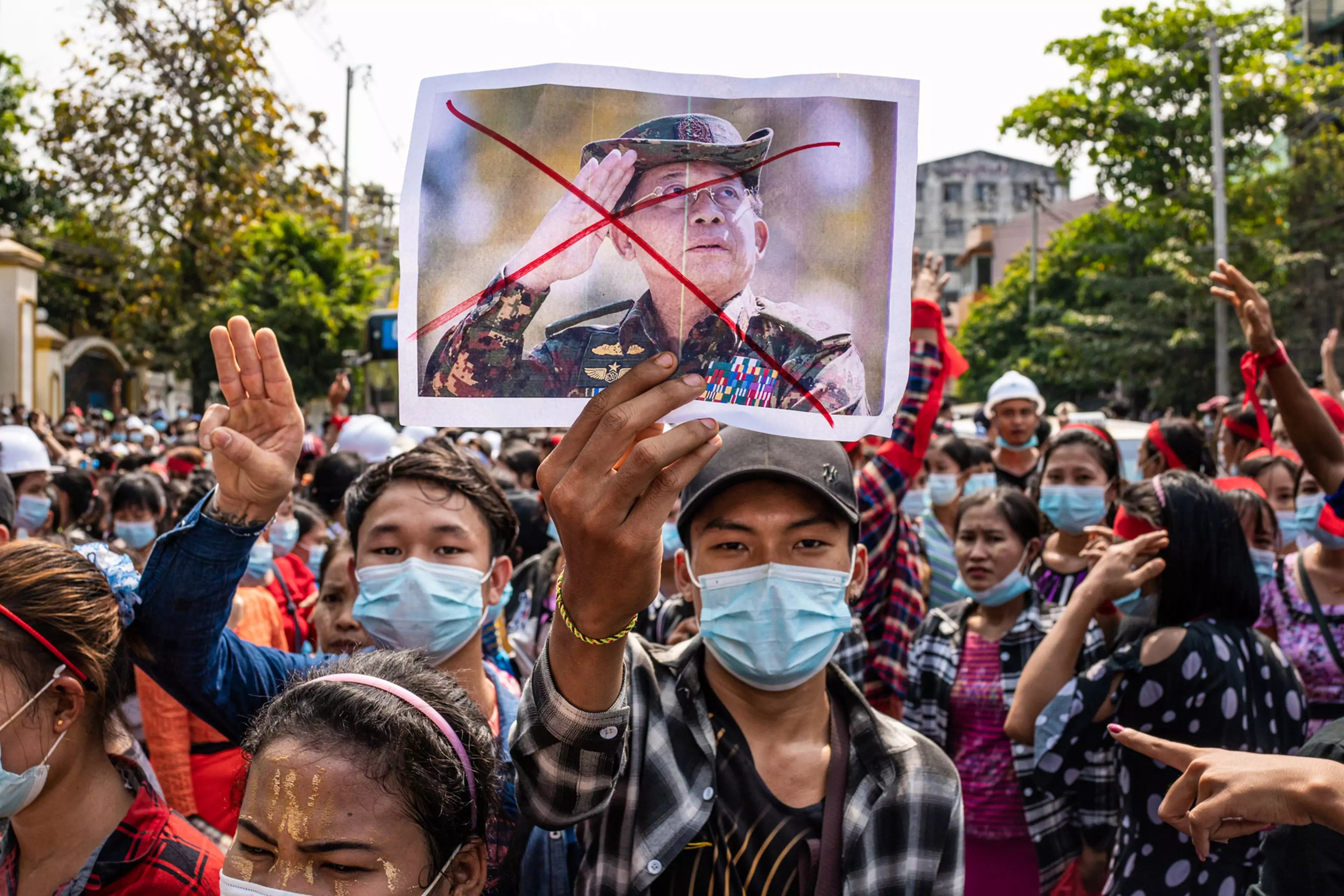
A protester holds an image of Senior General Min Aung Hlaing during an anti-coup march in February 2021. Getty Images
Myanmar, also known as Burma, has suffered decades of repressive military rule, widespread poverty, and civil war with ethnic minority groups.
The transition away from full military rule starting in 2011 spurred hopes of democratic reforms. But the military maintained control over much of the government and began a campaign of ethnic cleansing against the Rohingya.
The military launched a coup in February 2021 and then cracked down on protests. The opposition formed a shadow government and fighting force, leading to a civil war and humanitarian crisis that could spill over Myanmar’s borders.
ADST – Signed on January 27, 1973, the Paris Peace Accords were intended to finally end the Vietnam War, which had cost the lives of thousands of American soldiers, not to mention the millions of Vietnamese civilians who were killed, injured, or displaced. Initially, the Accords were negotiated in secret by National Security Advisor Henry Kissinger and Le Duc Tho, the lead North Vietnamese negotiator. These secret negotiations took place over the course of five years in Paris, from 1968 to 1973, but it was only in the early 70’s that any real progress was made.
U.S. President Nixon shakes hands with Chinese President Mao Zedong (Feb. 21, 1972, AP)
nikkei – Feb. 21 marks the 50th anniversary of U.S. President Richard Nixon’s trip to China, a turning point in international relations.
Washington and Beijing joined together to counter the Soviet Union, but China did not democratize as the U.S. hoped. It has now become an economic and military powerhouse under the one-party rule of the Communist Party. A half-century after the handshake that changed the world, cooperation has turned to confrontation. The U.S.-China relationship and global affairs have all undergone tumultuous change.
Russian troops seize Europe’s largest nuclear power plant in southeastern Ukraine, after attack sparks fire.
Published On 4 Mar 20224 Mar 2022
Russian forces have captured Ukraine’s Zaporizhzhia nuclear power plant, the largest in Europe, according to regional officials.
Ukrainian authorities said on Friday Russian shelling had caused a fire at a building in the plant complex that was later put out. The blaze raised alarm from leaders worldwide of a potential massive disaster. Russia blamed the attack on Ukrainian saboteurs, calling it a “monstrous provocation”.
Here is what we know so far:
Where is it located?
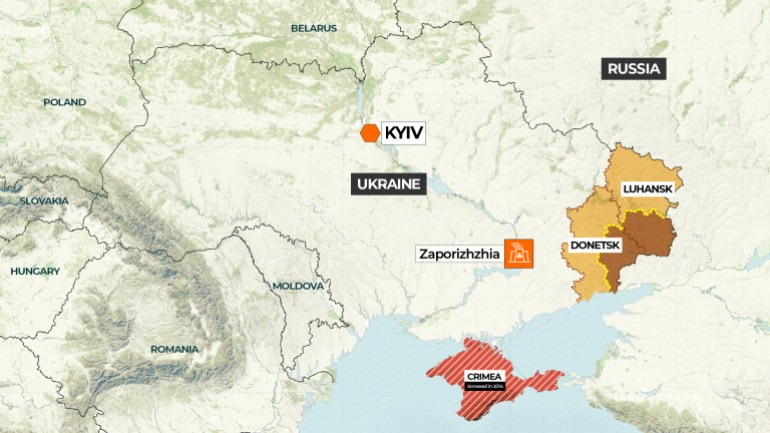
The Zaporizhzhia nuclear power plant is located in the southern Ukraine steppe on the Dnieper River, some 550 kilometres (342 miles) southeast of Ukraine’s capital, Kyiv, and about 525km (325 miles) south of Chernobyl, the site of the world’s worst nuclear power plant accident in 1986, which has also now been seized by Russian forces.
The plant has a total capacity of about 6,000 megawatts, enough to power about roughly four million homes.
On Wednesday, residents carrying Ukrainian flags had blocked the road to the plant, in an apparent standoff with Russian forces.
What happened?
But on Friday Russian troops were accused of attacking the plant, in an assault Ukraine’s President Volodymyr Zelenskyy branded “nuclear terror” and said could endanger the continent.
A video feed from the plant showed shelling and smoke rising near a building at the plant compound.
It is the first time in 40 years the security council has referred a crisis to the assembly and only the 11th time an emergency session of the UN general assembly has been called since 1950.
The United Nations has voted overwhelmingly for a resolution deploring Russia’s invasion of Ukraine and called for the immediate withdrawal of its forces, in a global expression of outrage that highlighted Russia’s increasing isolation.
In an emergency session of the UN’s general assembly, 141 of the 193 member states voted for the resolution, 35 abstained, and five voted against. The only countries to vote no in support of Moscow were Belarus, North Korea, Eritrea and Syria. Longstanding allies Cuba and Nicaragua joined China in abstaining.
The resolution said the UN “deplores in the strongest terms the aggression by the Russian Federation against Ukraine”. It demanded that “the Russian Federation immediately cease its use of force against Ukraine” and “immediately, completely and unconditionally withdraw all of its military forces”.
The resolution is not legally binding, but is an expression of the views of the UN membership, aimed at increasing pressure on Moscow and its ally, Belarus.
“It isn’t going to stop Russian forces in their stride, but it’s a pretty enormous diplomatic win for the Ukrainians and the US, and everyone who has got behind them,” Richard Gowan, UN director at the International Crisis Group, said.
Speaking before the vote, the US ambassador to the UN, Linda Thomas-Greenfield, compared the Russian invasion to the Nazi conquest of Europe.
“A few of the eldest Ukrainians and Russians might recall a moment like this, a moment when one aggressive European nation invaded another without provocation to claim the territory of its neighbour, a moment when a European dictator declared he would return his empire to its former glory and invasion that caused a war so horrific, that it spurred this organization into existence,” Thomas-Greenfield said.
Mức độ ô nhiễm bom mìn tại Việt Nam rất nghiêm trọng, bởi đã trải qua nhiều cuộc chiến tranh, hứng chịu hàng triệu tấn bom đạn.
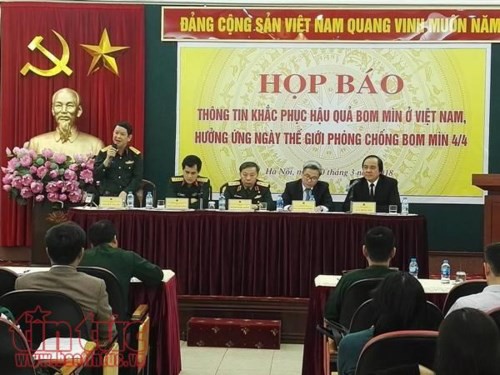
Quang cảnh họp báo
Theo báo cáo công bố hiện trạng tồn lưu ô nhiễm bom mìn, vật nổ sau chiến tranh, diện tích đất đai Việt Nam bị ô nhiễm bom mìn, vật nổ là trên 6,1 triệu ha, chiếm 18,71 % diện tích đất cả nước.
Quan hệ Việt – Mỹ rất đặc biệt. Đại sứ Hoa Kỳ tại Việt Nam Marc Evans Knapper cho biết, đây là thời điểm thích hợp để nâng cấp quan hệ Đối tác chiến lược Hà Nội – Washington.
Ông Marc Evans Knapper nhấn mạnh, Mỹ đánh giá cao vai trò và hợp tác với Việt Nam trong 5 trọng tâm chiến lược Ấn Độ Dương – Thái Bình Dương mới mà chính quyền Biden – Harris đã thông qua.
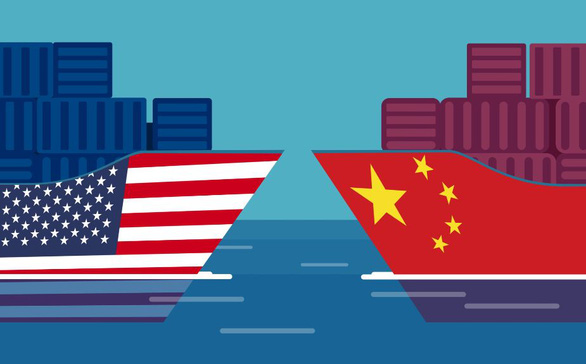
The US has gained ground against China in the contest for regional influence in Southeast Asia, according to the latest State of Southeast Asia Survey. ASEAN continues to be seen as ineffective in the eyes of respondents; at the same time, they are willing to give it credit when it is due.
The United States is gaining significant ground against China in the battle to win friends and influence countries, with respondents across Southeast Asia confident that Washington would be able to lead on issues such as championing free trade and upholding the rules-based regional order.
A fresh reading of The State of Southeast Asia Survey also showed that pressing issues — the Covid-19 pandemic, unemployment and economic retraction as well as climate change – continue to be prioritised by respondents. In their view, however, ASEAN is seen as too slow and ineffective to cope with rapid developments.
The Biden administration took office with the intention of making partnership with Europe a central element of its China strategy. This paper assesses what has been achieved in the first year of these efforts, and what to expect in 2022. Despite some of points of contention, such as the disputes over the security pact between Australia, the United Kingdom, and the United States (AUKUS), European and US officials ended the year in a more optimistic place on the transatlantic China and Indo-Pacific agendas than they were at the start. Over the course of 2021, the two sides put in place new structures—from the EU-US Trade and Technology Council (TTC) to the Indo-Pacific high-level consultations—that have helped to get the right issues on the table and pushed their bureaucracies to deal with each other in ways that they had not before. Instead of a thin layer of periodic dialogues on China, there is an increasingly thick web of interactions, from working-level groups in different policy areas to leader-level exchanges. The EU and the United States also removed many of the obstacles to their joining forces more effectively on economic goals, particularly with the deal on steel and aluminum tariffs. Meanwhile, without raising excessively high expectations of a new coalition government that will not depart radically from its predecessor, the change in Berlin should also provide a stronger basis for cooperation on China than was present during the final phase of Chancellor Angela Merkel’s government.
All this needs to be translated into results this year. The gap between the EU and the United States is less in their analysis of China and more in the level of urgency with which they treat the challenge. Where the United States is in the process of making China the animating factor for its grand strategy, Europe is not, and the crisis with Russia will not make it likelier in the months ahead. Yet the actor that has done most to narrow the urgency gap between Europe and the United States has been China. Much as its escalatory sanctions in 2021 derailed its contentious Comprehensive Agreement on Investment with the EU, Beijing’s treatment of Lithuania is helping to expedite European plans to address economic coercion and supply-chain risks that might otherwise have taken years.
Economic coercion is one of several issues that are a priority for EU-US cooperation this year. The transatlantic agenda on China and the Indo-Pacific is a very expansive one and, although there is value to this breadth, the two sides will need to pick a few areas that merit an additional political push. While in an ideal world these would all be positive-sum efforts, such as aligning their infrastructure finance initiatives to compete more effectively with China’s Belt and Road Initiative (BRI), Europe and the United States will unavoidably have to deal with the sharp edges of Chinese power too. In all these efforts, the transatlantic agenda is only one component of a wider framework of cooperation that also involves their major partners in the Indo-Pacific. From the Quad to the TTC, one of the key goals for this year will be for these allies to stitch their efforts together with a view to driving outcomes rather than creating even more complex consultation structures.
There are also long-running goals for the United States and Europe that transcend administrations. There were striking shifts between the Obama, Trump, and Biden administrations but there has been more underlying consistency in what both sides need from each other in dealing with the China challenge than in many other policy fields. Considerable long-term planning is possible regardless of the potential political oscillations in the years ahead.







 CVD
CVD 